
 Worksheets
Science 9 Chp. 13 Practice Test
Total questions: 112
Worksheet time: 6hrs 36mins
The unit used to measure work is the
watt.
newton.
joule.
meter
A force exerted over a distance to move an object is ______________________.
power
work
momentum
watt
Which of the following is the best example of work being done.
doing homework
lifting a box
pushing a stationary box
holding a box
In which of these cases is work being done?
A student sleeps.
A student pushes a locked door that does not move.
A student carries his chair into another room.
A student sits on the carpet.
P=25 watts
W=5000 Joules
t=???
200 sec
0.0005 s
125000 s
125 s
How much work has been done on an object with a force of 2000 N being displaced 2 m?
4000 J
1,000 J
40 J
150 J
How much power is used when a person has 100 kg moves 20 m over 2 seconds?
19600 J
9800 J
9800 W
0 W

This simple machine that consists a rigid bar that pivot about a fixed point.
lever
pulley
wheel and axle
fulcrum
A seesaw is an example of a _______.
wedge
lever
inclined plane
pulley
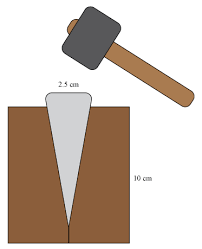
This device is a ______.
wedge
lever
incline plane
wheel and axle
The fixed point on the lever is called a ______.
load
resistance
bar
fulcrum

What is effort (input) force?
The force required by a machine in order to accomplish work. (the force you put on the machine)
The force which an effort force must overcome in order to do work on an object via a simple machine.
The force the machine exerts on a object.
The output work times the input distance.

A light bulb has which simple machine in its base?
wedge
pulley
incline plane
screw


What kind of energy is in a moving skateboard?
potential
kinetic
both potential and kinetic energy
none of the above

What kind of energy is in a rock at the edge of a cliff?
potential
kinetic
both potential and kinetic energy
none of the above
Gravitational potential energy depends on the ________ and ________ of the object.
height and mass
friction and movement
mass and movement
height and friction

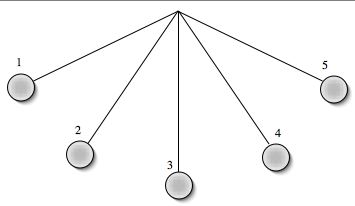
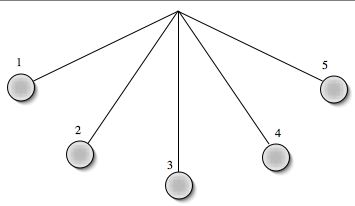
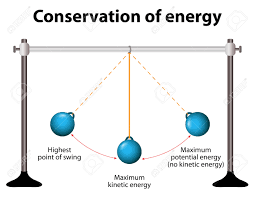
Which is an example of potential energy?
A roller coaster speeding down a hill.
The pulled back string on an archers's bow.
Releasing the strings on a guitar.
An electric current lighting a light bulb.

Digestion of food in our bodies is an example of ________.
electrical energy
chemical potential energy
nuclear energy
sound energy

Charging your phone is an example of _______.
radiant energy
thermal energy
kinetic energy
electrical energy
Feeling warm from the burning of wood around a campfire or in a fireplace is what type of energy?
elastic potential energy
nuclear energy
thermal energy
kinetic energy

Splitting an atom releases this type of energy?
gravitational potential energy
kinetic energy
chemical potential energy
nuclear energy

Stretching a slingshot is an example of _______.
elastic potential energy
sound energy
chemical potential energy
nuclear energy
Which best completes the statement:
"Energy is the ability to _________."
move
store material
do work
grow
Which of the following correctly represents potential energy, mathematically?
PE = 1/2mg
PE = mv
PE = mgh
PE = 1/2mgh2

What force causes a roller coaster cart to slow down the most?
friction
weight
gravity
air resistance
The law of energy conservation says the total energy before the change _______ the total energy after it.
is less than
is more than
affects
equals

What happens when the ball goes from the highest position to the lowest position?
The PE and KE increases and decreases together.
Impossible to know without knowing the mass of the object.
The PE decreases while KE increases.
Efficiency is calculated by Energy Out divided by Energy In, expressed as a percentage
False
True
Which formula is used to calculate work?
Work = force x distance
Work = mass x acceleration
Work = power x time
Work = velocity x time
In which direction must the force be applied for work to be done on an object?
In the direction of the object's motion
Opposite to the direction of the object's motion
Perpendicular to the direction of the object's motion
In any random direction
What is the SI unit of work?
Joule (J)
Watt (W)
Newton (N)
Meter (m)
If an object is not moving, what is the amount of work done on it?
Zero
One
Infinite
Equal to its mass
How is power defined in relation to work?
Power is the rate at which work is done
Power is the total amount of work done
Power is the force applied to an object
Power is the distance over which work is done
What is the SI unit of power?
Watt (W)
Joule (J)
Newton (N)
Second (s)
Which of the following best describes the relationship between work and power?
Power measures how quickly work is done
Work measures how quickly power is used
Power and work are unrelated
Power is always greater than work
A student pushes a box with a force of 10 N over a distance of 5 meters in the direction of motion. How much work is done?
50 J
2 J
15 J
5 J
How do machines make work easier?
By changing the size of an input force, the direction of the force, or both
By increasing the amount of energy required
By reducing the efficiency of work
By making work more complicated
What does mechanical advantage express?
How much a machine multiplies force or distance
How fast a machine operates
The color of the machine
The weight of the machine
Why is mechanical advantage considered an important ratio in the study of machines?
It shows how effectively a machine multiplies force or distance
It determines the color of the machine
It measures the speed of the machine
It calculates the cost of the machine
A student uses a lever to lift a heavy box. The lever allows the student to use less force than lifting the box directly. Which concept from the chapter explains this?
Mechanical advantage
Friction
Gravity
Acceleration
Which of the following best describes how using an inclined plane changes the force required to do work?
It increases the input force needed to lift an object.
It requires less input force to move an object up than lifting it directly.
It does not affect the force required to do work.
It makes the object heavier.
What is a wedge in terms of simple machines?
A type of lever.
A modified inclined plane.
A wheel and axle.
A pulley system.
Which statement correctly describes a screw as a simple machine?
A screw is a type of lever.
A screw is a pulley wrapped around a cylinder.
A screw is an inclined plane wrapped around a cylinder.
A screw is a wedge with a handle.
What simple machines make up a pair of scissors?
Two pulleys and a wedge.
Two first-class levers and a wedge.
Two inclined planes and a screw.
Two wheels and axles.
What is a compound machine?
A machine made of only one simple machine.
A machine made of more than one simple machine.
A machine that does not use any simple machines.
A machine that only uses levers.
Explain why pushing an object up an inclined plane requires less input force than lifting the same object directly. Use reasoning based on the concept of work and force.
The inclined plane increases the distance over which the force is applied, reducing the required input force.
The inclined plane makes the object lighter.
The inclined plane changes the direction of the force, making it harder.
The inclined plane does not affect the force at all.
What is the relationship between energy and work?
Energy is always greater than work
Energy is transformed or transferred whenever work is done
Work and energy are unrelated
Work is only possible without energy
Energy is measured in which unit?
Newtons (N)
Watts (W)
Joules (J)
Volts (V)
Why is potential energy sometimes called energy of position?
Because it depends on the speed of the object
Because it results from the relative positions of objects in a system
Because it is only found in moving objects
Because it is always constant
Which of the following best describes elastic potential energy?
Energy due to an object's temperature
Energy stored in objects that are stretched or compressed
Energy from chemical reactions
Energy from sunlight
A roller coaster at the top of a hill is an example of which type of potential energy?
Elastic potential energy
Chemical potential energy
Gravitational potential energy
Nuclear potential energy
Which factors does gravitational potential energy depend on?
Mass and height
Speed and direction
Temperature and pressure
Volume and density
What is the formula for gravitational potential energy?
PE = mass × velocity × time
PE = mass × free-fall acceleration × height
PE = force × distance
PE = mass × temperature × height
Explain how the position of an object affects its potential energy. (DoK Level 3)
The higher or further an object is from a reference point, the greater its potential energy due to its position relative to other objects.
The position of an object does not affect its potential energy.
Only the color of the object affects its potential energy.
Potential energy is only affected by the object's speed.
Which two factors does kinetic energy depend on?
Mass and speed
Height and mass
Volume and temperature
Pressure and density
What is the formula for kinetic energy?
KE = ½ × mass × speed squared
KE = mass × acceleration
KE = force × distance
KE = mass × velocity
Atoms and molecules have which type of energy due to their motion?
Kinetic energy
Potential energy
Chemical energy
Nuclear energy
What is nonmechanical energy?
Energy that lies at the level of the atom
Energy due to an object's height
Energy from moving objects
Energy from friction
Which process do plants use to turn the energy in sunlight into chemical energy?
Photosynthesis
Respiration
Fermentation
Digestion
What type of reaction fuels the sun’s core?
Nuclear fusion
Chemical reaction
Photosynthesis
Combustion
Explain why kinetic energy depends more on speed than on mass. Use the formula for kinetic energy in your explanation.
Because speed is squared in the formula, increasing speed increases kinetic energy much more than increasing mass.
Because mass is squared in the formula, increasing mass increases kinetic energy much more than increasing speed.
Because both mass and speed are equally important in the formula.
Because kinetic energy does not depend on speed.
Describe how chemical energy is related to the positions of atoms in a substance.
The amount of chemical energy depends in part on the relative positions of the atoms it contains.
Chemical energy is not related to atomic positions.
Chemical energy only depends on temperature.
Chemical energy is only found in liquids.
Which type of energy results from the location of charged particles in an electric field?
Electrical energy
Thermal energy
Nuclear energy
Sound energy
What happens to electrons when they move from an area of higher electric potential to an area of lower electric potential?
They lose energy
They gain energy
They remain unchanged
They disappear
How does light energy travel from the sun to Earth across empty space?
In the form of sound waves
In the form of electromagnetic waves
In the form of gravitational waves
In the form of mechanical waves
Electromagnetic waves are made of which two types of fields?
Electric and magnetic fields
Gravitational and thermal fields
Nuclear and sound fields
Light and heat fields
Explain why light energy is considered another example of energy stored in a field. Use evidence from your understanding of electromagnetic waves.
Because electromagnetic waves consist of electric and magnetic fields, light energy is stored in these fields.
Because light energy is only visible to humans.
Because light energy can be felt as heat.
Because light energy is produced by chemical reactions.
Which of the following best describes the law of conservation of energy?
Energy can be created and destroyed.
Energy cannot be created or destroyed; it only changes form.
Energy disappears when used.
Energy is only found in living things.
What type of energy does a roller coaster car have as it goes down a hill?
Chemical energy
Kinetic energy
Electrical energy
Sound energy
Which process describes potential energy becoming kinetic energy?
A ball sitting on the ground
A roller coaster car going down a hill
A battery storing energy
A light bulb glowing
According to thermodynamics, what does the net change in energy for any system equal?
The energy transferred as work and as heat
The energy lost to friction
The energy stored in batteries
The energy used by living organisms
If the total energy in a system increases, what must be true?
Energy was created inside the system.
Energy entered the system from an external source.
Energy disappeared from the system.
Energy was destroyed inside the system.
Explain how energy transformations occur in a roller coaster ride, using examples from both potential and kinetic energy.
Energy remains constant and does not change form during the ride.
The roller coaster car at the top of a hill has potential energy, which changes to kinetic energy as it goes down; at the bottom, kinetic energy can be used to do work to carry it up another hill.
The roller coaster car only has kinetic energy throughout the ride.
The roller coaster car only has potential energy throughout the ride.
Which law of thermodynamics is described as the law of energy conservation?
First law of thermodynamics
Second law of thermodynamics
Third law of thermodynamics
Zeroth law of thermodynamics
What is exchanged in an open system?
Only energy
Only matter
Both energy and matter
Neither energy nor matter
Which type of system exchanges energy but not matter with its surroundings?
Open system
Closed system
Isolated system
Dynamic system
What is true about most real-world systems?
They are isolated
They are closed
They are open
They are static
What is the definition of useful work in the context of machines?
All work done by a machine
Work done by a machine that is designed or intended to do
Work lost due to friction
Work input to a machine
Why is not all the work done by a machine considered useful work?
Because of gravity
Because of friction
Because of acceleration
Because of inertia
How is the efficiency of a machine usually expressed?
As a ratio
As a decimal
As a percentage
As a fraction
If a machine has a work input of 100 J and a useful work output of 80 J, what is its efficiency?
80%
100%
20%
50%
Explain why work output is always less than work input in real machines.
Because machines create energy
Because of friction and energy losses
Because machines are perfect
Because work input is not needed

