
 Worksheets
Test #1 Review
Total questions: 113
Worksheet time: 5hrs 47mins


Which of the following has the shortest wavelength?
microwaves
UV rays
Infrared
the color blue

Which of the following has the most energy?
Red
Blue
Green
Violet

Which of the following has the most energy?
X-rays
The color green
Microwaves
ultraviolet

Which of the following has the least amount of energy?
UV rays
The color yellow
infrared
Gamma rays

Which of the following has the shortest wavelength?
Gamma rays
The color blue
AM radio
Infrared

Which of the following has the highest frequency?
TV
Microwaves
the color indigo
ultraviolet rays

Which of the following has the lowest energy?
The color yellow
The color blue
The color indigo
The color orange

Which of the following are Non-Renewable energy resources? (Check all that apply.)
coal
wind
solar
nuclear

One advantage of solar and wind power over fossil fuels is that
wind and solar are presently much less expensive than fossil fuels.
wind and solar come from natural processes and fossil fuels do not.
wind and solar are nonrenewable resources and fossil fuel are renewable.
wind and solar are continuously renewable and fossil fuels take millions of years to be formed.

Renewable or Nonrenewable: Coal
Renewable
Nonrenewable

Renewable or Nonrenewable: Natural Gas
nonrenewable
renewable

Renewable or Nonrenewable: Oil
Nonrenewable
Renewable

Renewable or Nonrenewable: Sunlight
Renewable
Nonrenewable

Renewable or Nonrenewable: Water
Nonrenewable
Renewable

Renewable or Nonrenewable: Wind
Renewable
Nonrenewable

This is electrical energy that comes from the force of energy of moving water. It is the most widely used type of renewable energy.
Coal
Hydroelectric Power
Wind Energy
Geothermal Energy

This is the energy generated in the Earth's core and produces steam and hot water.
Solar Energy
Hydroelectric Power
Fossil Fuels
Geothermal

Fossil Fuels produce carbon dioxide that pollutes the atmosphere.
Advantage
Disadvantage

Geothermal power is geographically limited-not available in many locations.
Advantage
Disadvantage
What does the term renewable energy source mean?
Energy that can be replenished
Energy that can be all used up
Energy that can be lost
What does the term nonrenewable energy sources mean?
Energy can be used more than once
Energy that can be replenished
Energy can be lost once used
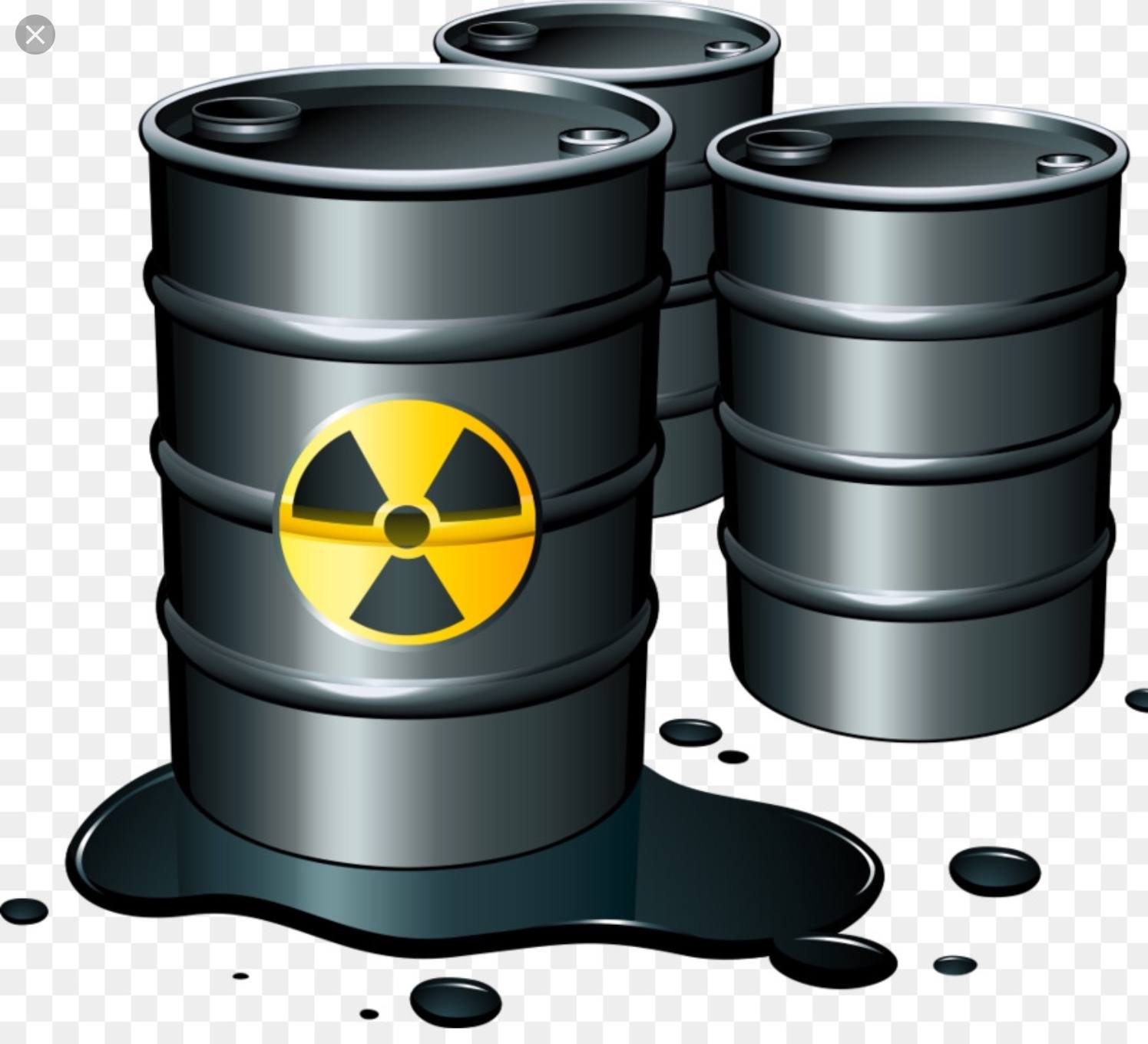
oil is renewable
True
False
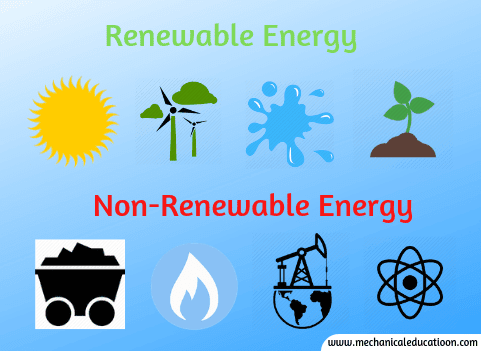
a nonrenewable resources is...
any natural material that is used by humans
a natural resource that can be replaced at the same rate at which it is consumed
a resource that forms much more slowly than it is consumed

a renewable resource is ....
a resource that forms much more slowly than it is consumed
a natural resource that can be replaced at the same rate at which it is consumed
any natural material that is used by humans

Coal, oil and natural gas are non-renewable resources also known as __________?
Recyclable
Biomass
Fossil Fuels
Radioactive

All of the following are problems caused by burning coal, except
Creates smog
It is radioactive
Contributes to acid rain
Contributes to global warming

Energy created by the Earth's heat.
Biomass
Solar
Geothermal
Wind

Energy created by moving water.
Solar
Wind
Geothermal
Hydropower
A machine with blades that turns because of wind or water.
Turbine
Power plant
Lawnmower
The act of digging a hole in the earth in the hope of getting oil.
mining
fission
drilling
What is a natural resource?
Material from the Earth that people use for their needs.
A place hidden in the mountains.
An object made from natural things.


Why are fossils fuels so widely used?
They are renewable so they won't run out.
They pollution they produce is less compared to renewable energy sources.
They are easy to obtain and process.
They don't disrupt the environment when mined from the earth.
Which subatomic particles are found in the nucleus of an atom?
Protons & Neutrons
Just Neutrons
Protons & Electrons
Neutrons & Electrons
In (a) decay a Neutron transforms into a Proton and an Electron is released.
In (a) decay 2 Protons and 2 Neutrons are released.
In (a) decay energy is released as a high frequency Electromagnetic Wave
What is a beta particle?
2 protons & 2 neutrons
a high energy EM wave
an electron
a large unstable nucleus
What is an alpha particle?
An electron
A Helium nucleus (2 protons & 2 neutrons)
A high energy EM wave
The largest subatomic particle
What happens in Nuclear Fusion?
A large heavy nucleus splits apart.
An unstable nucleus emits a helium nucleus.
An unstable nucleus release in the form of gamma radiation.
Two smaller nuclei combine to form a larger nucleus.
What happens in Nuclear Fission?
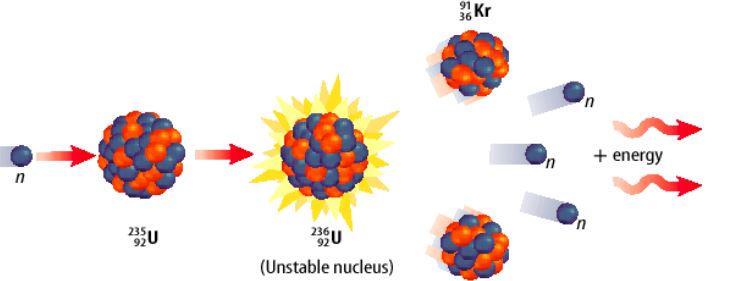
A large heavy nucleus splits apart.
A neutron is transformed into a proton, and a high energy electron is released.
An unstable nucleus release in the form of gamma radiation.
Two smaller nuclei combine to form a larger nucleus.
Which of the following are downsides of nuclear power? (multiple select)
No greenhouse gas emissions
Hazardous radioactive waste
High power output
Potential for catastrophic meltdowns.
Expensive to build
(T/F) Nuclear power plants contribute to global warming.
True
False
(T/F) Nuclear power plants do not release CO2 into the atmosphere.
True
False
(T/F) Nuclear power causes more deaths than any other power source.
True
False
(T/F) Nuclear power causes the least amount of deaths on average out of any power source.
True
False
How do nuclear reactions (fusion & fission) compare to chemical reactions?
They both release about the same amount of energy.
Nuclear reactions release much more energy.
Nuclear reactions release less energy.
The time it takes for half of a sample of radioactive material to decay is called...
Decay Time
Half Life
Gamma Period
Half Time
In the equation, 146C --> 147N + 0-1B, the _______ decay of radioactive carbon-14 results in the creation of a new nitrogen-14 atom.
Gamma
Beta
Alpha
23892U-->23490Th + 42He + 200

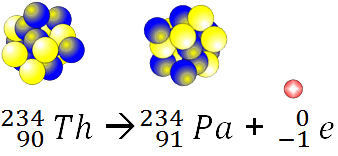

85209At = ___ + 24He
146C --> 0-1e + ________
85209At = ___ + 24He
Gamma rays have
no mass
a huge mass
a small mass
an average mass
614C = ___ + -10e
An isotope that undergoes B- decay has
too few protons
too many protons
too few neutrons
Too many neutrons
Solve this equation for beta decay.
614C = ___ + -10e
410Be
714N
210He
613C
How long does it take a 180-gram of gold-198 to decay to 22.5 grams if the half -life of gold-198 is 2.68 days?
8.04 days
3 days
4 days
2.68 days
How long will it take for a 28-gram sample of radon-222 to decay to 3.5 grams? the half-life of radon-222 of 3.82 days
15.28 days
11.46 days
3 days
4 days
How long will it take for a 150-gram sample of Nitrogen-16 tp decay to 18.75 grams if the half-life for Nitrogen -16 is 7.2 seconds
7.2 seconds
14.4 seconds
18.75 seconds
21.6 seconds
How long will it for a take for a 40 gram. The half-life of cobalt-60 is 5.26 years sample ofcobalt-60 to decay to 5 grams?
17.75 days
15.78 years
15.15 years
17.17 years

The nucleus is held together by the ___________________________force.
The Strong Nuclear Force
The Weak Nuclear Force
Electromagnetism
Gravity
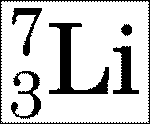
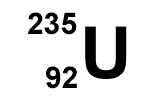
The half-life of Zn-71 is 2.4 minutes. Starting with 100.0 g, how many grams would remain after 7.2 minutes?
100.0 g
50.0 g
12.5 g
8.5 g
The half-life of strontium-90 is 25 years. How much will remain after 100 years if the initial amount is 4.0 g?
3.0 g
0.25 g
0.3 g
6.25 g
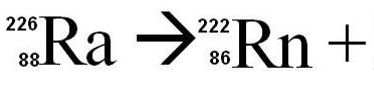
The sum of protons and neutrons
atomic number
atom mass
emission of energetic particles or rays from unstable atomic nuclei, during breakdown of that nucleus
Radioactive decay
Nuclear meltdown
What is the disintegration energy if the mass change in a fusion reaction is 3.4x10^-21 kg?
3.06x10^-6
3.06x10^6
1.02x10^-14
1.02x10^14
3.06x10^-4
What is the disintegration energy if the mass defect is 4.6 grams?
4.104x10^16 J
4.104x10^-16 J
4.104x10^19 J
4.104x10^-19 J
4.104x10^14 J
What is the disintegration energy if the mass defect is 0.66 amu?
3.97404x10^-10 J
9.8604x10^-11 J
3.97404x10^10 J
9.8604x10^-10 J
What is the disintegration energy if the mass defect is 3 amu?
1.494x10^-10 J
1.494x10^10 J
4.482x10^-10 J
4.482x10^-9 J

