wayground logo

Free Printable Worksheets

Font size

S
M
L
XL
Worksheets

Periodic Table & Elements Unit Review

Total questions: 110

Worksheet time: 55mins

Name
Class
Date
1.
How are elements arranged in the periodic table?
a)
in alphabetical order
b)
in the order in which they were discovered
c)
 in order of increasing atomic number
d)
 in order of increasing melting points
2.
The vertical columns in the periodic table are known as:
a)
groups
b)
periods
c)
valences
d)
isotopes
3.
Group 18 of the periodic table contains nonreactive elements like helium, neon, and argon. The elements in this group are called:
a)
alkali metsls
b)
transition metals
c)
halogens
d)
noble gases
4.
Why is the periodic table so useful to scientists?
a)
 it reminds them what the elements look like
b)
it can be used to predict how they react
c)
 it lists the chemical formulas for all of the different compounds
d)
 it contains the recipes for a variety of different kinds of mixtures
5.
Every element in the period table:
a)
combines easily with other elements
b)
is a solid at room temperature
c)
 has atoms that are the same size
d)
has a unique set of properties
6.
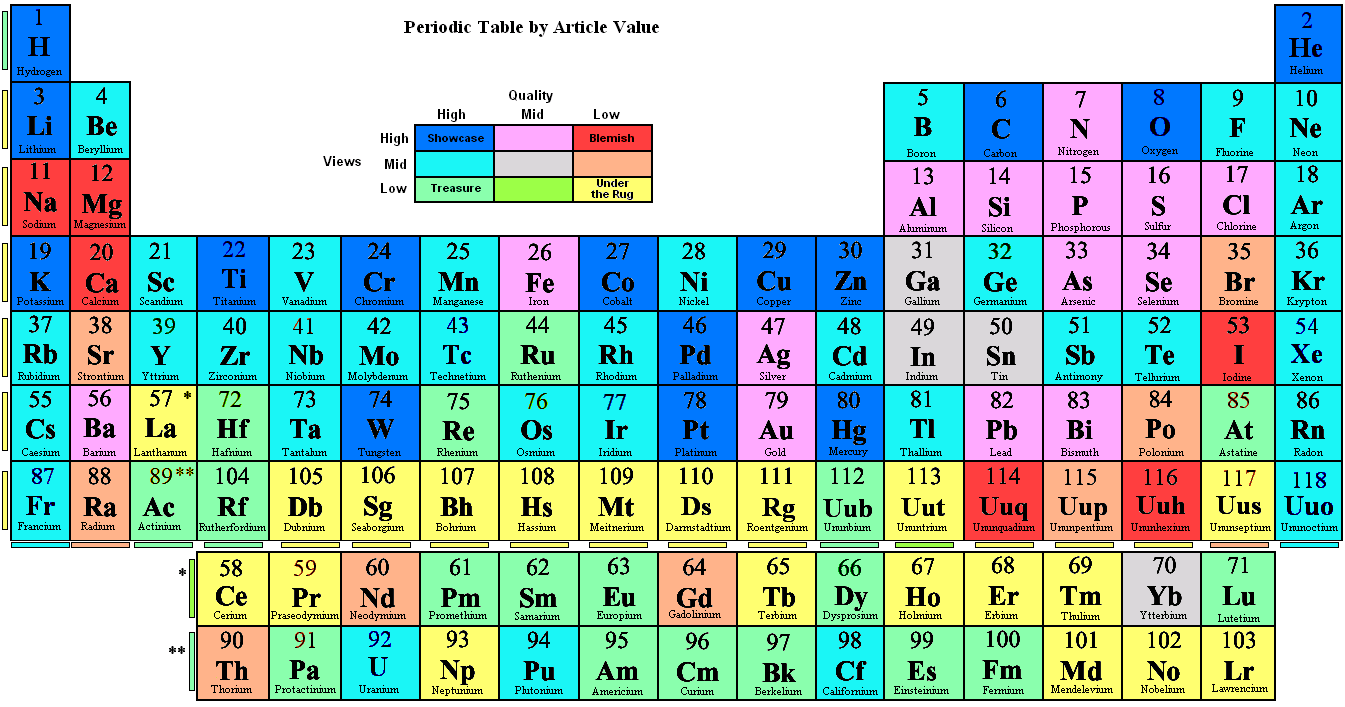
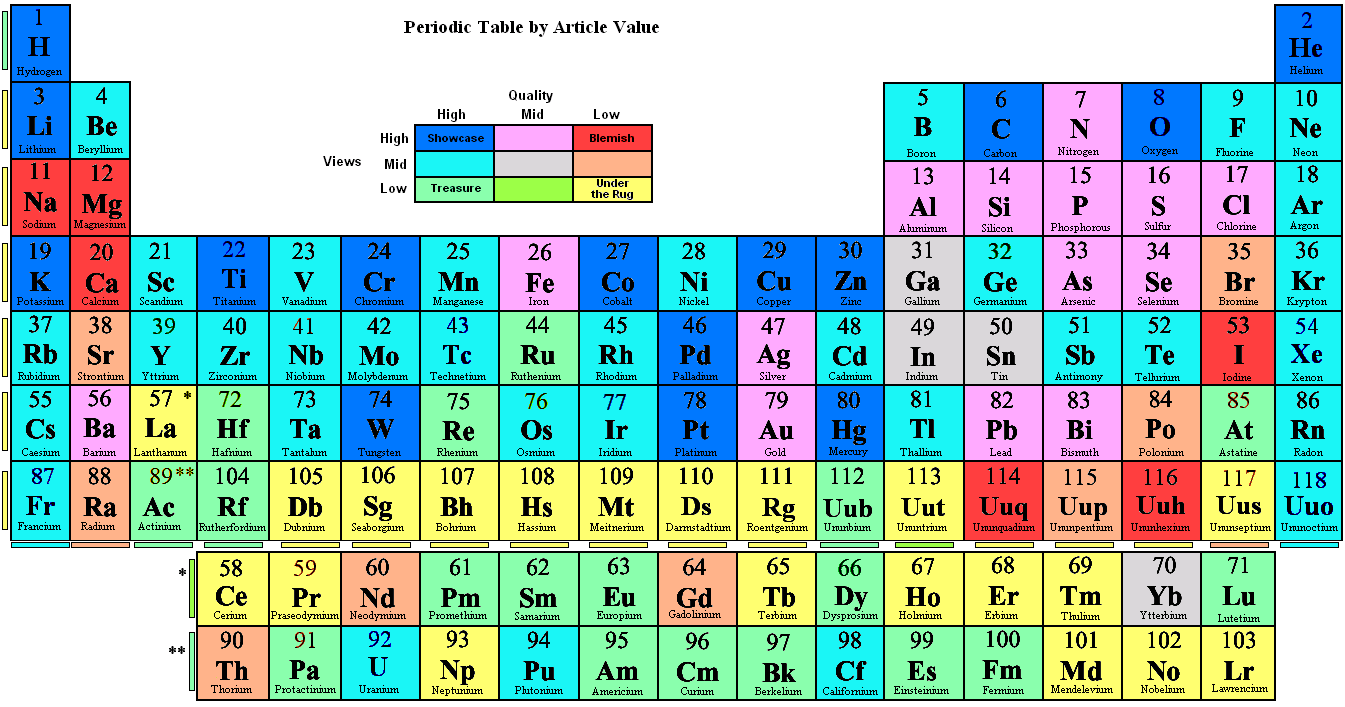
Use the periodic table to answer the question.
Which element listed below is a nonmetal?
a)
 sodium (Na)
b)
 magnesium (Mg)
c)
iron (Fe)
d)
 chlorine (Cl)
7.
The periodic table is organized so that scientists can easily see:
a)
 the color of each element
b)
when each element was discovered
c)
the atomic number and atomic mass of each element
d)
the density and melting point of each element
8.
The elements in the periodic table are placed in order based on:
a)
 the order in which they were discovered.
b)
 the number of protons in their atoms.
c)
the number of neutrons in their atoms.
d)
 the number of different isotopes they have.
9.
The horizontal rows of the periodic table are known as:
a)
periods
b)
groups
c)
columns
d)
isotopes
10.
 In their outermost energy levels, sodium has 1 electron, carbon has 4 electrons, fluorine has 7 electrons, and neon has 8 electrons. Which element is the least reactive?
a)
sodium
b)
carbon
c)
fluorine
d)
neon
11.
 Use the periodic table to answer the question.
Out of all the lists below, which list contains the three elements that are most alike in their chemical properties?
a)
O, F, Ne
b)
Li, Mg, Sc
c)
Li, Na, K
d)
H, He, Li
12.
Beryllium, magnesium, and calcium are all located in group 2 of the periodic table. What else do these three elements have in common?
a)
They are all metals.
b)
They all have the same atomic mass.
c)
They all have the same atomic number.
d)
They are all noble gases.
13.
Elements which are shiny, conduct electricity and heat are called
a)
metal
b)
nonmetal
c)
metalloid
d)
nonexistent
14.
The atoms along the staircase are called 
a)
metals
b)
nonmetals
c)
metalloids
d)
noble gases
15.
In what section would Transition Metals be found?
a)
orange
b)
light blue
c)
blue
d)
white
16.
The yellow atoms are called 
a)
metals
b)
nonmetals
c)
metalloids
d)
noble gases
17.
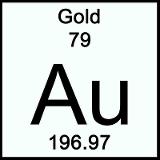
Which number is the atomic mass?
a)
79
b)
196.97
18.
Beryllium is in group number______.
a)
Group 2
b)
Group 3
c)
Group 4
d)
Group 7
19.
The period for Bromine is ___________.
a)
3
b)
2
c)
4
20.
Which of the following is not a property of metals?
a)
brittle
b)
malleable
c)
lustrous
d)
conductive
21.
Can an element be broken down into a simpler substance 
a)
yes 
b)
No
22.
Within a column the masses of the elements ___________ from top to bottom
a)
increases
b)
decreases
c)
there is no change
d)
is completely random
23.
_________ are elements that are good conductors of electric current and heat
a)
noble gasses
b)
metalloids
c)
nonmetals
d)
metals
24.
____________ are elements that form a bridge between the elements on the left and right sides of the periodic table.
a)
metals
b)
nonmetals
c)
metalloids
d)
transition metals.
25.
Elements that are poor conductors of heat and electricity. Many are gasses at room temperature
a)
metals
b)
nonmetals
c)
metalloids
d)
transition metals
26.
Elements with properties that fall between those of metals and nonmetals
a)
transition metals
b)
noble gasses
c)
metalloids
d)
all of the above
27.
which family of metals is most reactive?
a)
transition metals
b)
boron family 
c)
alkali family 
d)
noble gases
28.

A mystery element is very brittle, is not shiny, and does not conduct electricity. It is also more likely to share electrons equally when forming a compound. Based on the evidence, which group does the mystery element belong?

a)

1

b)

2

c)

3

d)

4

29.

Fluorine, chlorine, bromine, iodine, and astatine make up Group 17, the halogens. Why are these elements grouped together?

A. They all have the same atomic number.

B. They are all nonreactive gases with similar physical properties.

C. Their atoms all have eight electrons in their outer energy levels.

D. They are all very reactive nonmetals with similar chemical properties.

a)

They all have the same atomic number.

b)

They are all nonreactive gases with similar physical properties.

c)

Their atoms all have eight electrons in their outer energy levels.

d)

They are all very reactive nonmetals with similar chemical properties.

30.

A(n) _____________ cannot be broken down into any other substances.

a)

mixture

b)

molecule

c)

element

d)

compound

31.

What determine the order of elements on today's periodic table?

a)

Increasing atomic mass

b)

decreasing atomic mass

c)

increasing atomic number

d)

decreasing atomic number

32.

Look at the periodic table. Which of the following lists of elements form a group on the periodic table?

a)

Li, Be, B, C, N, O, F, and Ne

b)

He, Ne, Ar, Kr, Xe, and Rn

c)

B, Si, As, Te, and At

d)

Sc, Ti, V, Cr, Mn, Fe, Co, Cu, Ni, and Zn

33.

What are two properties that make a metal a good choice to use as wire in electronics?

a)

conductivity, malleability

b)

ductility, conductivity

c)

luster, malleability

d)

malleability, high density

34.

Where are most metals on the periodic table?

a)

on the left side only

b)

on the right side only

c)

in the middle only

d)

on the left side and in the middle

35.

Look at the periodic table and determine which element is a metalloid.

a)

carbon

b)

silicon

c)

oxygen

d)

aluminum

36.

Where are most of the nonmetals located on the periodic table?

a)

in the bottom row

b)

on the left side and in the middle

c)

on the right side

d)

in the top row

37.

Which element is most likely to react with potassium?

a)

bromine

b)

calcium

c)

nickel

d)

sodium

38.

Which group of elements can act as semiconductors?

a)

halogens

b)

metalloids

c)

metals

d)

noble gases

39.

Which elements have high densities, strength, and resistance to corrosion?

a)

alkali metals

b)

alkaline earth metals

c)

metalloids

d)

transition metals

40.

What is the name of the group of elements in this group?

a)

halogens

b)

metalloids

c)

metals

d)

noble gases

41.

What is a property of the elements in the group pictured? t

a)

They are conductors.

b)

They are semiconductors.

c)

They are nonreactive with other elements.

d)

They react easily with other elements.

42.

What is one similarity among elements in a group?

a)

atomic mass

b)

atomic weight

c)

chemical properties

d)

practical uses

43.

Which is a chemical property of transition elements?

a)

brightly colored

b)

great ductility

c)

denser than alkali metals

d)

reacts little with oxygen

44.

The seven horizontal rows on the periodic table. It indicates the number of electron "shells" or orbitals surrounding the nucleus.

a)

Groups

b)

Periods

c)

Families

d)

Neutrons

45.

The number of electron shells an atom has is equal to the element's:

a)

Period number

b)

Group number

c)

Valence number

d)

Atomic number

46.

The number of valence electrons an element has is equal to its:

a)

Period number

b)

Group number

c)

Valence number

d)

Atomic number

47.

What are the elements in group 1 (the far left) of the periodic table called?

a)

Alkali metals

b)

Alkaline earth metals

c)

Halogens

d)

Noble gases

48.

What are the elements in group 2 of the periodic table called?

a)

Alkali metals

b)

Alkaline earth metals

c)

Halogens

d)

Noble gases

49.

What are the elements in group 18 (the far right) of the periodic table called?

a)

Alkali metals

b)

Alkaline earth metals

c)

Halogens

d)

Noble gases

50.

What are the elements in group 17 of the periodic table called?

a)

Alkali metals

b)

Alkaline earth metals

c)

Halogens

d)

Noble gases

51.

What are the elements in groups 3-12 of the periodic table called?

a)

Transition metals

b)

Non-metals

c)

Metalloids

d)

Metals

52.
Which of the following will have a lower ionization energy than Scandium (Sc)?
a)
Helium (He)
b)
Titanium (Ti)
c)
Calcium (Ca)
d)
Magnesium (Mg)
53.
Which atom has the largest atomic radius?
a)
potassium
b)
rubidium 
c)
francium
d)
cesium
54.
As you move down the periodic table atoms get bigger.  This is because ____________.
a)
The atoms have more mass.
b)
The atoms have more protons.
c)
The atoms have more energy levels
d)
The atoms have more nuetrons
55.
As you move across the periodic table atoms tend to get smaller because, ______________.
a)
the atoms have more mass.
b)
the atoms have less mass
c)
the atoms have more protons.
d)
the atoms have less electrons.
56.
Atoms that have a high electronegativity, _______________.
a)
give up their electrons more easily.
b)
hold on to their electrons more tightly.
c)
have more electron shells.
57.
Electronegativity is...
a)
how good an atom is at attracting electrons
b)
the ability of an atom to lose electrons
c)
the energy required to remove an electron from a specific atom
d)
how easy it is to make friends. 
58.
Ionization energy is...
a)
the energy required to add an electron to a specific atom
b)
how much energy it takes to remove an electron from an atom
c)
the energy required to shield the outer electrons from the nucleus
d)
a measure of the ability of an atom to attract electrons
59.
The element with the largest electronegativity in the halogens is - 
a)
At
b)
F
c)
Cl
d)
Br
60.
The atom with the largest atomic radius in Group 18 is - 
a)
Ar
b)
He
c)
Kr
d)
Rn
61.
The element with the lowest electronegativity in Period 3 is - 
a)
Na
b)
Cl
c)
Ar
d)
Mg
62.
Which periodic group has the smallest atomic radius?
a)
Alkali metals
b)
Halogens
c)
Noble Gases
d)
Transition metals
63.
Atomic radius generally increases as we move __________.  
a)
down a group and from right to left across a period 
b)
up a group and from left to right across a period 
c)
down a group and from left to right across a period 
d)
up a group and from right to left across a period 
64.
Electronegativity __________ from left to right within a period and __________ from top to bottom within a group.
a)
decreases, increases 
b)
increases, increases
c)
increases, decreases 
d)
stays the same, increases
65.
Which of the following pairs of elements have similar properties
a)
Barium and Calcium
b)
Sodium and Magnesium
c)
Nickel and Copper
d)
Lithium and Helium 
66.
Which of the following is true for Calcium
a)
Metal and Low electronegativity value 
b)
Metal and has 2 valence electrons
c)
Metal, Low electronegativity, has 2 valence electrons
d)
Metal and Semi conductor 
67.
The tendency of an atom to attract electrons and acquire a negative charge
a)
electronegativity
b)
charge
c)
bonding ability
d)
electron configuration
68.
Which is larger:
P or P-3
a)
P
b)
P-3
c)
both are same size
69.
Looking at atoms in the same group/family, what factor affects Coulombic attraction?
a)
number of protons
b)
distance from the nucleus
70.
Looking at atoms in the same valence energy level, what factor affects Coulombic attraction?
a)
number of protons
b)
distance from the nucleus
71.
As the Coulombic attraction increases the atomic radius: increases or decreases?
a)
increases
b)
decreases
72.
Which element has the smaller atomic radius: potassium (K) or bromine (Br)?
a)
potassium (K)
b)
bromine (Br)
73.
As the Coulombic attraction in an atom increases, the energy needed to remove an electron: increases or decreases?
a)
increases
b)
decreases
74.
As the Coulombic attraction of an atom increases, the electronegativity of the atom: increases or decreases?
a)
increases 
b)
decreases
75.
Which of the following will have a higher electronegativity than arsenic (As)?
a)
Carbon (C)
b)
Neon (Ne)
c)
Antimony (Sb)
d)
Germanium (Ge)
76.
Which atom has the largest atomic radius?
a)
potassium
b)
rubidium 
c)
francium
d)
cesium
77.
As you move across the periodic table atoms tend to get smaller because, ______________.
a)
the atoms have more mass.
b)
the atoms have less mass
c)
the atoms have more protons.
d)
the atoms have less electrons.
78.
Which statement correctly and completely identifies a trend?
a)
Atomic radius decreases across a period and increases down a group.
b)
Electronegativity decreases across a period and decreases down a group.
c)
Ionization energy increases across a period and increases down a group.
d)
Ionic radius increases across a period and increases down a group.
79.
Which periodic group has the smallest atomic radius?
a)
Alkali metals
b)
Halogens
c)
Noble Gases
d)
Transition metals
80.
Atomic radius generally increases as we move __________.  
a)
down a group and from right to left across a period 
b)
up a group and from left to right across a period 
c)
down a group and from left to right across a period 
d)
up a group and from right to left across a period 
81.

Which alkali metal is the least reactive?

a)

Li

b)

Na

c)

H

d)

Fr

82.
As you move across the periodic table from left to right, the atomic radius decreases.  This is because - 
a)
the number of protons increases, so attraction to electrons increases
b)
the number of energy levels increases
c)
the number of electrons increases
d)
the atomic mass increases
83.
Electronegativity __________ from left to right within a period and __________ from top to bottom within a group.
a)
decreases, increases 
b)
increases, increases
c)
increases, decreases 
d)
stays the same, increases
84.
Name group 2 on the periodic table.
a)
alkali metals
b)
alkaline earth metals
c)
noble gases
d)
transition metals
85.
The Periodic Table of the Elements is useful for revealing patterns and trends in the elements. Which statement accurately describes a pattern in the size of atomic radii in the Periodic Table of the Elements?
a)
Atomic radii decrease from left to right across a period and decrease from top to bottom in a group.
b)
Atomic radii increase from left to right across a period and increase from top to bottom in a group.
c)
Atomic radii decrease from left to right across a period and increase from top to bottom in a group.
d)
Atomic radii increase from left to right across a period and decrease from top to bottom in a group.
86.
The symbols W, X, Y, and Z represent four elements shown on the outline of a periodic table.
Which element has the highest electronegativity?

a)
W
b)
X
c)
Y
d)
Z
87.
The ionization potential of an element is the amount of energy required to remove an electron from an isolated atom or molecule. According to the periodic table, which of the following indicates the correct decreasing order of ionization energy?
a)
Li > Na > K > Cs
b)
Na > K > Li > Cs
c)
Li > K > Na > Cs 
d)
Cs > K > Na > Li 
88.
Metals have the largest - 
a)
atomic radius and electronegativity
b)
electronegativity and ionization energy
c)
atomic radius only
d)
ionization energy and atomic radius
89.
As you move down the periodic table atoms get bigger.  This is because ____________.
a)
The atoms have more mass.
b)
The atoms have more protons.
c)
The atoms have more energy levels
d)
The atoms have more neutrons
90.
Atoms that have a high electronegativity, _______________.
a)
give up their electrons more easily.
b)
hold on to their electrons more tightly.
c)
have more electron shells.
91.

Which has the highest ionization energy?

a)

Ca

b)

As

c)

Br

92.

Which has the smaller ionization energy?

a)

P

b)

Mg

93.

Which element would want to keep its electrons the most?

a)

O

b)

S

c)

Al

d)

Rb

94.

Which would be the easiest to take an electron from?

a)

He

b)

F

c)

Ba

d)

Fr

95.
What's the difference between electronegativity and electron affinity?
a)
Electronegativity is a measured energy value and electron affinity is a man-made number.
b)
Electron affinity is a measured energy value and electronegativity is a man-made number.
96.
Define electron affinity.
a)
The energy it takes to add an electron to an atom.
b)
The energy it takes to remove an electron from an atom.
97.
The electron affinity of a metal is positive (endothermic).
a)
True
b)
False
98.
The electron affinity of a nonmetal is negative (exothermic).
a)
True
b)
False
99.
Elements closer to the noble gases have stronger attraction for electrons.
a)
True
b)
False
100.
Put these in order of increasing electronegativity:
Se, S, and O
a)
Se < S < O
b)
Se < O < S
c)
O < S < Se
d)
S < Se < O
101.
Chlorine and Fluorine are both very electronegative, as they are both missing a single electron from their valence energy level.  Why is Fluorine more electronegative than Chlorine? 
a)
Fluorine has less energy levels.
b)
Chlorine has more electrons in its outer shell
c)
Fluorine has more protons.
d)
None of these
102.
What elements have zero electronegativity?
a)
metals
b)
nonmetals
c)
metalloids
d)
noble gases
103.
A metal  which occur in free state
 
a)
gold 
b)
zinc 
c)
lead 
d)
calcium
104.
The least reactive in oxygen in the list is 
a)
iron
b)
zinc
c)
copper
d)
lead
105.
Which one of the following metals reacts most vigorously with cold water?
a)
Sodium
b)
Magnesium
c)
Copper
d)
Zinc
106.

What type of bond is frequently formed from reactions between metals and nonmetals?

a)

covalent bonds

b)

hydrogen bonds

c)

ionic bonds

d)

metallic bonds

107.

Select the phrase that identifies where METALS are found on the periodic table

a)

on the zig-zag line

b)

on the right of the zig-zag line

c)

on the left of the zig-zag line

d)

on the left and right sides of the zig-zag line

108.

Phosphorus is very reactive

a)

Metal

b)

Non metal

c)

Metalloid

d)

None of the above

109.

Which of the following represent the correct order of decreasing reactivity?

a)

Mg > Al > Zn > Fe

b)

Mg > Zn > Al > Fe

c)

Al > Zn > Fe > Mg

d)

Mg > Fe > Zn > Al

110.
The family in the periodic table that contains the most reactive metals is the_______
a)
Alkaline Earth Metals
b)
Transition Metals 
c)
Alkali Metals
d)
Other Metals