
 Worksheets
States of Matter
Total questions: 107
Worksheet time: 3620secs
Which of the following are states of matter?
Gas
Solid
Liquid
Plasma
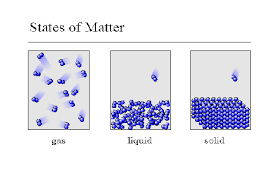
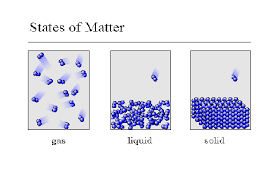
___________ is anything that has mass and takes up space.
Molecules
Matter
Volume
________ is the amount of space an object takes up.
Mass
Matter
Volume
Which state of matter does not have a definite shape but does have a definite volume?
Solid
Liquid
Gas
What is the process called when a gas turns into a liquid?
Condensation
Melting
Freezing
Evaporation
What is the process called when a solid changes to a liquid?
Freezing
Evaporation
Melting
Condensation
What is the process called when a liquid changes into a gas?
Freezing
Evaporation
Melting
Condensation
You stir sugar into a glass of warm water. What happens to the sugar?
A.
All the sugar sinks to the bottom of the glass.
B.
It freezes in the water.
C.
It dissolves in the water.
How does an ice cube change when placed in the sunlight?
A.
It freezes.
B.
It melts.
C.
It dissolves.
Which will become a solid in a freezer?
A.
A metal nail
B.
Juice
C.
a plate
John stirs sand into a glass of warm water. He knows the sand is NOT dissolving in the water. How does he know?
A.
All the sand sinks to the bottom of the glass.
B.
The sand spreads out and mixes completely with the water.
C.
The sand melts in the water
How does matter change when it burns?
A.
It turns from a solid to a liquid.
B.
It becomes a new type of matter.
C.
It mixes with a liquid.
Which word means to change from a solid to a liquid?
freeze
burn
melt
dissolve
Which word means to completely mix a solid with a liquid?
freeze
burning
melt
dissolve
Which word means the changing of a substance into ashes and smoke?
freeze
burning
melt
dissolve
Which word means to change from a liquid to a solid?
freeze
burning
melt
dissolve
Which of these are ways to change matter? Choose all that apply
Making it hotter
Making it colder
Matter is
Anything that has volume
Anything that has mass
Anything that has mass and volume

Evaporation is the change of state of a
Gas to solid
Liquid to Gas
Solid to liquid
Liquid to Solid

What is the state change that occurs, when ice turns into a liquid?
Boiling
Condensation
Melting
evaporation

Condensation is when
Liquid turns to a solid
Gas turns to liquid
Solid turns to liquid
Liquid turns to a gas
Solid particles are
Far apart
Close, but able to move
Closest together
Fast moving

This image is an example of what particle
Solid
Liquid
Gas
What particles move the fastest?
Solid
Liquid
Gas
What is the state of matter of ice
Gas
Liquid
Solid
What is an example of a Liquid
A straw
Carbon dioxide
Oil
Steam
What is the name of the change when a liquid becomes a solid?
Precipitation
Freezing
boiling
evaporation
Why do solids have a fixed shaped?
The particles vibrate
The particles are fixed in place
The particles are closely packed together
The particles are free moving
True or false? The particles of gas are far apart
False
True
When a gas reaches its condensation point what does it become?
Solid
Gas
Liquid
When a liquid reaches its freezing point what does it become?
Liquid
Gas
Solid
Plasma
______ is anything that takes up space and has weight.
Mass
Matter
Machine
Music
Which form os matter keeps its shape?
Solid
Liquid
Gas
Which form of matter takes the shape of its container?
Solid
Liquid
Gas
Which form of matter fills its container?
Solid
Liquid
Gas
Which is not matter?
desk
water
oxygen
dreams
Which is an example of a solid?
juice
pencil
air in a balloon
Which is an example of a liquid?
table
milk
helium
Which is an example of a gas?
car
water
carbon dioxide
When some solids are heated, such as ice, it becomes what kind of matter?
solid
liquid
gas
Why is a carrot considered a solid?
because it is orange
because it keeps its shape
because we can eat it
Volume is the amount of space an object takes.
True
False
All matter is made up of atoms. In which form of matter are the atoms packed tightly together?
solid
liquid
gas
In which form of matter do the atoms have more movement?
solid
liquid
gas
In which form of matter do the atoms freely move around?
solid
liquid
gas
What are the 3 states of matter?
Solids, Liquids and gas
Solids, paper and atoms
Liquids, solids, hot
hot, cold, wet

What state of matter is taken place here?
Solid to gas
Solid to liquid
Gas to solid
liquid to liquid
Liquids can change to a solid?
True
False
Solids can change to a liquid?
False
True

What is the characteristics of this object?
cold, liquid
gas, liquid
cold and solid
hot and cold
Everything around us is made of matter, from the air we breathe, to the water we drink. Even our bodies.
True
False
What determines the states of matter a material is in?
solid
liquid
temperature
gas
Liquid has a fixed shape
True
False
Solid has a fixed shape
True
False
All of the following are characteristics of a solid except
grab it
hold it
drink it
poke it
Water is in the gas phase is called steam
True
False
Your eyes can see water vapor and your nose can detect water vapor?
False
True
A sponge is a good model of air?
False
True
Compression means something is getting bigger and air is taken in
False
True
Liquids like candle wax have to be frozen in order to change to a solid
False
True
Select the true statement.
Solids are measured only in volume.
Gases hold their shape.
Solids take the shape of their containers.
Liquids take the shape of their containers.
In which of the following states of matter does a substance expand to fill the entire volume of its container?
Liquid only.
Liquid and gas only.
Solid, liquid, and gas.
Gas only.
The material shown is not in a container, but its length, width, and depth can be measured. What state of matter is the substance in?
magnetic
gas
liquid
solid
Which of the following phases of water has neither a definite shape nor a constant
volume?
gas
solid
liquid
none
Jacobi used an air pump to inflate a soccer ball.
As Jacobi pumped air into the soccer ball, the ball expanded.
The expansion of the ball when air was added shows that ________.
adding air to the ball made the ball weigh less.
air is not matter, so it has no small particles.
air is a type of matter.
air can change from a gas to a solid.
How do water particles behave when they are in the gas state?
The molecules do not move.
The molecules can move short distances and vibrate slightly.
The molecules are packed together in patterns.
The molecules move freely and rapidly in all directions.

Jose was doing an investigation on volume. He had four different objects, and he was supposed to compare their volumes by placing each one in a beaker of water and measuring how much the water level rose when the object was placed in the water. His results are shown below.
Which object has the smallest volume?
pair of dice
rubber ball
toy truck
lip balm

Use the table to answer the question.
Sample Z could be _______.
egg shell
rock
water
glass
Derek wanted to find the volume of one of his toy army men. He filled a graduated
cylinder with 50 mL of water, then put the army man in the graduated cylinder.
Afterward, the graduated cylinder read 78mL. What is the volume of the army man?
28mL
35mL
78mL
20mL
What kind of matter expands to fill the
container it is in?
liquid
powder
solid
gas

Matter is made of tiny particles called atoms and molecules.
True
False

Which of the following statements about the particle theory of matter is incorrect?
All matter is made up of tiny particles.
All substances are made of the same particles.
The particles can move when they are heated.
Particles are held together by strong electrical forces.

State of matter that takes the shape of it's container and has a definite volume.
Solid state
Liquid state
Gas state
Plasma state

State of matter that can fill containers with no fixed shape or volume.
Solid state
Liquid state
Gas state
Plasma state

State of matter in which materials have a definite shape and volume.
Solid state
Liquid state
Gas state
Plasma state
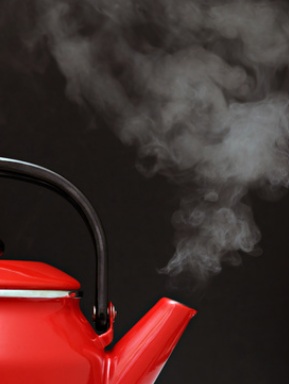
What change of state is taking place in this photograph?
Condensation
Freezing
Vaporization
Melting

What change of state is taking place in this photograph?
Condensation
Freezing
Vaporization
Melting

The diagram shows the changes in state of water (H2O). What is the process Z called?
Condensation
Freezing
Vaporization
Melting

Which of the following is a property of gases?
They have a definite volume.
They are not compressible.
They have no definite shape.
They have no ability to flow.

The diagram shows the way the particles of a solid occupy space. Select the property of a solid that is consistent with this micro-view.
No define shape
Cannot be compressed
No definite volume

When a beaker of water is heated its volume increases a little. What is happening to the particles in the liquid?
They are getting bigger.
They are moving slower.
They are moving faster.
They are getting smaller.

When you place a bottle of water in the freezer its volume increases. What is happening to the particles in the liquid?
They are getting bigger.
They are moving slower.
They are moving faster.
They are getting smaller.

Which is NOT a property of a solid?
They do not flow.
Definite volume.
No definite shape.
They are incompressible.

Which state of matter is represented in the following diagram?
Liquid
Liquid and gas
Gas
Solid

Which of the following states is correct?
Gases cannot be compressed.
Solids are easily compressed.
Gases are easier to compress than solids.
Liquids cannot be compressed or expanded.

Which change of state occurs when particles in a solid begin to move slowly past each other?
Melting
Freezing
Condensing
Vaporizing


This state of matter expands to fill its container.
Solid
Liquid
Gas
Plasma
This state of matter has a firm, unchanging physical structure.
Solid
Liquid
Gas
Plasma
This state of matter has a constant volume, but fits the space of the container holding it.
Solid
Liquid
Gas
Plasma
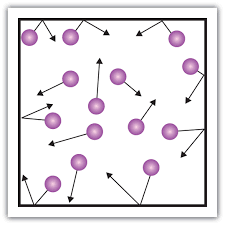
A gas typically consists of:
low energy particles that experience high attractive forces between them.
low energy particles that experience no attractive forces between them.
high energy particles that experience high attractive forces between them.
high energy particles that experience little attractive force between them
Which process could cause a material to change state from gas to liquid?
Adding heat
Adding energy
Removing particles
Removing energy
If I add heat to a solid, how will the motion of the particles be affected?
They will move slower
They will stop moving
They will move faster
They will move to a different container
Which image shows particles in a liquid?


Which image shows particles in a solid?
To change water from a solid to a liquid to a gas, you must...
add heat
remove heat

