
 Worksheets
BIO SPRING FINAL REVIEW DAY 1 2022/23
Total questions: 108
Worksheet time: 2hrs 53mins

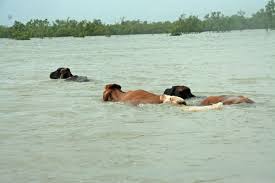
Natural disasters can be considered limiting factors.
true: density independent limiting factors
false; natural disasters are not limiting factors
true: density dependent limiting factors
false: because Mrs. Schaffer said
A lion and a cheetah attempt to occupy the same niche. The more aggressive lion survives; the cheetah does not.
Density-Dependent: Competition
Density-Independent: Competition
Density-Dependent: Predator-Prey
Density-Independent: Predator-Prey
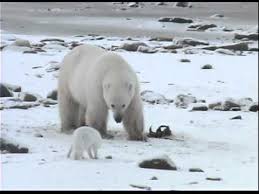
Two arctic fox are fighting with a polar bear for a sea lion carcass. One fox distracts the bear while the other eats. What type of limiting factor is the polar bear?
Predator-Prey Relationships
Competition
Herbivory Effect
Weather

A group of elephants gets stuck in mud at the edge of the river from a recent mud slide. A lion waits for an elephant to get tired before it attacks. What is the limiting factor to the elephant population?
Predator-Prey Relationships
Natural Disaster
Herbivory Effect
Competition

A duck population is breeding at exponential rates. The snakes that hunted them have been collected by fur collectors. They make boots from python snake skin. What is the limiting factor to the snakes?
Ducks
Predator-Prey
Exponential Growth
Humans

A duck population normally begin migrating south right after the last rain of the late summer season. Suddenly, they’re migrating much earlier. The climate has been changing far too often which is altering the effects of their magnetite.
Predator-Prey Relationships
Weather
Herbivory Effect
Competition

Small krill sweep the river bottom rocks for debris and muck. Next, the krill is suddenly swooped up by a small fish. The small fish then gets eaten by a salmon. A week after the bear eats the salmon, it begins to have symptoms. Over time the bear weakens from a botfly infection. What is the limiting factor to all the consumers?
Predator-Prey Relationships
Parasites
Disease
Competition
What is a limiting factor?
Factors that always increase a population
Factors that always decrease a population
Resources that are unlimited
Factors/resources that limit how many organisms can live in an area at the same time
If there was a wildfire in the forest that destroyed the plant life, what would happen to the herbivore population?
Herbivores would decrease due to a lack of food
Herbivores would increase due to an increase of food
Herbivores would not be affected
Herbivores would decrease due to an increase in predators
Choose the 4 limiting factors.
Food
Water
Time
Space
Shelter

What is the overall trend of this population graph?
Increasing
Decreasing
Constant
No trend
Zone where small numbers can survive these difficult conditions
range of tolerance
zone of intolerance
optimal range
zone of physiological stress
Zone where a stable healthy population survives
zone of intolerance
optimal range
zone of physiological stress
limiting factors
Zone where organisms cannot survive
zone of intolorance
range of tolerance
optimal range
zone of physiological stress
There must be a certain amount of abiotic factors in an ecosystem to allow organisms to survive. Factors that are too low or too high cause the organisms to die
range of tolerance
limiting factors
zone of intolerance
zone of physiological stress

What is ecological succession?
A series of predictable changes that occur in a community over time.
It is the number of fish increasing.
It is the seasons of the year.
It is that rain follows cloud formation.
Primary succession begins where there was no ecosystem and no soil such as
a severe storm
a volcanic eruption
an old farm is abandoned
a forest fire
So, how does an ecosystem start if there is no soil?
Moss and lichen break down rock and lava and produce soil.
Moss and lichen are air borne and they move by the wind to start in a secondary succession environment.
Moss and lichen are simple living organism that can start growing almost anywhere.
All answers
Secondary succession (thnk soil) forms after a catastrophic event like a forest fire and has a ___________ growth rate than primary succession because soil already exists.
extremely slower
slower
faster


What term best relates to equilibrium?
pioneer species
primary succession
secondary succession
climax community

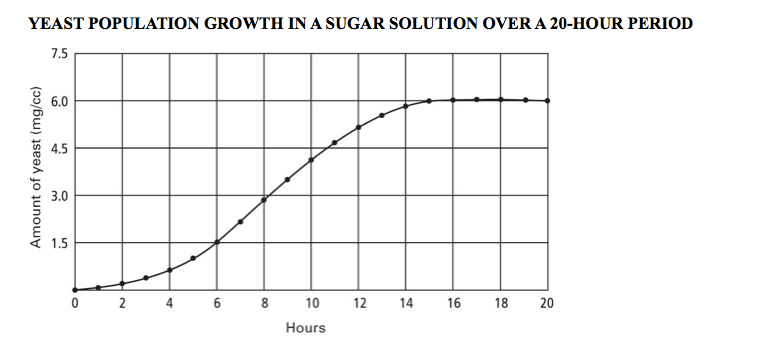
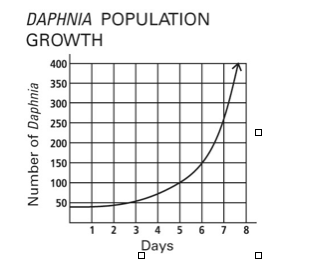

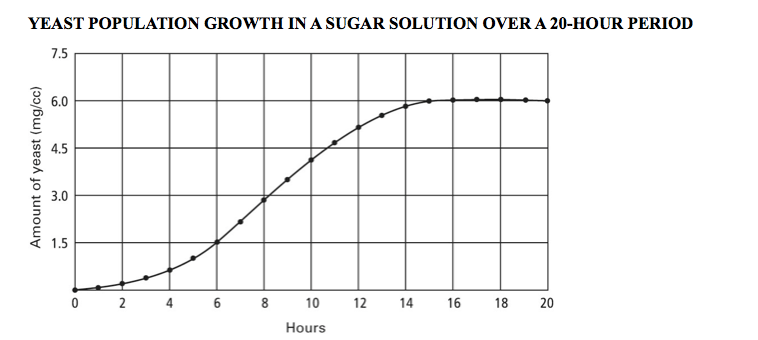
Which of the following is a density dependent limiting factor?
pollution
food
climate change
hurricane

The graph below represents the growth of a population of flies in a car? Which of the following statements best describes the graph?
The fly population did not change.
The fly population decreased, then increased.
The fly population grew following the logistic growth model.
The fly population grew following the exponential growth model.
Which of the following could be a density-independent limiting factor in the desert?
number of prey
food supply
parasitism
rainfall

Which point in this graph represents exponential growth?
Point E
Point A
Point B
Point C

The graph represents _____ of a population.
logistic growth model
exponential growth model

Which point on the graph best represents the carrying capacity?
Letter A
Letter C
Letter E
Letter D

In which month(s) did the Cottontail Rabbits reach their carrying capacity?
January and February
March and May
April and January
April and May
Owls and snakes eat mice and other organisms. What would happen to the mice population if the owl population decreased?
The population would decrease, as the loss of owls as part of their diet is a limiting factor.
The population would decrease, as shelters created by owl nests is a limiting factor.
The population would increase, as competition for food is a limiting factor.
The population would increase, as predation by owls is a limiting factor.

This graph shows ....
When one population increases, the other decreases.
When one population decreases, the other increases.
When one population increases, the other increases instantly.
When one population increases, it causes the other to increases shortly after.
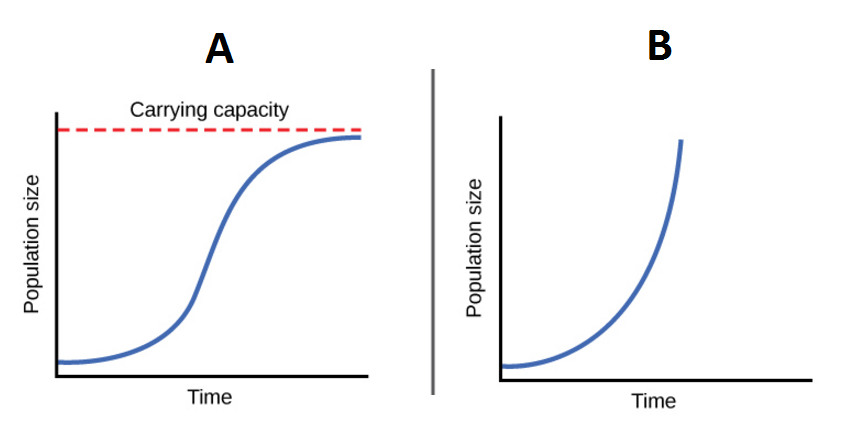
What type of growth model is shown in image A?
Exponential
Logistic
What type of growth model is shown in image B?
Exponential
Logistic

Health and disease can determine a population's
life or death
hopes and dreams
happiness or discontent
religious beliefs or politics
If population and the demand for natural resources continue to grow at the present rate, the human population will be too large for Earth to support.
true
false
What limits Population Growth?
birth rates increasing
resources being used up
natural selection taking place
none of the above

Which country will have the most rapid population growth?
Sweeden
United States
Mexico
None
As resources become less available the growth of a population
slows or stops
decreases or increases
up or down
in or out

What is a condition that halts population growth?
limiting factors
renewable resources
climate
conservation

What could cause exponential growth in population in a community?
people lifting heavy stuff
a community leaving
someone spreading a plague
people moving to the community/unlimited resources

What is a population ?
Disturbance has removed vegetation but left soil intact.
The natural birth, growth and development of ecosystem.
All organisms of a species that live in the same area.
A community of interacting organisms and their environment.
Three factors can affect population size
births, deaths,leaves or enters population
deaths, birth, buildings
photosynthesis, weather, deaths
houses, weather, heath


The size of the human population began to increase exponentially after the
bubonic plague
development of plowing and irrigation
Industrial Revolution
development of the first cities.

Name the type of pyramid in the picture.
slow growth
rapid growth
zero growth
negative growth

According to Figure 5–4, which year had the highest number of live births per thousand of population?
1900
1990
1910
1940

In which year was the ratio of births to deaths at its lowest point, according to Figure 5–4?
1900
1990
1910
1940

In general, what is happening with population growth?
The population is decreasing.
The population is increasing.
The population is stable.
There is no change.

Using Figure 5–6, describe the type of growth Mexico is experiencing.
Mexico is experiencing a rapid growth rate because there are more children than adults.
Mexico is experiencing no growth because people are living longer.
Mexico is experiencing slowed growth because there are fewer adults.
Mexico is experiencing a rapid decline because there are more children than adults.

What evidence do you see in Figure 5–6 that the United States is gradually entering the last stage of demographic transition?
The age structure for the US has fewer children in the younger age categories
The age structure for the US has fewer adults in the middle age categories
The age structure for the US has greater numbers in the 15-19 age category
The age structure for the US shows females living longer than males.

Which correctly describes the term demographic transition?
The transition from low birth rates and death rates to high birth rates and death rates as a country develops.
The transition from high birth rates and death rates to low birth rates and death rates as a country develops.
The transition from high birth rates to low death rates as a country develops.
The transition from low birth rates to high death rates as a country develops.

According to this graph, Which stage of the demographic transition has the highest level of population growth?
pre-industrial
transitional
industrial
post-industrial

Fruit fly body cells have 8 chromosomes. After mitosis, you would expect a resulting fruit fly daughter cell to have ...
16 chromosomes.
46 chromosomes.
8 chromosomes.
4 chromosomes.


What are the "X" shaped things in the drawing.
PMATs
Chromosomes
Ribosomes
Telophase
PMAT helps us remember the correct order of the phases of Mitosis. Which of the following has the phases of Mitosis in the correct Order
Interphase, Mitosis, Cytokinesis
Prophase, Metaphase, Anaphase, Prophase
Anaphase, Telophase, Prophase, Telophase
Prophase, Metaphase, Anaphase, Telophase
In which phase of Mitosis do the Chromosomes pull Apart
Metaphase
Prophase
Anaphase
Telophase
What is the purpose of Mitosis?
Growth of an organism and Repair of damaged tissue
To help the body get rid of extra cells
To increase the amount of classwork you have to do
To get rid of the nucleus
What is the correct order of the cell cycle?
Interphase, Cytokinesis, Mitosis
Interphase, Mitosis, Cytokinesis
Cytokinesis, Mitosis, Interphase
Anaphase, Telophase, Cytokinesis


CROSSING OVER INCREASES
LIFE SPAN
GENETIC VARIATION
THE NUMBER OF OFF-SPRING
ALL ARE TRUE

CROSSING OVER TAKES PLACE DURING
PROPHASE II
PROPHASE I
INTERPHASE
METAPHASE I
MEIOSIS
REDUCES THE NUMBER OF CHROMOSOMES BY ONE HALF
PRODUCES UNIQUE SEX CELLS-1N
ALLOWS TRAITS TO BE PASSED TO OFFSPRING
ALL ARE TRUE
INCREASE GENETIC VARIATION
MEIOSIS PRODUCES 4 CELLS, THEY ARE
N
2N
3N

