
 Worksheets
Minerals & Rocks Review Game
Total questions: 105
Worksheet time: 2hrs 46mins
Name
Class
Date
1.

This rock formed when bits of other rocks became pressed into a solid. What type of rock is it?
a)
Sedimentary Rock
b)
Metamorphic Rock
c)
Igneous Rock
2.

This rock was formed when magma cooled very slowly inside the Earth. What specific type of rock is it?
a)
Intrusive Igneous Rock
b)
Extrusive Igneous Rock
c)
Foliated Metamorphic Rock
d)
Clastic Sedimentary Rock
3.

This rock formed when lava cooled very quickly on Earth's surface. What specific type of rock is it?
a)
Extrusive Igneous Rock
b)
Intrusive Igneous Rock
c)
Non-Foliated Metamorphic Rock
d)
Biochemical Sedimentary Rock
4.
Two ways to describe types of igneous rocks are _____
a)
Extrusive and Intrusive
b)
Foliated and Non-Foliated
c)
Clastic and Biochemical
d)
Black and Gray
14.
When you are describing the sizes of the mineral grains in a rock, you are detailing the rock's _____
a)
Texture
b)
Composition
c)
Sedimentation
d)
Igneous-ness
6.
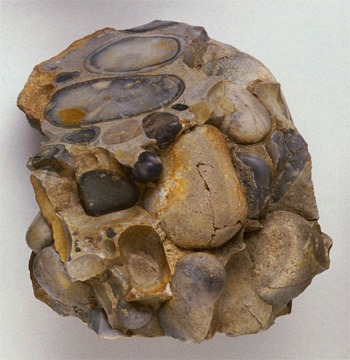
This rock was formed by smaller pieces of rock that settled at the bottom of a lake millions of years ago. What type of rock is this?
a)
Sedimentary
b)
Igneous
c)
Metamorphic
7.
What process is used to form sedimentary rocks?
a)
Lava cools and hardens to form a rock.
b)
Bits of sand and gravel form layers that turn into rock from pressure.
c)
Extreme heat and pressure from inside the Earth turn rocks into new rocks.
d)
Magma trapped under the Earth's surface cools and solidifies.
8.
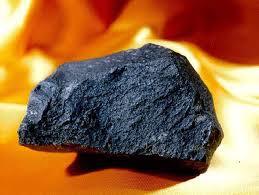
This rock was found near the mouth of a volcano. What type of rock is this?
a)
Sedimentary
b)
Igneous
c)
Metamorphic
9.
What is sedimentary?
a)
Formed by heat and pressure
b)
Formed by heat and cooling
c)
Layered rock formed by compaction
d)
All of the above
10.

When sediments are pressed together tightly, this is called ____________.
a)
Compaction
b)
Cementation
c)
Weathering
d)
Erosion
11.

The process when rocks break into smaller pieces due to exposure to natural elements is called
a)
erosion
b)
weathering
c)
sediments
12.
The movement of weathered material (sediment) is called?
a)
weathering
b)
erosion
c)
deposition
13.
When you watch a volcano erupt molten rock, you are seeing _____
a)
Lava
b)
Magma
c)
Mineral Crystals
d)
Igneous Rocks
14.
When you are describing the sizes of the mineral grains in a rock, you are detailing the rock's _____
a)
Texture
b)
Composition
c)
Sedimentation
d)
Igneous-ness
15.
Sedimentary rock that is made of fragments of rocks cemented together by a mineral are called...
a)
chemical
b)
organic
c)
clastic
16.
Sedimentary rock made from fossils are called...
a)
organic
b)
chemical
c)
stratified
17.
This rock was formed when molten rock cooled into a solid. What type of rock is it?
a)
Igneous Rock
b)
Metamorphic Rock
c)
Sedimentary Rock
18.
What is deposition?
a)
Dropping off sediment
b)
Movement of sediment
c)
Breaking down of sediment
19.

Each rock type can follow only one pathway of the rock cycle.
a)
True
b)
False
20.
What has to increase for metamorphism to occur?
a)
weathering and erosion
b)
temperature and pressure
c)
melting and cooling
d)
compaction ad cementation
21.
When magma cools quickly, what kind of texture does rock have?
a)
coarse grained
b)
large grained
c)
medium grained
d)
fine grained
22.
What are the main categories of sedimentary rock?
a)
extrusive and intrusive
b)
clastic, chemical, & organic
c)
felsic and mafic
d)
foliated and non-foliated
23.
What do scientists call the rock that is formed when magma cools below the surface
a)
extrustive igneous rock
b)
intrustive igneous rock
c)
erupitve rock
d)
volcanic
24.
Besides clastic and chemical, what is the other kind of sedimentary rock?
a)
extrusive
b)
foliated
c)
organic
d)
intrusive
25.
What kind of metamorphic rock has its minerals grains arranged in planes or bands?
a)
extrustive
b)
foliated
c)
non-foliated
d)
intrusive
26.
naturally occurring solid mixture of one or more minerals and organic matter
a)
deposion
b)
erosion
c)
rock
d)
rock cycle
27.
process in which sediment is dropped and comes to rest
a)
deposition
b)
erosion
c)
rock
d)
rock cyle
28.
process by which new rock is made from old rock
a)
rock
b)
texture
c)
rock cycle
d)
composition
29.
the quality of a rock based on size and shape of their mineral grains
a)
rock
b)
texture
c)
rock cycle
d)
composition
30.
the chemical makeup of a rock
a)
rock
b)
texture
c)
rock cycle
d)
composition
31.
the chemical makeup of a rock
a)
rock
b)
texture
c)
rock cycle
d)
composition
32.
Metamorphic rock in which minerals are NOT arranged in bands
a)
stratification
b)
non-foliated
c)
extrusive igneous rock
d)
strata
33.
rock that cools at the Earth's surface
a)
non-foliated
b)
extrusive igneous rock
c)
strata
d)
intrusive
34.
Extreme Heat and Pressure creates a _________ rock.
a)
Igneous
b)
Metamorphic
c)
Sedimentary
d)
Mineral
35.
True or False: Once a rock is sedimentary, it cannot become an igneous rock.
a)
True
b)
False
36.
What rock type would be commonly found around volcanoes?
a)
Igneous
b)
Sedimentary
c)
Metamorphic
d)
None of the above
37.
When inside a volcano, the hot liquid that can cool to form rocks is called __________.
a)
lava
b)
magma
c)
extrusive
d)
liquid goo
38.

This rock was formed by lots of fossils that settled on top of each other over time. What type of rock is this?
a)
Sedimentary
b)
Igneous
c)
Metamorphic
39.
A mineral is a living object
a)
True
b)
False
40.
What is weathering?
a)
The breaking down of rocks
b)
The movement of broken down rocks
c)
The weather
41.

This rock started as lava that cooled and then was heated and put under pressure over time. What type of rock is this?
a)
Sedimentar
b)
Igneous
c)
Metamorphic
42.

This rock started as molten magma. What type of rock is this?
a)
Sedimentary
b)
Igneous
c)
Metamorphic
43.

This rock was molten magma that slowly cooled under the ground. What type of rock is this?
a)
Sedimentary
b)
Igneous
c)
Metamorphic
44.

This rock is made from tiny pieces of other rocks that settled to the bottom of a valley millions of years ago. What type of rock is this?
a)
Sedimentary
b)
Igneous
c)
Metamorphic
45.
The process by which water, wind, ice, and changes in temperature break down rock into fragments called sediments.
a)
Deposition
b)
Erosion
c)
Weathering
d)
Igneous Rock
46.
An igneous rock can become ______.
a)
metamorphic
b)
sedimentary
c)
igneous
d)
all of these
47.
The name rock is given when it is broken down into smaller pieces.
a)
texture
b)
weathering
c)
sediment
d)
erosion
48.
What does it mean for a rock to be extrusive?
a)
Have layers
b)
Have Rounded Edges
c)
Form from Lava
d)
Form By Sediment
49.
What does it mean for a rock to be intrusive?
a)
Made by lava
b)
Made by magma
c)
Made by erosion
d)
Made by heat and pressure
50.

Wind and water have eroded this rock to show the layers of sediment that were laid down millions of years ago. What type of rock is this?
a)
Sedimentary
b)
Igneous
c)
Metamorphic
51.
A natural mixture of minerals.
a)
erosion
b)
magma
c)
alloys
d)
rock
52.
What two processes make sediment?
a)
Weathering
b)
Erosion
c)
Weathering & Erosion
53.
The process by which igneous rocks are formed...
a)
heat and pressure
b)
melting and cooling
c)
erosion and deposition
54.
Rock that forms when pressure, temperature, or chemical processes change existing rock.
a)
Igneous Rock
b)
Sedimentary Rock
c)
Metamorphic Rock
d)
Rock Cycle
55.
Rock that forms sediment from older rocks get pressed and cemented together.
a)
Sedimentary Rock
b)
Metamorphic Rock
c)
Igneous Rock
56.
From your knowledge of Earth's crust, where would you most likely find igneous rocks like basalt?
a)
Within mountain ranges
b)
In my backyard
c)
On the ocean floor
d)
Sandy Beaches
57.
Fossils are often found in ____________ because it is formed from the remains of once living things.
a)
metamorphic
b)
magma
c)
igneous
d)
sedimentary
58.
Texture is determined by
a)
the chemicals in a rock
b)
the color of a rock
c)
the bumpiness of a rock
d)
the size and shape of the rock's mineral grains
59.
What type of texture does a SLOWLY cooling, intrusive igneous rock have?
a)
Foliated
b)
Nonfoliated
c)
Coarse grained
d)
Fine grained
60.
What
is the rock cycle?
a)
Cycle
of how rocks slowly change forms over times
b)
mixtures
of minerals, volcanic glass, organic matter, or other materials
c)
naturally
occurring, inorganic solids with a definite chemical composition and an
orderly arrangement of atoms.
61.
Intrusive Igneous Rocks form in which of the following ways?
a)
from lava on the earth's surface
b)
from lava inside the earth
c)
layers and layers of sediment push sediments into layers
d)
from magma inside the earth
62.
How are rock and minerals related?
a)
they are the same
b)
rocks are in minerals
c)
minerals are in rocks
d)
they are not related
63.
When a mineral or rock creates “orderly arrangement of atoms”, what does it form?
a)
Cleavage
b)
Crystals
c)
Dysentery
d)
rocks
64.
What process is require for minerals to crystallize from magma?
a)
crystals
b)
eruption
c)
melting
d)
cooling
65.
The series of processes in which rock changes from one type to another.
a)
Metamorphic Rock
b)
Sedimentary Rock
c)
Igneous Rock
d)
Rock Cycle
66.
Rocks are made out of minerals.
a)
True
b)
False
67.
What are 3 properties that are used to identify minerals?
a)
luster, color and sound
b)
smell, color and hardness
c)
luster, color and hardness
d)
luster, smell and hardness
68.

Which property of minerals breaks in flat, smooth pieces?
a)
fracture
b)
streak
c)
luster
d)
cleavage
69.
A slow cooling igneous rock will have _____ crystals
a)
large
b)
small
c)
average
d)
black
70.
The way light reflects off of a mineral is it's _________.
a)
streak
b)
fracture
c)
luster
d)
cleavage
71.

Geologists use the ... test to determine the hardness of a mineral.
a)
cleavage
b)
density
c)
scratch
72.
What does Mohs Chart measure?
a)
The Density of Liquid
b)
The Density of Air
c)
The Hardness of Minerals
d)
The Hardness of Atoms
73.
What mineral is the highest on the Mohs Scale?
a)
Topaz
b)
Feldspar
c)
Diamond
d)
Granite
74.
The color of a mineral in powder form is called?
a)
hardness
b)
specific gravity
c)
luster
d)
streak
75.
How light reflects off of a mineral is called?
a)
luster
b)
streak
c)
cleavage
d)
fracture
76.
A mineral's resistance to being scratched is called?
a)
streak
b)
luster
c)
hardness
d)
heft
77.
Occurs when a mineral breaks along a smooth, flat surface
a)
cleavage
b)
fracture
c)
streak
d)
luster
78.
What term refers to the regular, geometric shapes that occur in many minerals?
a)
fracture
b)
crystal
c)
composition
d)
none of the above
79.

The following image shows what mineral property?
a)
Hardness
b)
Streak
c)
Cleavage
d)
None of the above
80.
What are the two types of luster?
a)
Metallic and Metallic
b)
Nonmetallic and Shiny
c)
Metallic and Nonmetallic
d)
Shiny and Dull
81.
Diamond has a hardness of ___ on Mohs Hardness Scale.
a)
1
b)
5
c)
8
d)
10
82.
The way a mineral breaks unevenly and unsmooth like refers to its ______ ,
a)
Cleavage
b)
Fracture
c)
Hardness
d)
Shatter
83.

Can a penny scratch fluorite?
a)
Yes
b)
No
c)
Maybe
d)
Cannot be certain
84.

Which of these minerals is softer than glass?
a)
Topaz
b)
Corundum
c)
Calcite
d)
Orthoclase
85.
What mineral is the main ingredient in baby powder?
a)
feldspar
b)
talc
c)
gypsum
d)
kaolinite
86.
Why is coal not a mineral?
a)
It's not a solid
b)
It is man-made
c)
It is not inorganic
d)
It is made of carbon
87.
By definition, a mineral has which of the following characteristic(s)?
a)
chemical composition
b)
crystalline structure
c)
natural
d)
all of the above
88.
Dull, silky, waxy, pearly, and earthy are terms that best describe which property of minerals?
a)
luster
b)
color
c)
streak
d)
cleavage
89.

If a mineral could be scratched by a steel file but not by a glass plate , what mineral is it?
a)
Quartz
b)
Topaz
c)
Orthoclase
d)
Fluorite
90.

What mineral is salt?
a)
quartz
b)
sulfur
c)
halite
d)
calcite
91.
What mineral is what is in pencils? You can write with it.
a)
feldspar
b)
magnetite
c)
graphite
d)
kaolinite
92.
Although cement, brick, steel, and glass all come from substances found in Earth's crust, they are NOT classified as minerals because
a)
they are organic
b)
they are not naturally occuring
c)
they are too hard
d)
they have many uses
93.
Minerals may form on Earth's surface when
a)
magma heats a solution
b)
crystallization is delayed
c)
solutions evaporate
d)
pure metals are present
94.
Minerals can form deep inside Earth's crust by
a)
clevage and fracture
b)
friction along faults
c)
crystallization of melted minerals
d)
evaporation of ancient seas
95.
Most minerals do not split apart evenly. Instead, they have a characteristic type of
a)
cleavage
b)
fracture
c)
crystal
d)
luster
96.
Coal can not be classified as a mineral because
a)
it is useful as a fuel
b)
it comes from the remains of plants and animals
c)
it is not valuable
d)
it is part of the earth's crust
97.

A mineral can be formed from which of the following ways?
a)
Metamorphism
b)
breaking rocks
c)
Condensation
d)
rock being heated to form a liquid rock.
98.
Which mineral group contains the most minerals?
a)
Halides
b)
Oxides
c)
Sulfates
d)
Silicates
99.
How many naturally forming different kind of minerals are there on the earth?
a)
20
b)
2000
c)
400
d)
4000
100.
A mineral is scraped across a ceramic plate and a red colored powder is left behind. What does this mean?
a)
The mineral has a red streak
b)
The color of the mineral is red
c)
The luster of the mineral is "dull"
d)
The density of the mineral is low
101.

A mineral breaks into pieces like are shown in the picture. How would you describe its breakage?
a)
Fracture
b)
Cleavage
c)
Glassy
d)
Waxy
102.

A mineral breaks into pieces like are shown in the picture. How would you describe its breakage?
a)
Fracture
b)
Cleavage
c)
Glassy
d)
Waxy
103.

Which mineral property is being shown here?
a)
luster
b)
hardness
c)
cleavage
d)
streak
104.
Which of the following is NOT true of minerals?
a)
They are liquids
b)
They are formed in nature
c)
They are inorganic
d)
They have crystalline structure
105.
Which of the following is NOT a way to identify a mineral?
a)
Luster
b)
Hardness
c)
Heaviness
d)
Density
100 %

