
 Worksheets
Sun-Earth-Moon System Review
Total questions: 103
Worksheet time: 1hrs 5mins
The visible part of the Moon becomes larger
Waxing
waning
New moon
Crescent moon
The visible part of the Moon becomes smaller
full moon
waxing
waning
crescent moon
The daily rising and falling levels of the oceans and other large bodies of water
eclipses
neap
spring
tides
the beginning of summer or winter: days on which the hours of daylight are longest or shortest
eclipse
solstice
ellipse
gravity
the spin of an object around its axis
rotation
revolution
orbit
retrograde
the orbit of one object around another object
circling
spinning
rotation
revolution
beginning of spring and fall; days on which hours of daylight equal hours of darkness
lunar eclipse
solstice
eclipse
equinox
movement of one solar system object into the shadow of another object
equator
equinox
solstice
eclipse
What causes our days and nights here on Earth?
The rotation of the moon
The rotation of the Earth on its axis
The revolution of the Moon
The revolution of the Earth
What is Earth's axis?
An imaginary line through the center of the Earth
A metal pole through the center of the Earth
The way the Earth revolves
The way the moon revolves
What causes the Earth's seasons?
The changing distance between the sun and Earth
The way the Earth spins on it's axis
The way the Earth is tilted on it's axis in relation to how it revolves around the Sun
The way the Moon revolves around the Sun
If the Moon doesn't emit its own light, how can I see it at night?
The moon reflects the sun's light.
The moon reflects the Earth's light
The moon is battery powered.
The sun reflects the moon's light.
If the alignment is Earth - Moon - Sun, what phase will the Moon be in?
Gibbous
Full Moon
New Moon
Crescent
How many degrees is earth tilted on its axis?
29.7 degrees
25.3 degrees
23.5 degrees
27.5 degrees
How many planets orbit our Sun?
10
9
7
8

What is this a picture of?
a total solar eclipse
a partial lunar eclipse
a partial solar eclipse
a total lunar eclipse
The intensity of light that the Earth receives from the Sun is strongest at the equator and weakest at the poles everyday because...
the Sun's heat cycle throughout the year
we are closer to the Sun in June
the Earth is tilted
the light is hitting the curved surface of the Earth's sphere
If the Earth was not tilted on its axis, which of the following would be true?
We would still have seasons, but there wouldn't be as much difference between cold and hot average monthly temperatures.
We would not have any seasons. The equator would still have the highest average annual temperature.
We would have two seasons: a mild winter and a mild summer.
We would not have any seasons. All of the Earth would have the same average annual temperature.
Seasons are influenced by Earth’s tilt and its orbit around the sun.
TRUE
FALSE
What is the best explanation for seasons?
The sun orbits the earth.
The earth is tilted, causing incoming sunrays to hit the rounded surface of the earth at different angles in opposite hemispheres.
The earth spins once a day, causing day and night.
The earth is farther away from the sun at times and closer at other times.
Which configuration (order) below would lead to a lunar eclipse when the objects are aligned?
Sun, Moon, Earth
Sun, Moon, Venus
Earth, Moon, Sun
Sun, Earth, Moon
The __________ is at the center of the solar system.
Earth
Moon
Sun
Equator
Which sequence of orbiting is correct?
The moon orbits around the Sun, and the Earth orbits around the moon.
The moon orbits around the Sun, while the sun orbits around the Earth.
The moon orbits around the Earth, and the Earth orbits around the Sun.
The Sun orbits around the Earth, while the moon orbits around the Sun.
Sunrays hit the Earth with the most intensity year-round in which region?
North pole
South Pole
Sunrays hit the Earth with equal intensity in all regions
Equator
When the northern hemisphere is tilted away from the sun, what season would be experienced there?(winter, spring, summer, fall)
(a)
When the northern hemisphere is tilted towards the sun, what season would be experienced there? (winter, spring, summer, fall)
(a)
The rotation of the Earth on its axis causes____
Days
Years
Months
Seasons
The Northern and Southern Hemispheres always have opposite seasons.
TRUE
FALSE
How are the poles different from the equator?
The poles are colder than the equator.
There is great variation in daytime and nighttime hours at the poles, which is not true for the equator.
The sun hits the poles at an angle, while the sun hits the equator head-on.
All of the above
As the earth orbits the sun, it gets closer to the sun at times. This is what causes summer.
TRUE
FALSE
This takes 24 hours:
rotation
revolution
This takes 1 year:
rotation
revolution
This causes day and night:
rotation
revolution
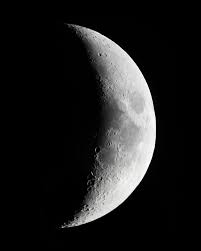
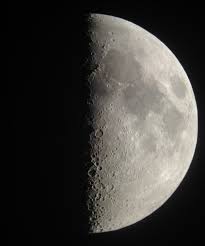
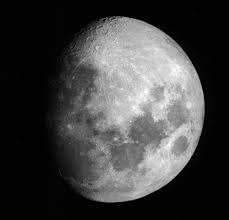
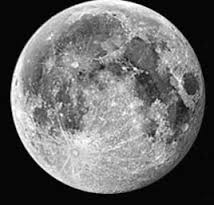
Daylight hours are _________________ for the hemisphere tilted toward the Sun during the solstice.
shorter
longer
stay the same
Earth is closest to the Sun during which northern hemisphere season?
Fall
Spring
Summer
Winter
During which moon phases are more of the moon visible each night?
Waning
Waxing
Shifting
Sliding
In what month does the summer solstice occur in the northern hemisphere?
December
June
September
March
Define lunar eclipse.
Hours of daylight and nighttime are equal
when the Moon moves directly between the Sun and Earth and throws a shadow on Earth
when Earth casts a shadow on the moon
A day when Earth’s rotation axis is most toward the Sun
The yearly orbit of Earth around the Sun.
When do the Sun's rays strike Earth at their northernmost and southernmost positions? (2 answers)
During spring equinox
During the summer solstice
During fall equinox
During the winter solstice
What do both the September equinox and the March equinox have in common?
They have nothing in common.
There are about 12 hours of darkness.
There are about 12 hours of daylight.
Their temperatures are about the same.
When does the northern hemisphere receive more solar energy?
When the north end of Earth’s rotation axis is toward the Sun
When the south end of Earth’s rotation axis is toward the Sun
When Earth's axis appears to be straight up and down.
What 2 things cause Earth’s seasons?
The Moon's revolution around Earth.
Earth’s tilted axis
Our rotation around the Sun
Our revolution around the Sun
Define solstice.
Hours of daylight and nighttime are equal
when the Moon moves directly between the Sun and Earth and throws a shadow on Earth
when the shadow of the Moon appears on Earth’s surface
A day when Earth’s rotation axis is most toward or away from the Sun
The yearly orbit of Earth around the Sun.
Why do solar eclipses happen only during a new moon?
The moon is aligned in between the Sun and Earth.
The Earth is aligned in between the Sun and Moon.
Solar eclipses only happen during a full moon.
During which moon phase can a lunar eclipse happen?
First Quarter
Third Quarter
New Moon
Full moon
There isn't a lunar eclipse each month because the Sun, Earth and Moon are not in the same plane.
True
False
Define revolution.
Hours of daylight and nighttime are equal
when the Moon moves directly between the Sun and Earth and throws a shadow on Earth
when the shadow of the Moon appears on Earth’s surface
A day when Earth’s rotation axis is most toward or away from the Sun
The yearly orbit of Earth around the Sun.
Define solstice.
Hours of daylight and nighttime are equal
when the Moon moves directly between the Sun and Earth and throws a shadow on Earth
when the shadow of the Moon appears on Earth’s surface
A day when Earth’s rotation axis is most toward or away from the Sun
The yearly orbit of Earth around the Sun.
Define solar eclipse.
Hours of daylight and nighttime are equal
when the Moon moves directly between the Sun and Earth and throws a shadow on Earth
when the shadow of the Moon appears on Earth’s surface
A day when Earth’s rotation axis is most toward the Sun
The yearly orbit of Earth around the Sun.
Define equinox.
Hours of daylight and nighttime are equal
when the Moon moves directly between the Sun and Earth and throws a shadow on Earth
when the shadow of the Moon appears on Earth’s surface
A day when Earth’s rotation axis is most toward the Sun
The yearly orbit of Earth around the Sun.
According to the most commonly accepted theory of the Moon’s formation, the Moon formed
out of a chunk of material that got ripped from Earth as it was forming.
elsewhere in the solar system, but was later "captured" by Earth's gravity.
at the same time and from the same materials as Earth.
as the result of an impact with an object the size of Mars.
During an annular solar eclipse, the Moon ___
does not completely block the Sun.
always appears reddish in color.
passes through Earth’s shadow.
is near perigee
A solar eclipse can only occur during _______ moon
1st Quarter
Full Moon
New Moon
Waxing Gibbous
The lunar month begins with which phase?
New Moon
First Quarter
Full Moon
Last Quarter
Which phase comes after Waxing Crescent?
New Moon
First Quarter
Full Moon
Last Quarter
Which phase comes after Waning Gibbous?
New Moon
First Quarter
Full Moon
Last Quarter

The apparent motion of the Sun moving across the sky is due to the Earth's
rotation
revolution
gravity
orbit

Approximately how long does it take from new moon to the next new moon?
24 hours
365 days
12 days
29 days
What is the difference between rotation and revolution?
Rotation is movement around an axis, revolution is the orbit of one body around another
Rotation is the orbit of one body around another, revolution is movement around an axis
Rotation always takes a longer period of time than revolution
Rotation and revolution are synonyms
What is the difference between Spring and Neap tide?
Spring tides occur in the Spring, Neap tides occur in the Fall
Spring tides are higher, Neap tides are lower
Spring tides are lower, Neap tides are higher
Spring tides have a greater tidal range, Neap tides have a lower tidal range
What causes the tides? (Select ALL that apply)
Gravitational pull of the Sun
Gravitational pull of the Earth
Gravitational pull of the Moon
Gravitational pull of the Planets
Where are the largest tidal ranges in the world?
Gulf Shores, Alabama
Reykjavik, Iceland
Nova Scotia, Canada
Antarctica
What is the difference between the Umbra and Penumbra?
The Umbra is the darkest part of the eclipse shadow, the Penumbra is the lighter part of the shadow
The Penumbra is the darkest part of the eclipse shadow, the Umbra is the lighter part of the shadow
The Penumbra is larger than the Umbra
The Umbra is larger than the Penumbra
Which of the following statements about a Lunar Eclipse is TRUE?
Moon moves into the Earth's shadow
Moon is between the Earth and the Sun
It is only visible from the daylight side of the Earth
It only occurs during a New Moon phase
Why are eclipses so rare?
Moon's orbit is tilted compared to Earth's
Moon is smaller than the Earth
The Sun is further away than the Moon
The Earth, Moon, Sun almost never align
Which of the following statements about Solar Eclipses is FALSE?
The Earth moves into the Moon's shadow
The Earth is between the Moon and the Sun
Only occur during a New Moon phase
Only occur over a small area of the Earth
What happens during a Total Lunar Eclipse?
The Moon turns into a black circle, similar to a New Moon
The Moon turns red
The Moon is totally blocked by the Sun
The Moon's orbit is at 0 degrees
The point where the Moon's orbit crosses the plane of the Earth is called a...
Ellipse
Ecliptic
Node
Equinox
What is the difference between the Summer and Winter Solstice?
The Summer Solstice is the shortest day of the year, the Winter Solstice is the longest day of the year
The Summer Solstice is the longest day of the year, the Winter Solstice is the shortest day of the year
The Summer Solstice is the longest day of the year, the Winter Solstice has the same amount of day and night
Both the Summer and Winter Solstices have the same amount of day and night
Which diagram below best represents the illumination of the Earth on the first day of winter in the Northern Hemisphere?


The diagram below shows a model of the Moon's orbit around Earth. Letters A, B, C, and D represent four positions in the Moon's orbit. What is the approximate length of time the Moon takes to travel from position A to position C?
1 day
14 days
8 days
30 days

The diagram below shows the Moon in four different positions, A, B, C, and D, as it orbits Earth. How does the Moon appear to an observer when the Moon is located at position A?


Which of the following statements best explains why it is warmer at the equator than at the North Pole?
The equator has a larger area than the North Pole
The equator is closer to the Sun than the North Pole
The equator receives more direct sunlight than the North Pole.
The equator has more hours of daylight per year than the North Pole.
Which of the following diagrams best shows the relative positions of Earth, the Moon, and the Sun during a lunar eclipse?


month
the time required for the moon to orbit once around the Earth
the time required for the Earth to rotate once on its axis
the time required for Earth to orbit once around the sun
the study of the universe
The day of the year with the fewest daylight hours is called the
spring equinox
fall equinox
summer solstice
winter solstice
When daylight hours are almost equal to night time hours, it is called
Equinox
Solstice

First day of fall
Autumnal Equinox
Summer Solstice
Winter Solstice
Vernal Equinox
The moon is not in the night sky during which phase?
Waning crescent
Waxing gibbous
Full moon
New moon

Which body has the greater effect on Earth's tides?
Sun
Saturn
Moon
Venus

What is a difference between spring and neap tides?
Spring tides occur when the earth and sun are IN LINE with the new or full moon.
Spring tides occur when moon in 3rd or 1st quarter phases
Spring tides are LOWER than neap tides
Spring tides occur in Spring and neap tides can occur in any season


The diagram below shows the alignment of the sun, the moon, and Earth. In which locations are neap tides taking place?
1 and 2
1 and 3
2 and 4
3 and 4


Tides are caused by the difference in the gravitational force of the ________ and ________ across the ________.
earth, sun, moon
sun, mars, jupiter
sun, moon, earth
tide, water, sun
The Moon's gravitational pull generates the (a)
How many high and low tides will most coastlines of the world experience on most days?
two high and two low
two high and three low
four high and two low
one high and one low
most of the world's coastlines don't experience tides
the point in the orbit of the moon or a satellite at which it is nearest to the earth.
solstice
apogee
equinox
perigee
The two days of the year on which the sun reaches its greatest distance north or south of the equator
winter
equinox
summer
solstice
The plane of Earth's orbit around the Sun
impact crater
ecliptic plane
disc
revolution
A spring tide is occurring when ...
the moon and sun are in alignment with the earth
the tidal range is the greatest
during a full or new moon
all of these are true

