
 Worksheets
Biology SOL Review
Total questions: 100
Worksheet time: 1hrs 10mins
Some insects can stand on the surface of water because water --
heats slowly and resists temperature change
is a good evaporative coolant
is cohesive and adhesive
has a high boiling point

Which label indicates the substrate?
A
B
C
Which label indicates the enzyme?
A
B
C

What is the optimal pH of trypsin?
3.5
4
7.8
10
Enzymes are classified as:
Carbohydrates
Nucleic acids
Lipids
Proteins

Which letter indicates the enzyme-substrate complex?
A
B
C
D
The part of the enzyme that the substrate binds to is called the -
active site
catalyst
inhibitor
substrate complex

The Oxygen in a water molecule carries a slightly _________ charge
positive
negative
neutral
hydrogen
The hydrogens in a water molecule carry a slightly _________ charge
positive
negative
neutral
hydrogen
Provides short term energy
Provides long term energy
What is the function of a lipid?
Provides short term energy
Provides long term energy
What is the function of a protein?
Provides short term energy
Provides long term energy
Help catalyze chemical reactions in cells.
What is the function of a nucleic acid?
Provides short term energy
Provides long term energy
Help catalyze chemical reactions in cells.

Which type of macromolecule is this?
Protein
Carbohydrate
Lipid
Nucleic Acid

This molecule contains CHON and is a
Protein
Carbohydrate
Lipid
Nucleic Acid

Which biomolecule makes up cell membranes?
Protein
Carbohydrate
Lipid
Nucleic acid
Which contains carbon, hydrogen, oxygen and has a ring-like structure?
Nucleic acid
Carbohydrates
Proteins
Lipids

This molecule contains CHONP and is a
Protein
Carbohydrate
Lipid
Nucleic Acid
Enzymes are composed of which organic molecule?
Carbohydrates
Lipids
Proteins
Nucleic Acids

Examine image C below. How could you increase the rate of reaction in image C?
Add more substrate
Add more enzymes
Remove substrate
Remove enzymes
Which do BOTH prokaryotes and eukaryotes contain?
nucleus
mitochondria
ribosomes
cell wall
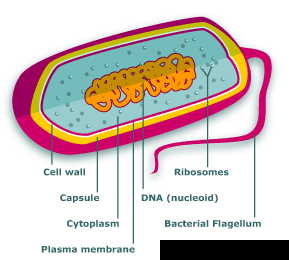


Eyepiece = 20X
Objective lens = 20X

This cell is a(n)______ cell because it contains ________
Plant, no nucleus and no membrane bound organelles
Plant, a nucleus and a cell wall
Animal, no nucleus and no membrane bound organelles
Animal, a nucleus and no cell wall

This cell is a(n)______ cell because it contains ________
Prokaryote, no nucleus and no membrane bound organelles
Plant, a nucleus and a cell wall
Animal, no nucleus and no membrane bound organelles
Eukaryote, a nucleus and a cell wall
Which organelle contains DNA and controls the cell?
Cell membrane
nucleus
nucleolus
lysosme
Which organelle controls what goes in and out of the cell?
nucleus
nucleolus
cell membrane
nuclear membrane
This organelle digests dead cell parts and contains enzymes
lysosome
golgi body
smooth ER
Rough ER
The gelatinous material inside the cell
ribosomes
lysosome
granum
cytoplasm
Proteins are produced at this organelle.
golgi body
ribosome
cytoskeleton
cilia
This organelle makes ATP (usable energy for the cell).
chloroplast
mitochondria
ribosome
nucleolus
This organelle packages and processes/ships proteins
Smooth ER
Rough ER
Golgi body
vacuole

The above diagram shows the process of osmosis. Only the water molecules could enter the cell because water molecules —
have more energy than the protein molecules
are smaller than the protein molecules
contain more hydrogen atoms than the protein molecules
are more numerous than the protein molecules

A student was studying the responses of cells to solutions of varying salt concentrations. Which solution below would cause no change in cell size?
F
G
H
J


What process is shown here?
Active Transport
Passive Transport
Diffusion
Osmosis

This process moves molecules with the help of transport proteins and is called..
Diffusion
Facilitated Diffusion
Osmosis
Active Transport
Some peeled pieces of apple were placed in distilled water and some in very salty water. The cells in the apple pieces will —
lose water in both solutions
gain water in the distilled water and lose water in the salty water
gain water in both solutions
lose water in the distilled water and gain water in the salty water

In the cell membrane model shown above, the molecules which move large molecules into and out of the cell are known as -
cholesterol
lipids
proteins
carbohydrates

The picture shows a virus and a bacteria cell. Which of the following do they have in common?
Nucleus
Capsid
Cell membrane
DNA
Which of the following choices is NOT a method of preventing bacterial illnesses from spreading in a meat-processing plant?
Treatment of work areas with chemical disinfectants.
Using antibiotics to treat persons with food poisoning.
Use of gloves when handling raw meat products.
Washing hands and utensils with hot, soapy water.
Select THREE descriptions below that apply to a virus.
Living, nucleus, made of cells
Nonliving, contains DNA/RNA, has a cell wall
Made of cells, contains RNA only, has a cell wall
Made of cells, contains DNA only, has a cell wall
A virus requires a host cell for what process?
reproduction
excretion
nutrition
evolution
Which type of pathogen cannot be treated with an antibiotic?
Bacteria
Virus

The infectious particles below could be described by all of the following statements EXCEPT
They replicate by using a host cell’s machinery.
They infect bacteria, plants, and animals.
The genome can be made of DNA or RNA.
They are the most ancient form of life.
The transfer of energy from glucose to ATP is accomplished most directly by the process of
mitochondria
diffusion
photosynthesis
cellular respiration
Algae and multicellular plants are autotrophs because they -
capture sunlight to produce sugars
absorb nutrients from soil
decompose dead organisms
break down starches to glucose
If photosynthesis "fixes" carbon dioxide, what does cellular respiration do?
unfixes it, releasing it into the atmosphere
changes it into a more stable form
converts the carbons into ATP
stores it as a high energy molecule

The graph shows how dissolved oxygen and carbon dioxide levels changed in a pond over a 24 hour period. What caused the decrease in oxygen concentration during the night?
decreased temperatures
increased evaporation
increased respiration
decreased photosynthesis

The image shows the process of mitotic cell division in a cell. If the daughter cells each have 16 chromosomes after cell division, what was the number of chromosomes in the parent cell?
6
16
32
4
The process of DNA replication is necessary before a cell -
codes for RNA molecules
modifies lysosome enzymes
divides into two cells
makes a protein

The diagram above shows homologous chromosomes during prophase I of meiosis. Which of the following correctly describes the process being illustrated?
mutation in which the DNA content of the gene is altered
segregation of sister chromatids
condensation and segregation of alleles
crossing over in which alleles are exchanged
The crossing over of homologous chromosome and the independent assortment of chromosomes only occur during meiosis. How do these two processes result in genetic variation of organisms?
Gene combinations of daughter cells are different from the parent.
The daughter cells produced become reproductive cells.
They occur in sexually reproducing organisms.
The daughter cells are haploid.

What is the correct sequence for plant cell mitosis?
A, B, D, C
C, B, A, D
B, A, D, C
D, C, B, A

According to this diagram, the result of spermatogenesis is four sperm cells, each with -
strands of DNA that resulted from crossing over.
half the original number of chromosomes.
genetically identical strands of DNA.
complete copies of all the original chromosomes.
If the DNA sequence of a gene is TAC CCC GGA GAG, what mRNA sequence will be produced in transcription?
AUG GGG CCU CUC
ATG GGG GGT GTG
AUG GGG CCU CUG
AUG CCG GCA CGG
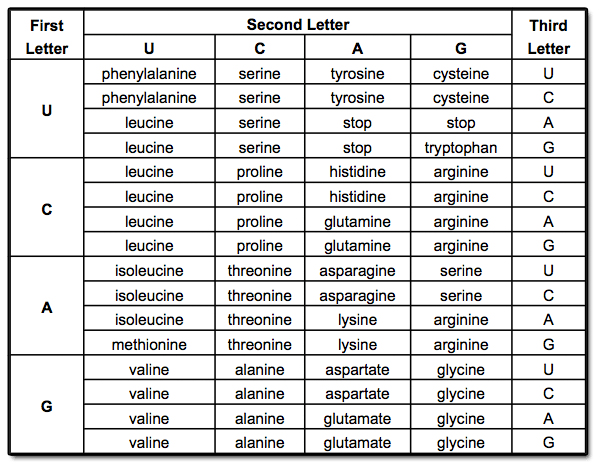
What amino acid would be added to the protein being formed during translation if the mRNA codon reads "AUG?"
Phenylalanine
Tyrosine
Leucine
Methionine

What amino acid would be added to the protein being formed during translation if the mRNA codon reads "CCU?"
Isoleucine
Stop
Methionine
Proline

The picture shows an x-ray diffraction of DNA. The x-ray diffraction of DNA led to the idea that DNA
is a very long molecule
can copy itself
contains based pairs
is a double helix

The arrow in the diagram represents the movement of which molecular structure?
Protein
DNA molecule
mRNA molecule
base pair

What are the next three mRNA bases in the strand below?
GUC
CUG
TAA
GTC


Which is Heterozygous?
Tt
BB
ff
Dominant

What are the chances that the offspring will have homozygous recessive traits?
1 in 4
3 out of 4
75%
50%


What is the sex of the individual whose karyotype is seen in the image?


The technique shown in the diagram represents
the formation of karyotype
animal cloning
amniocentesis
the formation of recombinant DNA
A red flowered plant (RR) breeds with a White flowered plant (WW). The gene for petal color in these plants expresses incomplete dominance. What percentage of the offspring will have pink (RW) flowers?
0%
25%
50%
100%
One parent is heterozygous for a certain trait (Dd). The other parent is homozygous dominant( DD) for that trait. What is the percent chance that an offspring from this cross will be heterozygous?
0%
25%
50%
100%
While working with pea plants, Gregor Mendel observed that some tall plants had yellow seeds while other tall plants had green seeds. This observation is best explained by
nondisjunction of chromosomes
independent assortment
linkage of genes
Intermediate inheritance
Darwin's explanation for evolution was dependent on which scientific concept?
The significance of social behaviors to survival
The ability of organisms to learn
The relationship between size and survival
The existence of variations in a population
Five species of frogs that live in separate habitats within 5 non-overlapping ranges along the Mississippi River share a common ancestor. Which process is most likely responsible for the formation of these five distinct species?
Geographic isolation
Physiological isolation
Behavioral isolation
Reproductive isolation
A group of ponies lives in the Chincoteague National Wildlife Reserve in Virginia. The development of longer legs over time would be selected for if-
it prohibited the long-legged ponies from using available food sources
it made the long-legged ponies run more slowly
it increased the survival rate of the long-legged ponies
it decreased the rate of reproduction of the long-legged ponies

The diagram shown represents a cross-section of undisturbed rock layers. A scientist discovers bones of a complex vertebrate species in layer B and C. In which layer would an earlier, less complex form of this vertebrate most likely first appear?
A
B
C
D
The leg structures of many different vertebrates are quite similar in number and location of bones. Most scientists would probably explain this on the basis of-
chance occurrence
needs of the organism
common ancestry
inheritance of acquired traits
The introduction of new genes into the gene pool of a population occurs through the process of
survival of the fittest
competition between organisms
mutations
overproduction

The fact that vertebrate embryos pass through similar stages of development is evidence for
acquired characteristics
homologous structures
use and disuse
common ancestry

For the growth curve to continue increasing, which of these must occur?
The organisms must adapt to a new habitat.
The organisms must migrate to a new environment.
The resources in the environment must be unlimited
The environment must provide a habitat for a large variety of organisms.
Seaweeds occupy an important niche in the Chesapeake Bay ecosystem. Which question will best help a student identify the role of seaweeds in this ecosystem?
Which organisms depend on seaweeds as an energy source?
Which seaweed species produces the greatest amount of oxygen?
What wavelengths of light are photosynthesized by seaweed species?
What salinity in areas where seaweed is growing?
In a population of 120 oak trees, 25% of the population has oak wilt disease. What is the number of trees in this population that have oak wilt?
10
25
30
42
In an ecosystem, a sudden decrease in the number of bacteria in the soil would most likely result in-
increased water pollution in the soil
a reduction in the amount of nitrogen available to the ecosystem
increased precipitation and flooding of the soil
a decrease in the number of fossils formed in the soil

A decreases in the grass population will most immediately decrease the available energy for the
snake
deer
mouse
frog

According to the energy pyramid, the most energy is present in organisms living at the same level as the-
bobcat
birds
grasshopper
grass

Most populations introduced to a new ecosystem grow until factors such as lack of food and overcrowding limit their growth, as illustrated above. What does the portion of the graph labeled B represent?
Exponential growth
Birthrate decrease
Slowing growth
Death rate increase

The first organisms to reappear after an ecosystem is damaged.
Abiotic Community
Pioneer species
Succession
Biomass
Some snake embryos have small buds resembling limbs These buds disappear at later stages of embryo development. These findings suggest that these snakes-
will have offspring with limbs
have functional limbs as adults
had a parent with limbs
evolved from an ancestor that had limbs

The information in the table supports which conclusion?
Frogs are more closely related to monkeys than sea anemones.
Frogs, monkeys, and sea anemones are classified into different kingdoms.
Sea anemones are more complex than frogs or monkeys.
Sea anemones and monkeys are adapted to similar environments.

Which species is most closely related to species C?
A
B
D
Ursus horribilis, the scientific name for the grizzly bear, refers to the bear's
kingdom and species
genus and species
kingdom and phylum
genus and phylum

The chart shows observations made of an unknown organism. Based on this information, the organism most likely belongs to the kingdom-
Fungi
Plantae
Animalia
Eubacteria

