wayground logo

Free Printable Worksheets

Font size

S
M
L
XL
Worksheets

CNS structures/function

Total questions: 101

Worksheet time: 3hrs 5mins

Name
Class
Date
1.

The nervous system is structurally subdivided into two systems: ________ nervous system and ________ nervous system.

a)

central;peripheral

b)

somatic; autonomic

c)

parasympathetic; sympathetic

d)

autonomic; sympathetic

2.

The part of the neuron that typically conducts nerve impulses away from the cell body is the ________.

a)

dendrite

b)

cell body

c)

synaptic cleft

d)

axon

3.

________ reflexes include the secretion of saliva, changes in the size of our pupils, and digestion involve the activities of smooth muscles.

a)

Somatic

b)

Voluntary

c)

Autonomic

d)

Sympathetic

4.

The thalamus, hypothalamus, and epithalamus collectively constitute the ________.

a)

pons

b)

cerebellum

c)

brain stem

d)

cerebrum

5.

The brain and spinal cord are protected and cushioned by three connective tissue membranes that are collectively called ________.

a)

ventricles

b)

arachnoid villi

c)

meninges

d)

sinuses

6.

One of the major functions of the pons is to control ________.

a)

breathing

b)

hunger

c)

thirst

d)

consciousness

7.

The hypothalamus regulates the ________.

a)

pineal gland

b)

pituitary gland

c)

pons

d)

thalamus

8.

The portion of the diencephalon that acts as a relay station for sensory impulses traveling to the sensory cortex is the ________.

a)

pons

b)

pituitary gland

c)

thalamus

d)

hypothalamus

9.

There are ________ pairs of cranial nerves and ________ pairs of spinal nerves in the peripheral nervous system.

a)

5; 7

b)

18; 34

c)

12; 31

d)

15; 25

10.

The ________ division of the autonomic nervous system is often called the "rest-and-digest" division.

a)

somatic

b)

sympathetic

c)

parasympathetic

d)

afferent

11.

The neuron processes that normally receive incoming stimuli are called ________.

a)

axons

b)

dendrites

c)

neurolemmas

d)

Schwann cells

12.

A stroke in the primary motor area has caused Don to lose control over his skeletal muscles on the right side of his body. What lobe of his brain was damaged?

a)

occipital lobe

b)

temporal lobe

c)

frontal lobe

d)

parietal lobe

13.

The midbrain, pons, and medulla oblongata are housed in the ________.

a)

diencephalon

b)

hypothalamus

c)

brain stem

d)

pineal gland

e)

cerebellum

14.

Control of temperature, endocrine activity, metabolism, and thirst are functions associated with the ________.

a)

medulla oblongata

b)

cerebellum

c)

hypothalamus

d)

thalamus

e)

cerebrum

15.

The vital centers for the control of visceral activities such as heart rate, breathing, blood pressure, swallowing, and vomiting are located in the ________.

a)

pons

b)

medulla oblongata

c)

midbrain

d)

cerebrum

e)

hypothalamus

16.

Loss of muscle coordination results from damage to the ________.

a)

cerebrum

b)

hypothalamus

c)

cerebellum

d)

thalamus

e)

midbrain

17.

How many pairs of cranial nerves branch from the surface of the brain?

a)

three

b)

five

c)

seven

d)

twelve

e)

eighteen

18.

The sympathetic and parasympathetic nervous systems are subdivisions of the ________.

a)

central nervous system

b)

voluntary nervous system

c)

autonomic nervous system

d)

somatic nervous system

e)

peripheral nervous system

19.
Which letter represents the Cervical Region of the spinal cord and vertebral column?
a)
A
b)
B
c)
C
d)
D
20.
Which letter represents the Thoracic Region of the spinal cord and vertebral column?
a)
A
b)
B
c)
C
d)
E
21.
Which letter represents the Lumbar Region of the spinal cord and vertebral column?
a)
A
b)
B
c)
C
d)
D
22.
Which lobe is known for “higher-cognitive functions like problem solving and decision making?
a)
Frontal Lobe
b)
Parietal Lobe
c)
Temporal Lobe
d)
Occipital Lobe
23.
Which lobe is responsible for hearing, selective attention, and language comprehension?
a)
Frontal Lobe
b)
Temporal Lobe
c)
Parietal Lobe
d)
Occipital Lobe
24.
Which lobe is primarily responsible for processing and relaying visual cues from the eyes?
a)
Frontal Lobe
b)
Temporal Lobe
c)
Parietal Lobe
d)
Occipital Lobe
25.
Which part of the brain controls messages between the cerebrum and the spinal cord.  Also maintains vital signs such as breathing and heart beat
a)
Parietal Lobe
b)
Cerebellum
c)
Brain Stem
d)
Spinal Cord
26.
The ____________ is the main pathway for information connecting the brain and the peripheral nervous system?
a)
Spinal Cord
b)
Brain Stem
c)
Cerebellum
d)
Frontal Lobe
27.
The spinal cord is protected by a bony spinal column made up of bones called ____________.
a)
White matter
b)
Gray matter
c)
Meninges
d)
Vertebrae
28.
What deep brain structure in the Temporal Lobe is concerned with maintaining homeostasis?
a)
Hypothalamus
b)
Hippocampus
c)
Amygdala
d)
Medulla Oblongata
29.
What deep structure of the brain in the Temporal Lobe is important for moving information from short-term memory to long-term memory so we can learn?
a)
Hypothalamus
b)
Hippocampus
c)
Amygdala
d)
Pons
30.
What deep structure of the brain in the Temporal Lobe is responsible for intense emotion of fear and anger?
a)
Hypothalamus
b)
Hippocampus
c)
Amygdala
d)
Midbrain
31.
What part of the Brainstem controls heart rate, blood pressure, and digestion and is also responsible for reflexes like vomiting, sneezing, and coughing?
a)
Midbrain
b)
Pons
c)
Medulla Oblongata
d)
Hypothalamus
32.
Which part of the brain controls breathing?
a)
cerebrum
b)
cerebellum
c)
brainstem
33.
Which part of the brain controls balance?
a)
cerebrum
b)
cerebellum
c)
brainstem
34.
Main organ of the nervous system. protected by the skull, and made of neurons, it is the control center for all actions, thoughts and emotions.
a)
brain
b)
electrical impulse
c)
gland
d)
heart
35.
Which section of the Spinal Cord has nerves that control your Hips, Knees, Feet (upward), and Toes?
a)
Cervical
b)
Thoracic 
c)
Lumbar
d)
Sacral
36.
What is protected by the vertebral column?
a)
Ligaments
b)
Spinal cord
c)
Muscles
d)
The brain stem
37.
How many segments are in the spinal column?
a)
3
b)
4
c)
5
d)
6
38.
What is the largest part of the brain?
a)
Thalamus
b)
Cerebellum
c)
Spinal Cord
d)
Cerebrum
39.
What letter represents the Frontal Lobe?
a)
A
b)
B
c)
C
d)
D
40.
What letter represents the Temporal Lobe?
a)
B
b)
C
c)
D
d)
F
41.
What letter represents the Occipital Lobe?
a)
A
b)
B
c)
C
d)
F
42.
What letter represents the Parietal Lobe?
a)
A
b)
B
c)
C
d)
E
43.
What letter represents the Cerebellum?
a)
A
b)
E
c)
F
d)
D
44.
What letter represents the Brain Stem?
a)
E
b)
D
c)
C
d)
B
45.
The Central Nervous System are made up of the _________ and __________.
a)
Brain and Meninges
b)
Meninges and Spinal Cord
c)
Brain and Spinal Cord
d)
Brain and Peripheral Nerves
46.
What is the fluid in the space between the meninges that acts as a shock absorber to the brain and spinal cord called? 
a)
Blood-Brain Barrier
b)
Meninges
c)
Cerebrospinal Fluid
d)
Cerebral Cortex
47.
Which lobe is known for processing and making sense out of the information gathered by the five senses?
a)
Frontal Lobe
b)
Temporal Lobe
c)
Parietal Lobe
d)
Occipital Lobe
48.
Quadriplegia means the patient is paralyzed from 
a)
the neck down
b)
the waist down
c)
only the legs
d)
isn't paralyzed at all
49.
The Five regions of the spine are:
a)
Vetebrae,Lumbar,
Thoracic
Sacrum,
Coccygeal
b)
Fascicle, Lumbar, Sacrum, Thoracic
c)
Cervical, Thoracic, Lumbar, Sacrum, Coccygeal
d)
Cervical, Thoracic, Lumbar, Sacrum, 
50.
Paralysis of the lower extremities is __________.
a)
paraplegia
b)
hemiplegia
c)
diplegia
d)
quadriplegia
51.
The membranes covering the brain and spinal cord are the _________.
a)
thalamus
b)
ventricles
c)
meninges
d)
choroid plexuses
52.
The spinal cord ends at the _________ vertebra
a)
cervical
b)
thoracic
c)
lumbar
d)
coccyx or coccygeal
53.
The spinal cord continues all the way to the end of the vertebral column at the coccyx?
a)
True
b)
False
54.

The corpus callosum

a)

manages our understanding of speech and language

b)

cannot process messages sent from the left hand

c)

is a deep fissure in the cerebral cortex

d)

is a thick band of nerve fibres linking the two hemispheres of the brain

55.
Which of the following statements is true?
a)
Each hemisphere's functions are fixed and cannot be performed by the other hemisphere
b)
The right hemisphere mostly specialises in verbal functions, while the left hemisphere specialises in non-verbal functions
c)
Both hemispheres operate quite independently 
d)
We usually draw on both hemipsheres to perform most functions 
56.
The frontal lobe of the cerebral cortex is associated with:
a)
helping us find our position in space
b)
receiving information from bodily sensations
c)
higher-order functions such as planning, reasoning and problem-solving
d)
processing auditory information
57.
Which of the following statements is true about language processing in the brain?
a)
Broca's area in the left frontal lobe is involved in the production of articulate speech
b)
The right hemisphere is where all major language functions are located
c)
The comprehension of speech is a function of Wernicke's area in the left frontal lobe
d)
Damage to Wernicke's area does not cause any speech difficulties
58.
The role of the cerebellum is to 
a)
detect emotions
b)
coordinate posture and balance
c)
process visual information
d)
think symbolically
59.
Which of the four lobes is typically responsible for receiving and processing auditory information?
a)
frontal
b)
parietal
c)
occipital
d)
temporal
60.

When Ebony patted her friend’s cat she was surprised by the softness of the fur. This tactile information was initially received by the

a)

Frontal lobe

b)

Parietal lobe

c)

Occipital lobe

d)

Temporal lobe

61.

The ___ is responsible for our emotions, memory and _____.

a)

Brain Stem, breathing

b)

Cerebellum, balance

c)

Frontal Lobe, decision making

d)

Temporal, hearing

62.
Makes decisions, plans, reasons, and carries out behaviors
a)
Frontal Lobe
b)
Parietal Lobe
c)
Occipital Lobe
d)
Temporal Lobe
63.
Receives sensory input for touch and body position
a)
Parietal Lobe
b)
Frontal Lobe
c)
Occipital Lobe
d)
Temporal Lobe
64.
Controls hearing, speaking coherently, and comprehension
a)
Frontal Lobe
b)
Temporal Lobe
c)
Occipital Lobe
d)
Parietal Lobe
65.
Processes visual information
a)
Frontal Lobe
b)
Temporal Lobe
c)
Occipital Lobe
d)
Parietal Lobe
66.
This structure helps pass information between the two hemispheres of the brain.
a)
corpus callosum
b)
hypothalamus
c)
pons
d)
amygdala
67.
When this area of the brain is damaged, patients loose the ability to speak fluently.
a)
Broca's area
b)
Hypothalamus
c)
Amygdala
d)
Occipital lobe
68.
You actually do 'have eyes in the back of your head' because this region of the brain responsible for visual processing is right above the cerebellum!
a)
temporal lobe
b)
sensory cortex
c)
occipital lobe
d)
gyri
69.
The _______ lobe is used to process auditory information and contains the Broca's area and the Wernicke's area.
a)
parietal
b)
prefrontal
c)
occipital
d)
temporal
70.
Which structure is NOT in the hindbrain?
a)
amygdala
b)
cerebellum
c)
pons
d)
medulla
71.
Records the waves of electrical activity (studies seizures)
a)
EEG
b)
MRI
c)
CT Scan
d)
fMRI
72.
Shows brain function by using a radioactive glucose solution (active neurons love glucose)
a)
MRI
b)
CT Scan
c)
PET Scan
d)
fMRI
73.

Tim is having difficulty processing anything hot when he touches something, which lobe is not functioning properly?

a)

Occipital Lobe

b)

Temporal Lobe

c)

Parietal Lobe

d)

Frontal Lobe

74.

This part of the brain makes us unique and is our control information processing center?

a)

Cerebellum

b)

Corpus Collosum

c)

Cerebrum

d)

Hypothalamus

75.
attention
a)
brain stem
b)
frontal
c)
occipital
d)
temporal
76.
goal setting
a)
frontal 
b)
cerebellum
c)
parietal
d)
temporal
77.
This insulating material forms a layer, around the axon of a neuron.  It enables electrical signals to travel down the axon at higher speeds.
a)
neuron
b)
myelin sheath
c)
dendrite
d)
neurotransmitter
78.

What part of the brain deals with the thalamus and hypothalamus?

a)

Brain Stem

b)

Cerebellum

c)

diencephalan

d)

cerebrum

79.

The part of the PNS that controls involuntary actions

a)

autonomic nervous system

b)

somatic nervous system

c)

organic nervous system

d)

reflexive nervous system

80.
The brain's "sensory switchboard":  directs sensory messages to proper area of the brain
a)
thalamus
b)
hypothalamus
c)
hippocampus
d)
reticular formation
81.
Controls motivational behaviors, including: feeding, fight-flight response
a)
Hippocampus
b)
Amygdala
c)
Reticular Formation
d)
Hypothalamus
82.
Receives sensory information and relays it to the proper part of brain for further processing
a)
Hypothalamus
b)
Reticular Formation
c)
Cerebellum
d)
Thalamus
83.
Damage to the cerebellum would most affect the career of
a)
an architect
b)
a teacher
c)
an athlete
d)
a librarian
84.
The Medulla Obolongata controls our ___.
a)
Blood Pressure 
b)
Muscle Memory 
c)
Pain reaction
d)
Memory 
85.
What is the largest part of the brain?
a)
Thalamus
b)
Cerebellum
c)
Spinal Cord
d)
Cerebrum
86.

This structure is involved in fear/panic response

a)

Cerebellum

b)

Hippocampus

c)

Amygdala

d)

Parietal Lobe

87.

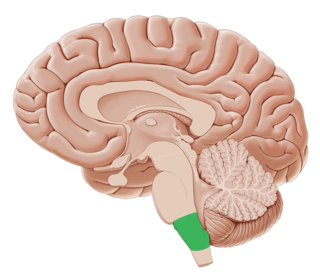
What is this?

a)

Corpus callosum

b)

Medulla Oblongata

c)

Cerebellum

d)

Hypothalamus

88.
Which structure is E?
a)
midbrain
b)
thalamus
c)
pons
d)
hypothalamus
89.
Controls behaviors (hunger, thirst, sleep, body temperature) through the release of hormones.
a)
hypothalamus
b)
thalamus
c)
adrenal glands
d)
pineal gland
90.
Hemisphere that is associated with Verbal and Mathematical abilities
a)
Left Hemisphere
b)
Right Hemisphere
91.

Who has a bigger frontal lobe?

a)
b)
92.
Possesses the Motor Cortex
a)
Temporal Lobe
b)
Parietal Lobe
c)
Occipital Lobe
d)
Frontal Lobe
93.
Receives sensory input for touch and body position
a)
Parietal Lobe
b)
Frontal Lobe
c)
Occipital Lobe
d)
Temporal Lobe
94.
Controls all endocrine glands and is primary hormone secreting structure in the brain.  Controls the hypothalamus.
a)
pituitary gland
b)
pineal gland
c)
amygdala
d)
thalamus
95.
The cerebral cortex is made of
a)
white matter
b)
gray matter
c)
pink goo
96.
The thin, web-like membrane between the outer and inner layer of meninges
a)
dura mater
b)
pia mater
c)
arachnoid mater
97.

The innermost layer of meninges that supplies blood vessels to the brain

a)

pia mater

b)

dura mater

c)

arachnoid mater

98.
The fluid that surrounds the brain and spinal cord
a)
pia mater
b)
CSF
c)
lymph 
d)
tissue fluid
99.
The worm-like ridges on the surface of the brain
a)
convolusions
b)
ventricles
c)
gyri
d)
pia mater
100.
Fluid filled cavities in the brain
a)
longitudinal fissures
b)
transverse fissures
c)
ventricles
101.
Responsible for heart rate, body temperature, and blood pressure
a)
medulla olongata
b)
hypothalamus
c)
thalamus
d)
pons