wayground logo

Free Printable Worksheets

Font size

S
M
L
XL
Worksheets

Biology Final Exam

Total questions: 100

Worksheet time: 2hrs 39mins

Name
Class
Date
1.
The girl is folding her arms.
a)
Observation
b)
Inference
2.

It's December.

a)

Observation

b)

Inference

3.

The mass of the chocolate cake is 250 g.

a)

qualitative

b)

quantitative

4.

When is a hypothesis written?

a)

before you decide on a question

b)

after the experiment

c)

before the experiment

d)

after the conclusion

5.

A hippo's mass would most likely be described using with units?

a)

kilometers

b)

milligrams

c)

kilograms

d)

grams

6.

What is the base unit for temperature in in the metric system?

a)

meters

b)

degrees Celsius

c)

degrees Fahrenheit

d)

centimeters

e)

degrees Kelvin

7.

What is it called when a group of the same organisms living together in the same place at the same time?

a)

An organism

b)

A population

c)

A community

d)

A biome

e)

An ecosystem

8.

What are groups of different populations living together in the same place at the same time called?

a)

An organism

b)

A population

c)

A community

d)

A biosphere

9.
Antonio and Javier are astronauts in space looking back at Earth and discussing how all the life on Earth interacts with each other as well as the nonliving things. What level of organization are they discussing?
a)
A community
b)
A biome
c)
An ecosystem
d)
A biosphere
10.
The arrows in a food chain or web represents what?
a)
They point to the organism that is being eaten.
b)
It shows how sunlight flows within an ecosystem.
c)
They show what direction the energy is flowing between organisms. 
d)
They represent how water is transferred within a habitat.
11.
What does a food web represent?
a)
All connections of energy flow throughout all organisms in a habitat.
b)
The specific ways that mutualism is carried out.
c)
A single pathway or energy flow between organisms. 
d)
How carnivores get their food. 
12.

What is an example of a decomposer?

a)

Plum

b)

Mushroom

c)

Deer

d)

Vulture

e)

Virus

13.

What is indicated by the diagram?

a)

Food web

b)

Food chain

c)

Food map

d)

Trophic pyramid

e)

Pyramid of numbers

14.
An organism that eats both plants and animals are know as a 
a)
Carnivore
b)
Omnivore
c)
Herbivore
d)
Decomposer
15.
What is the first source of energy for all food webs?
a)
Plants
b)
Sunlight
c)
Mineral in the soil
d)
Decomposers
16.

If there are 100 Kcal of energy available in the producers, how much energy would be available in the carnivores?

a)

10 Kcal

b)

1 Kcal

c)

100 Kcal

d)

1000 Kcal

17.

Grizzly bears eat seeds, berries, roots, grasses, fungi, deer, elk, fish, and insects. This would make them a(n)...

a)

Detritivore

b)

Carnivore

c)

Herbivore

d)

Omnivore

18.

Which organism is the autotroph?

a)
b)
19.

A tertiary consumer has to be which type?

a)

Omnivore

b)

Decomposer.

c)

Producer.

d)

Herbivore.

e)

Carnivore

20.
In this ecosystem, what is there the LEAST of?
a)
hyperparasites
b)
herbivores
c)
producers 
d)
parasites
21.
We are expecting a cold front to move into the area later today.
a)
weather
b)
climate
22.
Over the last decade we have had an increase in the amount of rain in our area.
a)
weather
b)
climate
23.

Is sunlight an abiotic or biotic factor?

a)

abiotic

b)

biotic

24.

The idea that no two species within an ecosystem can occupy the exact same niche at the same time.

a)

niche overlap

b)

niche differentiation

c)

competitive exclusion

d)

niche decay

25.
An organism's _________ is defined as the environment in which it lives.
a)
habitat
b)
niche
c)
social structure
d)
ecosystem
26.

A niche ________________.

a)

is the function that an organism performs in the food web of that community.

b)

includes everything else the organism does and needs in its environment.

c)

is specific to each individual animal and plant.

d)

All of the above.

27.

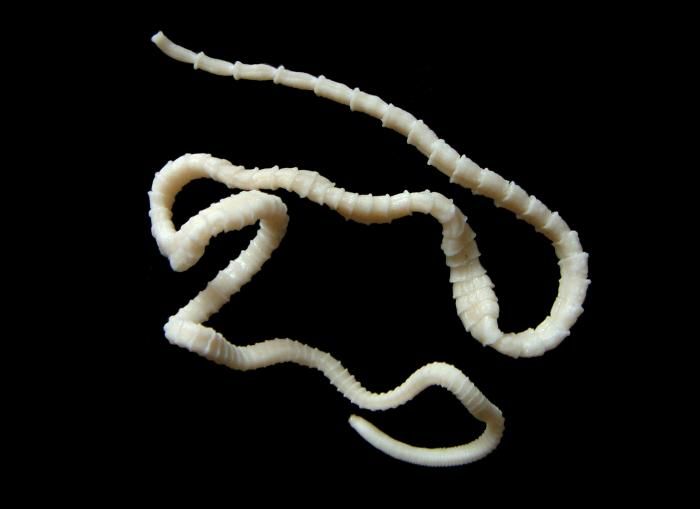
A tapeworm lives in the intestine of a cat absorbing nutrients through its skin. A tapeworm and a cat have this type of relationship.

a)

mutualism

b)

parasitism

c)

commensalism

d)

competition

28.
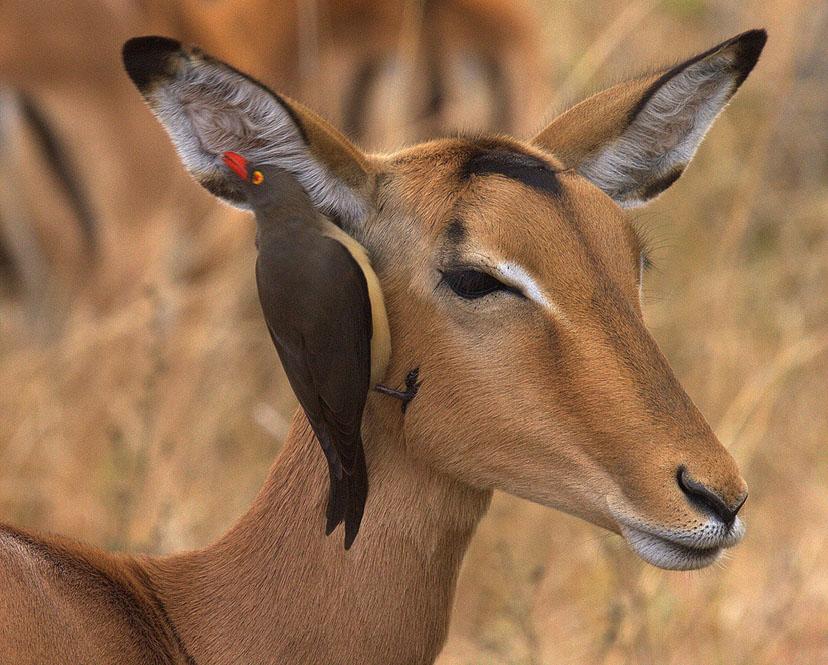
Red-billed oxpeckers are birds that often feed on parasites that infest impala.  This is an example of _______.
a)
commensalism
b)
mutualism
c)
neutralism
d)
competition
29.

What is the order of succession shown in this figure?

a)

A, B, C, D

b)

B, A, D, C

c)

C, D, A, B

d)

D, A, B, C

e)

D, C, B, A

30.
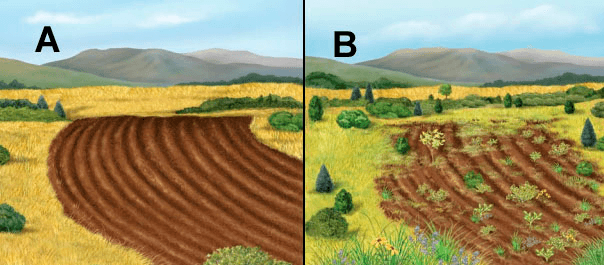
What type of succession is shown going from figure A to figure B?
a)
primary succession
b)
ecological succession
c)
secondary succession
d)
intermediate
31.

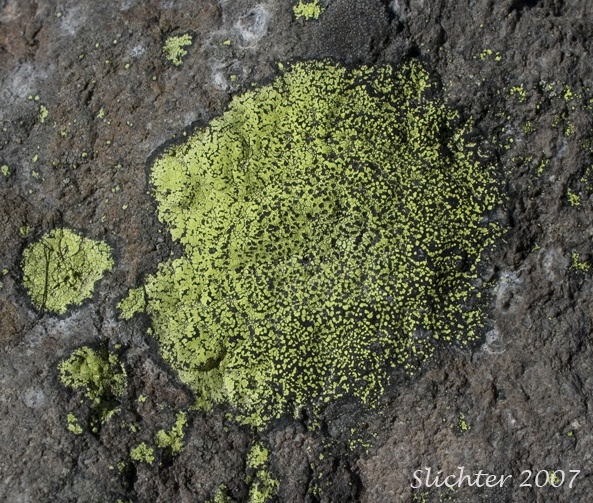
What is the name given to lichen or algae after a primary succession?

a)

climax species

b)

volunteer species

c)

founder species

d)

conqueror species

e)

pioneer species

32.
Final illustration (#8) shows
a)
pioneer species
b)
climax community
c)
only biotic factors
d)
only abiotic factors
33.
Approximately how many inches of rain did Anqing receive in June?
a)
5 inches
b)
7 inches
c)
10 inches
d)
12 inches
34.

Which month has the lowest average temperature?

a)

December

b)

November

c)

January

d)

February

35.

Disease is an example of

a)

density dependent limiting factors

b)

density independent limiting factors

36.
a)

exponential growth curve

b)

logistic growth curve

37.

The size of a population compared to the amount of space available is called the _________________.

a)

biotic potential

b)

population density

c)

limiting factor

d)

carrying capacity

38.

What is a group of organisms that have similar traits and are able to produce fertile offspring?

a)

community

b)

population

c)

species

d)

competition

39.

Which of the following would cause a population to increase in size?

a)

Emigration

b)

Decreased Birthrate

c)

Immigration

d)

Increased Deathrate

40.

Which of the following would NOT be an example of a density independent factor?

a)

predation

b)

tornado

c)

hurricane

d)

fire

41.

According to the graph, what is causing the deer population to decrease

a)

They got sick

b)

The wolf population is decreasing

c)

The wolf population increased

d)

They ran out of food

42.

Who discovered and named cells while looking at cork?

a)

van Leeuwenhoek

b)

Robert Hooke

c)

Matthais Schleiden

d)

Rudolf Virchow

e)

Theodor Schwann

43.

What was Schleiden convinced of?

a)

All plants are made of cells

b)

All animals are made of cells

c)

All cells are prokaryotic

d)

None of the above

44.

Cell theory states that...

a)

cells are the basic building block of life

b)

cells all have a nucleus

c)

cells are microscopic

d)

cells cannot be destroyed

e)

cells all have a membrane

45.

Which of the following is only found in EUKARYOTIC cells?

a)

nucleus

b)

DNA

c)

cell membrane

d)

ribosomes

46.
I am the outer most layer of an animal cell. What am I?
a)
cell wall
b)
nucleus
c)
cell membrane 
d)
cell skin
47.
Which organelle uses energy from sunlight to make sugar?
a)
mitochondria
b)
nucleus
c)
chloroplasts
d)
vacuoles
48.

What organelle is called the "powerhouse" of a cell?

a)

mitochondria

b)

nucleus

c)

cell wall

d)

cell membrane

49.

Identify the structure that is indicated by the arrow in the image.

a)

cell wall

b)

central vacuole

c)

chloroplast

d)

nucleus

50.

What type of cell is being shown in the image?

a)

plant

b)

animal

51.

Hydrophobic region of the cell membrane?

a)

E

b)

B

c)

C

d)

A

e)

D

52.

Passive Transport uses ____ATP energy

a)

no

b)

a lot of

c)

a little bit of

d)

some

53.

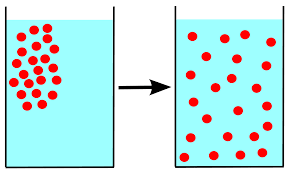
The picture below is an example of _________________.

a)

osmosis

b)

isotonic

c)

diffusion

d)

active transport

e)

hypertonic

54.
Which way will the water molecules move during osmosis?
a)
Out of the cell, so the cell shrinks.
b)
Out of the cell, so the cell swells.
c)
Into the cell, so the cell shrinks.
d)
Into the cell, so the cell swells.
55.
The cell below is in a _____________ solution.
a)
Hypertonic
b)
Hypotonic
c)
Isotonic
56.
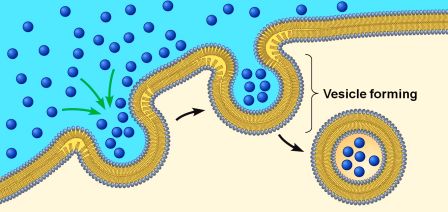
Which form of active transport is being shown?
a)
Facilitated Diffusion
b)
Exocytosis
c)
Endocytosis
d)
Protein Pumps
57.

Which is NOT a form of active transport?

a)

Endocytosis

b)

Osmosis

c)

Exocytosis

d)

Pinocytosis

e)

Secretion

58.
Which terms best describe heterotrophs?
a)
Plants; producers
b)
Animals; producers
c)
Plants; consumers
d)
Animals; consumers
59.
Which structures shown in the Figure make up the ADP molecule?
a)
A and B
b)
A, B and C
c)
A, B, C, and D
d)
C and D
60.

What is the correct equation for photosynthesis?

a)

6CO2 + 6H2O ------> C6H12O6 + 6O2

b)

6O2+C6H12O6------> 6H2O+ 6CO2

c)

6H2O+ C6H12O6------> 6O2+ 6CO2

d)

C6H12O6+6CO2------>6O2+ 6H2O+

61.

Light-independent reactions take place in what part of the chloroplast?

a)

Thylakoids

b)

Stroma

c)

Inner Membrane

d)

Granum

e)

Matrix

62.

What is B pointing to in this image?

a)

Thylakoid

b)

Stroma

c)

Grana

d)

Inner Membrane

e)

Lamellae

63.

What is the green pigment in plants called?

a)

carotene

b)

chlorophyll

c)

xanthophyll

d)

anthocyanin

64.
Where do the light reactions happen?
a)
mitochondria membrane
b)
thylakoid membrane
c)
stroma
d)
central vacuole
65.
Where does the light independent reaction take place?
a)
Matrix
b)
Stroma
c)
Thylakoid membrane
d)
Cytoplasm
66.
What provides the energy for the Calvin cycle?
a)
ATP
b)
ADP
c)
NADP
d)

NADPH

67.
What is the correct equation for cellular respiration?
a)
6O2 + C6H12O6 -> 6CO2 + 6H2O + Energy
b)
6O2 + C6H12O6 + Energy -> 6CO2 + 6H2O
c)
6CO2 + 6H2O -> 6O2 + C6H12O6 + Energy
d)
6CO2 + 6H2O + Energy -> 6O2 + C6H12O6
68.
After intense activity, your muscles feel sore because of 
a)
the accumulation of NAD+
b)
the accumulation of lactic acid 
c)
the accumulation of ATP
d)
the accumulation of carbon dioxide
69.

Which of the following structures is where cellular respiration (Kreb's Cycle and Electron Transport Chain) occurs in the cell?

a)

nucleus

b)

cytoplasm

c)

mitochondria

d)

vacuoles

70.

What is the name of the 1st step of cellular respiration?

a)

Calvin Cycle

b)

Kreb's Cycle

c)

ETC

d)

Anaerobic respiration

e)

Glycolysis

71.

Where does glycolysis take place?

a)

Grana

b)

Stroma

c)

Thylakoid

d)

Cytoplasm

e)

Mitochondria

72.
The two type of fermentation are alcohol and _____________ acid fermentation. 
a)
lactic
b)
sulfuric
c)
hydrochloric
d)
acetic 
73.

Glycolysis produces..

a)

34 ATPs

b)

2 ATPs

c)

17 ATPs

d)

38 ATPs

e)

36 ATPs

74.
The electron transport chain produces...
a)

32 ATPs

b)
2 ATPs 
c)
17 ATPs 
d)
38 ATPs 
75.

During what phase of Mitosis do the chromosomes line up in the Middle

a)

Metaphase

b)

Prophase

c)

Telophase

d)

Anaphase

76.
Structure B is pointing to the _____. 
a)
chromosome
b)
centromere
c)
DNA
d)
chromatid
77.
a)
Anaphase
b)
Cytonkinesis
c)
Interphase
d)
Prophase
78.
a)

Interphase

b)

Anaphase

c)

Telophase

d)

Prophase

79.
In mitosis, the two resulting cells are
a)
different from the starting cell and identical to each other.
b)
different from the starting cell and different from each other.
c)
identical to the starting cell and different from each other.
d)
identical to the starting cell and identical to each other.
80.
What is the name of the structure labeled X?
a)
Centriole
b)
Centrosome
c)
Chromatid
d)
Chromosome 
81.
Place these cells in order of mitosis.
a)
A, B, C, D, E
b)
B, E, D, A, C
c)
C, E, A, D, B
d)
B, D, A, E, C
82.
The process of crossing over occurs in what phase of meiosis?
a)
anaphase 1
b)
prophase 1
c)
prophase 2
d)
telophase 1
83.
The cells produced via meiosis are called:
a)
sex cells
b)
somatic cells
c)
body cells
d)
skin cells
e)

Gametes

84.
Why do we need meiosis?
a)
To double the number of chromosomes going into sex cells
b)
To halve the number of chromosomes going into sex cells
c)
To triple the number of chromosomes going into sex cells
d)
To not change the number of chromosomes going into sex cells
85.
The result of meiosis is:
a)
two diploid cells
b)
two haploid cells
c)
four diploid cells
d)
four haploid cells
86.
What phase is represented?
a)
metaphase 1
b)
metaphase 2
c)
anaphase 1
d)
anaphase 2
87.
What phase is represented?
a)
metaphase 1
b)
metaphase 2
c)
anaphase 1
d)
anaphase 2
88.
Meiosis makes sperm and egg cells. In humans, sperm and egg cells each have _____ chromosomes. Therefore a fertilized human egg cell (sperm and egg cell combined) would create a cell with _____ chromosomes.
a)
23, 46
b)
46, 23
c)
2, 4
d)
50, 100
89.

This occurs when sperm and egg combine.

a)

fertilization

b)

crossing over

c)

meiosis

d)

mitosis

90.

During meiosis what stage will occur next?

a)

telophase

b)

anaphase I

c)

metaphase I

d)

prophase

e)

metaphase II

91.
What sex will a child be if the mother contributes an X chromosome?
a)
female, if the father contributes a Y chromosome
b)
Either a male or a female
c)
Female, no matter what
d)
Male, no matter what
92.

How many calories are required to raise the temperature of 15 mls of water from 25 degrees C to 30 degrees C?

a)

5 calories

b)

375 calories

c)

75 calories

d)

450 calories

e)

150 calories

93.

A normal human zygote should have _____ chromosomes inside.

a)

46

b)

23

c)

92

d)

64

94.
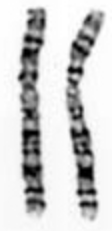
What is the gender of the individual whose karyotype is seen in the image?
a)
Male
b)
Female
95.

Which structure is labeled as A in the diagram?

a)

Centromere

b)

Chromosome

c)

Sister chromatids

d)

DNA

96.
A pair of identical chromosomes shown in a karyotype, one inherited from mom, and one inherited from dad are called
a)
sister chromotids
b)
centromeres
c)
homologous chromosomes
d)
autosomes
97.

If the number of chromosomes in a bat egg cell is 18, the number of chromosomes in a bat nerve cell would be?

a)

18

b)

9

c)

27

d)

36

98.

What type of molecule contains glycerol?

a)

simple carbohydrate

b)

fat

c)

complex carbohydrate

d)

protein

99.

If the yellow and blue circles in this diagram represent amino acids, then this whole structure represents

a)

a protein

b)

a fat

c)

a reducing sugar

d)

a simple carbohydrate

e)

None of these

100.

Select all examples of simple carbohydrates

a)

glycogen

b)

glucose

c)

glycerol

d)

starch