wayground logo

Free Printable Worksheets

Font size

S
M
L
XL
Worksheets

Anatomy Chapter 1 Review

Total questions: 95

Worksheet time: 2hrs 35mins

Name
Class
Date
1.

The heart is ______________ to my spinal cord.

a)

Posterior

b)

Anterior

c)

inferior

d)

superior

2.
The heart is ________ to the ribs.
a)
medial
b)
lateral
c)
superior
d)
deep
3.
Muscles are __________ to bones.
a)
deep
b)
superior
c)
medial
d)
superficial
4.

Divides body into superior and inferior portions

a)

Medial Plane

b)

Sagittal

c)

Proximal

d)

Transverse Plane

5.

This cavity protects the central nervous system

a)

Thoracic

b)

Abdominal

c)

Pelvic

d)

Dorsal

6.
Anterior landmarks are on which side of the body?
a)
Back
b)
Side 
c)
Lower
d)
Front
7.

A _____wound might require medical attention whereas a ____cut or scratch would just need basic bandages.

a)

superficial, deep

b)

deep, superficial

8.

What does it mean when a doctor says he/she is about to dissect the distal end of the popliteal artery?

a)

The doctor is going to dissect an artery at the front of the knee at the end closer to the hip

b)

The doctor is going to dissect an artery at the front of the knee at the end that is farther away from the hip

c)

The doctor is going to dissect an artery at the back of the knee at the end closer to the hip.

d)

The doctor is going to dissect an artery at the back of the knee at the end that is farther away from the hip.

9.

Identify the surface region of the body

a)

antecubital

b)

axilary

c)

bracial

d)

fermoral

10.

Identify the regional term

a)

inguinal

b)

lumbar

c)

pubic

d)

perineal

11.

Identify the regional term

a)

sacral

b)

vertebral

c)

olecranal

d)

scapular

12.

thigh area

a)

fibular

b)

femoral

c)

sural

d)

crural

13.
The back is my ____________ side
a)
posterior 
b)
anterior
c)
 ventral
d)
sagital
14.
My nose is ______________ to my shoulders
a)
inferior
b)
superior
15.
My ear is more _____________ than my nose
a)
Medial 
b)
lateral
16.
My heart is ______________ to my spinal cord.
a)
Posterior
b)
Anterior
c)
inferior
d)
superior
17.

Nails are ___________ to the nerves

a)

deep

b)

superior

c)

distal

d)

superficial

18.
Dorsal
a)
Toward the Back
b)
Toward the Front
c)
Toward the Trunk
d)
Away from the Trunk
19.
Ventral
a)
Toward the Back
b)
Toward the Front
c)
Toward the Trunk
d)
Away from the Trunk
20.
Superficial
a)
Above
b)
Below
c)
Toward Surface
d)
Toward Core
21.

sole of the foot

a)

plantar

b)

sural

c)

calcaneal

d)

olecranal

22.

armpit area

a)

antebrachial

b)

axillary

c)

acromial

d)

antecubital

23.

head region

a)

cephalic

b)

calcaneal

c)

frontal

d)

occipital

24.

cheek area

a)

crural

b)

frontal

c)

sacral

d)

buccal

25.

forearm

a)

antecubital

b)

antebrachial

c)

axillary

d)

scapular

26.
What region is this?
a)
Carpal
b)
Cervical
c)
Brachial
d)
Orbital
27.
What region is this?
a)
Pelvic
b)
Patellar
c)
Femoral
d)
Fibular
28.
What region is this?
a)
Oral
b)
Orbital
c)
Pelvic
d)
Inguinal
29.
What region is this?
a)
Vertebral
b)
Lumbar
c)
Sacral
d)
Scapular
30.
What region is this?
a)
Pelvic
b)
Pubic
c)
Popliteal
d)
Gluteal
31.
What region is this?
a)
Umbilical
b)
Thoracic
c)
Sternal
d)
Fibular
32.
What region is this?
a)
Patellar
b)
Femoral
c)
Fibular
d)
Tarsal
33.
What region is this?
a)
Antecubital
b)
Buccal
c)
Brachial
d)
Femoral
34.
The ___________ is the basic unit of life. Examples include plant, animal, and bacteria. 
a)
organ
b)
cell
c)
atom
d)
tissue
35.
Organs and tissues that perform the same function is called _____________?
a)
cells
b)
tissues 
c)
organ system
d)
organs
36.
A group of tissues that perform a similar function is called_____. 
a)
cells
b)
tissues
c)
organs
d)
organ system
37.
 A group of cells that have similar functions? 
a)
cells
b)
tissues
c)
organs
d)
atoms
38.
When many organ systems work together it can form...
a)
organ
b)
cells
c)
organ system
d)
organism 
39.
What is the correct order of organization
a)
tissues-cells-organs-organ systems-organism
b)
cell-tissue-organs-organ systems-organism
c)
organism-cells-tissues-organ systems-organism
d)
tissues-cells-organs-organ sytems-organism
40.
This is a example of........ 
a)
organ system
b)
cells
c)
organ
d)
tissue
41.
This is a example of ........
a)
cell
b)
tissue
c)
organ 
d)
organ system
42.
This is a example of ........
a)
cell
b)
organ system
c)
organ
d)
tissue
43.
Examples include respiratory, circulatory, excretory, reproductive, nervous, digestive, muscular, lymphatic, endocrine, skeletal
a)
cell
b)
tissue
c)
organ
d)
organ system
44.
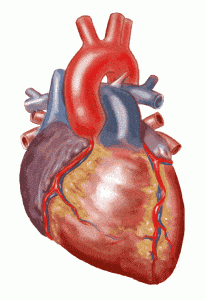
A group of tissues that perform a similar function is called_____. (Examples include the heart, lungs or stomach)
a)
cells
b)
tissues
c)
organs
d)
organ system
45.
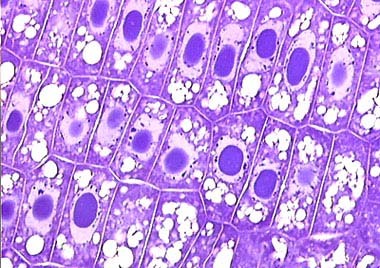
 A group of cells that have similar functions? Examples are nervous, epithelial, muscle and connective
a)
cells
b)
tissues
c)
organs
d)
atoms
46.
Which system absorbs oxygen and releases carbon dioxide?
a)
respiratory
b)
excretory
c)
endocrine
d)
immune
47.
Which system sends electrical messages that helps control the body's responses to internal and external changes?
a)
nervous
b)
endocrine
c)
reproductive
d)
integumentary
48.
Lungs are the primary organs of this system.
a)
muscular system
b)
nervous system
c)
circulatory system
d)
respiratory system
49.
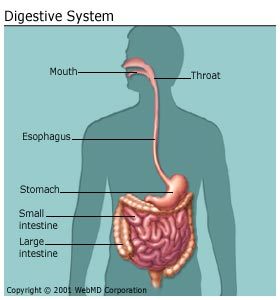
Major organs of the digestive system
a)
Kidneys, nephrons
b)
Stomach, intestines, mouth
c)
Heart, blood vessels, blood
d)
Liver, kidneys, heart
50.
Major organs of the nervous system
a)
Kidneys, nephrons
b)
Stomach, intestines, mouth
c)
Heart, blood vessels, blood
d)
Brain, spinal cord, nerve
51.
Major organs of the skeletal system
a)
Muscles, tendons
b)
Bones, ligaments
c)
Marrow, periostium, nerves
d)
Ribs, quadriceps, femur
52.

Heart, blood vessels, blood

a)

Digestive system

b)

Excretory system

c)

Cardiovascular system

d)

Immune system

53.
Nose, trachea, lungs, alveoli
a)
Respiratory system
b)
Endocrine system
c)
Muscular system
d)
Skeletal system
54.

Kidneys, lungs, skin, nephrons

a)

Digestive system

b)

Urinary system

c)

Integumentary system

d)

Respiratory system

55.
Major organs of the muscular system
a)
Shoulder-blade, kneecap, triceps
b)
Muscles, tendons
c)
Bones, ligaments
d)
Heart, intestines, stomach
56.
Pituitary gland, pancreas, thyroid, adrenal gland
a)
Digestive system
b)
Integumentary system
c)
Endocrine system
d)
Immune system
57.
Which body system is responsible for producing offspring?
a)
reproductive
b)
respiratory
c)
digestive
d)
skeletal
58.

The respiratory system works together with the ____ system so that all cells of the body receive oxygen.

a)

nervous

b)

endocrine

c)

cardiovascular

d)

integumentary

59.
This system provides the body with support, shape, and it helps to protect vital organs. 
a)
nervous
b)
unrinary
c)
skeletal
d)
muscular
60.
This system eliminates solid wastes from the body. 
a)
digestive
b)
respiratory
c)
cardiovascular
d)
immune
61.
The integumentary system includes all the following EXCEPT
a)
red blood cells
b)
hair
c)
skin
d)
fingernails
62.
This system regulates the metabolism and works with other systems to regulate horomones.  The thyroid gland is an organ of this system.  
a)
nervous
b)
reproductive
c)
digestive
d)
endocrine
63.
This system controls all other systems. 
a)
respiratory
b)
nervous
c)
endocrine
d)
integumentary
64.
The skeletal system works together with the _____ system so that the body can move.  
a)
muscular
b)
urinary
c)
excretory
d)
immune
65.
Which organ belongs to the digestive system?
a)
heart
b)
stomach
c)
femur
d)
brain
66.
Which organ system does the hair belong to?
a)
Lymphatic
b)
Integumentary
c)
Circulatory
d)
Skeletal
67.
Which organ belongs to the endocrine system?
a)
pancreas
b)
small intestine
c)
gluteus maximus
d)
spinal cord
68.
Which organ belongs to the reproductive system?
a)
ovaries
b)
spleen
c)
large intestine
d)
liver
69.
Which organ belongs to the reproductive system?
a)
gluteus maximus
b)
humerus
c)
radial artery
d)
testes
70.
Which organ system do the kidneys belong to?
a)
reproductive
b)
urinary
c)
respiratory
d)
digestive
71.
The ___________ belongs to the integumentary system.
a)
heart
b)
skin
c)
cranium
d)
spinal cord
72.
The veins of the body belong to which organ system?
a)
nervous
b)
lymphatic
c)
digestive
d)
circulatory
73.
The gluteus maximus belongs to which organ system?
a)
skeletal 
b)
endocrine
c)
respiratory
d)
muscular
74.
Which organ belongs to the urinary system?
a)
bladder
b)
spleen
c)
pineal body
d)
heart
75.

Which of the following is a survival need?

a)

growing

b)

reproduction

c)

movement

d)

breathing oxygen

76.

What do we need to proper atmospheric pressure?

a)

the atmospheric pressure can directly affect oxygen intake

b)

the atmospheric pressure can affect directly body temperature

c)

the atmospheric pressure can directly affect the urinary system

d)

the atmospheric pressure can directly affect reproduction of offspring

77.

Which of the following is not a necessary life function?

a)

oxygen

b)

movement

c)

reproduction

d)

boundaries

78.

What is an example of a microscope boundary?

a)

cell wall

b)

cell membrane

c)

skin

d)

bone

79.

Which of the following is not a necessary life function?

a)

Movement

b)

Temperature

c)

Metabolism

d)

Responsiveness

80.

Which is not an example of movement that represents life?

a)

blood circulation

b)

diffusion of chemicals

c)

contracting muscles

d)

tears rolling down face

81.

Which of the following is NOT an example of excretion?

a)

sweating

b)

breathing out carbon dioxide

c)

bleeding

d)

urinating

82.

Which of the following is NOT an example of growth?

a)

liver is 10 ounces and increases to 3 pounds

b)

heart increases from two chambers to four

c)

waist changes from 25 inches to 30 inches

d)

overall body weight changes from 100 pounds to 110 pounds.

83.

Which of the following is not an example of responsiveness.

a)

pupils dilating

b)

sweating

c)

sleeping

d)

heart rate increasing

84.

If your body temperature raises too high the _____ at the microscopic level can be altered in structure and stop working.

a)

kidneys

b)

enzymes

c)

substrates

d)

lungs

85.
What is mean by homeostasis?
a)
Controls and coordinates body activities through chemical 
b)
controls and coordinates body activities through electrical impulses
c)
For maintenance of a steady state in the internal environment
d)
remove metabolic waste products from the cel
86.
Which of the following is an example of positive feedback to indirectly maintain homeostasis?
a)
the chemical reactions involved in blood clotting
b)
your blood vessels dilate and you begin to sweat in response to elevated body temperature
c)
your blood vessels constrict and you begin to shiver in response to low body temperature
d)
your coach compliments you on your performance in practice
87.
Homeostasis
a)
allows for a wildly fluctuating internal environment
b)
is impossible in vertebrates
c)
is the maintenance of a relatively stable internal environment and often incorporates a form of feedback regulation
d)
is the maintenance of a relatively stable external environment and often incorporates a form of feedback regulation
88.
Homeostasis in the human body is often maintained by a: 
a)
neutral feedback loop 
b)
solar feedback loop
c)
positive feedback loop
d)
negative feedback loop
89.
Positive feedback is when the change caused by the stimulus is
a)
decreased
b)
non existant
c)
increased
d)
changes constantly
90.
When you are cold, you shiver and your blood vessels contract, which warms you up. When you are hot, you sweat and your blood vessels expand, which cools you down.  
a)
Positive Feedback Response
b)
Negative Feedback Loop 
91.
If the calcium in your blood decreases below homeostasis levels, a gland in the brain will sense the decrease and send a chemical message to your bones. Your bones will release calcium into the blood, bringing blood calcium levels back up.
a)
Positive Feedback Response
b)
Negative Feedback Loop 
92.

This is the term used to describe a body part that provides the response needed to influence a change.

a)

control center

b)

effector

c)

sensor

d)

set point

93.

receives and analyzes information received from the sensors

a)

control center

b)

effector

c)

sensor

d)

response

94.

A noticeable change in an organism's environment.

a)

control center

b)

response

c)

stimulus

d)

set point

95.

The patella is ______________ to the sural.

a)

anterior

b)

posterior

c)

inferior

d)

distal