
 Worksheets
GCA PhySci IA3 Review
Total questions: 93
Worksheet time: 1hrs 16mins


I'm thinking of a circuit has more than one loop. When one light goes out, the others stay on.
closed circuit
series circuit
parallel circuit
open circuit


What type of circuit is this picture?
parallel
series
open
Use your equation sheet.
What size resistor would produce a 3 Amp current flow with a 12 Volt battery
1 Ohm
3 Ohms
4 Ohms
12 Ohms
Use your equation sheet.
What is the Voltage of a circuit that has a resistance of 5 Ω and a current of 2 A?
25 V
10 V
2.5 V
0.4 V
Use your equation sheet.
If the battery produced 12 Volts what would be the current flow for a 6 Ohm resistor?
2 Amps
0.5 Amps
72 Amps
18 Amps

Which of the following describes the bending of a wave due to its change of speed.
Reflection
Diffraction
Refraction
Dispersion

When a wave front moves through a barrier which is of a width of similar wavelength is referred to as
Reflection
Refraction
Radiation
Diffraction

When waves meet and superpose forming a wave with either a larger or smaller amplitude
Radiation
Interference
Diffraction
Microwaves

What type of interference is occurring in the picture?
Constructive
Destructive

This illustration best depicts which of the following behaviors?
Reflection
Refraction
Diffraction
Resonance
What type of relationship to pressure and volume have?
direct
inverse
no relationship
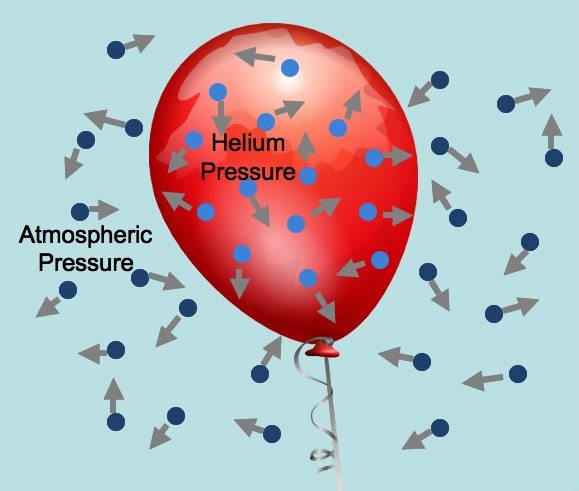
A student inflates a balloon with helium then places it in the freezer. The student should expect
the balloon's volume to increase
the balloon's volume to decrease
the balloon's temperature to increase
the balloon's density to decrease
If a hairspray can is heated, what can be expected of the pressure of the gas inside the can?
The pressure will increase
The pressure will decrease
The pressure will remain constant
The pressure will equalize
The number of valence electrons that a neutral atom has determines its
state.
color.
conductivity.
reactivity.


In general, the more energy a wave has the greater the amplitude.
True
False
For a wave, the larger the amplitude, the _____ energy the wave carries.
more
less

What characteristics feature of wave is indicated by the letter C on the diagram?
amplitude
loudess
frequency
wavelength
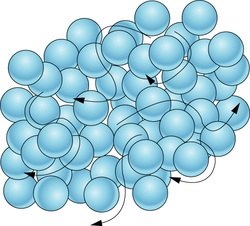
What state of matter does this picture show?
Solid
Liquid
Gas
What is the best definition of temperature?
How hot or cold something is
A measure of how fast the molecules are moving in a sample (on average)
How hot or cold something feels to a person
A measure of the density of a sample
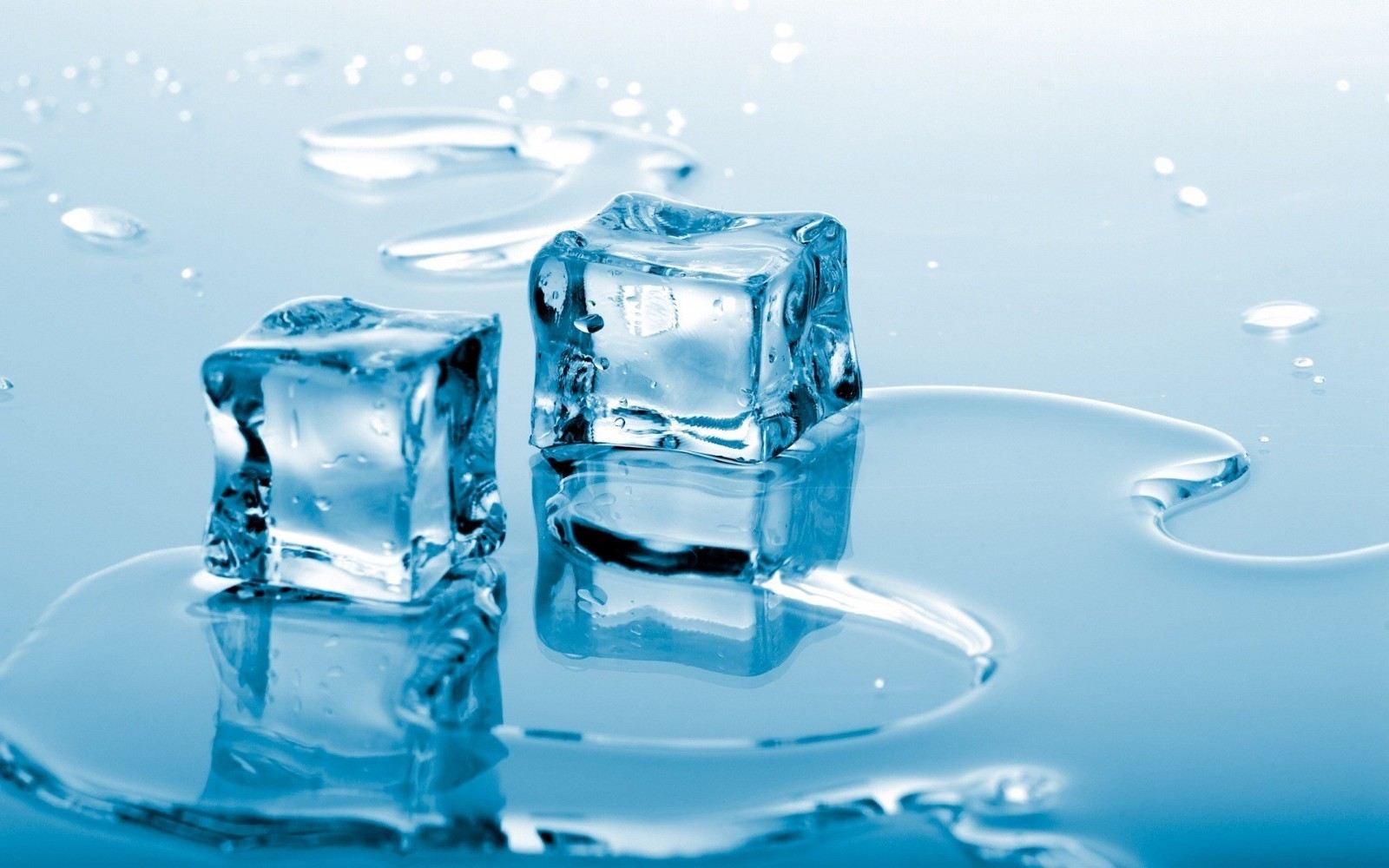
What is happening in this picture of ice melting?
Molecules are speeding up
Molecules are slowing down


USE THE PERIODIC TABLE
How many valence electrons does sodium (Na) have?
1
11
22.99
34
USE THE PERIODIC TABLE
How many valence electrons does Phosphorus have?
31
5
15
4
Use your Periodic Table.
How many valence electrons are found in atoms of group 14?
4
3
14
16
Which elements have the most similar chemical properties?
boron and carbon
oxygen and sulfur
aluminum and bromine
argon and silicon
USE THE PERIODIC TABLE
Find the element that has 3 Valence Electrons and 2 energy levels.
Magnesium - Mg
Lithium - Li
Aluminum - Al
Boron - B
USE THE PERIODIC TABLE
Find the element that has 5 Valence Electrons and 4 energy levels.
Arsenic - As
Selenium - Se
Calcium - Ca
Vanadium - V
All atoms are most stable with (or would "prefer") how many electrons in their valence shell?
1
2
8
18
Why are halogens so reactive?
They want to get rid of their only valance electron
They only need one more electron
They are non reactive, they have a full shell
A cation is a ____ ion.
negative
positive
neutral
asynchronous
An anion will be a ____ ion.
negative
positive
neutral
synchronous

Mass: 1 amu

Mass: 1 Amu

Mass: Almost Nothing


Use your periodic table.
Sodium (Na) ionizes and becomes a _______ cation.
+1
+2
-1
-2
Magnesium (Mg) loses 2 electrons when it ionizes. It ends up with a charge of ______.
+1
+2
-1
-2
Use your periodic table.
Nitrogen (N) forms and ion with a charge of _______.
+3
-3
+2
-2
Oxygen (O) gains 2 electrons when it ionizes to have a charge of ________.
+1
+2
-1
-2
Use your periodic table.
Fluorine ionizes to obtain a charge of ________.
-2
-1
+1
+2

If an atom has an equal number of protons and electrons it is a...
Positive cation ion
Negative anion ion
Isotope
Neutral atom

What is the atomic mass of "F" rounded to the nearest whole number.
9
18
17
19

How many electrons will a neutral atom of Carbon have?
6
12
8
4

Metal
Nonmetal
Metalloid

Metal
Nonmetal
Metalloid

Metal
Nonmetal
Metalloid
Select all properties of METALS.
good conductors of heat and electricity
brittle
malleable and ductile
lustrous
semiconductor
Select all properties of METALLOIDS.
Good conductors of heat and electricity
brittle
shiny and solid at room temperature
semiconductor
low melting point, gases at room temperature
Select all properties of NONMETALS.
good conductors of heat and eletricity
good insulators; poor conductors
brittle
malleable and ductile
form cations or no ions


Use your equation sheet, or just think about how mass and acceleration are related!
A force of 50 N is exerted by both teams. The dogs have a mass of 50 kg and the people have a mass of 100 kg. Which team will have the greater acceleration?
The people accelerate more
The dogs accelerate more
They will both accelerate at the same rate.

What kind of inertia should a dog have to be successful in an agility competition?
high
low
inertia does not affect how easy it is to turn
zero


The picture showing the energy conversion
Chemical → heat
is:


The picture showing the energy conversion
Chemical → light & heat
is:


What is the energy transformation in the picture
Electrical to thermal
Sound to mechanical
Electrical to mechanical
Mechanical to electrical

Use your equation sheet.
A box of 50 Newtons of weight FB is lifted by a 10 N force FA using a lever as shown below.
What is the mechanical advantage of the lever?
0.2
5
60 N
500 N
Use your equation sheet.
Using a lever, Joe is able to lift a 10,000 N car off of the ground with a force of 1000 N. What is the mechanical advantage of the lever?
1
10
0.1
1000

Use your equation sheet.
The mechanical advantage of this inclined plane is...
2.4
3.4
0.416
177 N
Check all true statements about a mechanical wave.
It must have a medium (matter) to move through.
It can travel through outer space.
Their frequency and wavelength are inversely related.
They can refract, reflect, diffract and undergo interference.
They can undergo the Doppler Effect.
Check all true statements about an electromagnetic wave.
It must have a medium (matter) to move through.
It can travel through matter or a vacuum.
Their frequency and wavelength are inversely related.
They can refract, reflect, diffract and undergo interference.
They can undergo the Doppler Effect.
Which group on the Periodic Table represents the halogens?
1
2
17
18
Which group on the Periodic Table represents the alkaline earth metals?
1
2
17
18
Which group on the Periodic Table represents the Nobel gases?
1
2
17
18

Use your equation sheet.
In 3 seconds, the dog covers 15 meters of ground. Find the average speed of the dog.
5 m/s
45 m/s
0.2 m/s
18 m/s

Use your equation sheet.
The dog sped up from 2 m/s to 6 m/s. It took 4 seconds. What is the dog's average acceleration?
1 m/s^2
2 m/s^2
0.5 m/s^2
1.5 m/s^2

Use your equation sheet.
A 3 kg dog exerts 12 newtons of force. At what rate does he accelerate?
4 m/s^2
0.25 m/s^2
36 m/s^2
9 m/s^2
Use your periodic table to find the average atomic mass of Nitrogen (N).
7
5
14.01
21.01

