
 Worksheets
Genetics
Total questions: 97
Worksheet time: 2hrs 46mins

Short = S
Short = t
Short = T
Short = tt

B = brown eyes
b = blue eyes
One brother has genotype BB and the other brother has genotype Bb.
Which statement is true about these two brothers?
They have same phenotype and genotype
They have different phenotypes and genotypes
They have same phenotype, but different genotypes
They have different phenotypes, but the same genotype


Sickle cell disease is an autosomal recessive disease that results in misshapen blood cells, which prevent oxygen from getting to the cells in the body. Determine the genotype of a person with sickle cell anemia.
SS
Ss
ss
Hemophilia is a sex-linked recessive disorder. The abnormal gene responsible for hemophilia is carried on the X chromosome. Identify a female that has hemophilia.
XhXh
XHXh
XhY
XHY
Hemophilia is a sex-linked recessive disorder. The abnormal gene responsible for hemophilia is carried on the X chromosome. Identify a male that has hemophilia.
XhXh
XHXh
XhY
XHY
Hemophilia is a sex-linked recessive disorder. The abnormal gene responsible for hemophilia is carried on the X chromosome. Identify a female that is a carrier.
XhXh
XHXh
XhY
XHY
Marfan syndrome is an autosomal dominant disease that affects the connective tissue in the heart, eyes, blood vessels, and bones. Determine the genotype of a person that does not have Marfan syndrome
MM
Mm
mm

DNA is an acronym for _____
Diphosphorus Nucleic Acid
Ribose Nucleic Acid
Deoxyribonucleic Acid
Deoxyribonucleic Acetate

A gene is (mark all that apply)
A distinct portion of the somatic cells responsible for increasing hormone concentrations during interphase
A distinct sequence of nucleotides forming part of the chromosome
A unit of heredity transferred from the parents to their offspring
A type of protein

Primary functions of DNA are (mark all that apply)
Transmit information on heredity from one generation to the next
Control cellular respiration
Regulate homeostasis
Provide a blueprint for making proteins

A nucleotide is composed of
A phosphate, sugar and nitrogenous base
A protein, protein and Guanine
A phosphate, Adenine, and nitrogenous base
A protein, Adenine and nitrogenous base
RNA is different than DNA because ___ (Mark all that apply)
It is a single strand instead of a double helix
It contains Uracil instead of Thymine
It is an nucleic acid instead of an amino acid
It is shorter in length
ATG TGA CAG
CAT TCA CTG


In DNA. what base always pairs with A?
A
T
C
G

DNA sends a messenger with a copy of the code out of the nucleus to make proteins. What is that messenger?
mRNA
Uracil
DNA
phosphate

What are proteins made of?
Amino acids
chloroplasts
guanine
carbohydrates

Fill in the matching bases that would appear on the top strand of the DNA molecule pictured, in order.
A G T C A T G A
A G T C A T G A
T T T A A A C C
T C A G T A C T
C A T G A G A T

Challenge- How many TOTAL NUCLEOTIDES are there in the DNA molecule pictured?
5
10
2
20


Which organelle makes proteins?
ribosome
nucleus
mitochondria
chloroplast
Which type of RNA is the message of the decoded gene from DNA?
mRNA
rRNA
tRNA
rDNA
Which type of RNA is the carrier of amino acids?
mRNA
rRNA
tRNA
DNA
What is translation?
the process in which DNA is copied to make another molecule of DNA
the process in which DNA is coded into mRNA
the process in which mRNA is decoded into a protein
the process in which enzymes break down mRNA
The DNA sequence ATC-AGC-GCT-GGC is part of a gene. how many amino acids are coded for by this message?
4
8
3
12
What are the building blocks of proteins called?
Nucleic Acids
Glucose
Amino Acids
Phosphate Groups
In RNA _______ matches with Adenine
Uracil
Guanine
Cytosine
Thymine
In DNA _______ matches with Adenine
Uracil
Guanine
Cytosine
Thymine

Which amino acid matches with the following codon:
GAU
GLU
SER
ASP
ILE
Which amino acid matches with the following codon:
CAC
STOP
HIS
LYS
ARG

Use the mRNA below to select the correct amino acid sequence:
AUG-UCA-AAA-UAG
MET-SER-LYS-STOP
MET-THR-LYS-TYR
LEU-SER-CYS-STOP
ILE-LYS-SER-STOP
Where does TRANSCRIPTION occur?
Nucleus
Ribosome
Cytoplasm
Mitochondria
Why must transcription occur where DNA can be found?
because DNA can't leave
because ribosomes are in the nucleus
because DNA polymerase is found there
because helicase unzips the DNA

A polypeptide is a sequence of ____________________ held together by a ______________ bond.
amino acids; peptide
fatty acids; ionic
proteins; hydrogen
fatty acids; covalent
Which enzyme is responsible for unzipping the DNA for replication?
(a)
Which enzyme is responsible for proofreading the new DNA during replication?
(a)
Which enzyme is responsible for "transcription" of DNA?
(a)

Mutation: ATC GCAT
What mutation occurred?
T-G-A-C-C-A
T-G-A-G-C-A
Nondisjunction
When a segment of a chromosome breaks off.
When a segment of a chromosome breaks off, flips, and reattaches.
When a segment of a chromosome is copied or doubles.
When a segment of a chromosome breaks and attaches to a non homologous chromosome.
When entire chromosomes don't separate evenly during meiosis.


What are chromosomes 1-44 called?
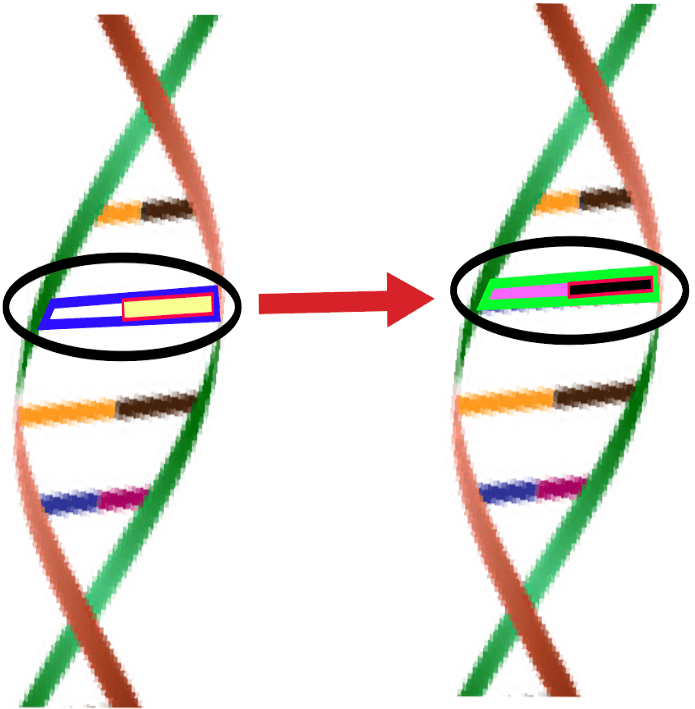
A permanent change in the DNA sequence
which can affect a single gene or group of genes
Homeostasis
Somatic Cell
Chromosomal Mutation
Gene Mutation

One nucleotide base is changed so only one amino acid
is affected
Substitution Mutation
Point Mutation
Translocation
Inverse Mutation

Failure of homologous chromosomes
to separate during meiosis.
Results in gametes with either one extra or one missing chromosome.
Translocation
Nondisjunction
Replication
Transcription
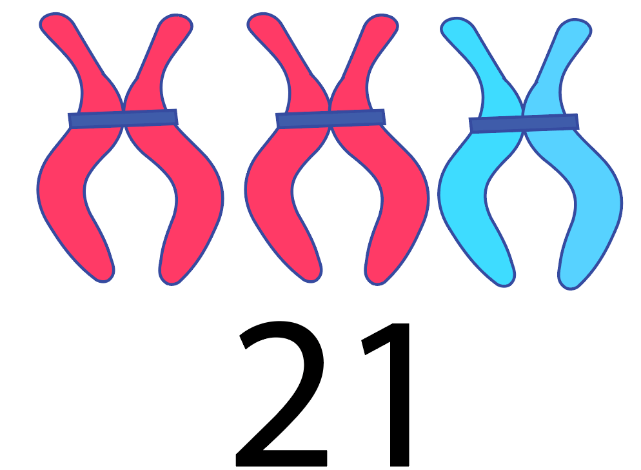
Condition caused by nondisjunction at pair 21 during meiosis.
Individuals have an extra chromosome
at pair 21, or a total of 47 chromosomes.
Also called Trisomy 21.
Cystic Fibrosis
Translocation
Hemophilia
Down Syndrome

A point mutation where DNA adenine (A)
is replaced by thymine (T) resulting in a single amino acid change during translation(affects blood cell
shape and function)
Encephelitis
Hemophilia
Sickle Cell Anemia
Influenza

Analyzes the inheritability of Sickle Cell Anemia,
a recessive trait that must be passed on
from both parents.
Nondisjunction Punnett Square
Hemophilia Punnett Sqaure
Cyctic Fibrosis Punnett Square
Sickle Cell Anemia Punnett Square
a photograph or picture of chromosomes grouped in ordered pairs is a ______________
pedigree
Punnett Square
Venn Diagram
Karyotype
A normal human zygote should have _____ chromosomes inside.
46
23
92
64


What is the environmental factor that influences the gene for black hair growth?
(a)
Example of selective breeding...
production of recombinant DNA in bacteria cultures
breeding two spotted dalmations to produce puppies with spots
cloning of sheep through the use of SCNT
production of "glo fish" with the use of restriction enzymes and gene splicing
Which of the following is used to cut DNA from organisms?
Gel Electrophoresis
Restriction Enzymes
Karyotypes
Haplotypes
A DNA molecule produced by combining DNA from different sources is called?
Mutant DNA
Polyploid DNA
Diploid DNA
Recombinant DNA
What is gene therapy?
Inserting copies of a healthy gene directly into cells with a mutated gene
Producing organisms with identical copies of DNA
Crossing two individuals that have similar desirable characteristics or traits
Crossing two individuals that have different characteristics or traits

If scientists engineer the DNA of tomatoes to make them survive in cold temperatures, what do type of technology do those tomatoes become?
Human Genome Project
Genetically Modified Organisms
Punnett Squares
Gene Therapy
Ideal temp for meat tenderizer (protease) activity in the DNA extraction lab
(a)
Used to break down the lipid membrane in the DNA extraction lab
(a)
Separated DNA from solution due to due to lack of solubility in this solution...
(a)

This laboratory procedure is known as
CLONING
gel electrophoresis
chromatography
use of a dichotomous key
In preparation for an electrophoresis procedure, enzymes are added to DNA in order to
convert the DNA into gel
cut the DNA into fragments
change the color of the DNA
produce longer sections of DNA

The parents of a new baby believe they brought the wrong child home from the hospital. Gel electrophoresis was performed using DNA samples from the parents and the child. A section of the gel
electrophoresis results is shown below. Which conclusion is valid based on the gel electrophoresis results?
They have the correct child, because her genetic information is identical to that of the father.
They have the wrong child, because her genetic information does not match that of either parent.
They have the correct child, because her genetic information came from both parents.
They have the wrong child, because her genetic information matches only that of the mother.

What is this technique an example of?
chromatography
gel electrophoresis
direct harvesting
genetic engineering

A student performed a gel electrophoresis experiment. The results are represented in the diagram
below. Compared to the fragments at the top of the gel, the fragments at the lower end are
larger, and move slower
larger, and move faster
smaller, and move faster
smaller, and move slower

Gel electrophoresis is used to separate DNA fragments on the basis of which property?
size
color
functions
chromosomes

What is the result of step 3?
a new type of molecular base is formed
different types of minerals are joined together
DNA from the bacterial cell is cloned
DNA from different organisms is joined together


