
 Worksheets
Thermal Energy
Total questions: 101
Worksheet time: 1hrs 11mins
Name
Class
Date
1.
As ice heats up from 0 ͒C to 10 ͒C, the average kinetic energy of its molecules will...
a)
Decrease
b)
Increase
c)
Remain the same
2.
Conduction is heat transfer by -
a)
Touch
b)
Circles
c)
Waves
3.
Convection is heat transfer by-
a)
Touch an object
b)
The heating and cooling of a fluid
c)
Electromagnetic Waves
4.

Warm air rises and the cool air sinks demonstrates this type of heat transfer.
a)
conduction
b)
convection
c)
radiation
d)
Insolation
5.

The heat from a hot burner to a pot is transferred by ______.
a)
convection
b)
insulation
c)
radiation
d)
conduction
6.

When the 2nd story of a house is warmer than the 1st floor of a house is heat transfer through
a)
conduction
b)
convection
c)
radiation
d)
thermal equilibrium
7.

The sun warming your skin is an example of heat transfer through
a)
conduction
b)
convection
c)
radiation
d)
thermal electricity
8.

Heat transfer through electromagnetic waves is called
a)
conduction
b)
convection
c)
radiaton
d)
thermal
9.
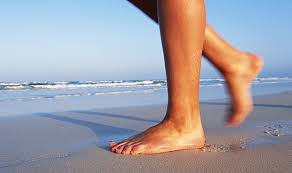
Walking on the warm sand sand with your bare feet demonstrates this type of heat transfer.
a)
conduction
b)
convection
c)
radiation
10.

A group of friends gather around a fire to stay warm.
a)
conduction
b)
convection
c)
radiation
11.
Hot coffee is stirred with a spoon; the spoon gets hot due to
a)
conduction
b)
convection
c)
radiation
12.
What type of heat transfer takes place in solids?
a)
Conduction
b)
Convection
c)
Radiation
13.
What type of heat transfer takes place in liquids and gasses?
a)
Conduction
b)
Convection
c)
Radiation
d)
Thermal Equilibrium
14.
As you touch a hot stove the heat transfers -
a)
from your hand to the stove
b)
from the stove to your hand
c)
It doesn't transfer
15.
Heat transfer always goes from-
a)
Cold to Hot
b)
Hot to Cold
c)
Heat doesn't transfer
d)
Freezing to Cold
16.
What happens to particles as they heat up?
a)
They slow down
b)
Nothing
c)
They don't move
d)
They speed up
17.
What happens to particles as they cool down?
a)
They slow down
b)
Nothing
c)
They don't move
d)
They speed up
18.
Mittens help keep your hands warm in winter because:
a)
They are conductors of heat.
b)
They are fuzzy.
c)
They are conductors of electrical energy.
d)
They are insulators.
19.
Conductors are materials that...
a)
Allow heat to pass through
b)
Stop heat from passing through
c)
Allow cold to pass through
d)
Stop cold from passing through
20.
An object that doesn't conduct heat well is known as:
a)
a conductor
b)
an insulator
c)
conduction
d)
insulation
21.
Conduction, Convection and Radiation are three types of...
a)
Electrical energy
b)
Thermal Energy
c)
Chemical Energy
d)
Sound Energy
22.

What two kinds of heat transfer are represented?
a)
stove→pot=radiation pot→egg=conduction
b)
stove→pot=conduction pot→egg=radiation
c)
stove→pot=convection pot→egg=conduction
d)
stove→pot=conduction pot→egg=convection
23.
Which of the following is an example of conduction?
a)
Solar energy warming a room.
b)
Heat rising from the coils of a stove.
c)
Hot air drying a wet towel.
d)
Heat moving from a clothes iron to a shirt.
24.
Thermal energy transfer by conduction is accomplished when heat moves from a warmer object to a cooler one by -
a)
moving across a solid barrier.
b)
being carried in a fluid, like air or water.
c)
coming in direct physical contact with it.
d)
traveling through empty space.
25.
Which of following is a conductor?
a)
Wooden Stick
b)
Styrofoam Cooler
c)
Metal Pot
d)
Plastic Container
26.
An example of a situation in which an egg is receiving thermal energy through convection -
a)
The egg is kept warm by its mother in the nest.
b)
An egg cracked on a hot sidewalk starts to cook.
c)
The egg is hard boiled in a pot of water.
d)
A metal pan on the stove fries the egg.
27.

In the situation illustrated, how will heat energy move? Heat energy will be transferred from –
a)
the water to the hot plate by convection.
b)
the water to the hot plate by conduction.
c)
the hot plate to the water by convection.
d)
the hot plate to the water by conduction.
28.
What type of material makes the best conductor?
a)
Food
b)
Wood
c)
Styrofoam
d)
Metal
29.
Which example below is an example of conduction?
a)
Boiling macaroni
b)
The attic is warmer than the basement
c)
The Sun heating the Earth
d)
Touching hot sand with your feet
30.
Which example below is an example of convection?
a)
Standing on a hot metal bridge
b)
The attic is warmer than the basement
c)
The Sun heating the Earth
d)
Touching hot sand with your feet
31.
Which example below is an example of radiation?
a)
Standing on a hot metal bridge
b)
The attic is warmer than the basement
c)
The Sun heating the Earth
d)
Touching hot sand with your feet
32.
Hot objects begin to cool as-
a)
cooler air is transferred to the hot object.
b)
thermal energy in the object is transferred to the surrounding air.
c)
atoms in the object react with the oxygen in the air.
d)
thermal energy in the object cancels out energy in the air
33.
Convection could occur in which of the materials below?
a)
A block of wood
b)
The ocean
c)
A bowl of ice cream
d)
In space
34.
Which sentence explains why a cold metal spoon placed in a pot of boiling water becomes hot?
a)
Thermal energy is transferred from the spoon to the water.
b)
Thermal energy is transferred from the water to the spoon.
c)
Thermal energy in the water is transformed into kinetic energy in the spoon.
d)
Thermal energy in the spoon is transformed into kinetic energy in the water.
35.
What evidence demonstrates that convection currents are at work?
a)
Food coloring spreads throughout a glass when the water in the glass is stirred
b)
Smoke rises from a lighted candle wick
c)
The handle of a pan on a stove gets hot
d)
Your face feels warm sitting beside a fire
36.

Darth Vader is using a light saber. The light saber transfers heat through-
a)
Conduction
b)
Convection
c)
Radiation
37.
Matter will change from one state to another if thermal energy is _______.
a)
released
b)
absorbed
c)
all of the above
d)
none of the above
38.
What do you call the temperature at which a substance changes from a liquid to a solid?
a)
Melting Point
b)
Boiling Point
c)
Freezing Point
d)
Solid Point
39.
As the thermal energy of a substance increases, its particles spread out and the substance expands.
a)
True
b)
False
40.
The particles of a gas move ____than the particles of the same substance in the liquid or solid state.
a)
faster
b)
slower
c)
same speed
41.
The change of state from a solid to a liquid is called ______.
a)
Freezing
b)
Boiling
c)
Melting
42.
What is the freezing point on the celsius scale?
a)
0
b)
32
c)
100
d)
-100
43.
Thermal energy and temperature are the same.
a)
True
b)
False
44.
Which of the following are kinds of heat transfer.
a)
Conduction
b)
Convection
c)
Radiation
d)
All of the above
45.
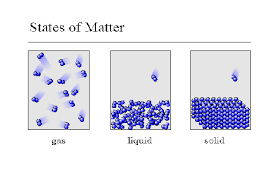
At higher temperatures
a)
particles in an object have less energy
b)
particles in an object move faster
c)
a gas contracts
46.
Freezing
a)
Solid to gas
b)
Liquid to solid
c)
Gas to solid
d)
Liquid to gas
47.
Boiling
a)
liquid to gas
b)
gas to solid
c)
gas to liquid
d)
solid to liquid
48.
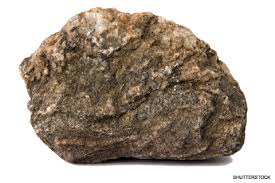
Which state of matter has tightly packed molecules?
a)
solid
b)
liquid
c)
gas
49.
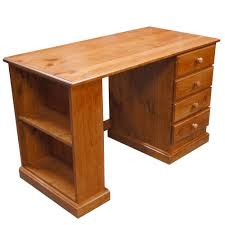
Which state of matter has a definite shape?
a)
solid
b)
liquid
c)
gas
50.
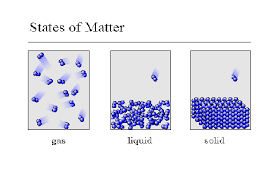
A gas
a)
has a definite shape but no definite volume
b)
has a definite volume but no definite shape
c)
has fast-moving particles
51.
Which state of matter has a definite shape?
a)
solid
b)
liquid
c)
gas
52.
What is happening when my ice cream changes from a solid to a liquid?
a)
freezing
b)
melting
c)
burning
d)
evaporation
53.
Define a liquid.
a)
Indefinite shape, indefinite volume
b)
Definite shape, definite volume
c)
Found in stars
d)
Definite volume, indefinite shape
54.
The state of matter that has no definite size or shape is
a)
Solid
b)
Liquid
c)
Gas
55.
Particles (molecules) in a ______________________ have more energy than the other states of matter.
a)
gas
b)
solid
c)
liquid
56.
Particles of a liquid
a)
are tightly packed together and stay in a fixed position.
b)
have no viscosity.
c)
decrease in volume with increasing temperature.
d)
are free to move around one another but still touch.
57.
What term describes a solid changing to a gas?
a)
Deposition
b)
Sublimation
c)
Evaporation
d)
Freezing
58.
Particles (molecules) in a ______________________ have more energy than the other states of matter.
a)
gas
b)
solid
c)
liquid
59.
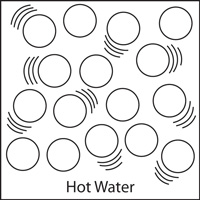
The speed of the molecules determines the _____.
a)
volume
b)
density
c)
pressure
d)
temperature
60.
What is condensation?
a)
gas to solid
b)
gas to liquid
c)
liquid to solid
d)
solid to liquid
61.
Which has a greater distance between particles?
a)
Solid
b)
Liquid
62.
The slower the particles in a substance move,
a)
the colder it is.
b)
the warmer it is.
c)
the more energy it has.
d)
the less energy it has.
63.
Thermal energy is...
a)
heat energy.
b)
the energy of motion
c)
energy of nuclear processes.
d)
an indication of physical change.
64.
Which of the following terms identifies the change from a liquid to gas?
a)
Vaporization
b)
Condensation
c)
Deposition
d)
Sublimation
65.
Which of the following terms identifies the change from a liquid to solid?
a)
Melting
b)
Condensation
c)
Vaporization
d)
Freezing
66.
When the temperature of matter increases the particles...
a)
speed up and move closer
b)
speed up and move farther apart
c)
slow down and move closer together
d)
slow down and move farther apart
67.
No Definite Shape and No Definite Volume
a)
Gas
b)
Liquid
c)
Solid
68.
Definite shape and a definite volume.
a)
Gas
b)
Liquid
c)
Solid
69.
No definite shape, but has a definite volume
a)
Gas
b)
Liquid
c)
Solid
70.
Phase change from a solid to a gas.
a)
sublimation
b)
deposition
c)
condensation
d)
evaporation
71.
Phase change from a solid to a liquid.
a)
melting
b)
sublimation
c)
boiling
d)
condensation
72.
Phase change from a liquid to a gas that only happens at the surface.
a)
evaporation
b)
boiling
c)
sublimation
d)
melting
73.
When the temperature of matter increases the particles...
a)
speed up and move closer
b)
speed up and move farther apart
c)
slow down and move closer together
d)
slow down and move farther apart
74.
When the temperature of matter decreases the particles ...
a)
speed up and move farther apart
b)
speed up and move closer together
c)
slow down and move farther apart
d)
slow down and move closer together
75.
Phase change from a gas to a liquid.
a)
condensation
b)
evaporation
c)
melting
d)
deposition
76.
The opposite phase of melting is
a)
freezing
b)
sublimation
c)
condensation
d)
deposition
77.

In which state are the particles least able to move? (Which is the solid?)
a)
State A
b)
State B
c)
State C
d)
None
78.
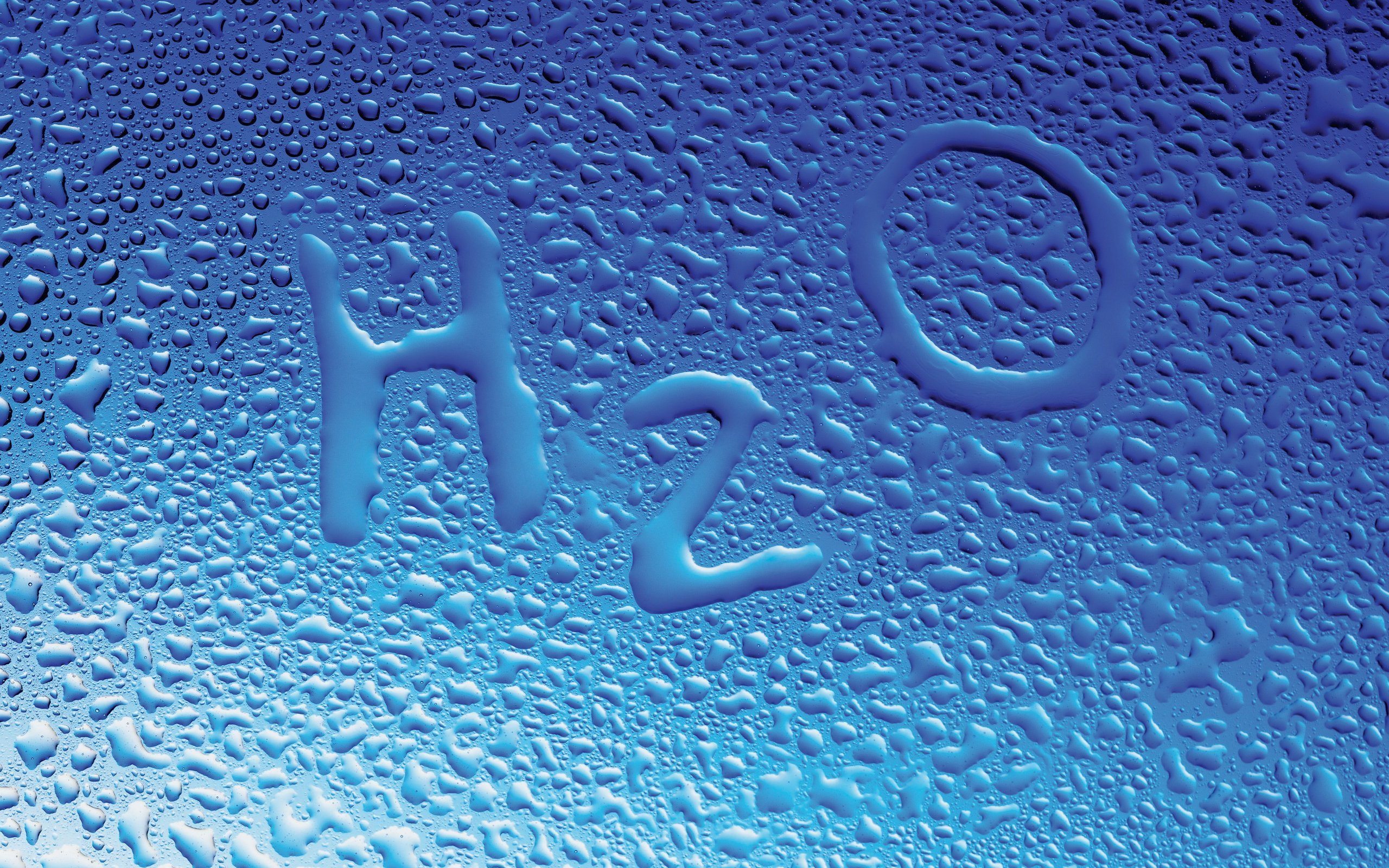
The phase change from water vapor to liquid water is known as...
a)
evaporation
b)
precipitation
c)
condensation
d)
sublimation
79.
5. What is it called when a solid turns directly into a gas?
a)
Sublimation
b)
Condensation
c)
Liquid
80.
Change from Gas to Solid is called........
a)
Sublimation
b)
Deposition
c)
Fusion
d)
condensation
81.
Change from gas to liquid...
a)
condensation
b)
evaporation
c)
expansion
d)
movement
82.
Change from Liquid to Solid is call......
a)
fusion
b)
Freezing
c)
sublimation
d)
evaporation
83.
change from liquid to gas is called....
a)
expansion
b)
evaporation
c)
condensation
d)
sublimation
84.
All changes in the state of matter of a substance requires
a)
vibration
b)
water
c)
permission
d)
energy
85.
What happens to particles when they are heated?
a)
They speed up and spread out
b)
They slow down and compress
c)
They stop moving
d)
They move closer together and speed up
86.
What is deposition?
a)
Phase change from gas to solid
b)
phase change from liquid to solid
c)
Phase change from solid to gas
d)
Phase change from liquid to gas
87.
What is sublimation?
a)
phase change between solid and liquid
b)
pahse change from gas to solid
c)
phase change from solid to gas
d)
phase change from solid to solid
88.
Melting is ...
a)
liquid to solid
b)
solid to liquid
c)
solid to gas
d)
gas to liquid
89.
Freezing is...
a)
Solid to gas
b)
Liquid to solid
c)
Gas to solid
d)
Liquid to gas
90.
Boiling is ...
a)
liquid to gas
b)
gas to solid
c)
gas to liquid
d)
solid to liquid
91.
What tool do we use to measure temperature?
a)
Thermometer
b)
Ruler
c)
Balance
d)
Magnifying Glass
92.
A glass beaker is placed on a hot plate. Five hundred milliliters of room temperature water are added to the beaker. If the temperature continues to increase, the water in the beaker will most likely -
a)
turn into a solid
b)
become more dense
c)
turn into a gas
d)
show no change in temperature
93.
___ is the physical change in a matter from a liquid to a gas
a)
evaporation
b)
melting point
c)
boiling point
d)
condensation
94.
Water changes its state of matter when heat is added or taken away. When water reaches its boiling point the particles-
a)
are closer together
b)
stay the same
c)
are moving more rapidly
d)
are moving more slowly
95.
The point in which a solid changes to a liquid is called-
a)
melting point
b)
freezing point
c)
boiling point
d)
condensation
96.
solid + heat =
a)
solid
b)
liquid
c)
gas
97.
liquid + heat =
a)
solid
b)
liquid
c)
gas
98.
In an exothermic reaction, heat is ...
a)
taken in
b)
given out
99.
In an endothermic reaction, heat is ,,,
a)
taken in
b)
given out
100.
In an endothermic reaction the system is releasing energy.
a)
True
b)
False
101.
When iron nails get rusty, heat is released. What process is this?
a)
Exothermic
b)
Endothermic
100 %

