wayground logo

Free Printable Worksheets

Font size

S
M
L
XL
Worksheets

Earth Science Comprehensive Review 2020-2021

Total questions: 100

Worksheet time: 2hrs 59mins

Name
Class
Date
1.
A huge body of air that has similar temperature and humidity at any given height is called an __________________________.
a)
front
b)
jet stream
c)
air mass
d)
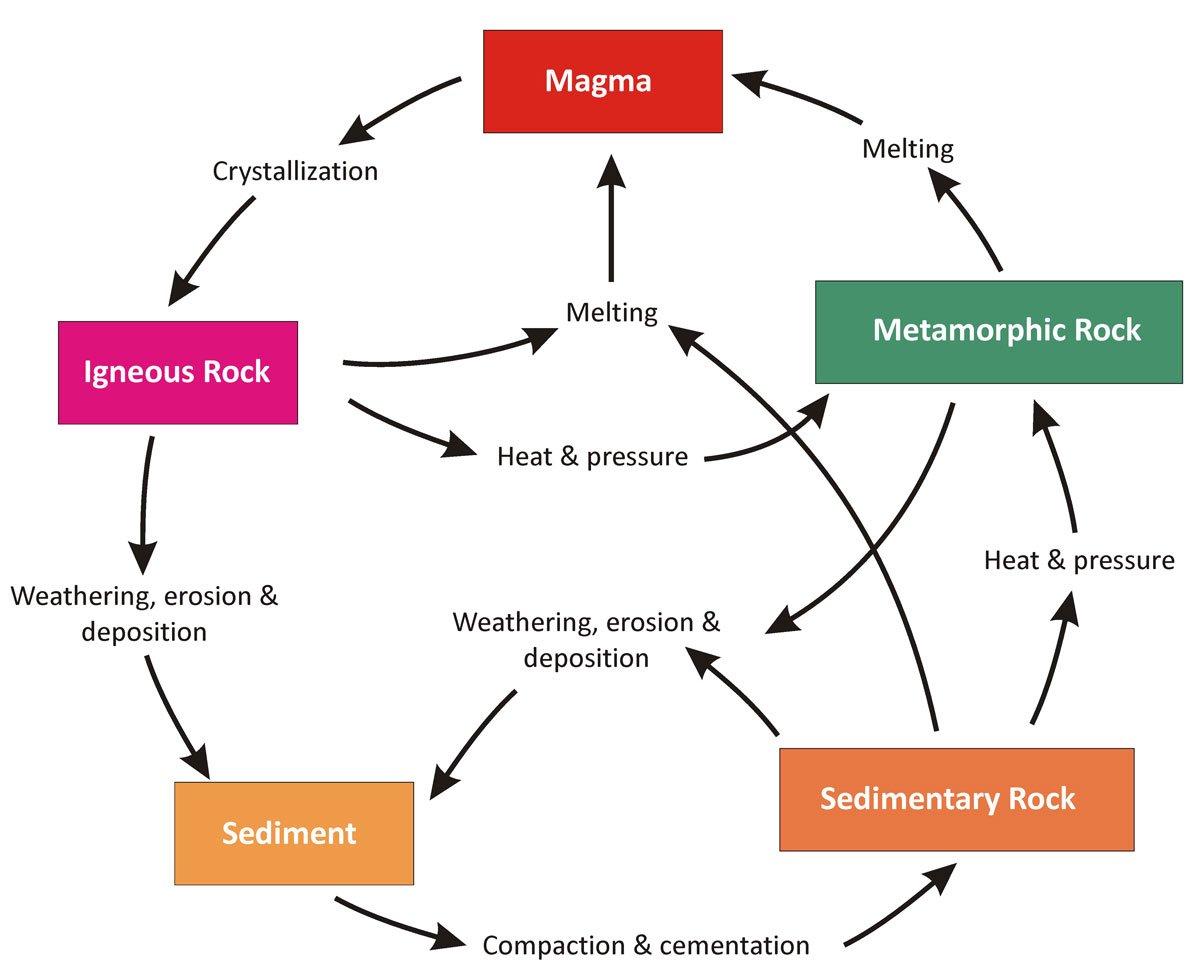
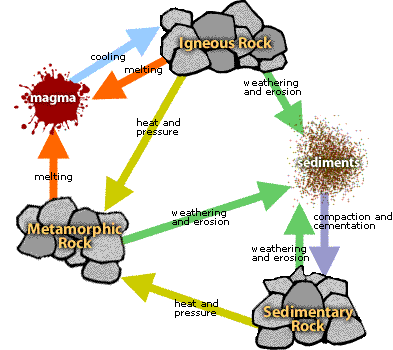
cyclone
2.
Which of the following air masses would be characterized as warm and dry?
a)
Maritime tropical
b)
Continental tropical
c)
Maritime polar
d)
Continental polar
3.
Which front would you possibly see heavy rain or snow fall?
a)
warm front
b)
cold front
c)
stationary front
d)
occluded front
4.
In the winter, Continental polar air masses bring what type of air to North America?
a)
dry and warm
b)
humid and cold
c)
dry and cold
d)
humid and warm
5.
Continental tropical air masses form from the South and bring what type of air to southern plains?
a)
dry and cold
b)
dry and warm
c)
humid and cold
d)
humid and warm
6.
The average, year-after-year conditions of temperature, precipitation, winds, and clouds in an area is known as ______________________.
a)
latitude
b)
weather
c)
climate
d)
altitude
7.
Which type of air mass brings cool, humid weather to the West Coast of the United States?
a)
maritime tropical
b)
continental tropical
c)
maritime polar
d)
continental polar
8.

Air masses are named for ______.

a)

the type of air they contain

b)

animals

c)

people

d)

where they form

9.
What kind of pressure predicts clear weather?
a)
high
b)
low
c)
cold
d)
stationary
10.

78% of the Earth's atmosphere is ___________ and 21% of the Earth's atmosphere is _____________.

a)

Oxygen, Nitrogen

b)

Nitrogen, Oxygen

c)

Nitrogen, Carbon Dioxide

d)

Oxygen, Carbon Dioxide

11.

In what layer of the atmosphere do all weather events occur?

a)

Stratosphere

b)

Exosphere

c)

Mesosphere

d)

Troposphere

12.

The ozone layer is a sublayer of the ________ layer.

a)

Troposphere

b)

Stratosphere

c)

Exosphere

d)

Mesosphere

13.

Why is the ozone layer vital to life on Earth?

a)

Planes fly in the ozone layer

b)

It is made up of oxygen (O2)

c)

It shields the Earth from ultraviolet (UV) rays from the sun

d)

It causes clouds to be created

14.

What is the order of the layers of the atmosphere, starting with the layer closest to Earth's surface?

a)

Stratosphere, Troposphere, Exosphere, Mesosphere, Thermosphere

b)

Troposphere, Stratosphere, Mesosphere, Thermosphere, Exosphere

c)

Troposphere, Stratosphere, Mesosphere, Exosphere, Thermosphere

d)

Troposphere, Stratosphere, Thermosphere, Exosphere, Mesosphere

15.

Which explanation correctly describes the greenhouse effect?

a)

The process of the atmosphere keeping the Earth's surface dense

b)

The process of the atmosphere trapping the sun's radiation, and making the Earth warm and livable for humans

c)

The process of the atmosphere keep us from floating into space

d)

The process of the atmosphere reflecting all of the Sun's heat back into space

16.

Hardness:

a)

It’s the ability of some minerals to break in geometric shapes

b)

It's the stripe colour of a mineral

c)

It's a measure of a mineral’s resistance to being scratched

d)

None of the answers is correct

17.
The color of a mineral in powder form is called the mineral's 
a)
hardness
b)
specific gravity
c)
luster
d)
streak
18.
How light reflects off of a mineral is called the mineral's 
a)
luster
b)
streak
c)
cleavage
d)
fracture
19.
The following image shows what mineral property?
a)
Hardness
b)
Streak
c)
Cleavage
d)
Density
20.
Diamond has a hardness of ___ on Mohs Hardness Scale.
a)
1
b)
5
c)
8
d)
10
21.
What mineral is the softest mineral on Moh's Hardness Scale and the main ingredient in baby powder?
a)
feldspar
b)
talc
c)
gypsum
d)
kaolinite
22.
Large crystals are going to form
a)
when lava erupts from a volcano
b)
when a shallow sea evaporates
c)
when magma underground cools off
d)
all of the above
23.
Formed by heat and pressure
a)
Sedimentary
b)
Metamorphic
c)
Extrusive Igneous
d)
Intrusive Igneous
24.
Formed by compacting & cementing of sediments
a)
Sedimentary
b)
Metamorphic
c)
Extrusive Igneous
d)
Intrusive Igneous
25.
Has large crystals because of slow cooling
a)
sedimentary rock
b)
metamorphic rock
c)
intrusive igneous rock
d)
extrusive igneous rock
26.
Fossils are only found in
a)
Sedimentary rocks
b)
Foliated Metamorphic rocks
c)
Igneous Rocks
d)
Nonfoliated Metamorphic rocks
27.
Which of the following are associated with volcanoes?
a)
Sediments and soil
b)
Crystals and sand
c)
Magma and lava
d)
Mica and granite
28.
What are the 3 major types of rocks?
a)
Igneous, Metamorphic, Sedimentary
b)
Metamorphic, Igneous, Cementation
c)
Brown, Red, Gray
d)
Streak, Hardness, Breakage
29.

This rock was formed when molten rock cooled into a solid. What type of rock is it?

a)

Igneous Rock

b)

Metamorphic Rock

c)

Sedimentary Rock

30.
What is the common name for Horizon A?
a)
bedrock
b)
topsoil
c)
parent material
d)
subsoil
31.
What is humus?
a)
organic material rich in nutrients
b)
subsoil
c)
parent material
d)
trees
32.
Subsoil is made mostly of
a)
parent material
b)
humus
c)
clay and silt
d)
bedrock
33.
What process breaks down bedrock to begin soil formation?
a)
leaching
b)
weathering
c)
decomposition
d)
humus
34.
Soil is made of
a)
weathered rocks and minerals
b)
dead plants and animals
c)
air and water
d)
all of the above
35.
Which layer of soil are these roots growing in?
a)
subsoil
b)
topsoil
36.
What happens to a rock when it weathers?
a)
It settles out of water that is carrying it.
b)
It creates a valley.
c)
It forms a delta.
d)
It breaks into small pieces.
37.
Which type of climate will have faster chemical weathering?
a)
Hot and Wet
b)
Cold and Dry
c)
Hot and Cold
d)
Cold and Wet
38.
What is mechanical weathering?
a)
Process through which rocks are physically broken into smaller pieces.
b)
Rocks are broken down through chemical changes.
c)
Rocks are worn away from acid in plant roots.
d)
Rocks broken down by machinery.
39.
During chemical weathering, what can happen to the type of rock that has undergone chemical weathering?
a)
a new rock is produced that is larger than the original rock
b)
a new rock is produced that is the same as the original rock
c)
a new rock is produced that is different from the original rock 
d)
no new rock is created - it is just smaller in size
40.

What is the process of moving sediments from location to another?

a)

Deposition

b)

Erosion

c)

Weathering

d)

Compaction

41.
The downhill movement of a large mass of rocks or soil because of the pull of gravity is called what? 
a)
Mudslide
b)
Mass Wasting
c)
Mudflow
d)
Rockfall
42.
Trees, walls, and fence posts leaning downhill are a sign of ______. 
a)
Rockfalls
b)
Mud Flow
Mud Flows
c)
Creep
d)
Slump
43.
This image show an example of a 
a)
Rock fall
b)
Slump
c)
Creep
d)
Mudflow
44.
This image show an example of a 
a)
Rock fall
b)
Slump
c)
Creep
d)
Mudflow
45.
This image show an example of a 
a)
Rock fall
b)
Slump
c)
Creep
d)
Mudflow
46.
In which direction is Mill River flowing?
a)
Southeast
b)
Southwest
c)
Northeast
d)
Northwest
47.
Which side of Holland Hill is the steepest?
a)
North
b)
South
c)
East 
d)
West
48.
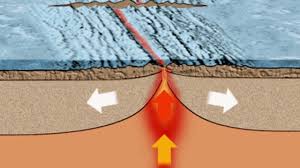
What is represented by the picture? 
a)
Sea-floor spreading
b)
Pangea
c)
How the continents are arranged today
d)
Volcanoes
49.
True or False : Sea-floor Spreading adds new material to the ocean floor?
a)
True
b)
False
50.

Who was Alfred Wegener?

a)

A German Meteorologist

b)

Discovered the Plate Tectonics Theory

c)

Discovered Continental Drift Theory

d)

Named the one big continent Panagea

51.

In sea-floor spreading, molten material rises from the mantle and erupts

a)

along the edges of all the continents.

b)

along mid-ocean ridges.

c)

in deep-ocean trenches.

d)

at the north and south poles.

52.

Most geologists think that the movement of Earth’s plates is caused by _______

a)

convection.

b)

continental drift.

c)

subduction.

d)

conduction.

53.

A place where two plates slip past each other, moving in opposite directions, is known as a _______

a)

transform boundary

b)

divergent boundary.

c)

convergent boundary.

d)

rift valley.

54.

The place where two plates come together is known as a _______

a)

transform boundary.

b)

divergent boundary.

c)

convergent boundary.

d)

rift valley.

55.
The epicenter of an earthquake is
a)
The point below the surface where rock begins to break and the first motion occurs
b)
The seismic station closest to the earthquake
c)
The place where the greatest damage occurs
d)
The point on the surface directly above the focus
56.
Which travels fastest, always being the first detected by seismic stations?
a)
P waves
b)
S waves
57.
Most earthquakes happen along the _________________. 
a)
coast
b)
faults
c)
desert
d)
directions
58.

where quake begins below surface

a)

elastic rebounding

b)

focus

c)

epicenter

d)

fault

59.

A large crater that often forms when the walls collapse.

a)

Calderon

b)

Caldera

c)

California

d)

Calling

60.

What type of lava is this?

a)

'A'a

b)

Pahoehoe

61.

What type of lava is this?

a)

'A'a

b)

Pahoehoe

62.

In order to finish one complete revolution, Earth takes ... days.

a)

1

b)

365 1/4

c)

24

d)

366

63.

Because Earth needs 365,25 days to complete one rotation, this number got formulated to create one additional day that makes in every 4 years we have 366 days. These year is known as ...

a)

lunar year

b)

solar year

c)

new year

d)

leap year

64.

Earth revolution can cause several effects. One of these effects is the direct and indirect sunlight that causing the changes of ...

a)

constellation

b)

sun positions (solstice)

c)

equinox

d)

seasons

65.

The fixed elliptical path along which the earth revolves is called

a)

Axis

b)

Tilt

c)

Orbit

d)

Radius

66.
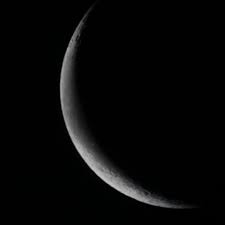
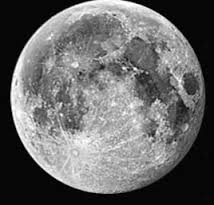
Name the moon phase
a)
waning crescent
b)
waxing crescent
c)
waning gibbous
d)
waxing gibbous
67.
Name the moon phase
a)
waning crescent
b)
waxing crescent
c)
waning gibbous
d)
waxing gibbous
68.

Name the moon phase

a)

First Quarter

b)

Third Quarter

c)

New Moon

d)

Full Moon

69.

Name the phase of the moon for letter a

a)

First Quarter

b)

Third Quarter

c)

Waxing Gibbous

d)

Waning Gibbous

70.
What is illuminating the Moon?
a)
Nuclear Fusion
b)
Sunlight
c)
Mirrors
d)
Flood Lights
71.
The cycle of the moon lasts about a _.
a)
day
b)
year
c)
week
d)
month
72.

This model is showing us a...

a)

lunar eclipse

b)

solar eclipse

c)

phases of the moon

d)

earth eclipse

73.

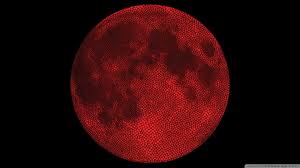
This image is showing us a.....

a)

solar eclipse

b)

lunar eclipse

c)

phases of the moon

d)

earth eclipse

74.

All stars begin their life as a

a)

Main Sequence

b)

Nebula

c)

Protostar

d)

Black Dwarf

75.

The life cycles of stars are determined by their:

a)

mass (size)

b)

color

c)

distance from Earth

d)

how bright they are

76.
Our sun is currently in what star stage?
a)
Protostar
b)
Nebula
c)
Main Sequence
d)
Red Giant
77.
A gigantic explosion that causes the death of a large star is called
a)
pulsar
b)
red giant 
c)
supernova
d)
black hole
78.

A ________ is an object so dense with so much gravity that even light cannot escape.

a)

neutron star

b)

white dwarf

c)

black hole

d)

black dwarf

79.
The core of a Red Giant collapses and becomes a ___________________.
a)
White Dwarf
b)
Blue Supergiant
c)
Red Supergiant
d)
Black Hole
80.

When nebula is big and hot enough is collapses on itself and ...................... is made

a)

white dwarf

b)

supernova

c)

protostar

d)

planetary nebula

81.

Neutron stars are very small and extremely dense

a)

true

b)

false

82.
What determines the color of a star? 
a)
It's size
b)
It's temperature
c)
It's composition
d)
They are all the same color 
83.
Larger stars (stars with more mass) have a longer life cycle. 
a)
True
b)
False
84.
What is the Moon?
a)
It is a planet
b)
It is a satellite
c)
It is a star
d)
It is a comet
85.
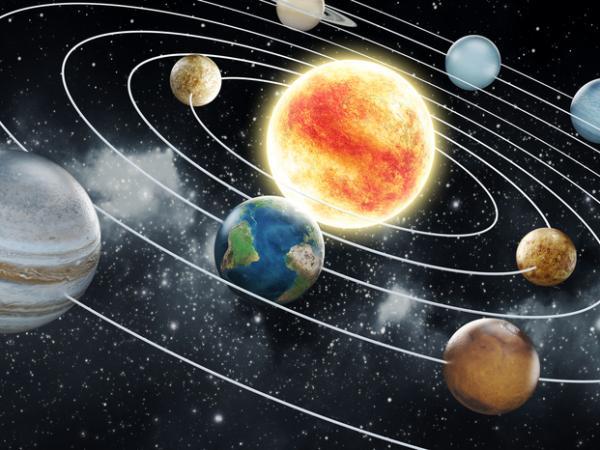
How many planets are there in the Solar System?
a)
eight
b)
three
c)
nine
d)
ten
86.

If you wanted to find an asteroid with a telescope, where would be the best place to look?

a)

Between Mars and Jupiter

b)

Between Earth and Venus

c)

Between Jupiter and Saturn

d)

Between Mercury and Venus

87.

What´s the red planet ?

a)

Mars

b)

Saturn

c)

Venus

88.

Mercury is the smallest planet in the Solar System.

a)

True

b)

False

89.

Which letter has a higher velocity?

a)

A

b)

B

90.

Which letter is there more deposition occurring?

a)

A

b)

B

91.

What kind of river produces meanders like the ones in the image?

a)

Young

b)

Old

92.

When a meander becomes very pronounced, this feature is formed. What is it called?

a)

U bend

b)

Horse shoe lake

c)

Oxbow lake

d)

An undercut

93.
Where is saturated water located?
a)
Above the water table
b)
below the water table
c)
beside the water table
d)
within the water table
94.
Which measures the water's ability to flow through rock and sediment?
a)
fluidity
b)
viscosity
c)
porosity
d)
permeability
95.

What percent of the Earth is Fresh Water?

a)

97%

b)

45%

c)

22%

d)

3%

96.

What is the Coriolis effect?

a)

heat transfer caused by the rising of hotter, less dense fluids and the falling of cooler, more dense fluids.

b)

A punk rock band.

c)

the apparent deflection of moving air as a result of Earth's rotation.

d)

The amount of matter in a given volume.

97.

Surface Ocean currents are primarily caused by

a)

temperature and salinity

b)

wind

c)

convection

d)

continental drift

98.

Deep Ocean currents are primarily caused by

a)

temperature and salinity

b)

wind

c)

gravity

d)

precipitation

99.

which of these characteristics will produce the most dense water?

a)

high salinity, high temperature

b)

high salinity, low temperature

c)

low salinity, high temperature

d)

low salinity, low temperature

100.

What are a circular system of currents in the Earth's major oceans?

a)

ocean current

b)

gyre

c)

upwelling

d)

conveyor belt