wayground logo

Free Printable Worksheets

Font size

S
M
L
XL
Worksheets

Language of Science Final Exam

Total questions: 106

Worksheet time: 1hrs 20mins

Name
Class
Date
1.

What is this picture?

a)

radio telescope

b)

telescope

c)

Jupiter

d)

orbit

2.

What planet is this?

a)

Earth

b)

Mercury

c)

Venuse

d)

Saturn

3.

What planet is this?

a)

Saturn

b)

Earth

c)

Pluto

d)

sun

4.

Where are stars born?

a)

Milky Way

b)

black hole

c)

nebula

5.

What is the name of our galaxy?

a)

Milky Way

b)

M33

c)

M31

d)

dwarf

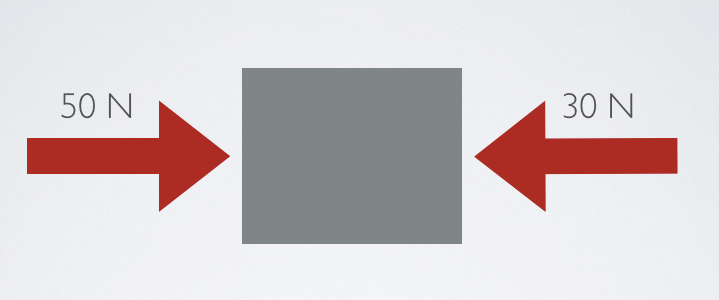
6.

What is the result?

a)

0 N

b)

20 N to the right

c)

20 N to the left

d)

3 N up

7.
How will this object move? 
a)
It won't move. 
b)
It will move to the right. 
c)
It will move to the left. 
d)
It will move up. 
8.
How will this object move? 
a)

It will not move. 

b)
It will move to the right. 
c)
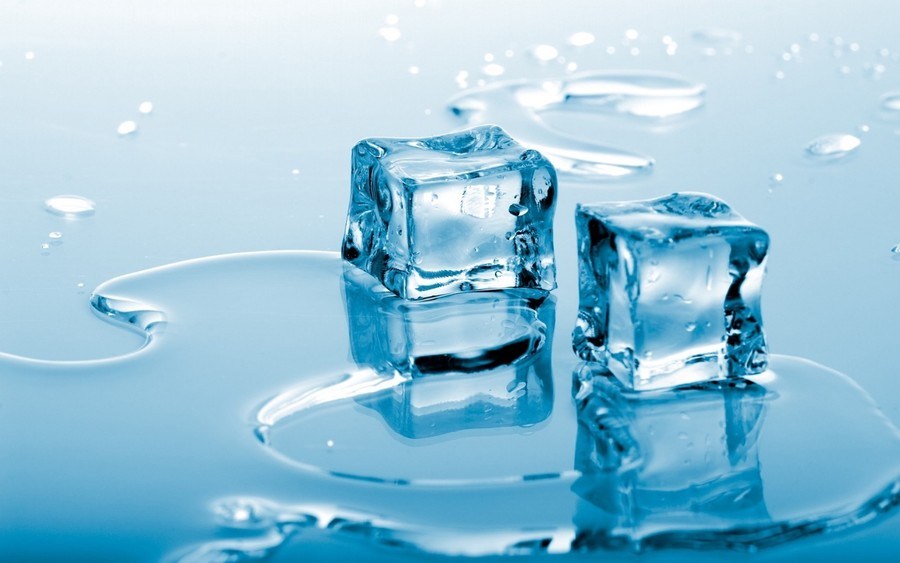
It will move to the left. 
d)
It will move in both directions. 
9.

These forces are...

a)

Balanced

b)

Unbalanced

10.

These forces are...

a)

Balanced

b)

Unbalanced

11.
Balanced or unbalanced?
a)
balanced
b)
unbalanced
12.
If an object is not moving the forces acting upon it are _____________
a)
unbalanced
b)
weak
c)
balanced
d)
Hulk Smash!
13.
A ____________ is a push or a pull on an object.
a)
friction
b)
force
c)
magnet
d)
gravity
14.
What will cause an object to move?
a)
Applied forces
b)
Balanced forces
c)
Unbalanced forces
15.
Balanced or Unbalanced?
a)
Balanced 
b)
Unbalanced
16.
How will this object move? 
a)
It won't move. 
b)
It will move to the right. 
c)
It will move to the left. 
d)
It will move up. 
17.

A lamp sitting on a table.

a)

Balanced Force

b)

Unbalanced Force

18.
Are the forces acting on the rope balanced or unbalanced?
a)
Balanced
b)
Unbalanced
19.

Inertia is

a)

An object in motion tends to stay in motion

b)

The rate which the position of an object changes

20.

Net Force equals

a)

The combination of all forces acting on an object

b)

The force of gravity

c)

The force of Luke Skywalker

21.

When two equal forces are acting upon an object and there is a net force of zero the object has a

a)

balanced force

b)

unbalanced force

22.

A rubbing force that acts against motion between two objects and always slows an object down.

a)

velocity

b)

force

c)

friction

23.

The rate in which an object moves in a certain direction

a)

acceleration

b)

gravity

c)

velocity

24.

The rate at which the position of an object changes is

a)

speed

b)

inertia

c)

momentum

25.

Force is a

a)

push or pull in a particular direction

b)

the potential for an object to move

c)

the process of changing positions

26.

The rate at which an objects velocity changes is

a)

acceleration

b)

really cool

c)

speed

27.

Force is measured in

a)

lbs

b)

kilograms

c)

Newtons

28.

65 MPH North is an example of

a)

speed

b)

velocity

c)

acceleration

29.

Newtons first law states

a)

an object in motion tends to stay in motion, and object at rest tends to stay at rest

b)

force equals mass times acceleration

c)

for every action there is an equal and opposite reaction

30.

Newtons second law states

a)

force equals mass times acceleration

b)

force equals distance divided by time

c)

innocent until proven guilty

31.

Newtons 3rd law states

a)

For every action there is an equal and opposite reaction

b)

if you hit me I will hit you back

c)

an object in motion will stay in motion forever

32.
all matter is made of what 
a)
energy 
b)
atoms 
c)
electrons 
d)
compounds 
33.
The positive particles of an atom are 
a)
electrons 
b)
positrons 
c)
neutrons 
d)
protons 
34.
Particles in an atom that are neutral and have no charge are 
a)
negatrons 
b)
electrons 
c)
neutrons 
d)
protons 
35.
The particles that are found in the nucleus of an atom are
a)
neutrons and electrons
b)
electrons only
c)
protons and neutrons
d)
protons and electrons
36.
Neutrons are _______________ particles.
a)
negative
b)
positive
c)
neutral
d)
cows
37.
The positive particles of an atom are called ___________.
a)
electrons 
b)
atoms
c)
neutrons 
d)
protons 
38.
The smallest part of an element is known as the 
a)
Periodic Table
b)
Atom
c)
Group
d)
Period
39.

Which term defines any substance that cannot be broken down into a simpler substance?

a)

atom

b)

molecule

c)

element

d)

compound

40.
All matter is made of .....
a)
energy 
b)
atoms 
c)
air
d)
chemistry
41.
The atomic number of an element tells the number of _____ in the nucleus of an atom of that element.
a)
protons
b)
neutrons
c)
electrons
d)
isotopes
42.
Which is an electron?
a)
A
b)
B
c)
C
43.
Which is a proton?
a)
A
b)
B
c)
C
44.
Which is a neutron?
a)
A
b)
B
c)
C
45.
Which item on this element square is the chemical symbol?
a)
Copper
b)
29
c)
Cu
d)
63.546
46.
Which item on this element square represents the atomic number?
a)
13
b)
Al
c)
Aluminum
d)
26.981538
47.
What is the number of protons that the element in this image contain?
a)
14
b)
7
c)
15
d)
18
48.
What is the atomic mass of "F"
a)
9
b)
18
c)
17
d)

18.9984

49.

The number of protons in the nucleus of an atom is the same as the ________ number.

a)

neutron

b)

Periodic Table

c)

atomic

d)

quark

50.

Which of the following correctly lists the particles of an atom and their charges?

a)

protons (-), neutrons (neutral), electrons (+)

b)

protons (neutral), neutrons (+), electrons (-)

c)

protons (+), neutrons (-), electrons (+)

d)

protons (+), neutrons (neutral), electrons (-)

51.

Most of the elements on the Periodic Table are ______,

a)

metals

b)

non-metals

c)

man-made

d)

metalloids

52.

Which of the following shows the correct symbol for helium?

a)

He

b)

he

c)

HE

d)

Hel

53.

The atomic number for this element is _________.

a)

26

b)

55.845

c)

Fe

d)

iron

54.

The atomic mass for this element is __________.

a)

26

b)

Fe

c)

55.845

d)

iron

55.

The chemical symbol for this element is _________.

a)

Fe

b)

Iron

c)

26

d)

55.845

56.
Water freezing into ice is an example of a...
a)
Physical Change
b)
Chemical Change
57.

Logs burning in a campfire.

a)
Physical Change
b)
Chemical Change
58.
Bubbles form when two or more substances are combined ...
a)
Chemical Change
b)
Physical Change
59.
Chemical change or physical change?
a)
Chemical Change
b)
Physical Change
60.
Chemical change or physical change?
a)
Chemical Change
b)
Physical Change
61.
Chemical change or physical change?
a)
Chemical Change
b)
Physical Change
62.

Which is an image of a tornado?

a)
b)
c)
63.

Which is an image of a hurricane?

a)
b)
c)
64.

Which is an image of a thunderstorm?

a)
b)
c)
65.
Which storm forms over water?
a)
tornado
b)
hurricane
c)
thunderstorm
66.
What occurs when water flows or collects over land that is usually dry.
a)
dam
b)
flood
c)
floodway
d)
levee
67.

What type of storm is pictured?

a)

Thunderstorm

b)

Blizzard

c)

Hurricane

d)

Tornado

68.

What type of storm is pictured?

a)

Thunderstorm

b)

Blizzard

c)

Hurricane

d)

Tornado

69.

What type of precipitation comes with a blizzard?

a)

rain

b)

snow

c)

hail

70.

What type of precipitation comes with a hurricane?

a)

rain

b)

snow

c)

hail

71.

Which type of galaxy is illustrated?

a)

spiral

b)

elliptical

c)

irregular

d)

it's not a galaxy

72.

The name of the galaxy in which our solar system is situated is the:

a)

Andromeda

b)

Milky Way

c)

Black eye

d)

Sombrero

73.

What type of galaxy is the Milky Way galaxy?

a)

Irregular

b)

Elliptical

c)

Spiral

d)

None of these

74.

Is the Milky Way the only galaxy in the universe?

a)

Yes

b)

No

75.

What is the shape of our Milky Way galaxy?

a)
b)
c)
d)
76.
What planet is the smallest?
a)
Mercury
b)
Venus
c)
Mars
d)
Jupiter
77.
What is the largest planet?
a)
Jupiter
b)
the moon
c)
Saturn
d)
the Sun
78.
What planet is closest to the sun?
a)
Mercury
b)
Mars
c)
Venus
d)
Sun
79.

What color of star is the hottest?

a)

Yellow

b)

White

c)

Red

d)

Blue

80.

What color of star is the coolest?

a)

Red

b)

Blue

c)

Yellow

d)

White

81.

What is the name of the largest stars?

a)

Very Huge Star

b)

Red Giants

c)

Super Giants

d)

Dwarf stars

82.

Constellations are stars that appear to be in a pattern or picture.

a)

True

b)

False

83.

How many stars is the milky way made out of

a)

billions

b)

a few

c)

hundreds

d)

a couple

84.

What is the Milky Way?

a)

Planet

b)

Asteroid

c)

Star

d)

Galaxy

85.

What is the sun?

a)

Black Hole

b)

Light Bulb

c)

Star

d)

Planet

86.

Which answer correctly orders the planets from the sun?

a)

Saturn, Earth, Mars, Jupiter, Venus, Mercury, Uranus, Neptune

b)

Jupiter, Saturn, Uranus, Neptune, Earth, Venus, Mars, Mercury

c)

Mercury, Venus, Earth, Mars, Jupiter, Saturn, Uranus, Neptune

d)

Mercury, Venus, Earth, Neptune, Mars, Jupiter, Saturn, Uranus

87.

Which planets are the gas giants?

a)

Mercury, Venus, Eymy, Mars

b)

Jupiter, Saturn, Uranus, Neptune

c)

Mercury, Venus, Emanuel, Saturn

d)

Jazmin, Mercury, Venus, Earth

88.

Which planet has rings made of ice, rock and dust?

a)

Saturn

b)

Mars

c)

Earth

d)

Moon

89.

What state of matter is ice?

a)

solid

b)

liquid

c)

gas

90.

What state of matter is this?

a)

solid

b)

liquid

c)

gas

91.

What state of matter is this?

a)

solid

b)

liquid

c)

gas

92.

What happens to liquid when it is heated?

a)

freezes

b)

turns to gas (water vapor)

c)

nothing

93.

What are the three states of matter?

a)

solid, liquid, gas

b)

soft, hard, medium

c)

pink, purple, blue

94.

Which state of matter is represented by the particles in this image?

a)

Solid

b)

Liquid

c)

Gas

95.

Which state of matter is represented by the particles in this image?

a)

Solid

b)

Liquid

c)

Gas

96.
What does this picture represent? 
a)
solid
b)
liquid 
c)
gas
d)
plasma
97.
What body part do you use to see?
a)
eyes
b)
ears
c)
hands
d)
nose
98.
What body part do you use to hear?
a)
eyes
b)
ears
c)
hands
d)
nose
99.
What body part do you use to smell?
a)
eyes
b)
ears
c)
hands
d)
nose
100.
What body part do you use to touch?
a)
eyes
b)
ears
c)
hands
d)
nose
101.
What body part do you use to taste?
a)
eyes
b)
ears
c)
tongue
d)
hands
102.
What do you do with your eyes?
a)
listen
b)
see
c)
touch
d)
taste
103.
What do you do with your ears?
a)
taste
b)
feel
c)
listen
d)
see
104.
What do you do with your hands?
a)
listen
b)
see
c)
 touch
d)
taste
105.
What do you do with your tongue?
a)
taste
b)
touch
c)
listen
d)
see
106.
What do you do with your nose?
a)
smell
b)
see
c)
hear
d)
touch