
 Worksheets
Final Exam Review
Total questions: 101
Worksheet time: 1hrs 2mins
What does precision refer to in scientific experiments?
The consistency of repeated measurements
The closeness of a measurement to the true value
The number of significant figures in a measurement
The hypothesis being tested
Which of the following is NOT a step in the scientific method?
Hypothesis
Observation
Conclusion
Calculation
What is the purpose of unit conversions in scientific measurements?
To find the accuracy of measurements
To change measurements from one unit to another
To determine the number of significant figures
To formulate a hypothesis
Which of the following digits are NOT considered significant in significant figures?
Non-zero digits
Zeros between significant digits
Leading zeros
Trailing zeros in a decimal number
What is the primary role of protons in an atom?
They determine the atomic number of an element.
They provide electrical neutrality.
They decrease the atomic radius.
They are found outside the nucleus.
Which of the following is NOT a characteristic of neutrons?
They have a positive electrical charge.
They are located in the nucleus.
They have a mass similar to protons.
They are electrically neutral.
How does the atomic radius change as you move across a period in the periodic table?
It increases.
It decreases.
It remains constant.
It fluctuates unpredictably.
What happens to the ionization energy as you move down a group in the periodic table?
It increases.
It decreases.
It remains the same.
It doubles.
Which particle is correctly paired with its location within an atom?
Proton - outside the nucleus
Neutron - in the electron cloud
Electron - in the nucleus
Proton - in the nucleus
What is the charge of an electron?
Positive
Neutral
Negative
Variable
Which particles are located in the nucleus of an atom?
Electrons and Neutrons
Protons and Electrons
Protons and Neutrons
Neutrons only
What is the mass of an electron compared to protons and neutrons?
About half
About the same
Much smaller
Twice as much
What type of bond involves the sharing of electrons between atoms?
Ionic bonding
Covalent bonding
Metallic bonding
Hydrogen bonding
Which of the following is true about isotopes?
They have different numbers of protons
They have different numbers of electrons
They have different numbers of neutrons
They are always unstable
What does the Law of Conservation of Mass state about the mass in a chemical reaction?
The mass of reactants is always less than the mass of products.
The mass of reactants is always more than the mass of products.
The mass of reactants is equal to the mass of products.
The mass of reactants and products is not related.
Which type of reaction absorbs energy and typically causes the surroundings to cool down?
Exothermic reaction
Endothermic reaction
Photosynthesis
Combustion
What is transferred through convection?
Heat through direct contact
Heat through electromagnetic waves without involving particles
Heat through the movement of fluids
Heat through static conduction
According to Newton's First Law of Motion, what happens to an object at rest?
It moves at constant velocity unless acted upon by an external force.
It remains at rest unless acted upon by an external force.
It accelerates unless acted upon by an external force.
It decreases its velocity unless acted upon by an external force.
What does the pH scale measure?
The color intensity of a solution
The viscosity of a solution
The acidity or basicity of a solution
The thermal conductivity of a solution
What is the net force if two forces, 10 N and 15 N, act in the same direction on an object?
5 N
25 N
20 N
30 N
How is velocity calculated?
Displacement multiplied by time
Displacement divided by time
Speed divided by time
Speed multiplied by displacement
What is the acceleration of a car that increases its velocity from 0 to 20 m/s in 5 seconds?
4 m/s²
5 m/s²
20 m/s²
100 m/s²
What does the formula KE = ½mv² represent?
Potential Energy
Thermal Energy
Kinetic Energy
Mechanical Energy
According to the Second Law of Thermodynamics, what happens to the total entropy of an isolated system?
It decreases
It remains constant
It increases
It fluctuates
What is the formula to calculate the heat energy required to change the temperature of a substance?
Q = mΔT
Q = mcΔT
Q = cΔT
Q = m/cΔT
What is the amount of energy required to raise the temperature of 2 kg of water by 10°C?
Skip (pick this one)
Skip

Maya designed an experiment to answer the following question: How does the amount of water given to a lima bean seed affect how tall it grows?
Which factors does Maya need to keep the same in her experiment? (Multiple answers)
The amount of water each plant gets
The amount of soil
The type of plant
The amount of sunlight each plant gets

This would be an example of
particles in a substance
particles in a mixture

Which one of these pictures represents a pure substance?
1 and 2
1 and 3
2 and 3
1, 2 and 3
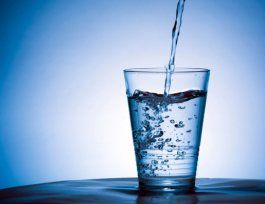
A hypothesis is an educated guess based on observation and question.
What type of energy is stored in food?
Mechanical energy
Chemical energy
Nuclear energy
Thermal energy
Which of the following is a characteristic feature of a chemical change?
It is easily reversible
It involves a change in physical state
It produces new substances with different properties
It does not involve energy changes
Burning wood is an example of what type of change?
Physical change
Chemical change
State change
Phase change
Which of the following is NOT a characteristic of a chemical change?
Change in color
Formation of a gas
Change in shape
Production of heat
What is the scientific method?
A systematic procedure for how to conduct a scientific experiment
The process of solving a problem
A way of making non-scientific observations
A way to summarize findings from multiple investigations
Which of the following is a compound?
Oxygen
Water
Neon
Iron
Which of the following is NOT a characteristic of a chemical change?
Change in color
Formation of a gas
Change in shape
Production of heat
What is the charge of a proton?
Negative
Positive
Neutral
Variable
What does the atomic number of an element represent?
The number of protons in the nucleus
The number of neutrons in the nucleus
The total number of protons and neutrons in the nucleus
The total number of protons and electrons in an atom
What is the significance of the atomic number in determining the chemical properties of an element?
It determines the element's position on the periodic table
It indicates the number of electrons in a neutral atom, which determines how the atom will react chemically
It shows the total mass of the atom
It is only important for isotopes
Which subatomic particle is not found in the nucleus of an atom?
Proton
Neutron
Electron
All of the above are found in the nucleus
Which subatomic particle is not found in the nucleus of an atom?
Proton
Neutron
Electron
All of the above are found in the nucleus
Which subatomic particle is not found in the nucleus of an atom?
Proton
Neutron
Electron
All of the above are found in the nucleus
What is the taste of acids?
Bitter
Sweet
Sour
Salty
Which of the following is a property of bases?
They turn litmus paper red
They have a pH less than 7
They feel slippery
They release hydrogen gas when reacting with metals
What color does blue litmus paper turn when dipped in an acidic solution?
Stays blue
Turns red
Turns pink
Turns yellow
Which of the following is a common indicator for both acids and bases?
Methyl orange
Phenolphthalein
Litmus
Bromothymol blue
What is the pH range of acids?
0 to 7
7 to 14
0 to 14
1 to 6
Bases have a taste that is:
Sour
Bitter
Sweet
Salty
Which of the following is not a property of acids?
They conduct electricity
They are corrosive
They have a pH greater than 7
They react with metals to produce hydrogen gas
A _________ occurs when two or more substances join to form new substances with new properties.
chemical change
phase change
physical change
Which of the following is an example of chemical change?
A chunk of metal being hammered flat
a piece of chalk being crushed into powder
a solid rock melting into magma
an iron bridge turning brownish over the years
A scientist combines three elements and observes the results. She concluded that the elements formed a compound when they combined. Which of these observations best supports the scientist's conclusion?
Each element had some unique properties
All of the elements shared some properties
The combination of the three elements shared some properties with the elements
The combination of the three elements had some properties that none of the elements had.
Which of the following never changes during a chemical change?
arrangement of atoms
number of molecules
total number of atoms
color of the reactants

How can particles of a new substance be formed out of particles of an old substance?
Particles may break apart and rejoin in different ways, forming a substance with a new identity.
Particles get smashed up and disappear, and new particles pop up.
What type of reaction releases energy and typically causes the surroundings to heat up?
Endothermic reaction
Exothermic reaction
Photosynthesis
Electrolysis
What is the primary function of neutrons in an atom?
To engage in chemical bonding
To provide charge balance
To add mass to the nucleus
To stabilize the nucleus
Which of the following elements is a noble gas?
Oxygen
Chlorine
Argon
Carbon
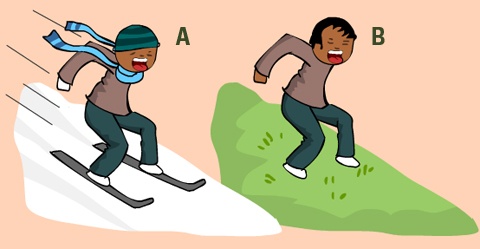
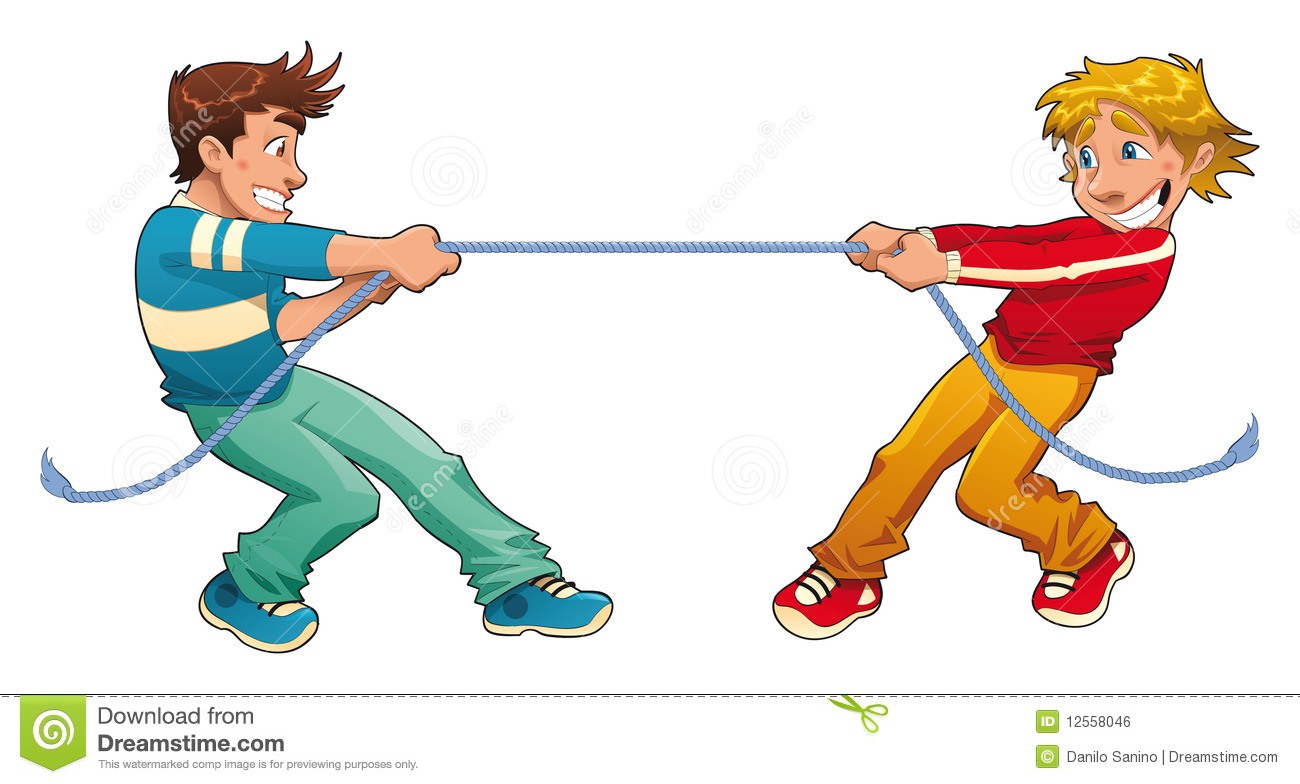


? = mass x acceleration
or
? = m x a
is used to find
1st
Law of Motion
2nd
Law of Motion
3rd
Law of Motion


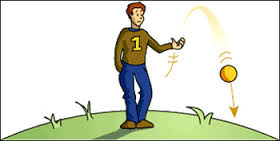


A squirrel sits on the ground and eats a donut. We know the forces on him must be balanced because...
Forces are always balanced
the squirrel is not accelerating
squirrels are projectiles
he's eating a donut

What is the formula for calculating density?
Mass divided by volume
Volume divided by mass
Mass multiplied by volume
Volume multiplied by mass
Which of the following is a physical change?
Burning paper
Rusting iron
Melting ice
Cooking an egg
What is the unit of force in the International System of Units (SI)?
Joule
Newton
Pascal
Watt

