
 Worksheets
Midterm Review
Total questions: 100
Worksheet time: 1hrs 16mins


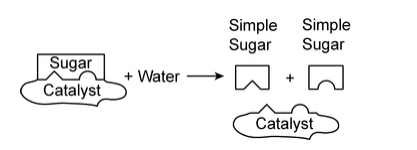
In a model of the water molecule - what do the ears of the shape Mickey Mouse represent? What is the charge of this particle of the water molecule? Choose two.
Hydrogen atoms
Oxygen atoms
negative charge
positive charge
What is the attractive force between two bodies of different substances that are in contact with each other? This is the property of a water molecule that allows it to stick to other substances.
adhesion
cohesion
specific heat
universal solvent
What is the force that holds molecules of a single substance together and its the property of water that allows one water molecule to stick to other water molecules?
cohesion
adhesion
specific heat
universal solvent
Water molecules are polar molecules. What is meant by the term polar molecule?
a molecule that has no charge on one end and either an overall negative or positive charge on the other end
a molecule that has an overall positive charge on one end, as well as an overall positive charge on the other end
a molecule that has an overall negative charge on one end, as well as an overall negative charge on the other end
a molecule that has an overall positive charge on one end and an overall negative charge on the other end
The positive particles of an atom are ___________.
electrons
protons
neutrons
The center of an atom where its neutrons and protons are is called the _____________.
nucleus
electron cloud
center
An atom with atomic number 6 would have how many protons?
6
12
3
Particles in an atom that are neutral and have no charge are
protons
electrons
neutrons


waves of muscle contractions (squeezing)
stomach
small intestine
peristalsis

Digestive organ where most chemical digestion and absorption of food takes place
pancreas
small intestine
liver

produces bile to break up fat particles
pancreas
large intestine
liver

absorbs water into bloodstream
gall bladder
large intestine
liver

What are these structures call that are found on the lining of the small intestine?
Gallbladder
Villi
Sphincter
Duodenum
This organ produces several enzymes that chemically break down food, food does not pass through this organ
liver
pancreas
gall bladder
stomach
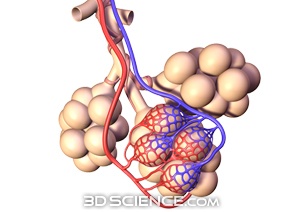
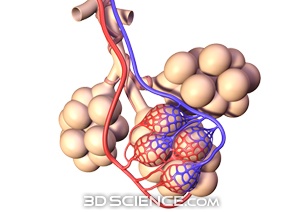
Where are the alveoli located?
Between the larynx and pharynx
Between the bronchi and bronchioles
At the end of the bronchioles
What is the name of the muscle located under the lungs?
Diaphragm
Trachea
Alveoli
Bronchi
Arteries carry oxygen rich blood away from the heart.
True
False
Veins carry oxygen poor blood back to the heart.
False
True

State one reason why blood at location B contains more oxygen than blood at location A.
because blood at location A goes to the lungs
because blood at location A comes from the lungs
because blood at location B comes from the lungs
because blood at location B goes to the lungs
The human body has specialized cells, such as white blood cells, to help protect it from many diseases. Describe what these specialized cells do to protect the body from the disease.
they carry oxygen
they fight and destroy germs
they give blood its color
they clot when we get a cut
What are the main functions of the excretory system?
deliver oxygen to the body
deliver nutrients to the body
remove water and waste from the body
remove disease from the body

Blood is cleaned by which organs?
Lungs
Ribs
Kidneys
Intestines
Which of the following is the sugar which is the main source of fuel for our body cells?
Glucose
Glycogen
Bile
Fats
The pancreas, liver, and gallbladder are known as...
accessory organs
the digestive tract
acid makers
digestion helpers
The excretory system is responsible for moving toxic wastes, dissolved molecules, and excess heat. You would conclude that the excretory system contributes to
circulating molecules around the body
maintaining homeostasis in the body
producing glucose
gas exchange
Which of the following are NOT found in animal cells
chloroplasts and cytoplasm
chloroplasts and cell wall
cell wall and cell membrane
cell wall and nucleus
What do vacuoles do?
They give the cells their shape.
They protect the cell.
They are the brain of the cell.
They are used for storage.
organs, organ systems, organisms, cells, tissues
Animal Cell
Plant Cell

Animals, Plants, Fungi, and Protista
Eukaryotic
Prokaryotic
What type of solution is a cell in when it gets bigger than normal while in tap water?
hypertonic
isotonic
hypotonic
What type of solution is a cell in when it shrinks while in salt water?
hypertonic
isotonic
hypotonic


This arrangement within the cell membrane allows it to
Match the following organelles
Nucleus
Contains the codes & information for protein synthesis
Rough ER
Transports the proteins
Golgi
Packages the proteins
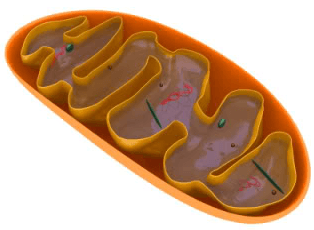
Mitochodrion
Supplies ATP to all organelles
Ribosomes
Synthesizes the proteins

Exit: Carbon dioxide
Exit: Glucose
Exit: Oxygen
Exit: Water vapor
What is the pigment in chloroplasts that performs photosynthesis?
Chlorosynthesis
Chlorophyll
Chloroplast
Green

Oxygen (O2) is a product during which reaction?
Photosynthesis
Cellular Respiration


If you wanted to produce more energy, what pathway would you choose?
aerobic
anaerobic
The primary source of energy for planet earth is sunlight. Since animals cannot absorb and light directly, how do animals obtain energy?
They obtain energy indirectly from photosynthesis in plants
They eat other animals which make their own energy
They eat mushrooms which grow in the dark
They get energy from gaseous molecules in the air
Which of the following is the correct chemical equation for photosynthesis?
6CO₂ + C₆H₁₂O₆ + 6O₂+ light energy in Chlorophyll ---> H₂0
CO₂ + H₂0 + light energy in Chlorophyll ---> C₆H₁₂O₆ + 6O₂
6CO₂ + 6H₂0 + light energy in Chlorophyll ---> C₆H₁₂O₆ + 6O₂
C₆H₁₂O₆ + 6O₂ ---> 6CO₂ + 6H₂0 + ATP
Because carbon has 4 valence electrons
it can form up to 4 covalent bonds
it can form ionic bonds
it can form only double bonds
it can form covalent bonds with H only
The four groups of organic compounds are
sugar, salt, water, oxygen
proteins, carbohydrates, lipids, nucleic acids
carbon dioxide, methane, proteins, lipids
oxygen, proteins, nucleic acids, lipids
Which of the following are almost always hydrophobic?
carbohydrates
lipids
proteins
nucleic acids
What element if the building block of life?
Carbon
Hydrogen
Oxygen
Nitrogen

