
 Worksheets
Rocks Unit Summative [23-24] master set
Total questions: 104
Worksheet time: 9hrs 40mins

Density—higher
Density—lower
Density—higher
Density—lower

Peridot is a form of the mineral


If all four samples are placed together in a closed, dry container and shaken vigorously for 10 minutes, which mineral sample would experience the most abrasion?

According to the Earth Science Reference Tables, which
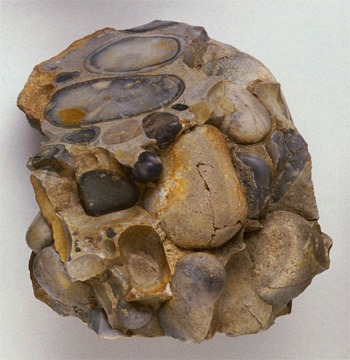
sedimentary rock would be formed by the compaction and cementation of particles 1.5 centimeters in diameter?
A) shale
B) conglomerate
C) siltstone
D) sandstone
A
B
C
D
Where is metamorphic rock frequently found?
A) along the interface between igneous intrusions and
sedimentary bedrock
B) within large lava flows
C) on mountaintops that have horizontal layers containing marine fossils
D) as a thin surface layer covering huge areas of the
continents
A
B
C
D

According to the Earth Science Reference Tables, which
graph best represents the comparison of the average grain sizes in basalt, granite, and rhyolite?
A
B
C
D

According to the Earth Science Reference Tables, which is
a fine-grained igneous rock made up primarily of pyroxene and plagioclase feldspar?
granite
gabbro
basalt
rhyolite

According to the Earth Science Reference Tables, which characteristic determines whether a rock is classified as a shale, a siltstone, a sandstone, or a conglomerate?
the mineral composition of the sediments within the rock
the density of the sediments within the rock
the particle size of the sediments within the rock
the absolute age of the sediments within the rock

According to the Earth Science Reference Tables, which is a sedimentary rock that forms as a result of precipitation from seawater?
shale
halite
basalt
conglomerate

According to the Earth Science Reference Tables, which sedimentary rock is composed of fragmented skeletons and shells of sea organisms compacted and cemented together?
shale
sandstone
gypsum
limestone

The best evidence for determining the cooling rate of an igneous rock during its solidification is provided by...?
disintegration of radioactive substances
crystal size of its minerals
index fossils
faults in the rock

According to the "Scheme for Igneous Rock Identification" in the Earth Science Reference Tables, basalt contains the greatest quantity of which mineral?
mica
quartz
pyroxene
potassium feldspar

According to the "Scheme for Igneous Rock Identification" in the Earth Science Reference Tables, which statement best describes the percentage of plagioclase feldspars in a sample of gabbro?
Gabbro always contains less plagioclase feldspars than pyroxene.
Gabbro contains no plagioclase feldspars.
Plagioclase feldspars always make up 25% of a gabbro rock sample.
The percentage of plagioclase feldspar in gabbro can vary.
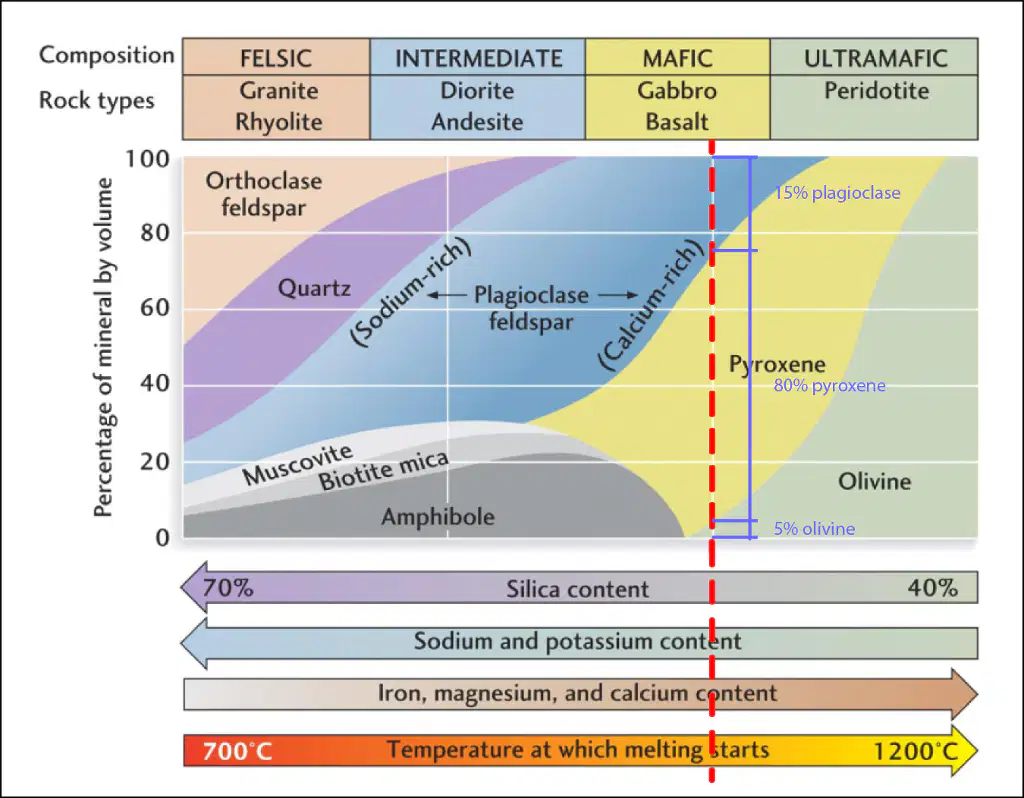
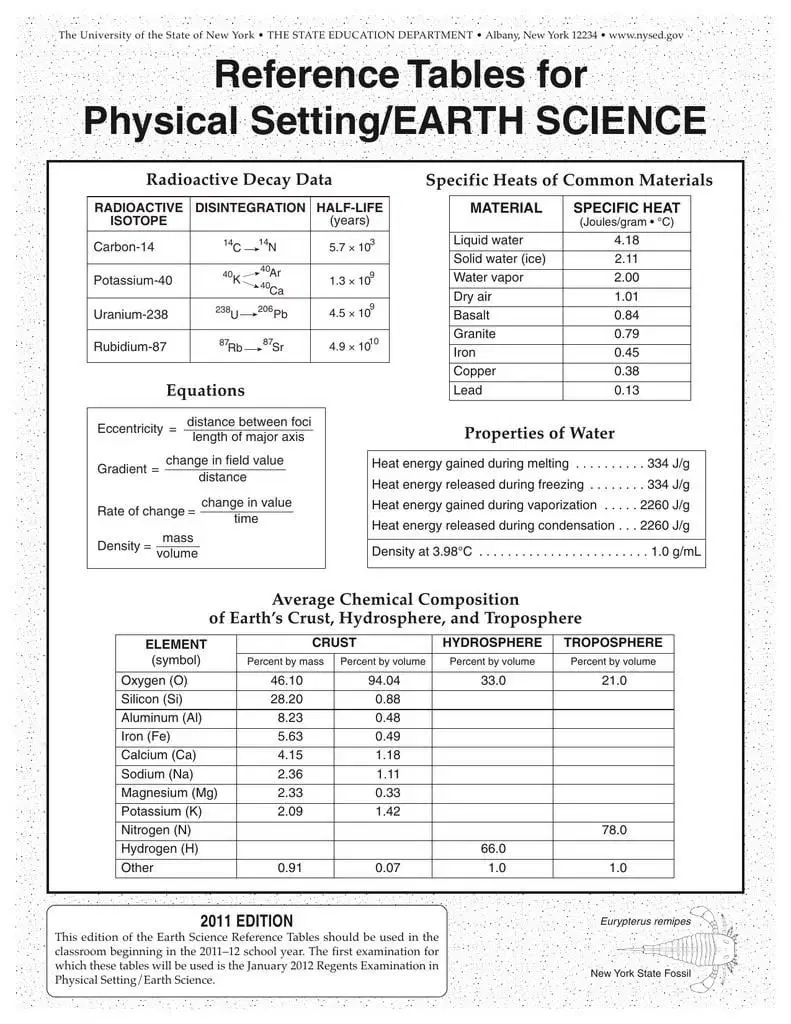
According to the Earth Science Reference Tables, which property would be most useful for identifying igneous rocks?
types of fossils present
kind of cement
number of minerals present
mineral composition

Most igneous rocks form by which processes?
erosion & deposition
heat & pressure
melting & solidification
compaction & cementation

A river carrying pebbles, sand, silt, and clay flows into the ocean. The sediments are sorted by size as they are deposited at different distances from shore. Which sedimentary rock will most likely form from the sediment deposited farthest from shore?
conglomerate
sandstone
siltstone
shale
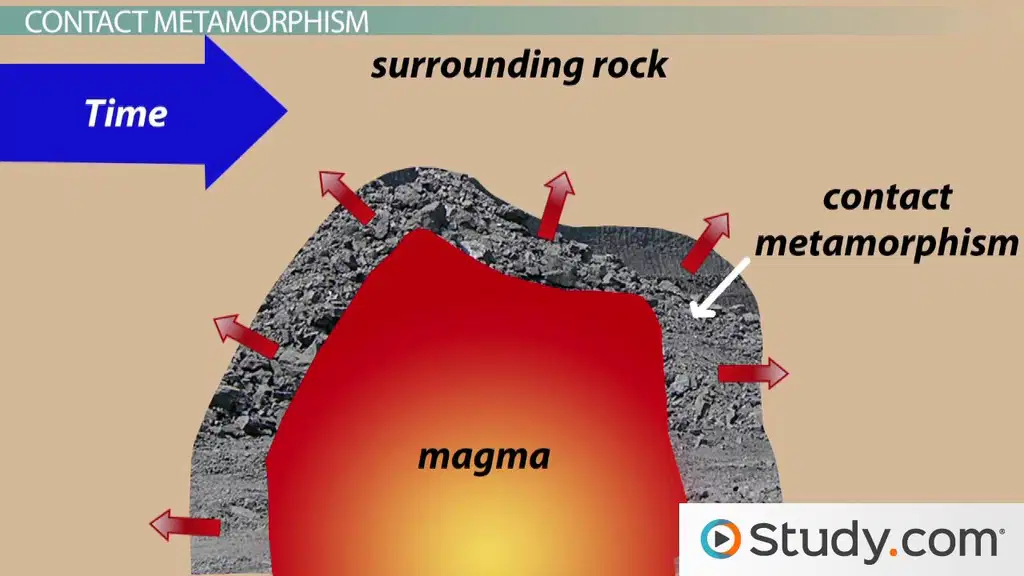
The recrystallization of unmelted material under high temperature and pressure results in
volcanic rock
igneous rock
metamorphic rock
sedimentary rock

The root word " (a) " mean change.

Limestone becomes (a) when temperature and pressure increase!

(a) metamorphism occurs when magma or lava comes in contact with, or touches, surrounding rock.

(a) sedimentary rocks form when chemicals in water come out of the water and form solids.

Clastic rocks are classified by the size of the (a) that form them.

The two main types of sedimentary rocks are (a) and (b) .


This type of igneous rock has little or no crystals when it forms. (a)

Which "Scheme" should you use to identify the minerals usually found in felsic rocks?
Igneous
Metamorphic
a printed copy
Sedimentary


The Mohs Scale can be applied to rocks as well as minerals. Why? What property of rock is being observed when looking for whether or not it scratches other rocks and minerals? (a)



What will happen if an igneous rock is put under an extreme amount of heat and pressure?
it will melt into lava
it will weather and erode
it will become a metamorphic rock
it will become a sedimentary

What combination of processes can transform (change) a metamorphic rock to sediments?
Erosion, crystallization, and melting.
Heating, pressure, and lithification.
Melting, crystallization, and compaction.
Exposure, weathering, and erosion.

According to the rock cycle, which of the following transitions are possible? An unlimited number of steps are possible.
An intrusive igneous rock becomes a sedimentary rock.
A sedimentary rock becomes soil.
A metamorphic rock becomes an extrusive igneous rock.
All of the above are possible.
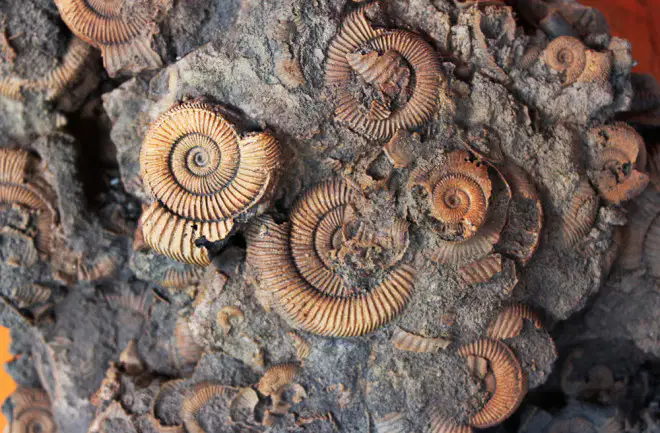
If you examine a rock sample and observe (see) fossils in it, what type of rock must the sample be?
Igneous
Metamorphic
Sedimentary
Fossils are found in several of the types listed above.

The location marked by the black rectangle is an area with high temperature and pressure. What rock type will form in this location?
Igneous
Metamorphic
Sedimentary
None of the above

Which of the rock samples is a typical, FOLIATED metamorphic rock?
Sample A
Sample B
Sample C
Sample D

Pieces of sediment come to rest on a surface
Movement of sediment
Breaking down of sediment
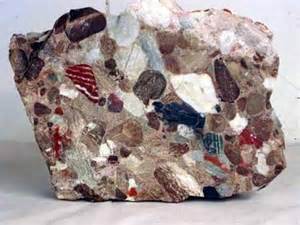

Limestone made from shells
Organic (or bioclastic)
Chemical (precipitates or evaporites)

Conglomerate
Clastic
Organic
Chemical

Classify each sedimentary rock as either Clastic, Organic, or Chemical. Shale (a)

What must happen to a metamorphic rock before it becomes a sedimentary rock rock?
It must be broken down into sediment
It must be melted into magma
Its minerals must dissolve in water
It must be exposed to high temperature and pressure

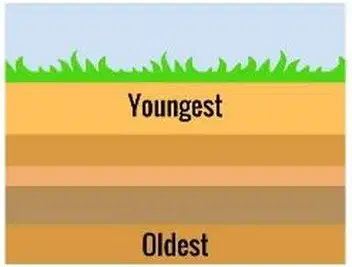
This picture shows the Law of Superposition. Why is the oldest layer in sedimentary rock found at the bottom?
The bottom layer
The bottom layer has the sediments that were deposited first.
The bottom layer has the real sediments.
The bottom layer has the lightest sediments that the river carried farther.
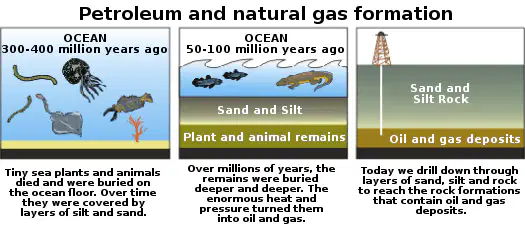
Fossil Fuels are NONrenewable, which means they cannot be replaced in a human lifetime. Which of these reasons explains why fossil fuels are not easy to replace?
Lots of pressure is needed to make them.
Heat from deep in the Earth transform dead plants and animals.
It takes MILLIONS of years to transform fossils into carbon fuel that can be burned.
None of these


If heat and pressure inside the Earth cause a rock to melt, that material will become ____________.
Metamorphic
Magma
Granite
Lava
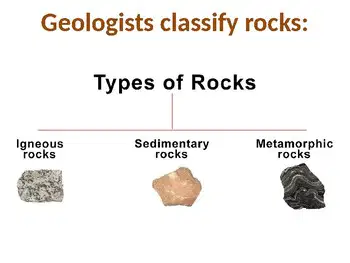


The root wood "igni-" or "ign-" means
air
change
fire
water

Why are sedimentary rocks the only classification of rock in which it is possible to find fossils? Choose TWO correct answers.
Because sedimentary rocks stay on the surface where they form, and that is where the dead plants and animals are.
Because sedimentary rocks form in water, and water is essential for all living things on Earth.
Because metamorphic rocks form at temperatures between 100 C and 800 C, and the heat would destroy and deform the fossils.
Because igneous rocks are formed from molten rock, and temperatures hot enough to melt rocks into minerals would burn the fossils.

Look at this diagram of potential metamorphism. In which layer is it IMPOSSIBLE for metamorphic rocks to form?
Layer A
Layer B
Layer C
Layer D

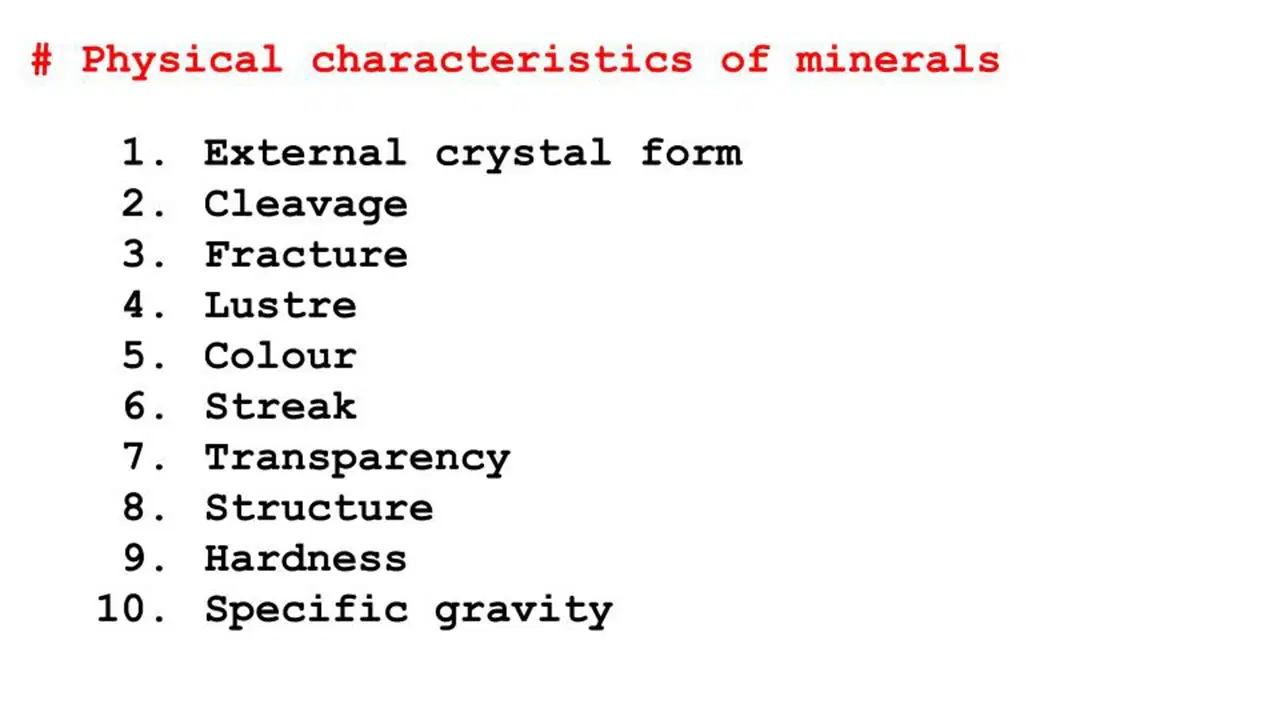
The way a surface (of a mineral) reflects light is _______. It is either metallic or nonmetallic.


A scientist made an object in a lab that has a crystal structure and was solid. Why is the object NOT considered a mineral?
It is a solid
It is made by a human.
It is inorganic
It has a crystalline structure

Igneous rocks that are light-colored, have high silica content, and contain quartz and feldspars are classified as
felsic.
intermediate.
mafic.
ultramafic.
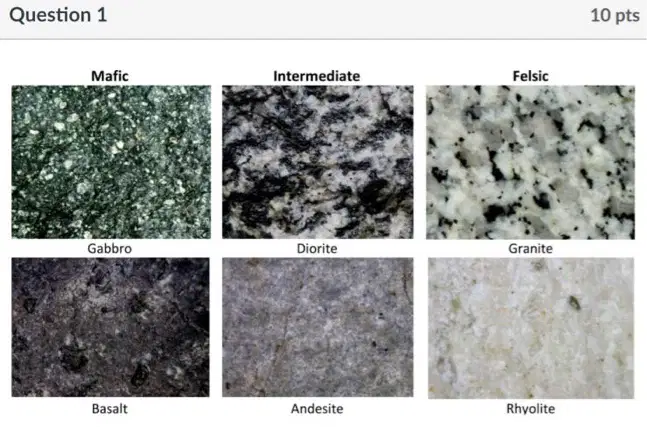
Igneous rocks that are dark-colored, have lower silica content, and are rich in iron and magnesium, are classified as
felsic.
intermediate.
mafic.
ultramafic.

Why is water never classified as a mineral? Which of its properties is the reason?
It is a compound of hydrogen and oxygenL H2O.
It may occur in three states of matter: solid, liquid, and gas.
Its color is unreliable because it reflects light or can be polluted.
It can be easily made in a laboratory.

The Appalachian Plateau is where coal is mined. Coal forms in what type of rock?
igneous
foliated metamorphic
nonfoliated metamorphic
sedimentary

The Fall Line is the natural border between two regions. What is important about the Fall Line?
The Fall Line shows which directions rocks and sediments will go in an earthquake.
All precipitation and river water east of the fall line will go into the Chesapeake Bay.
The Fall Line represents how high the ocean water will come on land in a hurricane.

Which province is most unlikely to contain fossils because of its igneous and metamorphic rocks?

Which province has the oldest rocks in Virginia--up to 1 billion years old?

Karst topography includes underground caverns. Where in Virginia would this landscape be found?

You can see Loudoun County on this map. Which Virginia province is it MOSTLY in?
Piedmont

Read the map! All of the following Virginia River watersheds empty into the Chesapeake Bay EXCEPT
Rappahannock River
New River
Potomac River
York River
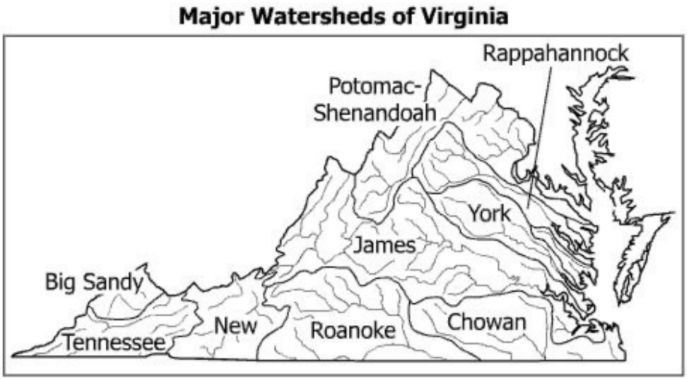
Which Virginia Watershed has the greatest impact in the state due to its size?
Tennessee River Watershed
James River Watershed
Chowan River Watershed
Rappahannock River Watershed
What is the best evidence that many different geologic periods are represented in Virginia?
The presence of fossils of different ages
The location of the Piedmont
The amount of chemical weathering
The length of its rivers

Colliding tectonic plates caused sedimentary rock layers in
which province of Virginia to become folded and faulted?
Coastal Plain
Ridge and Valley
Blue Ridge
Piedmont

As a result of the weathering and erosion of the mountains of Virginia, which province has the rolling hills?
Piedmont
Ridge and Valley
Blue Ridge
Coastal Plain

Karst topography (with sinkholes, depressions, and caves) is found primarily in which of Virginia's physiographic provinces?
Coastal Plain
Blue Ridge
Piedmont
Valley and Ridge

Sand is a valuable resource that is mined in Virginia, and is exported all over the country. Sand can be used to make glass, and is one of the ingredients of concrete.
Logically, which Virginia province is the primary place to mine sand?
Coastal Plain
Piedmont
Blue Ridge
Valley and Ridge

Trilobites are marine animal fossils related to modern day horse shoe crabs. These animals lived throughout Earth's oceans hundreds of millions of years ago. Fossils of these animals can be found in sedimentary rock layers in the mountains of Virginia. This indicates that________________________.
the mountains of Virginia were formed by massive volcanoes
the mountains of Virginia were once covered by swamps
the mountains of Virginia has never been covered by water
the mountains of Virginia were once a marine environment

Think about everything you have learned so far about cycles on Earth. Do parts of the Earth move under its surface in the crust and mantle?
Yes
No


According to the law of superposition, the oldest fossils are found
At the top of the rock layers
Near the bottom of the rock layers
In the middle of the rock layers
Somewhat near the surface


Which of the following orders the rock layers accurately from oldest to youngest?
1, 2, 3, 4, 5
5, 4, 3, 2, 1
2, 3, 4, 5, 1
1, 2, 3, 5, 4

Organisms D and C clearly lived in an aquatic (water) environment. Organism A does not look like it lived in the water. What is the most likely explanation for this?
The fossil in layer A died on land and was carried to the water
The fossils in layer C and D did not live in the same location as the fossil in layer A
The environment changed over a long period of time. It used to be under water, but is not anymore

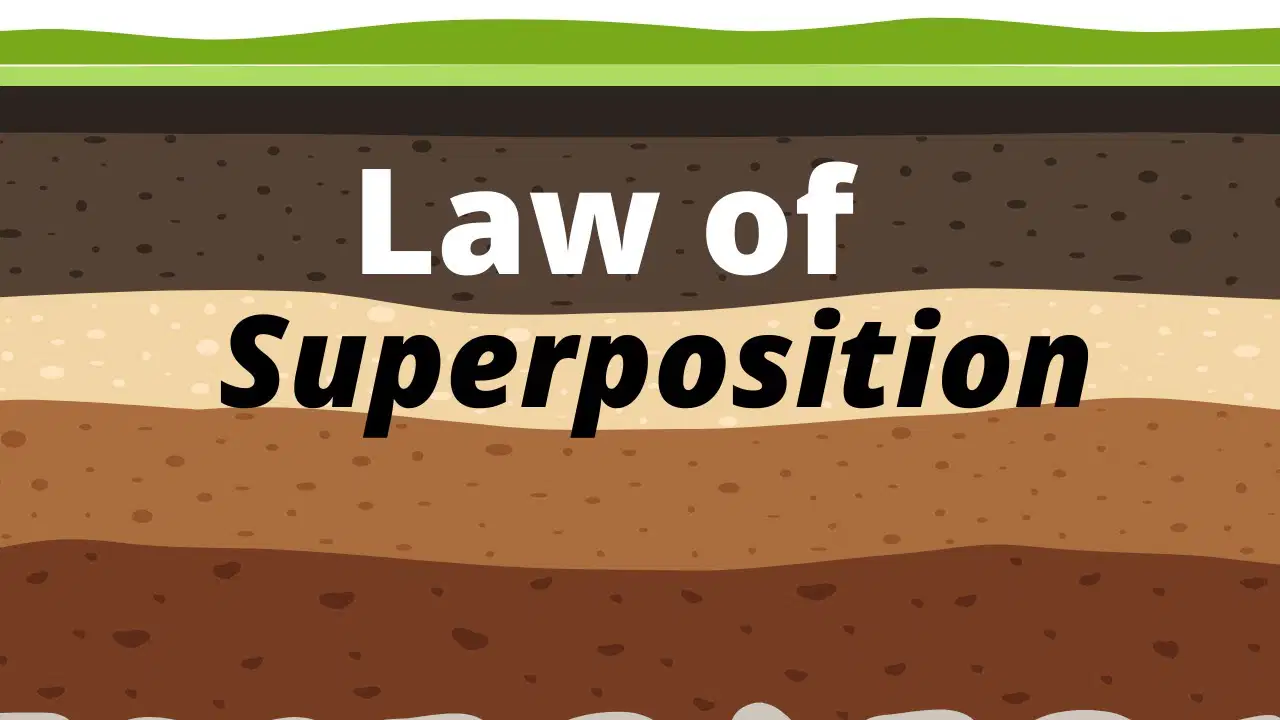
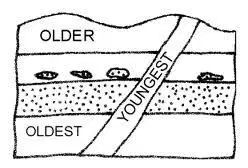

Which law of geology tells you that layer A is older than layer B?
law of horizontality
law of really old dirt
ice wedging
law of superposition

In terms of RELATIVE AGE, Ms. Sinclair is...
older than me.
smaller than me.
younger than me.
taller than me.

