
 Worksheets
Physics Test Review
Total questions: 107
Worksheet time: 3hrs 0mins
Name
Class
Date
1.

What is the net force?
a)
17 N Right
b)
3 N Right
c)
3 N Left
d)
17 N Left
2.
A runner races in the 100 meter dash. It takes her 10 seconds to finish. What is her average speed?
a)
10 m/s
b)
1000 m/s
c)
100 seconds
d)
10 seconds
3.
What is velocity?
a)
the quickness of an object
b)
the location of an object
c)
acceleration
d)
speed in a specific direction
4.
Acceleration is
a)
increasing speed
b)
decreasing speed
c)
changing direction
d)
all of the above
5.
What is the name for a push or pull?
a)
A movement
b)
A force
c)
Speed
d)
Density
6.
A ____ force is the sum of forces felt by an object.
a)
sum
b)
net
c)
strong
d)
balanced
7.

Calculate the net force.
a)
5 N
b)
10 N
c)
45 N
d)
500 N
8.
What is speed?
a)
how far you go
b)
how much distance is covered over a period of time
c)
how fast you accelerate
d)
the change in the location of a object
9.
Alan travels 100km in 5hrs. Find his average speed in km/h
a)
5km/hr
b)
10km/hr
c)
50km/hr
d)
20km/hr
10.

What is the net force?
a)
5000 N right
b)
4000 N right
c)
40 N left
d)
4000 N left
11.

What does this graph represent?
a)
Constant speed
b)
Acceleration
c)
Not moving
d)
Turning around
12.

LT4: The graph shows Ashley riding her bike to Maria's house.
What was occurring from point B to point C?
What was occurring from point B to point C?
a)
She was increasing her speed.
b)
She stopped for 4 minutes.
c)
She was decreasing in speed.
d)
She turned around and went home.
13.
What is the formula to calculate speed?
a)
Speed = time/distance
b)
Speed = distance/time
c)
Speed = distance x time
d)
Speed = time x distance
14.

According to the graph how far does the person travel in the first 5 seconds?
a)
2 m
b)
10 m
c)
0 m
d)
5 m
15.

What is the person doing from 5 seconds to 10 seconds?
a)
Walking
b)
Running
c)
Standing Still
d)
Walking Fast
16.

What is the average speed of the person during the first 5 seconds?
a)
0 m/s
b)
1 m/s
c)
3 m/s
d)
6 m/s
17.
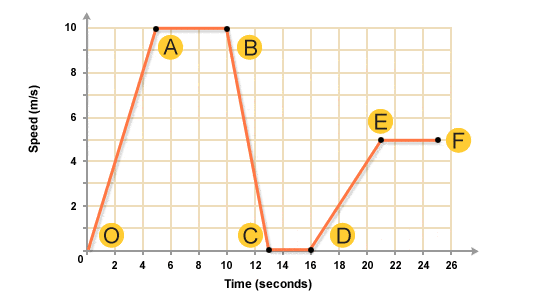
What is happening in this graph from point B to C?
a)
The object is going down a hill.
b)
The object is returning to its starting location.
c)
The object is slowing down.
d)
The object is staying still.
18.
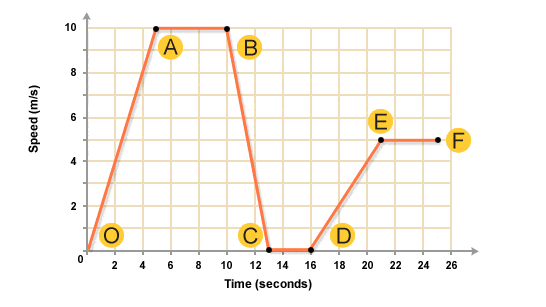
What is happening in this graph from point A to B?
a)
The object is accelerating.
b)
The object is not moving.
c)
The object is decelerating.
d)
The object is moving at a constant speed.
19.

What does this graph represent?
a)
Constant Speed
b)
Acceleration
c)
Not moving
20.

Which runner won the race?
a)
A
b)
B
c)
C
21.
Which of the following is a unit for acceleration?
a)
km/s
b)
m/s2
c)
mi/hr
d)
ft
22.
Acceleration of an object happens when things ________
a)
slow down
b)
go faster
c)
change direction (turn)
d)
All of the above
23.
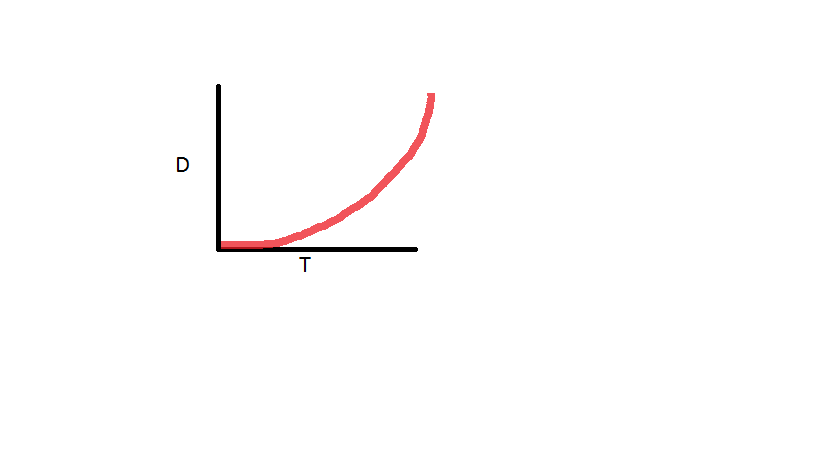
The graph below represents
a)
Speed
b)
Velocity
c)
Acceleration
d)
Deceleration
24.
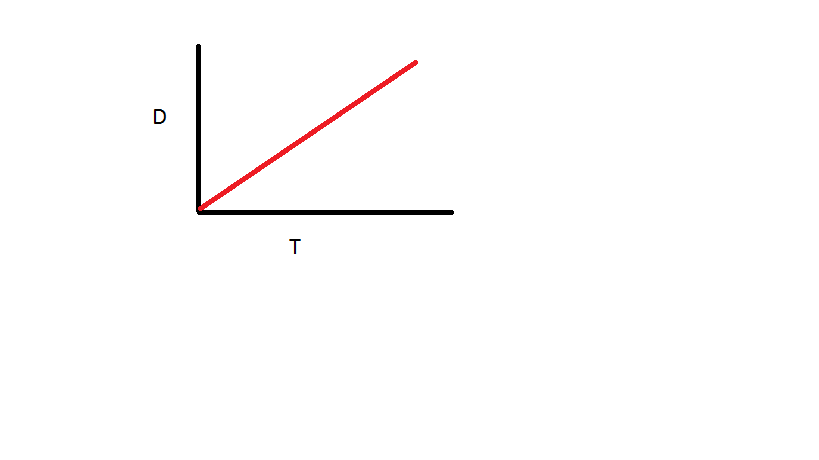
The graph represents
a)
Acceleration
b)
No motion
c)
Deceleration
d)
Constant Velocity
25.
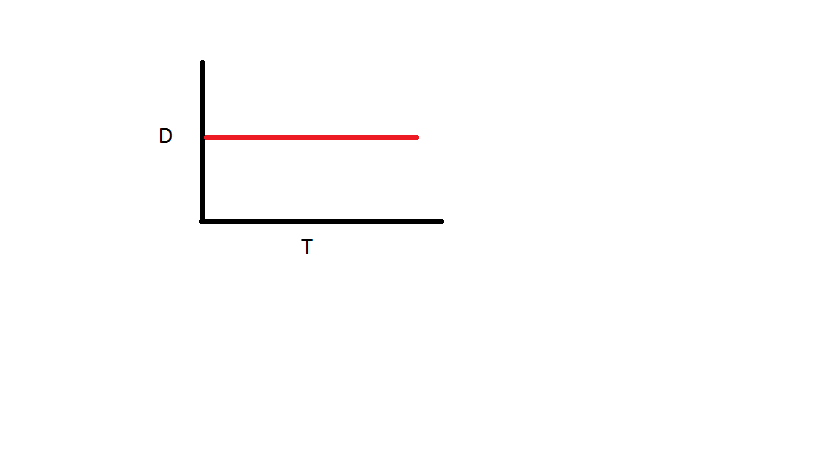
The graph represents
a)
No motion
b)
Constant velocity
c)
Acceleration
d)
Deceleration
26.

The graph respresents
a)
No motion
b)
Constant Velocity
c)
Acceleration
d)
Deceleration
27.

The graph represents
a)
no motion
b)
Constant velocity
c)
Acceleration
d)
negative acceleration
28.

The graph represents
a)
no motion
b)
constant velocity
c)
acceleration
d)
negative acceleration
29.
g is defined as
a)
acceleration of all objects in motion
b)
acceleration of objects moving vertically
c)
acceleration of gravity
d)
none of the above
30.
How much time does it take for a car travelling at 65 miles/hour to travel 300 miles?
a)
4.6 hours
b)
0.22 hours
c)
19,500 hours
d)
none of the above
31.
If a car is traveling forward at 15 m/s, how fast will it be going in 1.2 seconds if the acceleration is -10 m/s/s?
a)
27 m/s
b)
3 m/s
c)
-27 m/s
d)
-3 m/s
32.
1. How far will a train moving at 5.7 km/min go in 45 minutes?
a)
256.5 km
b)
0.12 km
c)
7.89 km
33.
Jermaine runs exactly 2 laps around a 400 meter track. What is the displacement?
a)
800 meters
b)
400 meters
c)
0 meters
d)
200 meters
34.

A roller coasters accelerates from an initial velocity of 6.0 m/s to a final velocity of 70 m/s over 4 seconds. What's the acceleration?
a)
24 m/s2
b)
18 m/s2
c)
16 m/s2
d)
16 m/s
35.

a)
The boat came to a stop after it traveled for 10 minutes.
b)
The boat was at rest from 20 to 40 minutes.
c)
The boat traveled the fastest in the last 20 minutes.
d)
The boat traveled the shortest distance in the first 20 minutes.
36.
What is the distance a ball falls after 1,2,3,4,5 seconds (assume g is rounded to 10 m/s2)?
a)
10, 20, 30, 40, 50 m (meters)
b)
5, 20, 45, 80,125 m (meters)
c)
5, 10,15, 20, 25 m (meters)
d)
10, 25, 60, 90,120 m (meters)
37.
The change in velocity in a given time period is?
a)
Vi
b)
Vf
c)
a
d)
d
38.
When speed and direction remain the same throughout a motion, this is called?
a)
Accelerated motion
b)
Constant motion
c)
Changing motion
d)
Changing velocity
39.
When an object falls in physics world, what happens?
a)
It accelerates at a constant rate until it hits the ground
b)
It accelerates at a non-constant rate until it hits the ground
c)
It accelerates at a constant rate until it reaches terminal velocity
d)
It accelerates at a non-constant rate until it reaches terminal velocity
40.
Which would hit the ground first if dropped from the same height in a vacuum—a feather or a metal bolt?
a)
the feather
b)
the metal bolt
c)
They would hit the ground at the same time.
d)
They would be suspended in a vacuum.
41.
Suppose you are in a car that is going around a curve. The speedometer reads a constant 30 miles per hour. Which of the following is NOT true?
a)
You and the car are accelerating.
b)
Your acceleration is constantly changing.
c)
Your velocity is constant.
d)
Your direction is constantly changing.
42.
A freely falling object starts from rest. After falling for 6 seconds, it will have a speed of about
a)
6m/s
b)
30m/s
c)
60m/s
d)
300m/s
43.
1. An object free falls for 3.5 seconds. How far does it fall?
a)
120.05 m
b)
17.15 m
c)
60.03 m
d)
34.3 m
44.
1. An object free falls for 3.5 seconds. Given only this information, what equation is used to find the speed?
a)
v=gt
b)
v=d/t
45.
Objects that are falling toward Earth in free fall move
a)
faster and faster.
b)
slower and slower.
c)
at a constant velocity.
d)
slower then faster.
46.
A free falling objects falls under the influence of
a)
force of air
b)
force of gravity
c)
force of resistance
d)
force of
47.
Free-falling objects do not encounter
a)
air resistance
b)
force of gravity
c)
downward acceleration
48.
Mass has units of ____
a)
kg
b)
m
c)
N
d)
m/s
49.
Weight is a
a)
a unit
b)
a force
c)
a mass
d)
a length
50.
How do you write
8.317 x 10⁶
in standard form?
8.317 x 10⁶
in standard form?
a)
8, 371, 000
b)
83, 170, 000
c)
837, 100
d)
8, 317, 000
51.
Solve:
(2.1×102) × (3.0×104)
(2.1×102) × (3.0×104)
a)
5.1 x 10²
b)
6.3 x 10⁶
c)
5.1 x 10⁶
d)
6.3 x 10⁸
52.
Express the following in standard notation:
8.025 x 10⁻⁸
a)
.00000008025
b)
.000000008025
c)
802,500,000,000
d)
80,250,000,000
53.
Multiply:
(9.4 x 10⁶)(3.2 x 10⁵)
(9.4 x 10⁶)(3.2 x 10⁵)
a)
30.08 x 10¹¹
b)
3.8 x 101
c)
3.008 x 10¹²
d)
2.9375 x 101
54.
How would you write -5.6 x 10⁻³ in standard form?
a)
0.0056
b)
-5,600
c)
0.00056
d)
-0.0056
55.
Divide:
(6.9 x 10⁷) / (2.3 x 10⁻³)
(6.9 x 10⁷) / (2.3 x 10⁻³)
a)
3 x 10¹⁰
b)
3 x 10⁴
c)
3 x 10⁻⁴
d)
3 x 10-11
56.
Multiply:
(3.4 x 10⁵)(1.2 x 10⁻³)
(3.4 x 10⁵)(1.2 x 10⁻³)
a)
4.08 x 10⁻⁸
b)
4.8 x 10²
c)
4.08 x 10²
d)
4.08 x 10⁻¹⁵
57.
When writing a number in scientific notation, the first number must be greater than 1, but less than 10.
a)
False
b)
True
58.
Solve:
(6 x 10⁶) / (2 x 10³)
(6 x 10⁶) / (2 x 10³)
a)
12 x 103
b)
3 x 10⁹
c)
1.2 x 10⁴
d)
3 x 10³
59.
Solve:
(9 x 10⁻⁶) / (3 x 10⁻³)
(9 x 10⁻⁶) / (3 x 10⁻³)
a)
27 x 10-9
b)
3 x 10⁻³
c)
3 x 10⁻⁹
d)
27 x 10-3
60.
Which one of these is in scientific notation?
a)
8.987000
b)
8.98 x 10⁶
c)
80.987 x 10
d)
8.986
61.
How do you write
1001
in scientific notation?
1001
in scientific notation?
a)
1.0001 x 10⁴
b)
1.01 x 10⁵
c)
1.001 x 10³
d)
10.1 x 10³
62.
How would you write 0.0005 in scientific notation?
a)
50 x 105
b)
5 x 10⁻⁴
c)
5 x 10⁻³
d)
.5 x 103
63.
How would you write 564,000,000 in scientific notation?
a)
5.64 x 10⁻⁷
b)
5.64 x 10⁶
c)
5.64 x 10⁸
d)
56.4 x 10⁷
64.
Express the following in scientific notation:
.000045
.000045
a)
4.5 x 10⁻⁵
b)
45 x 10-6
c)
4.5 x10⁵
d)
45 x 106
65.
Subtract the within the scientific notation.
(2 x 10³) - (1.9 x 10²)
(2 x 10³) - (1.9 x 10²)
a)
1.81 x 10⁵
b)
1.81 x 10³
c)
1.81 x 10⁶
d)
1.81 x 10⁴
66.
Subtract withing scientific notation
(7.32 x 10⁶) - (4.01 x 10⁸)
(7.32 x 10⁶) - (4.01 x 10⁸)
a)
-3.937 x 10⁸
b)
3.937 x 10⁸
c)
3.937 x 10⁷
d)
3.937 x ⁻²
67.
Which of the following is correct scientific notation?
a)
20.35 x 10⁴
b)
.2035 x 104
c)
2035 4
d)
2.035 x10⁴
68.
Convert 56,000,000,000 from standard to scientific notation form.
a)
5.6 x 10⁹
b)
56 x 10-9
c)
56 x 109
d)
5.6 x 10¹⁰
69.
How do you write
8.317 x 10⁶
in standard form?
8.317 x 10⁶
in standard form?
a)
8, 371, 000
b)
83, 170, 000
c)
837, 100
d)
8, 317, 000
70.
How would you write 4.3756 x 10⁻⁴ in standard form?
a)
437,560,000
b)
0.00043756
c)
43,756
d)
4,3756
71.
UNDERSTANDING
If the exponent is a negative number...
If the exponent is a negative number...
a)
you will get a large number
b)
you will get a small number
72.
Add withing scientific notation
(5.2 x 10⁷) + (3.01 x 10⁴)
(5.2 x 10⁷) + (3.01 x 10⁴)
a)
5.20301 x 10¹¹
b)
.520301 x 10⁷
c)
5.20301 x 10⁷
d)
5.20301 x 10⁸
73.
Convert from meters to cm: 9 meters
a)
900 cm
b)
90 cm
c)
0.9 cm
d)
0.09 cm
74.
Convert 17 m to cm:
a)
0.17 cm
b)
0.017 cm
c)
1,700 cm
d)
170 cm
75.
Convert 8 kilometers to meters
a)
800 m
b)
80,000 m
c)
8,000 m
d)
.008 m
76.
Is 20 g greater than, less than, or equal to 2 kg?
a)
greater than
b)
less than
c)
equal to
77.
42 L = ___mL
a)
4,200
b)
.0042
c)
4.20
d)
42,000
78.
247 m = ____ cm and ___ mm
a)
300 cm and 3 mm
b)
240 cm and 7 mm
c)
200 cm and 3 mm
d)
50 cm and 5 mm
79.
Which unit is bigger?
a)
m
b)
mm
80.
Which unit is the smallest?
a)
km
b)
mm
c)
m
d)
cm
81.
the tendency of an object to resist a change in its motion
a)
acceleration
b)
inertia
c)
mass
d)
frame of reference
82.
a force that opposes motion between any surfaces that are touching
a)
velocity
b)
friction
c)
inertia
d)
position
83.
The SI unit for force
a)
distance
b)
Newton (N)
c)
frame of reference
d)
inertia
84.
Inertia is the tendency of an object to resist a change in its ___________.
a)
temperature
b)
shape
c)
size
d)
motion
85.
Objects with greater _________ also have greater inertia.
a)
speed
b)
mass
c)
temperature
d)
friction
86.
Because of inertia, a resting object will remain at ________.
a)
rest
b)
a constant speed
c)
school
d)
inertia
87.
Because of inertia, a moving object will keep ________.
a)
at rest
b)
moving
c)
in one spot
d)
inertia
88.
What kind(s) of objects have inertia?
a)
all objects with mass
b)
only objects at rest
c)
only objects in motion
d)
only objects whose motion is being changed
89.
The law of inertia (Newton’s First Law) applies
a)
to both moving and nonmoving objects
b)
only to moving objects
c)
only to objects that are not moving
90.
You push on a car and it does not move. What is true about the inertia?
a)
The inertia is changing
b)
The inertia of the car is too great
c)
The inertia of the person is equal to the car
d)
There is not inertia because of no movement
91.
Which of the following would be considered quantitative data?
a)
Color
b)
Smell
c)
6.84 cm
d)
texture
92.
Explaining the color of a chemical would be what kind of observation?
a)
Qualitative
b)
Quanitative
93.
What is a factor that the experimenter has full control over and changes to see what happens?
a)
Dependent Variable
b)
Independent Variable
c)
Control group
d)
Hypothesis
94.
What is a factor that changes because of what the experimenter does?
a)
Dependent Variable
b)
Independent Variable
c)
Control Group
d)
Hypothesis
95.
Nick wanted to see how high an ice cube would float in different temperatures of water. Identify the DEPENDENT variable
-Amount of water
-Height of Ice cube
-Temperature the ice cube was at its highest height
-Temperature of the water
-Size of the ice cube
-Amount of water
-Height of Ice cube
-Temperature the ice cube was at its highest height
-Temperature of the water
-Size of the ice cube
a)
Amount of water
b)
Height of Ice cube
c)
Temperature the ice cube was at its highest height
d)
Size of the ice cube
96.
A scientist hypothesizes the the temperature at which an alligator's egg is incubated will determine whether the alligator will be male or female. The independent variable is
a)
the male alligators
b)
the incubator
c)
the gender of the alligator
d)
the temperature
97.

In this graph, what is the independent variable?
a)
Population
b)
Day
c)
Species 5
98.

In this graph, what is the dependent variable?
a)
Walla Walla Island
b)
Time
c)
Number of Deer
99.
The summary at the end of an experiment that explains the results.
a)
conclusion
b)
procedures
c)
materials
d)
responding variable
100.
On what axis should the independent variable always be?
a)
X
b)
Y
101.
A possible explanation to a problem that has not yet been tested.
a)
data
b)
theory
c)
hypothesis
d)
fact
102.
Which is NOT a step in the scientific method?
a)
Make observation
b)
Form a theory
c)
Collect data
d)
Form a hypothesis
103.

Are these forces balanced or unbalanced?
a)
balanced
b)
unbalanced
104.
The astronomer Copernicus publically states in the 1500s that the Earth
a)
does not move
b)
moves in a straight line
c)
revolves around the sun
d)
is the center of the solar system
105.
Galileo found that a ball rolling down one inclined plane would roll how far up another inclined plane?
a)
The ball would not rull up the other plane at all.
b)
to nearly the original height
c)
to nearly twice the original height.
d)
to nearly half it original height
106.
Which of the following statements does NOT apply to Aristotle's concept of violent motion?
a)
Violent motion is imposed
b)
violent motion has an external cause
c)
violent motion is the result of forces that push and pull
d)
violent motion is thought to be either straight up or down.
107.
Galileo was the first to publicly state the earth revolves around the sun.
a)
True
b)
False
100 %

