wayground logo

Free Printable Worksheets

Font size

S
M
L
XL
Worksheets

G9 ASP review T2

Total questions: 110

Worksheet time: 9hrs 10mins

Name
Class
Date
1.

The speedometer on your car measures___.

a)

average speed.

b)

average velocity.

c)

instantaneous speed.

d)

instantaneous velocity.

2.

Which of the following map directions is equivalent to the Cartesian 180°?

a)

000T

b)

090T

c)

270T

d)

360T

3.

The resultant is the arithmetic sum of the magnitudes only if

a)

the vectors are in the same direction.

b)

the vectors are in opposite directions.

c)

one vector is perpendicular to the other.

d)

the magnitudes of the vectors are the same.

4.

Which is not necessarily true about similar triangles?

a)

Their corresponding sides are proportional.

b)

Their angles are sufficient to determine similarity.

c)

Their corresponding sides are congruent.

d)

Their corresponding angles are congruent.

5.

Find the resultant of a vector whose component vectors are +5.50 m vertically and +9.50 m horizontally. Use an order-of-magnitude estimation to choose the correct answer.

a)

11 m

b)

3.87 m

c)

15 m

d)

4 m

6.

If the length of one leg of a right triangle is 4.5 m and the length of the hypotenuse is 10.2 m , what is the length of the other leg?

a)

2.39 m

b)

9.15 m

c)

5.7 m

d)

14.7 m

7.

If a vector's reference angle is 45° and it lies in the third quadrant, what is the vector angle?

a)

q = 45°

b)

q = 135°

c)

q = 225°

d)

q = 315°

8.

The study of the causes of motion is called (a)   .

9.

A physical quantity that has both a _____ and a ______ associated with it is called vector quantity.

(a)  

10.

Map directions are measured from (a)   .

11.

A vector diagram has three essential parts: The magnitude, the ____ and the ____

(a)  

12.

Triangles containing a 90° angle are called ________ triangles.

a)

Isosceles

b)

right

c)

complementary

d)

equilateral

13.

Two vectors are considered equal as long as they have the same magnitude.

a)

True

b)

False

14.

Scalar quantities are negative.

a)

Never

b)

Sometimes

c)

Always

15.

f an object travels in a straight line, the magnitude of its displacement will be equal to ____.

a)

the distance traveled

b)

the opposite displacement

c)

the average speed

d)

zero

16.

The study of the causes and the description of motion is called____.

a)

dynamics

b)

kinematics

c)

mechanics

d)

physics

17.

The slope of a two-dimensional velocity-time graph gives

a)

gravity

b)

speed

c)

average velocity

d)

acceleration

18.

Which of the following are not vector quantity?

a)

acceleration

b)

speed

c)

displacement

d)

velocity

e)

total distance

19.

The equations of motion apply only if___.

a)

velocity is constant

b)

displacement is constant

c)

acceleration is constant

d)

motion is horizontal

20.

A ball is dropped from an 120.0 m building. What is the ball's velocity after 1 min? Use an order-of magnitude estimation to identify the correct choice. Vf=Vi +( a .Δt)V_f=V_i\ +\left(\ \overline{a}\ .\Delta t\right)

a)

588.6 m/s

b)

120 m/s

c)

12.24 m/s

d)

1176 m/s

21.
Which statement describes a vector?
a)
It has magnitude but no direction
b)
It has direction but no magnitude
c)
It has both direction and magnitude
d)
It has constant magnitude but no
 direction
22.
A car travels 90 meters due north in 15 seconds. Then the car turns around and travels 40 meters due south.  What is the magnitude and direction  of the car's resultant displacement?  
a)
40 metres, South
b)
50 metres, South
c)
50 metres, North
d)
40 metres, North 
23.
In practice A of the figure, What is  the magnitude of the  resultant displacement?
a)
5 km 
b)
8 km
c)
11 km
d)
15 km
24.

In practice A of the figure, what is the direction of the resultant displacement?

a)

South of East

b)

North of East

c)

North of West

d)

South of West

25.
In practice B of the figure, which displacement is the horizontal component?
a)
30 km, East
b)
30 km, West
c)
40 km, North
d)
40 km, South
26.
Is this a scalar quantity or a vector quantity?
A deer running 15 meters per second due west
a)
Scalar
b)
Vector
27.
The _______ of two or more vectors is the sum of the vectors.
a)
components
b)
scalar
c)
resultant
d)
magnitude
28.
What is the net force?
100 N        230 N
<------        --------->
a)
30 N to the right
b)
230 N to the right
c)
130 N to the right
d)
This is a balanced force
29.

A vector is a ray with both ____________ and _____________.

a)

Wings and halos

b)

Space and time

c)

Direction and magnitude

d)

Radicals and exponents

30.

Find the magnitude.

a)

0

b)

5

c)

-5

d)

4

31.

Find the length of the resultant.

a)

4

b)

5

c)

3

d)

square root of 5

32.

What is the horizontal length?

a)

4

b)

5

c)

3

d)

square root of 5

33.

What is the vertical length?

a)

4

b)

5

c)

3

d)

square root of 5

34.

In practice B of the figure, which displacement is the vertical component?

a)

30 km, East

b)

30 km, West

c)

40 km, North

d)

40 km, South

35.

In practice B of the figure, which displacement is the resultant?

a)

50 km, Northeast

b)

70 km, Southwest

c)

70 km, Northwest

d)

50 km, Southwest

36.
What type of friction is not moving?
a)
static
b)
sliding
c)
fluid
d)
rolling
37.
A force is a ____________________
a)
push or pull
b)
motion
c)
speed
d)
net force
38.

The force that one surface exerts on another when the two rub against each other is called

a)

friction.

b)

inertia.

c)

acceleration

d)

gravity

39.

In which direction does friction force act?

a)

Direction opposite of object's motion.

b)

In same direction as object's motion.

c)

Up direction.

d)

Down direction.

40.

Which object has the most sliding friction (kinetic friction) with the sloping surface?


All objects have equal masses. The slope material is the same for all objects.

a)

Object #1

b)

Object #4

c)

Object #3

d)

All have equal friction.

41.

Which type of friction is the strongest? (has the greatest force)

a)

Kinetic friction (sliding friction)

b)

Rolling friction

c)

Static friction

d)

All forms of friction are equal for the same object.

42.
 What is the unit called that measures force?
a)
weight
b)
meter
c)
Newton
d)
kilogram
43.
What does friction produce?
a)
light
b)
sound
c)
heat
d)
gravity
44.
 What is the force of friction between a block of ice that weighs 950 N and the ground if μ = .12? 
a)
65 N
b)
226 N
c)
175 N
d)
114 N
45.
What is the coefficient of static friction if it takes 44 N of force to move a box that weighs 86 N? 
a)
0.78
b)
0.51
c)
0.78 N
d)
0.58 N
46.
A box takes 40 N to start moving when the coefficient of static friction is .54. What is the weight of the box? 
a)
81 N
b)
18 N
c)
98 N
d)
74 N
47.
What are the units on the coefficient of friction?
a)
none
b)
Newtons
c)
meters
d)
kilograms
48.
What are the units on the force due to friction?
a)
none
b)
Newtons
c)
meters
d)
kilograms
49.
What are the 2 types of friction discussed in the book?
a)
Static and Dynamic Friction
b)
Kinetic and Static Friction
c)
Kinetic and Dynamic Friction
d)
Dynamic and Moving Friction
50.
What are 2 factors that determine the amount of friction between 2 objects?
a)
Force and roughness between surfaces
b)
hills and valleys and how smooth or rough the surface is
c)
Amount of force and amount of surface the comes in contact
d)
The force and the weight exerted on the surfaces
51.
Which of the following is opposed by kinetic friction?
a)
A truck being pushed but not moving
b)
A box being pushed but not moving
c)
A box being pushed and sliding across the floor
d)
A wagon being pulled but not moving
52.
The amount of friction depends on the weight of the objects pressing together.
a)
True
b)
False
53.

Static friction prevents motion between surfaces in contact.

a)

True

b)

False

54.

Friction depends on _____ surfaces in contact.

a)

1

b)

2

c)

3

d)

4

55.

Coefficient of friction is represented with? μ\mu  

a)

μ\mu  

b)

β\beta  

c)

θ\theta  

d)

α\alpha  

56.
A box weighing 46 newtons rests on an incline that makes an angle of 25° with the horizontal. What is the magnitude of the component of the box’s weight perpendicular to the incline?
a)
19N
b)
21N
c)
42N
d)
26N
57.
When the sum of all the forces acting on a block on an inclined plane is zero, the block
a)
must be at rest
b)
must be accelerating
c)
may be slowing down
d)
may be moving at a constant speed
58.
An 8.0-newton block is accelerating down a frictionless ramp inclined at 15° to the horizontal. What is the magnitude of the net force causing the block’s acceleration?
a)
0N
b)
2.1N
c)
7.7N
d)
8.0N
59.
A 1.0 × 10⁵-newton truck at rest on a hill that makes an angle of 8.0° with the horizontal. What is the component of the truck’s weight parallel to the hill?
a)
1.4E3N
b)
1E4N
c)
1.4E4N
d)
9.9E4N
60.
A cart rolls down an inclined plane with constant speed as shown in the diagram below. Which arrow represents the direction of frictional force?
a)
A
b)
B
c)
C
d)
D
61.
A 10.-newton block is sliding down a 30-degree incline at a constant speed. What is the force of friction?
a)
5N
b)
4.9N
c)
10N
d)
98N
62.
A 10.0-kilogram mass held at rest on a frictionless 30.0º incline by force F. What is the magnitude of force F?
a)
49.1N
b)
98.1N
c)
85N
d)
9.81N
63.
A 3.0-kg block slides on a frictionless 20° inclined plane. A force of 16 N acting parallel to the incline and up the incline is applied to the block. What is the acceleration of the block?
a)
2 m/s^2 down the incline
b)
5.3 m/s^2 up the incline
c)
2 m/s^2 up the incline
d)
3.9 m/s^2 down the incline
64.
 A 50.-kilogram crate is on a frictionless plane at  some angle to the horizontal. The crate is pushed at constant speed up the incline by force F. If angle were increased, what would be the effect on the magnitude of force F?
a)
increase
b)
decrease
c)
stay the same
d)
not enough info
65.
The diagram represents an object being held at rest on a frictionless incline. The net force is equal to
a)
zero
b)
normal force
c)
weight
d)
friction
66.
A block of mass 5 kilograms lies on an inclined plane  at 37 degrees.  The horizontal and vertical supports for the plane have lengths of 4 meters and 3 meters, respectively. The coefficient of friction between the plane and the block is 0.3. The magnitude of the force F necessary to pull the block up the plane with constant speed is most nearly 
a)
30
b)
42
c)
49
d)
50
67.
A block of mass 5 kilograms lies on an inclined plane  at 37 degrees.  The horizontal and vertical supports for the plane have lengths of 4 meters and 3 meters, respectively. The coefficient of friction between the plane and the block is 0.3. The magnitude of the force F necessary to pull the block up the plane with constant speed is most nearly 
a)
30
b)
42
c)
49
d)
50
68.
A wooden box is first pulled across a horizontal steel plate. The box is then pulled across the same steel plate while the plate is inclined. How does the force required to overcome friction in the inclined case compare to the horizontal case ? 
a)
bigger
b)
smaller
c)
the same
d)
not enough info
69.
A block weighing 10.0 newtons is on a ramp inclined at 30.0° to the horizontal. A 3.0-newton force of friction, Ff , acts on the block as it is pulled up the ramp at constant velocity with force F, which is parallel to the ramp, as shown in the diagram below. What is the magnitude of force F?
a)
7N
b)
8N
c)
10N
d)
13N
70.
A block rests on a ramp, making angle θ with the horizontal. As theta is increased
a)
the blocks mass will decrease
b)
the blocks mass will increase
c)
the blocks component of weight parallel to the ramp will increase
d)
the blocks component of the weight parallel to the ramp will decrease
71.

What is the sign of horizontal velocity Vx at point B

a)

+

b)

-

c)

0

72.

What is the sign of vertical velocity Vy at point B

a)

+

b)

-

c)

0

73.

What is the sign of the vertical velocity Vy at point C, before hitting the ground?

a)

+

b)

-

c)

0

74.

What is the sign of the horizontal velocity Vx at point C, before hitting the ground?

a)

+

b)

-

c)

0

75.

What happens to the horizontal velocity Vx when the ball moves from A to B (going up)

a)

increases

b)

decreases

c)

remains constant

76.

What happens to the vertical velocity Vy when the ball moves from A to B (going up)

a)

increases

b)

decreases

c)

remains constant

77.

What happens to the horizontal velocity Vx when the ball moves from B to C (going down)

a)

increases

b)

decreases

c)

remains constant

78.

What happens to the vertical velocity Vy when the ball moves from B to C (going down)

a)

increases

b)

decreases

c)

remains constant

79.

A projectile is launched with 45m/s at an angle 30o above the horizontal. What is the Vx when the projectile hits the ground.

a)

22.5 m/s

b)

35.7 m/s

c)

39 m/s

d)

45 m/s

80.

A projectile is launched with 45m/s at an angle 30o above the horizontal. What is the Vy when the projectile hits the ground.

a)

+ 22.5 m/s

b)

+ 39 m/s

c)

- 22.5 m/s

d)

- 39.5 m/s

81.

What is the initial height of the parabola?

a)

h = 0.563

b)

h = 10.063

c)

h = 5

d)

h = 1.356

82.

The pathway of an arrow can be represented by the equation h = -16t2 + 80t + 25, where h is the height in feet and t is the time in seconds. What is the maximum height?

a)

h = 125 feet

b)

h = 80 feet

c)

h = 95 feet

d)

h = 140 feet

83.

A rock is dropped from a bridge 320 feet above a river. The pathway that the rock takes can be modeled by the equation h = -16t2 + 320. How long will it take the rock to reach the river (ground)?

a)

4.5 seconds

b)

2.5 seconds

c)

3.8 seconds

d)

3.5 seconds

84.

Joe Mauer hits a fly ball. You can track the height of the ball using the equation: h(t) = -16t2 + 140t + 2. What is the starting height of the ball?

a)

-16 feet

b)

140 feet

c)

2 feet

d)

0 feet

85.
A ball is thrown into the air with an upward velocity of 100 ft/s. Its height, h, after t seconds is given by the function
 h = -16t2 + 64t + 960.
When did the ball hit the ground?
a)
10 seconds
b)
2 seconds
c)
5 seconds
d)
7 seconds
86.
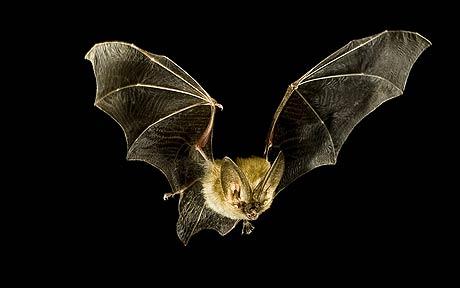
Bruno the bat flies at a speed of 0.5 m/s in circle of radius 1 m. What is his acceleration?
a)
0.25 ms-2
b)
0.5 ms-2
c)
1 ms-2
d)
2 ms-2
87.
Calculate the velocity of an object moved around a circle with a radius of 1.65 m and an acceleration of 3.5 m/s2.
a)
2.4 m/s
b)
3.6 m/s
c)
3.9 m/s
d)
4.2 m/s
88.
Find the magnitude of the torque produced by a 5.0 N force applied to a door at a perpendicular distance of 65 cm from the hinge.
a)
75 Nm
b)
3.25 Nm
c)
6.3 Nm
d)
8.75 Nm
89.
A car is traveling at 21.0 m/s. It slows to a stop at a constant rate over 5.00 s. How far does the car travel during those 5.00 seconds before it stops? 
a)
4.20 m
b)
52.5 m
c)
105 m
d)
158 m
90.

The ability to do work or cause change:

a)

work

b)

energy

c)

momentum

d)

power

91.

Energy in the form of motion.

a)

mechanical energy

b)

potential energy

c)

kinetic energy

d)

momentum

92.

Stored energy in the form of position or condition.

a)

potential energy

b)

kinetic energy

c)

momentum

d)

mechanical energy

93.

A soccer player kicks a ball with 20 Newtons of force causing it to travel 100 meters. How much work is done on the ball?

a)

200 J

b)

80 J

c)

5 J

d)

2000 J

94.

A worker climbs a ladder and does 8 J of work on a 2 N object. What is the distance they lift the object?

a)

18 m

b)

4 m

c)

10 m

d)

6 m

95.

Where is the kinetic energy of pendulum at its highest?

a)

at the top of the swing

b)

at the bottom of the swing

c)

at 1/4 of the swing

d)

at 3/4 of the swing

96.

At which point of this roller coaster is the energy 1/2 kinetic and 1/2 potential?

a)

A

b)

B

c)

C

d)

D

97.

Two workers use 100 N of force to move a sofa 2 meters in 2 seconds. How much power is required?

a)

100 watts

b)

400 watts

c)

104 watts

d)

50 watts

98.
Energy from a compressed spring would be an example of...
a)
kinetic
b)
elastic
c)
gravitational
d)
chemical
99.
How much work is being done with 200 N of force over 426 meters?
a)
85,200 J
b)
45,620 J
c)
90,480 J
d)
62,329 J
100.

The SI unit for power is...?

a)

Watts

b)

Joules

c)

Newtons

d)

Metres

101.
The faster an object moves, the ________ kinetic energy it has. 
a)
more
b)
less
c)
none of the above
d)
all of the above 
102.
What is the formula for calculating the total amount of mechanical energy?
a)
ME = KE + PE
b)
KE = ME + PE
c)
PE = KE + ME
d)
ME = 1/2 mv2
103.
What is the energy of position or shape that depends on weight and height, also called stored energy?
a)
Energy
b)
Kinetic energy
c)
Potential energy
d)
Sound energy
104.

Suppose a cart has a kinetic energy of 0.5 J. If you add enough mass to double the mass and make the cart go three times as fast, its kinetic energy is now ---.

a)

6 J

b)

3 J

c)

18 J

d)

9 J

105.

Two equal mass marbles are at the top of a ramp. One marble falls to the ground off the back while the other rolls down the ramp. What is true about the marbles when they reach the ground?

a)

The marble that rolled down the ramp is moving faster than the marble that fell.

b)

The marble that fell down the back of the ramp is moving faster than the marble that rolled.

c)

The marble that rolled down the ramp is not moving when it reaches the ground.

d)

The two marbles are moving with the same speed.

106.

A block starts at rest at point P at the top of a ramp which is height h above the ground. The block slides down one side and up the other, stopping at a point less than h above the ground.

a)

The block did not go as high on the other side because gravity pulls down.

b)

The block did not go as high on the other side because potential energy always has to decrease.

c)

The block did not go as high on the other side because work from friction made the mechanical energy less.

d)

The situation as described is impossible to happen.

107.

If there is no friction on this track, at which point would the coaster have the most kinetic energy?

a)

A

b)

B

c)

C

d)

D

108.

A 40-kg person is climbing 3 m up a flight of stairs in 6 seconds. How much power did they exert climbing the stairs?

a)

400 W

b)

1200 W

c)

200 W

d)

120 W

109.

What effect do external forces like an applied force, friction force, or drag force have?

a)

They have no effect on a system's mechanical energy.

b)

They convert kinetic energy into potential energy.

c)

They convert potential energy into kinetic energy.

d)

They convert between mechanical energy and other forms of energy to change the total mechanical energy of the system.

110.

How does conservation of energy explain why something that is falling should speed up?

a)

It gains kinetic energy because it gains potential energy.

b)

It loses kinetic energy because no work was done on it.

c)

It gains kinetic energy because it loses potential energy.

d)

It loses kinetic energy because the Earth gains potential energy.