
 Worksheets
FINAL ONE !!
Total questions: 113
Worksheet time: 4hrs 31mins

The picture shows three objects gravitationally interacting with each other. Which object exerts the greatest force on object B?
Object A
Object C
A and C exert an equal force on B
Cannot be determined

The gravitational force in the previous interaction was 20 N. Determine the gravitational force in the new situation where the second mass is doubled.
10 N
20 N
40 N
80 N

The picture shows the gravitational field in the space surrounding the Earth. What is creating this gravitational field?
The gravitational force.
The mass of the Earth.
The distance of the Earth.
The universal gravitational constant.
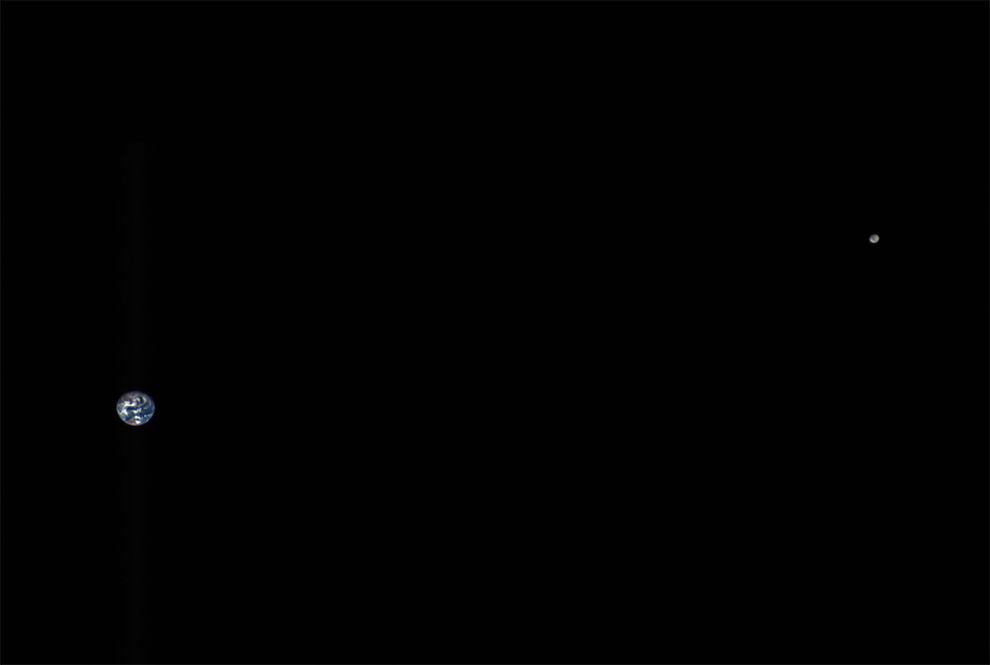
According to Newton's law of gravitation, the Earth and the Moon are gravitationally attracted to each other. The more massive Earth attracts the Moon with...
a stronger force than the Moon attracts the Earth.
a weaker force than the Moon attracts the Earth.
the same force as the Moon attracts the Earth.
a force that is sometimes stronger and other times weaker than the Moon attracts the Earth.

Kepler's Second Law states
objects attract other objects with a force that is directly proportional to the product of their masses
the square of the ratio of the periods of any two planets revolving around the Sun is equal to the cube of the ratio of their average distance from the Sun
An imaginary line joining a planet and the sun sweeps out an equal area of space in equal amounts of time.
Planets move about the Sun in an elliptical orbit with the Sun at one of the foci.
The atmosphere is held to the earth by:
Winds
gravity
clouds
None of these
Gravitational forces are:
always attractive
always repulsive
sometimes attractive and sometimes repulsive
None of these
Which of the following is the evidence to show that there must be a force acting on earth and directed towards the sun:
deviation of the falling bodies towards east
revolution of earth around the sun
phenomena of day and night
apparent motion of sun round the earth
The gravitational force between two objects does not depend on:
Sum of the masses
Product of the masses
Gravitational constant
(a)Distance between the masses
The mass of the moon is about 1.2% of the mass of the earth. Compared to the gravitational force the earth exerts on the moon, the gravitational force the moon exerts on earth:
Is the same
Is smaller
Is greater
Varies with its phase
A spherical planet far out in space has a mass M0 and diameter . D0 A particle of mass m falling freely near the surface of this planet will experience an acceleration due to gravity which is equal to:
GM0/ D02
4GM0/ D02
GM0/ 2D02
4GM0/ 3D02
If the radius of the earth were to shrink by 1% its mass remaining the same, the acceleration due to gravity on the earth's surface would:
Decrease by 2%
Remain unchanged
Increase by 2%
Increase by 1%
The radii of two planets are respectively R1 and R2 and their densities are respectively ρ1 and ρ2 . The ratio of the accelerations due to gravity at their surfaces is:
g1 : g2 = (ρ1 / R1) ∙ (ρ2 / R2)
g1 : g2 = R1R2 : ρ1ρ2
g1 : g2 = R1 ρ2 : R2 ρ1
g1 : g2 = R1 ρ1 : R2 ρ2
Where will it be profitable to purchase 1 kg sugar (by spring balance)
At poles
At equator
At 45° latitude
At 60°latitude
The acceleration due to gravity at pole and equator can be related as:
gp < ge
gp = ge = g
gp < ge = g
gp > ge
The weight of body at earth's surface is W. At a depth half way to the centre of the earth, it will be (assuming uniform density in earth):
W
W /2
W /4
Zero
An iron ball and a wooden ball of the same radius are released from a height h in vacuum. They both take same time to reach the ground. The correct answer to above statement is based on :
Acceleration due to gravity in vacuum is same irrespective of size and mass of the body
Acceleration due to gravity in vacuum depends on the mass of the body
There is no acceleration due to gravity in vacuum
In vacuum there is resistance offered to the motion of the body and this resistance depends on the mass of the body
The weight of an object in the coal mine, sea level, at the top of the mountain are W1, W2
and W3
W1 < W2 > W3
W1 = W2 = W3
W1 < W2 < W3
W1 > W2 > W3
At the surface of a certain planet, acceleration due to gravity is one-quarter of that on earth. If a brass ball is transported to this planet, then which one of the following statements is not correct:
The mass of the brass ball on this planet is a quarter of its mass as measured on earth
The weight of the brass ball on this planet is a quarter of the weight as measured on earth
The brass ball has the same mass on the other planet as on earth
The brass ball has the same volume on the other planet as on earth
A spring balance is graduated on sea level. If a body is weighed with this balance at consecutively increasing heights from earth's surface, the weight indicated by the balance:
Will go on increasing continuously
Will go on decreasing continuously
Will remain same
Will first increase and then decrease
The value of acceleration due to gravity
(a) is same on equator and poles
(b) is least on poles
(c) is least on equator
(d) increases from pole to equator
The gravitational force between two objects is F. If masses of both objects are halved without changing distance between them, then the gravitational force would become
(a) F/4
(b) F/2
(c) F
(d) 2F
Law of gravitation gives the gravitational force between
(a) the earth and a point mass only
(b) the earth and Sun only
(c) any two bodies having some mass
(d) two charged bodies only
The value of quantity G in the law of gravitation
(a) depends on mass of earth only
(b) depends on radius of earth only
(c) depends on both mass and radius of earth
(a) is independent of mass and radius of the earth
The earth attracts a body of mass 1 kg on its surface with a force of
(a) 9.8 N
(b) 19.6 N
(c) 6.67 x 10⁻¹¹ N
(d) 2 x 6.67 x 10–11 N
The atmosphere is held to the earth by
(a) gravity
(b) wind
(c) clouds
(d) earth’s magnetic field
The force of attraction between two unit point masses separated by a unit distance is called
(a) gravitational potential
(b) acceleration due to gravity
(c) gravitational field
(d) universal gravitational constant
The weight of an object at the centre of the earth of radius R is
(a) zero
(b) infinite
(c) R times the weight at the surface of the earth
(d) 1/R2 times the weight at surface of the earth
The mass of a body on the surface of earth is 12 kg. If acceleration due to gravity on moon is 1/6 of acceleration due to gravity on earth, then its mass on moon will be
(a) 2kgf
(b) 72kg
(c) 12kg
(d) zero
A stone dropped from a building takes 4 s to reach the ground. The height of the building is
(a) 19.6 m
(b) 80.4 m
(c) 78.4 m
(d) 156.8 m
The mass of moon is about 0.012 times that of the earth and its diameter is about 0.25 times that of earth. The value of G on the moon will be:
Same as that on the earth
About one-fifth of that on the earth
About one-sixth of that on the earth
About one-fourth of that on the earth
An apple falls from a tree because of the gravitational attraction between the earth and the apple. If F1 is the magnitude of the force exerted by the earth on the apple and F2 is the magnitude of the force exerted by the apple on the earth, then
F1 is very much greater than F2
F2 is very much greater than F1
F1 and F2 are equal
F1 is only a little greater than F2
A stone is released from the top of a tower of height 19.6 m. Then its final velocity just before touching the ground will be:
384.16 m/ s
196 m/s
19.6 m/s
3841.4 m/s

. A boy is whirling a stone tied with a string in a horizontal circular path as shown in the following figure:
Will move along a straight line towards the centre of the circular path
Will move along a straight line the tangential to the circular path
Will move along a straight line perpendicular to the circular path away from the boy
Will continue to move in the circular path
The gravitational force between two bodies is decreased by 36% when the distance between them is increased by 3m. The initial distance between them is
6m
9m
12m
15m
If the distance between two bodies is increased by 25%, then the % change in the gravitational force is
Decreases by 36%
Increases by 36%
Increases by 64%
Decreases by 64%
Acceleration due to gravity on the surface of a planet is g/5 where g is the value on the earth. When a body is vertically thrown up on the earth, it reaches a maximum height h. If the same body is projected with the same velocity from the surface of planet, maximum height reached by it would be
h/5
h/25
5h
25h
An object falls through a distance h in certain time on the earth. The same object falls through a distance 4h in the same time on a planet. If 'g' is acceleration due to gravity on the earth, acceleration due to gravity on that planet is
g/4
4 g
g/2
2 g
The gravitational force between two objects is F. If masses of both objects are doubled and distance between them becomes doubled, then the gravitational force would become
4F
6F
2F
F
The weight of any person on the moon is about 1/6 times that on the earth. He can lift a mass of 12 kg on the earth. What will be the maximum mass, which can be lifted by the same force applied by the person on the moon?
60KG
72KG
96KG
54KG
choose corect relation the average density of the earth in terms of g, G and R.
4g/3πGR
3g/4πGR
3G/4πgR
4G/3πgR
How does the mass weight of an object vary with respect to mass and radius of the earth. In a hypothetical case, if the diameter of the earth becomes half of its present value and its mass becomes four times of its present value, then how would the weight of any object on the surface of the earth be affected?
m,w
16m,w
m,16w
16m,16w
A satellite of the earth is revolving in a circular orbit with a uniform speed v. If the gravitational force suddenly disappears, the satellite will
Continue to move with velocity v along the original orbit
Move with a velocity v, tangentially to the original orbit
Fall down with increasing velocity
Ultimately come to rest somewhere on the original orbit
A man can jump to a height of 1.5 m on a planet A. What is the height he may be able to jump on another planet whose mass and radius are, double to the planet A
1.5 m
3.0 m
4.5 m
6.0 m
The masses of two planets are in the ratio 1 : 2. Their radii are in the ratio 1 : 2. The acceleration due to gravity on the planets are in the ratio
1 : 2
2:1
1:4
4:1
Identical packets are dropped from two aeroplanes, one above the equator and the other above the north pole, both at height h. Assuming all conditions are identical, will those packets take same time to reach the surface of earth.
at poles reaches early
at equator reaches early
reaches at equal rate at poles and equator
never reach earth
On the earth, a stone is thrown from a height in a direction parallel to the earth’s surface while another stone is simultaneously dropped from the same height. Which stone would reach the ground first and why?
free fall will reach first
body with horizontal motion reach first
both will reach at same time
never reach ground
Two particles are placed at some distance. If the mass of each of the two particles is tripped, keeping the distance between them unchanged, the value of gravitational force between them will be
1/9 times
9 times
6 times
1/6 times
Two objects of different masses falling freely near the surface of moon would
have same velocities at any instant
have different accelerations
experience forces of same magnitude
undergo a change in their inertia
The value of ‘g’
Increases as we go above the earth’s surface
Decreases as we go to the centre of the earth
Remains constant
Is more at equator and less at poles
A student turns on flashlight. What is the energy conservation that happen there?
chemical - light - electrical
electrical - chemical - light
chemical - electrical - light
light - chemical - electrical

A person boils water by using electrical stove. What type of energy conservation there?
heat - electrical
electrical - heat
sound - heat
heat - light
A box is pushed by 20 N force to the right and displace for 0.1 m. What is the work done?
0.005 J
0.1 J
1 J
2 J
What is the formula of work?
W = F / d
W = F + d
W = F x d
W = F - d
A car has speed 5 m/s and the mass of the car 1000 kg. What is the kinetic energy of the car?
12500 J
25000 J
5000 J
2500 J
A box is raised from 2 m to 5 m. This box has mass 15 kg. What is the change in potential energy from initial to final point? (
g=10 s2m )300 J
450 J
750 J
1000 J
Which of the following variable is not affect the potential energy?
height from ground
gravitational acceleration
mass
temperature
Potential energy of a feather is 2 J. The mass of the feather is 50 gram. What is the height of feather above the ground? (
g=10 s2m )4 cm
40 cm
400 cm
4 km
Initially, the box at rest. Then after applied by a force, it moves to 10 m/s. The mass of box is 5 kg. What is the work done of force?
25 J
250 J
500 J
750 J
A marble is thrown upward with initial speed 20 m/s. The mass of marble is 0.01 kg. What is the maximum height reached by marble? (
g=10 s2m )5 m
10 m
15 m
20 m
The coefficient of kinetic friction between a large box and the floor is 0.21. A person pushes horizontally on the box with a force of 165 N for a distance of 2.8 m. If the mass of the box is 72 kg, what is the total work done on the box? (Round your answer to a whole number)
51
49
47
45
A 3 kg plate is tossed across the room with an acceleration of 13 m/s2 in 2.5 sec. Calculate the amount of power it took to toss the plate.
290.5 W
1267.5 W
507 W
3000 W
You raise a bucket of water from the bottom of a well that is 12 m deep. The mass of the bucket and the water is 5.00 kg, and it takes 15 s to raise the bucket to the top of the well. How much power is required?
39 W
41 W
43 W
45 W
What is the S.I unit of work?
N.m2
(Kg.m2) / s2
J/m
J
In which scenario is work = 0 J ?
Pushing a stationary wall
Pulling a trolley car
Pushing a book across the table
Dropping a set of keys from a height, h.
Power depends on force and speed.
True
False
Work is zero if the force has a component in the direction opposite of motion.
True
False
An object weighing 20 N moves horizontally toward the right a distance of 5.0 m. What is the work done on the object by the force of gravity?
The work done on the object by the force of gravity is 50 J.
The work done on the object by the force of gravity is zero joules.
The work done on the object by the force of gravity is 4.0 J.
The work done on the object by the force of gravity is 0.25 J.
The work done on the object by the force of gravity is 100 J.
You pick up a 3.8 kg can of paint from the ground and lift it to a height of 1.4 m. You hold the can stationary for half a minute, waiting for a friend on a ladder to take it. How much work do you do during this time (when the can of paint was stationary)?
52 J
30 J
0 J
25 J
If the net work done on an object is positive, what can you conclude about the object's motion?
The object is speeding up.
The object is moving with a constant velocity.
The object is slowing down.
The object is at rest; its position is constant.

What is the formula for calculating the total amount of mechanical energy?
ME = KE + PE
KE = ME + PE
PE = mgh
ME = 1/2 mv2

Which of the following has kinetic energy?
a rock poised for a fall
an archer's bow that is drawn back
a rolling bowling ball
A spring that has been compressed

When you pull back the lever on a pinball machine and then release it to launch the ball up a ramp, which of the following energy transformations occurred? (Select all that apply)
Kinetic --> Gravitational Potential
Elastic Potential --> Gravitational Potential
Kinetic --> Elastic Potential
Chemical Potential --> Kinetic
Elastic Potential --> Kinetic

A force of 80 N is used to pull a 10-kg block at an angle of 60 degrees (shown above) to the right. If the block moves 5 meters to the right, how much work was done on the block.
4000 N*m
200 N*m
2000 N*m
346.4 N*m
400 N*m
While training for breeding season, a 380 gram male squirrel does 32 pushups in a minute, displacing its center of mass by a distance of 8.5 cm for each pushup. Determine the total work done on the squirrel while moving upward (32 times).
103360 J
1.03 J
3230 J
10139 J
10.1 J
A 78-kg skydiver has a speed of 62 m/s at an altitude of 870 m above the ground. Determine the total mechanical energy of the skydiver.
816 kJ
15.0 kJ
666 kJ
668 kJ
500 kJ
If a spring is compressed from a natural length of 0.5 m to 0.1 m and has a spring constant of 640 N/m, what is the elastic potential energy stored in the spring?
80 J
128 J
51.2 J
160 J
How much work is being done with 200 N of force to the right on object that moves 426 meters to the right? (assume the force and displacement are in the same direction)
85,200 J
45,620 J
90,480 J
62,329 J
In case of negative work the angle between the force and displacement is
0 degree
45 degree
90 degree
180 degree
An iron sphere of mass 10 kg has the same diameter as an aluminium sphere of mass is 3.5 kg. Both spheres are dropped simultaneously from a tower. When they are lo m above the ground, they have the same
Acceleration
Momentum
Potential Energy
Kinetic Energy
A girl is carrying a school bag of 3 kg mass on her back and moves 200 m on a levelled road. The work done against the gravitational force will be (g = 10 ms²)
6 × 10³ J
6 J
0.6 J
Zero
Which one of the following is not the unit of energy?
Joule
Newton Meter
Kilo Watt
Kilowatt Hour
The work done on an object does not depend upon the
Displacement
Force applied
Angle b/w force and displacement
Initial velocity of the object
Water stored in a dam possesses
No energy
Electrical energy
Kinetic Energy
Potential Energy
A body is falling from a height h. After it has fallen a height h/2, it will possess
Only potential energy
Only kinetic energy
Half potential and half kinetic energy
More kinetic and less potential energy
If speed of a car becomes 2 times, its kinetic energy becomes
4 times
8 times
16 times
12 times
Work done by friction
Increases kinetic energy of the body
Decreases kinetic energy of the body
Increase potential energy of the body
Decreases potential energy of the body
One joule work is said to be done when
a force on 1 N displaces a body by 1cm
a force of 1N displaces a body by 1m
a force of 1dyne displaces a body of 1cm
a force of 1dyne displaces a body of 1m
SI unit of power is
Watt
Joule
Newton
Meter
Mechanical energy of a body includes
Kinetic energy only
Potential only
kinetic and potential energy
None of these
Commercial unit of energy is
Joule
Kwh
Watt
Newton
Potential energy of a body depends on its
Position
Configuration
Position and configuration
Mass and velocity
Work done is product of ………….. and distance moved the direction of the force
Force
accelaration
velocity
time period
A girl is carrying a school bag of 3 kg mass on her back and moves 200 m on a levelled road. The work done against the gravitational force will be (g = 10 ms²)
(a) 6 × 10³ J
(b) 6 J
(c) 0.6 J
(d) zero
Which one of the following is not the unit of energy?
(a) joule
(b) newton metre
(c) kilowatt
(d) kilowatt hour
A body is falling from a height h. After it has fallen a height h/2, it will possess
(a) only potential energy
(b) only kinetic energy
(c) half potential and half kinetic energy
(d) more kinetic and less potential energy
The number of joules contained in 1 kWh is
(a) 36 × 105 J
(b) 3.6 × 10⁷ J
(c) 36 × 108 J
(d) 3.7 × 10⁷ J
If speed of a car becomes 2 times, its kinetic energy becomes
(a) 4 times
(b) 8 times
(c) 16 times
(d) 12 times
A dog weighing 25 kg, while chasing a cat, jumps over a fence of height 1.6 m. What is the potential energy of dog at the top of fence ?
(Take 'g'=10 m s-2 )
(a) 160 Joules
(b) 320 Joules
(c) 380 Joules
(d) 400 Joules
A car with mass ‘M’ is moving on horizontal road with velocity ‘v’. Driver applies accelerator and increases it speed 3 times to ‘3v’. The final K.E. acquired by the car will be :
(a) 1.5 Mv2
(b) 2.5 Mv2
(c) 3.5 Mv2
(d) 4.5 Mv2
A cyclist is moving at a speed of 5 m/s on leveled road. While going down the slop, his speed increases to 7 m/s. Here the nature of work done by gravitational force in increasing the speed of cyclist is an example of ?
(a) positive work done
(b) negative work done
(c) Infinite work done
(d) Zero work done
An object is thrown vertically upward and it reaches to a maximum height 'h' from the ground. During its flight, on reaching 3/4 of height h, it will acquire?
(a) less potential and high kinetic energy
(b) more potential and less kinetic energy
(c) same potential and kinetic energy
(d) only kinetic energy
A body is moving with velocity 4 m/s , possesses 56 Joules of Kinetic Energy. The momentum of body will be equal to
(a) 7 kgms-1
(b) 14 kgms-1
(c) 21 kgms-1
(d) 28 kgms-1

