Font size
 Worksheets
Unit 1/2 Review
Total questions: 60
Worksheet time: 1hrs 13mins
The parts of the experiment that must be kept the same.
Constants
Independent Variable
Dependent Variable
Conclusion
Esther became interested in insulation while her parent’s new house was being built. She decided to determine which insulation transferred the least heat. She filled each of 5 jars half-full with water.
She sealed each jar with a plastic lid.Then she wrapped each jar with a different kind of insulation. She put the jars outside in the direct sunlight. Later, she measured the temperature of the water in each jar. What is the independent variable?
The type of insulation
The temperature of the water
Number of houses
The amount of sunlight
only 1
The type of variable that responds to the experiment and is what you measure or count to determine if your hypothesis is true.
Thomas tests different types of liquids to see which will grow his plants the most. He has water, soda, milk, and no liquid at all. What is the control group?
the one with water
the one with soda
the one with milk
the one with no liquid


Look at the graph. What would be the best conclusion based on the data?
The cooler the temperature, the louder the crickets chirp.
The crickets cannot chirp at temperatures lower than 10 degrees C.
The warmer the temperature, the more often crickets chirp.
The temperature and the chirping of crickets are not related.
___________a molecule that is present in all living cells and that contains the information that determines the traits a living thing inherits and needs to live.
Cell
Stimulus
Homeostasis
DNA
A paramecium will move away from direct light. This is an example of which characteristic of life?
respond to stimuli
maintain homeostasis
made of cells
get energy
A turtle lays a hundred of eggs.
use energy
grow and develop
reproduce
evolve
What characteristic best explains: The tendency of an organism to maintain a stable internal balance such as temperature or the pH of blood.
grow and develop
maintain homeostasis
respond to stimuli
evolve
All living things are based on a universal genetic code
All living things are made of cells
All living things acquire and use energy
Which of the following is not one of the four major classes of macromolecules?
Lipids
Carbon
Protein
Carbohydrates
Nucleic Acid
Which of the following elements are found in all macromolecules? (Select all that apply).


Nucleic acids make up which of the two molecules listed below?
FDA
RNA
DNA
FDR

Storing energy is the primary function of two macromolecules. What macromolecule is represented by the structure below?
Carbohydrates
Proteins
Lipids
Nucleic Acids
Which of the following are examples of carbohydrates? (Select all that apply).
Bread
Pasta
Olive Oil
Cheese

The most important element that is the backbone of all biological molecules
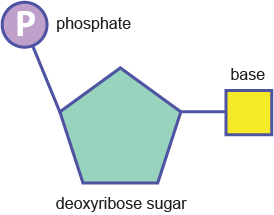
Identify the monomer shown
monosaccharide
amino acid
neucleotide
glucose molecule
What elements are in proteins
CHO
CHON
CHONP
CHOP
This macromolecule has been associated a great deal with muscle building and is often used during pre- and post workouts to replenish the body of the necessary nutrients it needs to promote increased muscle function and growth. Which macromolecule is made up of a chain of amino acids and allows the muscles to contract making body movement possible?
carbohydrates
lipids
nucleic acids
proteins

Four different types of macromolecules and their characteristics are listed below. What type of macromolecule is D?
carbohydrate
lipid
nucleic acid
protein

A digestive enzyme that is released into the small intestines by the pancreas is used to break down proteins. Data from a chemical reaction with the digestive enzyme are shown in the graph below.
According to the graph, which conclusion can be made about this digestive enzyme?
It functions most efficiently from pH 7.0 to pH 9.0.
It will work best if pH levels increase above pH 10.0.
It breaks down the most proteins between pH 1.0 and pH 5.0.
It is effective at breaking down proteins from pH 1.0 to pH 10.0.

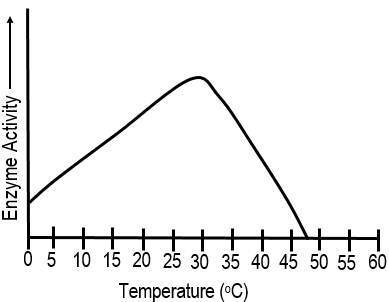
The effect of temperature on the relative rate of enzyme activity is shown.
Which statement is a valid conclusion based on the information in the graph?
The maximum rate of human respiration occurs at about 57°C.
The maximum rate of human digestion occurs at about 45°C.
Growth can be controlled by the action of an enzyme.
Temperature can influence the action of an enzyme.
Which of the following statements can be attributed to water's versatility as a SOLVENT?
Frozen water floats on top of liquid water.
Blood is able to flow through small vessels.
Nutrients from food can dissolve into blood.
An air bladder allows fish to regulate buoyancy in the water.
Which macromolecule is the most diverse (has the most roles in our body)?
Proteins
Carbohydrates
Lipids
Nucleic Acids

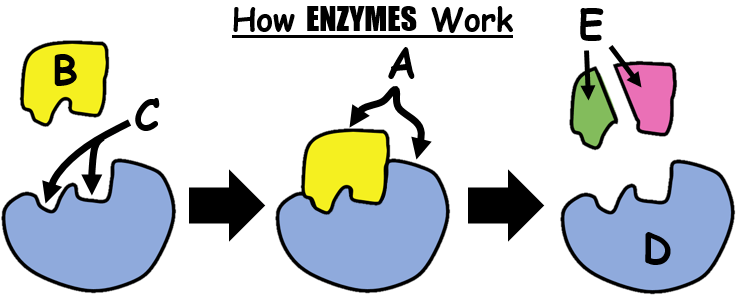
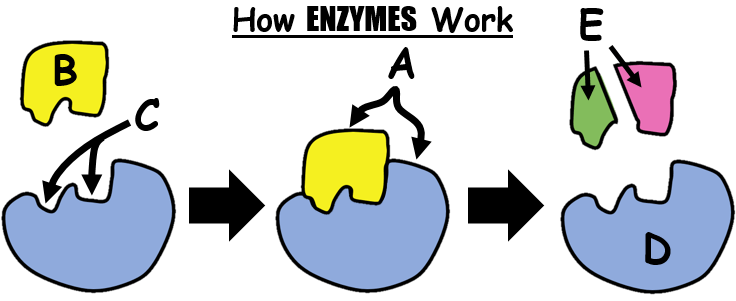
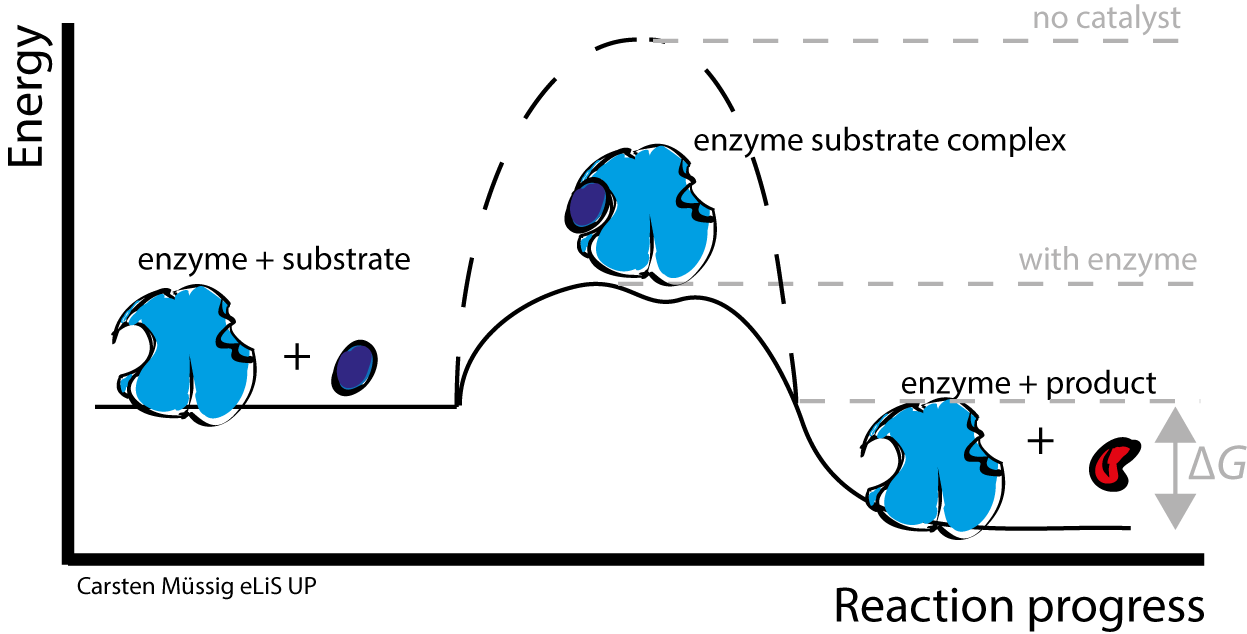
What type of macromolecule may function as an enzymes to speed up chemical reactions?

Carbon is perfect for forming large macromolecules because
Carbon can bond with up to 4 other atoms.
Carbon can bond with other carbon atoms, forming rings and branched chains.
Carbon cannot form covalent bonds.
Carbon can bond with up to 4 other atoms and it can bond with other carbon atoms forming rings and branched chains.
Bonds that hold a water molecule together are called ____________.
Covalent Bonds
Ionic Bonds
Hydrogen Bonds
Water Bonds
How many outermost electrons does carbon have?
1
2
3
4
Carbon can bond up to four other atoms.
True
False
An electron has what kind of charge?
no charge
positive
negative
+3
Which subatomic particles adds mass to the atom but no charge?
Proton
Electron
Neutron
Positron
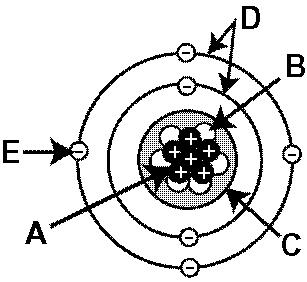
Enzymes are an example of
Lipids
Carbohydrate
Protein
Nucleic Acid