
NEW
Font size
 Worksheets
Nervous System III Receptors/Senses ONLY
Total questions: 35
Worksheet time: 21mins
Where are our senses derived from?
Sensory Receptors
Motor Cortex
Migdala
Spinal Chord
In which category(ies) do senses fall?
Somatic (General)
Special
Both of the above
None of the above
Which of the following is not a type of sensory receptor?
Chemoreceptor
Nociceptor
Gas Receptor
Mechanoreceptor
Photoreceptor
Which sensory receptor is responsible for sensing changes in chemical concentratrions?
Chemoreceptors
Nociceptors
Thermoreceptors
Mechanoreceptors
Which sensory receptors is responsible for responding to changes in pressure or movement?
Chemoreceptors
Nociceptors
Thermoreceptors
Mechanoreceptors
Sensation is ...
when the brain interprets the sensory input
the awareness of a stimulus that occurs when the brain receives sensory impulses
when the brain send the sensation back to its point of origin, so the person can pinpoint the area of stimulation
None of the above
Perception occurs ...
when the brain interprets the sensory input
when the awareness of a stimulus that occurs when the brain receives sensory impulses
when the brain sends the sensation back to its point of origin, so the person can pinpoint the area of stimulation
None of the above
The brain can become _________ to a maintained stimulus such as the feel of clothing on the skin, persistent odors, ongoing sounds, etc.
more responsive
less responsive
Both of the above
Neither of the above
Which of the following is not a general sense?
Touch
Pressure
Pain
Taste
Which of the following is not a mechanoreceptor?
Free Nerve Endings
Myelin Sheaths
Tactile Corpuscles
Lamellated Corpuscles
Warm temperature receptors respond to temperatures between ____ and ____.
77° F and 113° F
50° F and 68° F
Both of the above
Neither of the above
How quickly do pain receptors adapt to stimuli?
Very quickly
Little, if at all
Quickly if the stimuli is weak
Slower if the stimuli is strong
Where is the only place that nociceptors are not found?
Skin
Heart
Liver
Brain
How do visceral nociceptors differ from surface nociceptors?
Damage produces pain sensations.
Stretching or spasms produce pain sensations.
Stretching or spasms do not produce pain sensations.
None of the above.
What is referred pain?
Visceral pain that is treated by a doctor.
Surface pain that changes in origin.
Visceral pain that feels as if it is coming from another body area.
All of the above.
Which type of nerve fiber carries acute pain?
Myelinated nerve fibers
Unmyelinated nerve fibers
Both of the above.
Neither of the above.
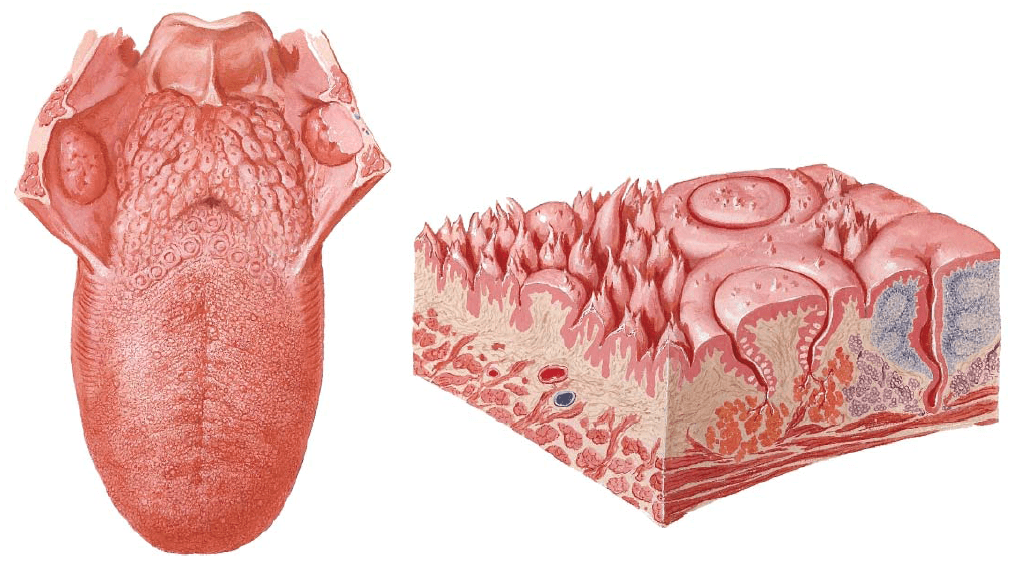
Small projections located on the tongue’s surface where taste buds are located are known as:
papillae
gustatory cells
olfactory epithelium
mucous producing glands
NOT a primary taste sensation
bitter
salty
sweet
peppery

Which of the following papillae do not contain taste buds:
fungiform
filiform
circumvallate
all of the above
What sensory receptor reacts to light?
Chemoreceptor
Nociceptor
Photoreceptor
Gravoreceptor
What receptor reacts to physical forces?
Chemoreceptor
Mechanoreceptor
Electroreceptor
Thermoreceptor
What receptor detects pain?
Thermoreceptor
Mechanoreceptor
Proprioceptor
Nociceptor
What receptor indicates change in body positions? (Hint: helps us with balance.)
Geogravity receptors
Proprioreceptors
Chemoreceptors
Photoreceptors
What receptor helps us identify changes in smell and taste?
Thermoreceptors
Proprioreceptors
Electroreceptors
Chemoreceptors
What is a thermoreceptor?
Responds to body position
Responds to changes in temperature
Responds to physical forces including touch and pressure
Responds to squirrels running outside
What receptor allows you to see a rainbow?
Photoreceptor
Thermoreceptor
Mechanoreceptor
Gravitonreceptor
Which receptor helps you hear your favorite band?
Mechanoreceptor
Bandreceptor
Thermoreceptor
Idon'tknowwhatIamthinking receptor


Which answer below correctly orders the steps that our nervous system takes to sense the world around us?
Sensory receptors in our sense organs receive information, then the message/signal travels through our nerves to our brain, and finally the brain processes this information and decides what to do
Messages/signals travel through our nerves to our brain, then the brain processes this information and decides what to do, and finally the sensory receptors in our sense organs receive information
The brain processes information and decides what to do, then sensory receptors in our sense organs receive information, and finally the message/signal travels through our nerves to our brain

