
 Worksheets
CA #2 Review
Total questions: 53
Worksheet time: 37mins

What do plants take in through their ROOTS to make food (or carry out photosynthesis)?
Carbon Dioxide
Water
Light
Where in a plant cell does photosynthesis take place
Palisade cells
Chlorophyll
Chloroplasts
Vacuole
What is the purpose of photosynthesis?
To release energy
To create glucose
To grow
To get oxygen for respiration
What are the products of photosynthesis?
Oxygen and Energy
Carbon Dioxide and Glucose
Glucose and Oxygen
Oxygen and Water


What gas goes into the plant before photosynthesis?
Carbon Dioxide
Carbon Monoxide
Oxygen
Nitrogen
Cellular respiration is...
the process by which cells break down glucose into energy.
the process by which cells break light down into energy.
the process by which cells communicate with other cells.
In which way are photosynthesis and cellular respiration different?
Cellular respiration stores ATP, while photosynthesis releases ATP.
Cellular respiration produces oxygen, while photosynthesis uses oxygen.
Photosynthesis releases energy, while cellular respiration stores energy.
Photosynthesis uses carbon dioxide, while cellular respiration produces carbon dioxide.
Cellular respiration occurs in
chloroplasts
mitochondria
golgi aparatus
thylakoid
How can photosynthesis be related to cellular respiration?
What's produced by one is needed for the other
They both produce the same products
They both have the same reactants (need the same things)
These 2 processes have nothing in common

Which letter represents Metaphase?
A
B
C
D
How many chromosomes will a normal human have after a complete cell cycle?
23
46
47
92
The correct sequence of mitosis:
metaphase, anaphase, telophase, prophase
prophase, metaphase, anaphase, telophase
prophase, anaphase, metaphase, telophase
telophase, metaphase, prophase, anaphase
Identical halves of a chromosome are called?
Cousins
Chromatids
Centromere
Centrosome
Sister Chromatids separate from each other
prophase
telophase
anaphase
metaphase
Chromosomes line along the center of the cell
anaphase
prophase
metaphase
telophase
After mitosis the number of chromosomes in the newly created cells will be:
Half the number of the original cell
The same number as the original cell
Twice as much as the original cell
The division of chromosomes is called?
anaphase
mitosis
cytokineses
G0
The division of the cytoplasm is called?
anaphase
mitosis
cytokineses
G0
Uncontrolled growth can result in:
G0 phase
S phase
Replication
Cancer


What are homologous chromosomes?
Pairs of chromosomes with different genes on each.
Pairs of chromosomes with the same genes on each.
Pairs of chromosomes with no genes.
Pairs of chromosomes with the wrong genes on each.


Which letter represents the cell membrane?
A
B
C
D
E
Which letter represents the ligand?
A
B
C
D
E
Who took a picture of DNA using X-ray diffraction?
Rosalind Franklin
Watson & Crick
Oswald Avery
Hershey & Chase
Who developed the double-helix model of DNA?
Watson & Crick
Avery
Hershey & Chase
Franklin

Provided clear x-ray crystallography images of DNA
James Watson & Francis Crick
Rosalind Franklin
Maurice Wilkins
Linus Pauling
Erwin Chargaff

Built models to determine that DNA was a double helix shape with base pairs A-T and G-C in rungs between the sugar/phosphate backbone of DNA.
James Watson & Francis Crick
Rosalind Franklin
Maurice Wilkins
Linus Pauling
Erwin Chargaff
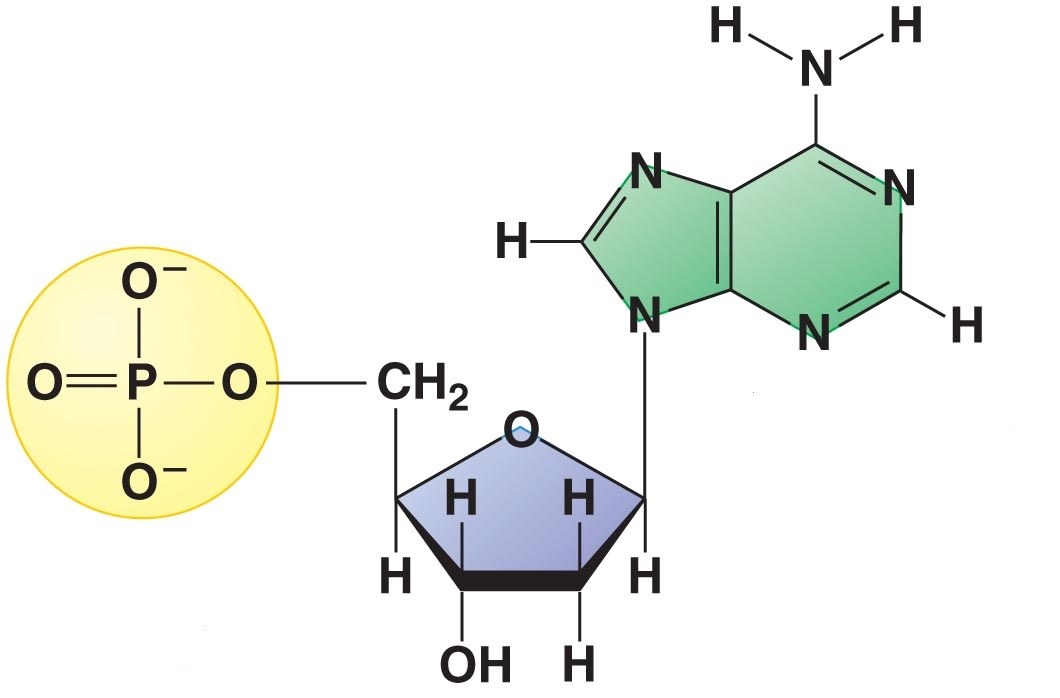

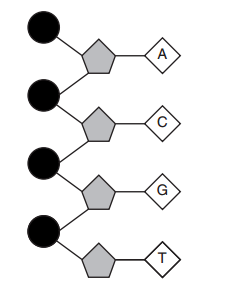
What makes up the SIDES (not the "middle") of a DNA ladder?
nitrogen bases
sugars & phosphates
genes & chromosomes
RNA
When a signaling cell secretes a ligand to a cell that it is physically connected to:
direct contact
local signaling
long distance signaling
What kind of cell communication involves 2 cells physically touching?
Direct Contact
Local Signaling
Long-distance Signaling
Endocrine Signaling
What kind of cell communication involves a cell releasing a signal molecule into the blood?
Direct Contact
Local Signaling
Long-distance Signaling
What kind of cell communication involves a cell releasing a signal molecule over a short distance?
Direct Contact
Local Signaling
Long-distance Signaling
Endocrine Signaling
Which of the following is the order of steps for a signal transduction pathway?
Transduction -> Response
Reception -> Initiation -> Transduction -> Response
Reception -> Transduction -> Response
Transduction -> Reception -> Response
What is the purpose the the cell cycle checkpoints?
To repair damaged cells before they enter cell division.
To remove damaged cells from an organism.

