wayground logo

Free Printable Worksheets

NEW

Font size

S
M
L
XL
Worksheets

Unit 1 Matter

Total questions: 52

Worksheet time: 2hrs 43mins
Name
Class
Date
1.
At higher temperatures
a)
particles in an object have less energy
b)
particles in an object move faster
c)
a gas contracts
2.
A gas
a)
has a definite shape but no definite volume
b)
has a definite volume but no definite shape
c)
has fast-moving particles
3.

The state of matter that has no definite size or shape is

a)

Solid

b)

Liquid

c)

Gas

4.

Particles in a ______________________ move quickly and are far apart.

a)

gas

b)

solid

c)

liquid

5.

Particles of a liquid

a)

are tightly packed together and stay in a fixed position.

b)

are free to move around one another but still touch.

6.

Solid to Gas

a)

Deposition

b)

Sublimation

c)

Evaporation

7.

The slower the particles in a substance move,

a)

the colder it is.

b)

the warmer it is.

c)

the more energy it has.

8.
The temperature of a substance increases as___.
a)
the substance expands
b)
the average kinetic energy of its particles increases
c)
the substance's volume increases
d)
the substance's mass increases
9.

Has a definite volume but not a definite shape

a)

Solid

b)

Liquid

c)

Gas

10.

When changing a substance from liquid to solid, the energy has to...

a)

INCREASE

b)

DECREASE

11.

When changing a substance from liquid to gas, the energy has to...

a)

INCREASE

b)

DECREASE

12.

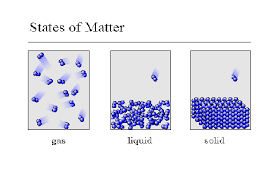
Look at the picture. Which state of matter is in beaker C?

a)

Solid

b)

Liquid

c)

Gas

d)

Blue thingys

13.
Glucose (C6H12O6) contains atoms of carbon, hydrogen, and oxygen that are chemically bonded together.  What type of matter is glucose?
a)
Glucose is an element
b)
Glucose is a compound 
c)
Glucose is a mixture
d)
Glucose is a metal
14.
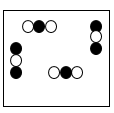
What does the diagram show?
a)
A mixture of two elements
b)
A pure compound
c)
A mixture of two compounds
d)
A mixture of a compound & element
15.
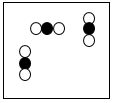
What does the diagram show?
a)
A mixture of two elements
b)
A pure compound
c)
A mixture of two compounds
d)
A mixture of a compound & element
16.
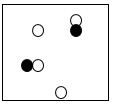
What does the diagram show?
a)
A mixture of two elements
b)
A pure compound
c)
A mixture of two compounds
d)
A mixture of a compound & element
17.
Which statement below is TRUE about compounds?
a)
The properties of compounds are totally different than the properties of the elements that form them
b)
All compounds are listed on the Periodic Table of Elements
c)
A compound is a pure substance that is made from one type of atom
d)
The properties of compounds are the same as the properties of the elements that form them
18.
A pure substance that is made from one type of atom is a(n) ______________ .
a)
Mixture
b)
Atom
c)
Element
d)
Compound
19.

A pure substance that cannot be broken down into any other substance.

a)

Elements

b)

Compounds

c)

Mixtures

20.

Chex mix is a

a)

Mixture

b)

Compound

c)

Element

21.
Which of these is a pure substance?
a)
bread
b)
table salt
c)
garden soil
d)
sea water
22.
A mixture that appears to be evenly mixed throughout:
a)
an atom
b)
a compound
c)
a homogeneous mixture
d)
a heterogeneous mixture
23.

A mixture that does NOT appear to be evenly mixed throughout is ______.

a)

an atom

b)

a compound

c)

a homogeneous mixture

d)

a heterogeneous mixture

24.

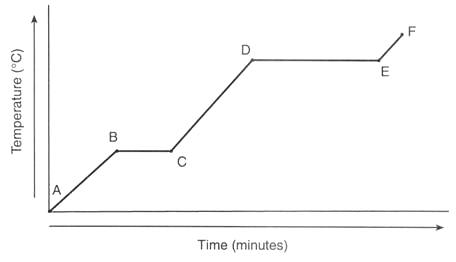
Between which points is the temperature of the substance remaining constant?

a)

A-B only

b)

A-B, C-D, and E-F

c)

B-C only

d)

B-C and D-E

25.

The melting point of the sample is

a)

-60 ºC

b)

20 ºC

c)

60 ºC

d)

100 ºC

26.

Which letter indicates where water is in both the solid and liquid phase at the same time?

a)

A

b)

B

c)

C

d)

D

e)

E

27.

In which region(s) does temperature increase?

a)

Region C only

b)

Regions B and D

c)

Regions A, C, and E

d)

Regions A and B

28.

Describe the substance at letter A.

a)

Solid

b)

Liquid

c)

Melting

d)

Evaporating

29.

In a heating curve, diagonal lines indicate temperature is __________, while flat lines indicate temperature is __________.

a)

Constant, changing

b)

Changing, constant

30.

NaCl was heated starting at an initial temperature of 0°C. The heating curve is shown in the picture. What is the melting point of this substance?

a)

0°C

b)

801°C

c)

1000°C

d)

1465°C

31.

At higher temperatures

a)

Particles in an object move slower

b)

Particles in an object move faster

c)

Particles move at the same speed as lower temperature

32.
What is an example of a Chemical change?
a)
Ripped paper 
b)
boiled egg
c)
cracked egg
d)
sugar in water
33.
What characteristic defines all chemical changes?
a)
There is a change of state.
b)
Electricity is produced.
c)
A new material is formed.
d)
Bubbles are produced. 
34.
Which is a physical change?
a)
burning match 
b)
vinegar in baking soda 
c)
melting butter
d)
cooking an egg
35.
Liv lit a match and said it was a physical change. Is she correct?
a)
Yes
b)
No
36.
Which of the following is a chemical property of water?
a)
Reacts with pure sodium.
b)
Boils at 100 oC.
c)
Dissolves sugar easily. 
d)
Has a density of 1 gm/mL
37.
Which of the following is a sign that a chemical reaction has occurred?
a)
change in shape
b)
melting
c)
formation of a gas
d)
dissolving
38.
Which of the following is NOT an example of a physical change?
a)
crumpled paper
b)
pencil sharpening
c)
shrunken clothing
d)
sour milk
39.
Kim puts an ice cube in a beaker and it melts. This is a good example of:
a)
a physical change.
b)
a chemical change.
c)
an experiment.
d)
an analysis.
40.
Which of the following does the discoloration of a coin  describe?
a)
Chemical Change
b)
Physical Change
c)
None of the above
d)
Both
41.
What happens when water freezes?
a)
ice is formed; chemical property
b)
cold water is formed; physical change
c)
ice is formed; physical change
d)
cold water is formed; chemical change
42.
One cup of water is left outside for two days when it was checked there was only half a cup left. What happened?
a)
evaporation; chemical change
b)
condensation; physical change 
c)
evaporation; physical change
d)
condensation; chemical change
43.
Which of the following is an example of a chemical change?
a)
melting chocolate
b)
crushing a soda can
c)
cutting paper
d)
wood burning
44.

What is a chemical property?

a)

A property that describes the state of a system

b)

A property observed during a reaction

45.

Physical properties....

a)

change the matter when studied

b)

can be observed and measured without changing the matter being studied

c)

include the ability to burn and rust

d)

are useless unless studied in a lab

46.

______________________ can only be recognized when substances react or do not react chemically with one another.

a)

Physical properties

b)

Chemical properties

c)

Flammable properties

d)

Colorful properties

47.

Flammability means the ability to _______ and is a _________ property.

a)

melt; chemical

b)

rust; physical

c)

change; physical

d)

burn; chemical

48.
Which of the following is not a chemical property? 
a)
rusting 
b)
boiling 
c)
rotting 
d)
burning 
49.
Which is an example of a physical property?
a)
ability to react with acid
b)
 state of matter
c)
flammability
d)
ability to react with oxygen
50.

When the temperature of a gas at constant volume is increased...

a)

the pressure of the gas decreases.

b)

the pressure remains the same.

c)

the pressure of the gas increases.

d)

the pressure can either increase or decrease.

51.

What causes a truck's tires to burst on long road trips?

a)

Hot temperatures increase the pressure inside the tire.

b)

Lower temperatures decrease the volume.

c)

Lower pressure is caused by lower temperatures.

52.

Predict: What do you think will happen when you dunk a balloon in ice water?

a)

The balloon will remain the same size because temperature change does not affect the volume.

b)

The ballon will become smaller because lower temperatures will cause the volume to decrease.

c)

The balloon will become larger because lower temperatures will cause the volume to increase.