
 Worksheets
Geometry TP Unit B Review Study Tool for Test
Total questions: 116
Worksheet time: 3hrs 12mins

What is the angle relationship?
Alternate Interior
Corresponding
Same Side Interior
Same Side Exterior

The angles are
Congruent
Supplementary
Supplementary angles equal
90 degrees
180 degrees
360 degrees
270 degrees
Parallel lines
Will never intersect
Go on and on forever
Have the same distance between them at all points
All of the above

What is the angle relationship?
Alternate Interior
Same Side Interior
Alternate Exterior
Same Side Exterior

The angles are
Congruent
Supplementary

What is the angle relationship?
Alternate Interior
Corresponding
Adjacent
Vertical

The angles are
Congruent
Supplementary

What is the angle relationship?
Same Side Interior
Same Side Exterior
Corresponding
Adjacent

The angles are
Congruent
Supplementary

∠1 and ∠2 are ___.
Alternate Interior Angles
Alternate Exterior Angles
Same-side Interior Angles
Corresponding Angles
None of these
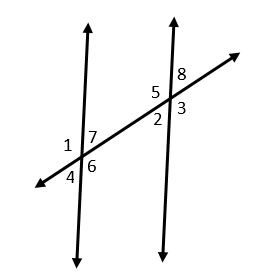
2) Given the following two parallel lines cut by a transversal.
Which pair of angles represents corresponding angles?
∠1 and ∠6
∠6 and ∠5
∠7 and ∠8
∠4 and ∠8
3) Given the following two parallel lines cut by a transversal.
Which pair of angles represents alternate interior angles?
∠3 and ∠8
∠7 and ∠2
∠7 and ∠8
∠4 and ∠8
4) Given the following two parallel lines cut by a transversal.
Which pair of angles represents alternate exterior angles?
∠4 and ∠8
∠7 and ∠5
∠1 and ∠2
∠6 and ∠5
5) True or False.
If the following parallel lines are cut by a transversal, would∠2 and ∠6 be corresponding?
True
False

7) Given the following two parallel lines that have been cut by a transversal.
True or False, ∠6 and ∠4 are vertical angles?
False
8) Given the following two parallel lines that have been cut by a transversal.
∠1 and which angle make up Alternate Interior angles?
∠6
∠5
∠3

9) Given the following two parallel lines that have been cut by a transversal.
Choose all the options that represent corresponding angles.
∠3 and ∠8
∠2 and ∠7
∠6 and ∠4
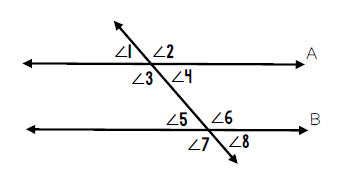
Angle 3 and Angle 6 are examples of which type of angle pair?
Alternate exterior angles
Alternate interior angles
Vertical angles
Corresponding angles
Angle 1 and Angle 5 are examples of which type of angle pair?
Alternate exterior angles
Alternate interior angles
Vertical angles
Corresponding angles


are corresponding angles
are corresponding angles
are corresponding angles
are corresponding angles

are alternate interior angles
are alternate interior angles
are alternate interior angles
are alternate interior angles
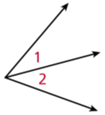
What type of angles are these?
Adjacent Angles
Linear Pair
Complementary Angles
Supplementary Angles
Vertical Angles
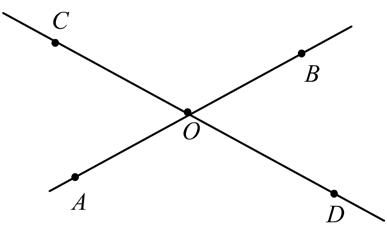
Which are pairs of vertical angles?
∠COB and ∠COA
∠AOD and ∠AOC
∠COB and ∠AOD
∠BOD and ∠AOD
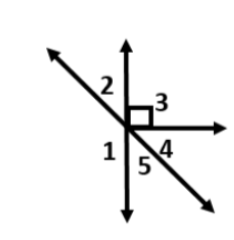
What angle is vertical to angle 2?
∠4
∠1
∠2
∠5
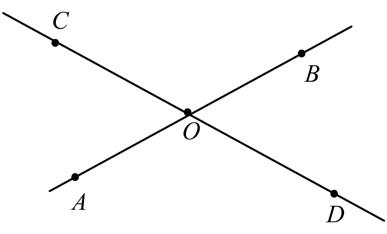
Which are pairs of adjacent angles?
∠COB and ∠DOA
∠AOD and ∠AOC
∠COB and ∠AOD
∠BOD and ∠AOC

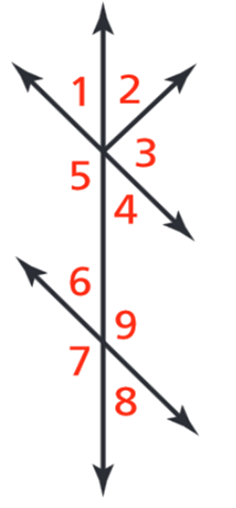
Which angle is a linear pair with ∠5 ?
∠2
∠3
∠4
∠9
∠6
Angle 3 and Angle 6 are examples of which type of angle pair?
Alternate exterior angles
Alternate interior angles
Vertical angles
Corresponding angles
Angle 1 and Angle 5 are examples of which type of angle pair?
Alternate exterior angles
Alternate interior angles
Vertical angles
Corresponding angles


Classify angles 3 and 7
corresponding angles
alternate exterior algles
vertical angles
alternate interior angles
supplementary angles
Classify angles 6 and 8
corresponding angles
alternate exterior algles
vertical angles
alternate interior angles
supplementary angles


What angle pair is pictured?
Alternate Interior Angles
Corresponding Angles


When 2 parallel lines are cut by a transversal, which angle pairs produce congruent angles? Select all that apply
Alternate Interior and Alternate Exterior
Same Side Interior and Same Side Exterior
Corresponding
Adjacent/Supplementary
Vertical
When 2 parallel lines are cut by a transversal, which angle pairs produce supplementary angles? Select all that apply
Alternate Interior and Alternate Exterior
Same Side Interior and Same Side Exterior
Corresponding
Adjacent/Supplementary
Vertical

Which "Picture Property/Theorem" congruency statement applies? (By reflexive segments, reflexive angles, or vertical angles)
Reflexive Segments
Reflexive Angles
Vertical Angles
None of these

Which "Picture Property/Theorem" congruency statement applies? (By reflexive segments, reflexive angles, or vertical angles)
Reflexive Segments
Reflexive Angles
Vertical Angles
None of these

Which "Picture Property/Theorem" congruency statement applies? (By reflexive segments, reflexive angles, or vertical angles)
Reflexive Segments
Reflexive Angles
Vertical Angles
None of these

Which "Picture Property/Theorem" congruency statement applies? (By reflexive segments, reflexive angles, or vertical angles)
Reflexive Segments
Reflexive Angles
Vertical Angles
None of these

Which "Picture Property/Theorem" congruency statement applies? (By reflexive segments, reflexive angles, or vertical angles)
Reflexive Segments
Reflexive Angles
Vertical Angles
None of these

Which "Picture Property/Theorem" congruency statement applies? (By reflexive segments, reflexive angles, or vertical angles)
Reflexive Segments
Reflexive Angles
Vertical Angles
None of these

Which "Picture Property/Theorem" congruency statement applies? (By reflexive segments, reflexive angles, or vertical angles)
Reflexive Segments
Reflexive Angles
Vertical Angles
None of these

Which "Picture Property/Theorem" congruency statement applies? (By reflexive segments, reflexive angles, or vertical angles)
Reflexive Segments
Reflexive Angles
Vertical Angles
None of these

Which "Picture Property/Theorem" congruency statement applies? (By reflexive segments, reflexive angles, or vertical angles)
Reflexive Segments
Reflexive Angles
Vertical Angles
None of these

Which "Picture Property/Theorem" congruency statement applies? (By reflexive segments, reflexive angles, or vertical angles)
Reflexive Segments
Reflexive Angles
Vertical Angles
None of these

Which "Picture Property/Theorem" congruency statement applies? (By reflexive segments, reflexive angles, or vertical angles)
Reflexive Segments
Reflexive Angles
Vertical Angles
None of these
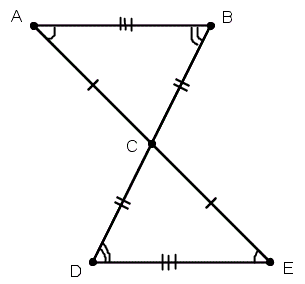
Which "Picture Property/Theorem" congruency statement applies? (By reflexive segments, reflexive angles, or vertical angles)
Reflexive Segments
Reflexive Angles
Vertical Angles
None of these
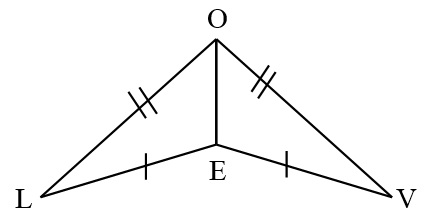
Which "Picture Property/Theorem" congruency statement applies? (By reflexive segments, reflexive angles, or vertical angles)
Reflexive Segments
Reflexive Angles
Vertical Angles
None of these
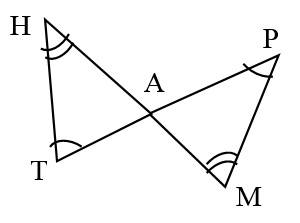
Which "Picture Property/Theorem" congruency statement applies? (By reflexive segments, reflexive angles, or vertical angles)
Reflexive Segments
Reflexive Angles
Vertical Angles
None of these

Which "Picture Property/Theorem" congruency statement applies? (By reflexive segments, reflexive angles, or vertical angles)
Reflexive Segments
Reflexive Angles
Vertical Angles
None of these

Which "Picture Property/Theorem" congruency statement applies? (By reflexive segments, reflexive angles, or vertical angles)
Reflexive Segments
Reflexive Angles
Vertical Angles
None of these

Which "Picture Property/Theorem" congruency statement applies? (By reflexive segments, reflexive angles, or vertical angles)
Reflexive Segments
Reflexive Angles
Vertical Angles
None of these

Which "Picture Property/Theorem" congruency statement applies? (By reflexive segments, reflexive angles, or vertical angles)
Reflexive Segments
Reflexive Angles
Vertical Angles
None of these

Which "Picture Property/Theorem" congruency statement applies? (By reflexive segments, reflexive angles, or vertical angles)
Reflexive Segments
Reflexive Angles
Vertical Angles
None of these

Which "Picture Property/Theorem" congruency statement applies? (By reflexive segments, reflexive angles, or vertical angles)
Reflexive Segments
Reflexive Angles
Vertical Angles
None of these

Which "Picture Property/Theorem" congruency statement applies? (By reflexive segments, reflexive angles, or vertical angles)
Reflexive segments
Reflexive angles
Vertical angles
None of these
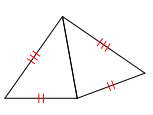
Which "Picture Property/Theorem" congruency statement applies? (By reflexive segments, reflexive angles, or vertical angles)
Reflexive segments
Reflexive angles
Vertical angles
None of these

Which "Picture Property/Theorem" congruency statement applies? (By reflexive segments, reflexive angles, or vertical angles)
Reflexive segments
Reflexive angles
Vertical angles
None of these

Which "Picture Property/Theorem" congruency statement applies? (By reflexive segments, reflexive angles, or vertical angles)
Reflexive Segments
Reflexive angles
Vertical Angles
None of these

Which "Picture Property/Theorem" congruency statement applies? (By reflexive segments, reflexive angles, or vertical angles)
Reflexive segments
Reflexive angles
Vertical angles
None of these

Which "Picture Property/Theorem" congruency statement applies? (By reflexive segments, reflexive angles, or vertical angles)
Reflexive segments
Reflexive angles
Vertical angles
None of these

Which "Picture Property/Theorem" congruency statement applies? (By reflexive segments, reflexive angles, or vertical angles)
Reflexive segments
Reflexive angles
Vertical angles
None of these

Which "Picture Property/Theorem" congruency statement applies? (By reflexive segments, reflexive angles, or vertical angles)
Reflexive segments
Reflexive angles
Vertical angles
None of these

Which "Picture Property/Theorem" congruency statement applies? (By reflexive segments, reflexive angles, or vertical angles)
Reflexive segments
Reflexive angles
Vertical angles
None of these

Which "Picture Property/Theorem" congruency statement applies? (By reflexive segments, reflexive angles, or vertical angles)
Reflexive Segments
Reflexive angles
Vertical angles
None of these
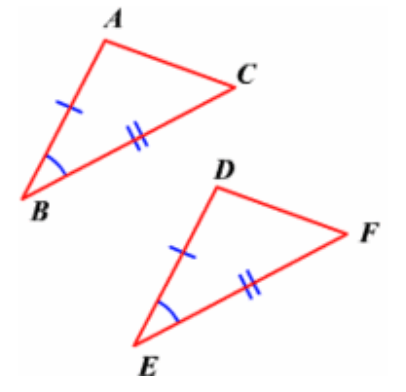


Which triangle congruence postulate is illustrated?
SSS
SAS
ASA
AAS
Not a postulate

Which triangle congruence postulate is illustrated?
SSS
SAS
ASA
AAS
Not a postulate

Which triangle congruence postulate is illustrated?
SSS
SAS
ASA
AAS
Not a postulate

Which triangle congruence postulate is illustrated?
SSS
SAS
ASA
AAS
Not a postulate

If ΔBCA≅ΔYZX , what angle corresponds to ∠C ?
∠Y
∠Z
∠X
None
Which is NOT a shortcut to prove triangles congruent?
AAS
SSS
AAA
SAS
Which triangle congruence postulate is illustrated?
SSS
SAS
ASA
AAS
Not a postulate
Which triangle congruence postulate is illustrated?
SSS
SAS
ASA
AAS
Not a postulate
Which triangle congruence postulate is illustrated?
SSS
SAS
ASA
AAS
Not a postulate
Which triangle congruence postulate is illustrated?
SSS
SAS
ASA
AAS
Not a postulate
Which triangle congruence postulate is illustrated?
SSS
SAS
ASA
AAS
Not a postulate

ΔAEB ≅ ΔCED by...
SAS
ASA
AAS
SSS

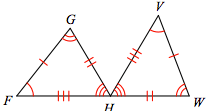

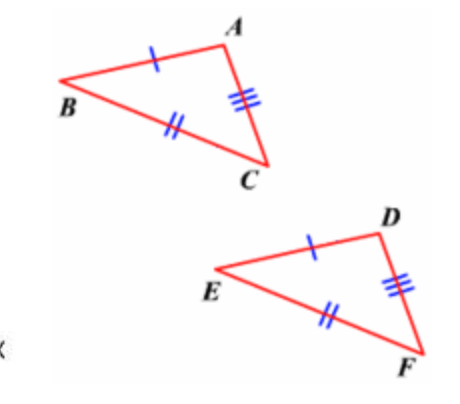

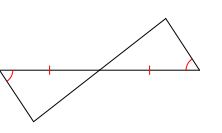
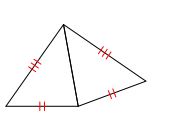
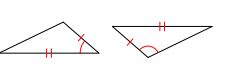
Which triangle congruence postulate is illustrated?
SSS
SAS
ASA
AAS
Not a postulate
Which triangle congruence postulate is illustrated?
SSS
SAS
ASA
AAS
Not a postulate

Which triangle congruence postulate is illustrated?
SSS
SAS
ASA
AAS
Not a postulate

Which triangle congruence postulate is illustrated?
SSS
SAS
ASA
AAS
Not a postulate
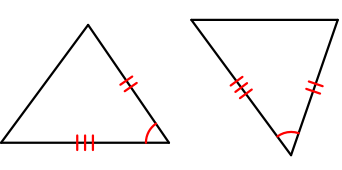
Which triangle congruence postulate is illustrated?
SSS
SAS
ASA
AAS
Not a postulate



