Wayground logo

Free Printable Worksheets

Font size

S
M
L
XL
Worksheets

Sun & More

Total questions: 46

Worksheet time: 24mins

Name
Class
Date
1.
The energy from the sun is created by a process called:
a)
nuclear fission
b)
nuclear fusion
c)
nuclear reaction
d)
nuclear core
2.

____________are areas of gas on the sun that are cooler than the gas around them.

a)

Solar Wind

b)

Solar Flares

c)

Sunspots

d)

Core

3.

What is needed for fission to occur

a)

High density and low pressure

b)

High temperatures and low pressure

c)

High density and high temperature

4.
How many Earths could fit inside the Sun?
a)
About 1 million
b)
About 2 million
c)
About 1.5 million
d)
About 2.5 million
5.
In which area of the sun does gas rise as it heats up, then fall back down as it cools?
a)
the core
b)
the radiation zone
c)
the convection zone
d)
the corona
6.
What layer can be seen here?
a)
chromosphere
b)
corona
c)
photosphere
d)
core
7.
When we look at the sun, what layer are we viewing?
a)
photosphere
b)
chromosphere
c)
corona
d)
convection zone
8.
a brief burst of energy from the sun’s photosphere
a)
corona
b)
solar flare
c)
solar wind
d)
photosphere
9.
a dark spot on the photosphere of the sun
a)
corona
b)
solar flare
c)
sunspot
d)
magnitude
10.
Label Part 3
a)
#3 Chromosphere
b)
#3 Radiation zone
c)
#3 Convection zone
d)
#3 Photosphere
11.

Which of the following lists some of the layers of the Sun in order from the center of the Sun outward?

a)

convection zone, radiation zone

b)

radiation zone, convection zone

c)

chromosphere, photosphere

d)

corona, photosphere

12.

The Sun is NOT a star.

a)

True

b)

False

13.

Which of the following correctly describes the rotation of the Sun?

a)

All parts of the Sun rotate together.

b)

The Sun rotates faster at its equator than at its pole.

c)

The Sun rotates slower at its equator than at its pole.

d)

The Sun does not rotate at all.

14.

What is the Sun?

a)

It is a hot ball of solids, liquids, and gases.

b)

It is a hot ball of solids.

c)

It is a hot ball of liquids.

d)

It is a hot ball of gases.

15.

The central region of the Sun is called the (a)  

16.

The sun is the (a)   object in the Solar System

17.

During a Solar Eclypse, the (a)   is between the Earth and the sun.

18.
When prominences erupt into space releasing gas and energy we call this: 
a)
solar winds
b)
coronal outburst
c)
solar flares
d)
auroras
19.

In which area of the sun does gas rise as it heats up, then fall back down as it cools?

a)

the core

b)

the radiative zone

c)

the convective zone

d)

the corona

20.
What layer of the sun's atmosphere gives the sun its "white halo" during a solar eclipse?
a)
chromosphere
b)
photosphere
c)
corona
d)
atmosphere
21.
The particles of the corona extends into space for millions of kilometers and spreads into streams of electrically charged particles called:
a)
coronal discharge
b)
solar flares
c)
coronal ejection
d)
solar winds
22.
Huge loops of reddish gas that connect sunspots are called:
a)
prominences
b)
solar flares
c)
coronal loops
d)
solar wind
23.
What is the state of matter in the sun?
a)
Gas
b)
Liquid
c)
Plasma
d)
Solid
24.
The auroras are caused by 
a)
Prominences
b)
The corona
c)
Magic
d)
Solar wind
25.
Auroras are frequently seen
a)
near the equator.
b)
before a sunspot cycle.
c)
every 11 years.
d)
after solar flares.
26.
Which of the following is NOT a solar ejection?
a)
solar flare
b)
prominence
c)
sunspot
d)
coronal mass ejection
27.
Sunspots vary in a cycle that lasts about
a)
110 yrs
b)
11,000 yrs
c)
11 yrs
d)
110,000 yrs
28.
What is the hottest layer of the sun’s atmosphere called?
a)
convective zone
b)
corona
c)
radiative zone
d)
photosphere
29.
Particles thrown off the sun’s corona that can affect Earth’s magnetic field are called
a)
a coronal mass ejection.
b)
a coronal mass reflection
c)
nuclear fusion
d)
sunspots
30.
During nuclear fusion in the sun, which of the following occurs?
a)
Atomic nuclei split apart.
b)
The aurora australis appears.
c)
hydrogen nuclei combine to produce a helium nucleus.
d)
A solar eclipse results
31.
Scientists break up the sun’s light into a spectrum using a device called a
a)
corona
b)
spectrograph
c)
positron
d)
chromograph
32.
What are northern lights?
a)
Auroras
b)
solar flares
c)
prominences
d)
coronas
33.
What is a prominence on the sun?
a)
a part of the sun’s corona, a cloud of colored gas
b)
a disturbance in the sun’s atmosphere; an arched, glowing cloud of gas
c)
a part of the convective zone, a cool area with powerful magnetic fields
d)
a magnetic disruption in the sun’s photosphere
34.
What is the name for this giant loop of energy leaping from the solar surface? 
a)
aurora
b)
prominence
c)
solar flare
d)
sunspot
35.
What is an explosion on the sun that gives out huge amounts of energy?
a)
Sun Spot
b)
Solar Flare
c)
Sun Ray
d)
Sun Gases
36.
Which statement is true about the sun?
a)
It is a star.    
b)
It is the largest star in our galaxy. 
c)
It is a planet close to Earth.
d)
It is a moon. 
37.
The Sun spins on its axis
a)
TRUE
b)
FALSE
38.
The middle layer of the sun's interior that contains very tightly packed gas is called the _____________.
a)
photosphere
b)
chromosphere
c)
radiation zone
d)
convection zone
39.
What layer gives the sun it's reddish color during a solar eclipse?
a)
convection zone
b)
corona
c)
chromosphere
d)
photosphere
40.
Huge loops of reddish gas that connect sunspots are called:
a)
prominences
b)
solar flares
c)
coronal loops
d)
solar wind
41.

Who is famous for inventing the telescope (even though he didn't really invent it)?

a)

Galileo

b)

James Webb

c)

Newton

d)

Hubble

42.

A refracting telescope uses _______ to focus light.

a)

Lenses

b)

Mirrors

c)

Lasers

d)

Water

43.

Reflecting telescopes use _______ to focus light.

a)

Lenses

b)

Flat mirrors

c)

Curved Mirrors

d)

A lens and lasers

44.
A ______ telescope uses a mirror to focus light onto a small area.
a)
reflecting
b)
refracting
c)
radio
d)
spectrum
45.
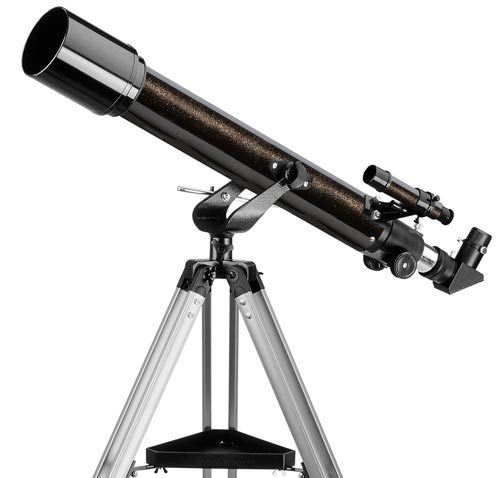
What type of telescope is this?
a)
Refractor
b)
Reflector
c)
Non-Optical
d)
X- Ray
46.
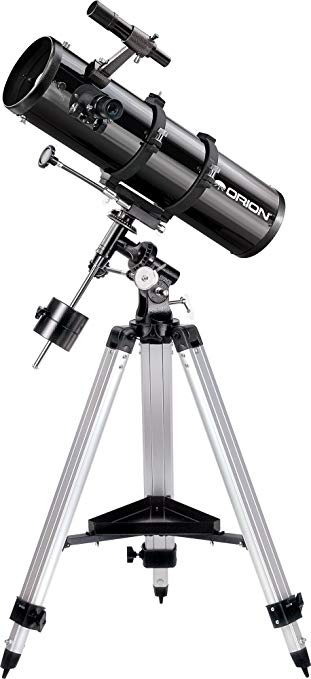
What type of telescope is this?
a)
Refractor
b)
Reflector
c)
Non-Optical
d)
X- Ray