Worksheets
UNIT 1- AP KINEMATICS
Total questions: 41
Worksheet time: 4hrs 50mins
x = x0 + vx0 + 21ax t2
A ball released from rest at the 30th floor of a building has fallen one floor after 1 second. Assume the floors are evenly spaced and assume negligible air resistance.
What is the number of floors that the ball has fallen after 4 seconds ?
Match the correct term to the variable or value.
Δx
change of x
acceleration due to gravity
9.81 m/s
velocity on the y axis
vy
v0
v naught or initial velocity
vx
velocity on the x axis
Two students want to determine the speed at which a ball is released when thrown vertically upward into the air. One student throws the ball into the air while the other student measures the total time that the ball is in the air. The students use a meterstick to measure the release height of the ball. Which of the following equations should the students use to determine the speed at which the ball was released?
Use y = y0 + vy0t + 1/2ayt2 from the moment in time in which the ball was released to the moment in time in which the ball reaches its highest point.
Use y = y0 + vy0t + \1/2ayt2 from the moment in time in which the ball was released to the moment in time in which the ball hits the ground.
Use v2y = v2y0 + 2ay (y - y0) from the moment in time in which the ball was released to the moment in time in which the ball reaches its highest point.
Use v2y = v2y0 + 2ay (y - y0) from the moment in time in which the ball was released to the moment in time in which the ball hits the ground.
An object undergoes an acceleration as it travels along a straight, horizontal section of a track. Which of the following graphs could represent the motion of the object?
Select two answers.


A car initially at rest accelerates at 10 m/s2 . The car’s speed after it has traveled 25 meters is most nearly
A student wants to study the motion of an object with constant acceleration. Which of the following experiments could the student conduct to best observe a situation where an object has constant acceleration? Select two answers.
Release a ball from rest near the Earth's surface.
Release a toy car from rest so that it travels along different looped sections of a track.
Launch a water-propelled rocket from rest so that it travels into the air and falls back to the Earth's surface.
Release a cart from rest so that it travels down an incline of 40 degrees with respect to the ground.
Which of the following is NOT indicated by a horizontal line on a velocity vs. time graph?
The object is at rest.
The object is speeding up.
The object is moving at a constant high speed.
The object is moving at a constant low speed.
At what angle should a projectile be launched to achieve the maximum horizontal range?
0 degrees
20 degrees
45 degrees
90 degrees
If acceleration and velocity vectors are in the same direction, the object is...
Slowing down
No change
Speeding up
Stopped
Which of the following is NOT a scalar quantity?
Mass
Acceleration
Speed
Distance
A velocity vs. time graph starts at a positive y-value at t=0 and progresses as a linear line with a negative slope that crosses the x-axis over time. Which of the following situations could it represent?
An object floating upwards.
A ball in free-fall from rest.
A ball kicked up in the air and falls back down.
A stationary object.
A truck, after having travelled 200 m at 50 m/s, suddenly decelerates at 10 m/s2 for 5 seconds. What is the total displacement of the truck at the end of 5 seconds?
200 m
500 m
325 m
424 m
What does the slope of a position vs. time graph represent?
Acceleration
Displacement
Velocity
Force
What is the acceleration of a free-falling object moving at a speed of 25 m/s after 3 seconds?
26 m/s
18 m/s
17.6 m/s
9.81 m/s²
If acceleration and velocity vectors point in opposite directions, the object will...
Speed up
Stop
Remain stationary
Slow down
What does the area under a velocity-time graph represent?
The acceleration of the object.
The displacement of the object.
The impulse on the object.
The force on the object.
A person starts from rest and runs with constant acceleration, reaching a final velocity of 20 m/s. What was their average velocity?
20 m/s
0 m/s
10 m/s
25 m/s
A car travels 500m from rest and with an final velocity of 55 m/s. What was its acceleration?

The graph above represents the position (x) versus time (t) for an object being acted upon by a constant force. What is the average speed during the interval between 1 s and 2 s?
2 m/s
4 m/s
6 m/s
8 m/s

The position vs. time graph for an object moving in a straight line is shown below. What is the instantaneous velocity at t = 2 s?
-2 m/s
4 m/s
0 m/s
0.5 m/s

The motion of a circus clown on a unicycle, moving in a straight line, is shown in the graph.
What is the clown's acceleration at 5 s?
1.6 m/s2
8 m/s2
3.4 m/s2
2 m/s2

How far is the clown from her original starting point after 12 seconds?
50 m
12 m
74 m
67 m

A ball is dropped from a building. How fast is it traveling after falling for 1.77 s? (Hint: It's a free-falling object.)
-5.54 m/s
-17.36 m/s
-11.58 m/s
-8.04 m/s
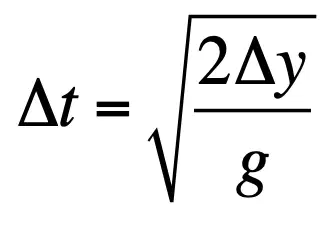
An apple falls 1 meter from a tree. How long does it take to reach the ground?
0.125 s
0.45 s
0.6 s
1 s
0.56 s

Match the section of the graph with the correct description of motion
A - B
a = 10
B - C
a = 0
D - E
v = 40
C - D
a = 20
F - G
v = 20

Largest speed
A
Vertical velocity is zero
B
Vertical velocity is negative
C
Almost all GPE transferred to KE
D
Horizontal velocity is constant
All
What does it mean when a change in velocity is negative?
The object is speeding up.
The object is slowing down.
The object is changing direction.
The object is falling down.
What is the acceleration of an object that has a constant velocity?
a. 0.0 m/s
b. 0.0 m/s2
c. 1.0 m/s
d. 1.0 m/s2
Can an object move with constant velocity and also accelerate?
Yes, if it is speeding up.
Yes, if it is slowing down.
Yes, if it is turning in a circle.
No.
Benjamin is running on a circular track. He maintains a constant speed, but his velocity changes. This is because velocity depends on _________ as well as speed. So, even if Benjamin's speed remains constant, his velocity can change.
vibration
tone
measurement
direction
A car pulls onto the highway. It accelerates at 2 m/s2, merges over a distance of 100 m, and ends with a velocity of 28 m/s. What was its initial velocity? (Round to two decimal places and use correct units.)
(a)
What is the velocity of an object that has been accelerating at 5 m/s2 for 3 seconds, starting from rest?
5 m/s
10 m/s
15 m/s
20 m/s
Which of the following graphs best represents an object moving with constant acceleration?
A straight horizontal line on a velocity vs. time graph
A straight line with a positive slope on a velocity vs. time graph
A curved line on a position vs. time graph
A straight line with a negative slope on a position vs. time graph
An object is thrown vertically upwards with an initial velocity of 20 m/s. What is its velocity at the highest point of its trajectory?
0 m/s
10 m/s
20 m/s
30 m/s