wayground logo

Free Printable Worksheets

Font size

S
M
L
XL
Worksheets

Quadratic Equations

Total questions: 100

Worksheet time: 1hrs 15mins

Name
Class
Date
1.
Say 'TRUE' or 'FALSE'
Every Quadratic equation has exactly one root
a)
TRUE
b)
FALSE
2.
Say 'TRUE' or 'FALSE'
A quadratic equation ax2 + bx + c = 0 has equal roots, then b2 - 4ac = 0 
a)
TRUE
b)
FALSE
3.
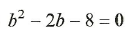
a)
a)
b)
b)
c)
c)
d)
d)
4.
The Equation (x2 + 1)2 - x2 = 0 has ___
a)
four real roots
b)
two real roots
c)
no real roots
d)
one real root
5.
The positive real root of the equation : 64x2 - 1 = 0 is ______
a)
8
b)
c)
1⁄16
d)
1⁄4
6.
Roots of the quadratic equation of the type ax2  + bx = 0 is _____
a)
x = 0 
b)
ax + b = 0 
c)
x = 0 and ax + b = 0
d)
Not possible to find
7.
Can 0 be a root of a quadratic equation?
a)
Yes. Possible
b)
No. Not posssible
8.
Can both the roots of quadratic equation be zero?
a)
Yes. Possible
b)
NO. Not possible
9.
Is (x +1)2 = x2 + 2x + 1 is a quadratic equation?
a)
YES
b)
NO
10.
The non-zero root of the equation 3x - 5x2 = 0 is_____
a)
3⁄5
b)
5⁄3
c)
-3⁄5
d)
-5⁄3
11.

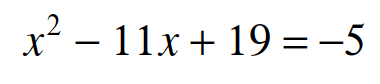
Solve the equation by factoring.

a)

x = {3,8}

b)

x = {-3,8}

c)

x = {3,-8}

d)

x = {-3,-8}

12.

How many solutions can a quadratic have?

a)

1 solution

b)

3 solutions

c)

0 solutions

d)

2 solutions

13.
ax2+bx+c=0  is the standard form of a quadratic equation.
a)
True
b)
False
14.

Solve by factoring

a)

-4, 2

b)

-2, 4

c)

-16

d)

-4

15.

Solve for r:

a)

-3, 4

b)

3, 4

c)

-4, -3

d)

-3

16.

Solve the following quadratic equation: 4x29=04x^2-9=0  

a)

x=32x=\frac{3}{2}  &  x=32x=-\frac{3}{2}  

b)

x=23x=\frac{2}{3}  & x=23x=\frac{-2}{3}  

c)

x=94x=\frac{9}{4}  

d)

x=49x=\frac{4}{9}  

17.

If discriminant of a quadratic equation is negative, then roots of the equation are __________.

a)

Distinct Roots

b)

Equal roots

c)

Unequal roots

d)

none

18.

Find the nature of roots in the quadratic equation 3x² - 9x+5=0

a)

Real and Equal

b)

Real and distinct

c)

Unreal and distinct

d)

None

19.

What is the quadratic formula?

a)
b)
c)
d)
20.
Determine the values of
a, b, and c for
the quadratic equation: 
4x2 – 8x = 3
a)
a = 4, b = -8, c = 3
b)
a = 4, b =-8, c =-3
c)
a = 4, b = 8, c = 3
d)
a = 4, b = 8, c = -3
21.
Which of the following equations matches standard form of a quadratic?
a)
ax + by = c
b)
y = a(x - h)2 + k
c)
y = ax2 + bx + c
d)
y = mx + b
22.
What is another word for zeros?
a)
y-intercepts
b)
roots
c)
vertex
d)
axis of symmetry
23.
Find the zeros.
a)
0 and 4
b)
0 and -4
c)
0
d)
-4
24.

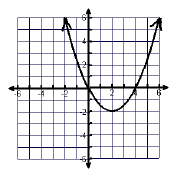
What are the roots of the function?

a)

x = 4, -1

b)

(-4, 1)

c)

x = -4, 1

d)

(4, 0) (-1, 0)

25.
What is the discriminant?
a)
b²-4ac
b)
b2/2a
c)
4ac
d)
b2±4ac
26.
If the discriminant is negative, then the quadratic has:
a)
1 Real Solution
b)
2 Real Solutions
c)
Half a Solution
d)
No Real Solutions
27.
If the graph of a quadratic does not intercept the x axis at any point, then it has:
a)
1 Real Solution
b)
2 Real Solutions
c)
Half a Solution
d)
No Real Solution
28.
Convert x2-6x+9 to factored form and identify the solution.
a)
(x-3)(x-3); x=3
b)
(x+3)(x+3); x=-3
c)
(x+4)(x+2); x=-4, -2
d)
Not factorable
29.
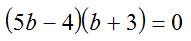
Find the zeros of this quadratic.
a)
b=4/5, b=3
b)
b=4, b=-3
c)
b=1/5, b=3
d)
b=4/5, b=-3
30.
Solve using the Quadratic Formula:
x2 + 4x + 3 = 0
a)
x = 1 and x = 3
b)
x = 6 and x = -2
c)
x = -1 and x = -3
31.
Factor x2-6x-40
a)
(x-10)(x+4)
b)
(x+10)(x-4)
c)
(x-8)(x+5)
d)
(x+8)(x-5)
32.

Solve using the Quadratic Formula:


2x2 − x − 3 = 0

a)

x=32, 1x=-\frac{3}{2},\ 1

b)

x=32, 1x=\frac{3}{2},\ -1

c)

x=32, 1x=-\frac{3}{2},\ -1

d)

x=32, 1x=\frac{3}{2},\ 1

33.

Solve using any form of factoring or Quadratic Formula


x2 + 6x + 9 = 0

a)

x = −3, 3

b)

x = −3

c)

x = 3

d)

No Solution

34.

Solve for the values of x:

(x + 2)(x - 3) = 0

a)

{ 2, 3 }

b)

{ -2, -3 }

c)

{ 2, 3 }

d)

{ -2, 3 }

35.
What should you do first in solving this equation?
x2 + 6x - 13 = 3
a)
Get factored form
b)
Find two numbers which add to make 6 and multiply to make -13
c)
Make it equal 0 by subtracting 3 on each side
d)
Type it all in a calculator.
36.

Solve by factoring:

n² - 2n = 0

a)

n = 2 and 0

b)

n = -2 and 0

c)

n = 2

d)

n = 0

37.

Solve the perfect square trinomial
x2+8x+16=0x^2+8x+16=0  

a)

x2+42x^2+4^2  

b)

(x4)(x+4)(x-4)(x+4)  

c)

(x4)2\left(x-4\right)^2  

d)

(x+4)2\left(x+4\right)^2  

38.

Solve using the Square Root Method
x2=36x^2=36  

a)

±6\pm6  

b)

±18\pm18  

c)

±12\pm12  

d)

66  

39.

Which word is not a term for where the graph crosses the x-axis?

a)

Root

b)

Zero

c)

Solution

d)

Y-Intercept

40.

What are the roots if

a=1, b= -12, and c=36

a)

x= {6, 0}

b)

x= {-6, 6}

c)

x= {-6, 0}

d)

x= {6}

41.

What is the vertex of the equation
f(x)=6x2+13x5f\left(x\right)=6x^2+13x-5  
(plug it into the calculator)

a)

(1.08,12)(-1.08,-12)  

b)

(12, 1.08)\left(-12,\ -1.08\right)  

c)

(2.5, 0.33)\left(-2.5,\ 0.33\right)  

d)

(0.33, 2.5)\left(0.33,\ -2.5\right)  

42.

What are the factors of
x216x^2-16  

a)

(x4)2\left(x-4\right)^2  

b)

(x+4)2\left(x+4\right)^2  

c)

(x4)(x+4)\left(x-4\right)\left(x+4\right)  

d)

(x)2(4)2\left(x\right)^2-\left(4\right)^2  

43.

The vertex of a quadratic function or graph is

a)

The highest point of the graph

b)

The lowest point of the graph

c)

Where the axis of symmetry passes through

d)

Where the graph crosses the x-axis

44.

How many roots can a quadratic function have?

(select all that are true)

a)

0

b)

1

c)

2

d)

Infinite

45.

What is the discriminate of the Quadratic Formula?

a)

b2a\frac{-b}{2a}

b)

b24ac\sqrt{b^2-4ac}

c)

b24acb^2-4ac

d)

b±b24ac2a\frac{-b\pm\sqrt{b^2-4ac}}{2a}

46.

What is the vertex of the above function?

a)

(-2,1)

b)

(-3,0)

c)

(-1,0)

d)

(0,-1)

47.

What are the solutions to the given function?

a)


x={2,0}x=\left\{-2,0\right\}

b)

x={3,1}x=\left\{-3,-1\right\}

c)

x={1,3}x=\left\{1,3\right\}

d)

x={1,0}x=\left\{-1,0\right\}

48.

What is the axis of symmetry for this graph?

a)

x=1x=-1

b)

x=8x=-8

c)

y=8y=-8

d)

y=1y=-1

49.

What are the zeros for this graph?

a)

x={3,1}x=\left\{-3,1\right\}

b)

x={3,0}x=\left\{-3,0\right\}

c)

x={1,8}x=\left\{-1,-8\right\}

d)

x={6,3}x=\left\{-6,-3\right\}

50.

Who is your favorite teacher?

a)

Mrs. Washington

b)

Mrs. Elizondo

c)

Coach Redding

d)

Mrs. Perez

e)

Coach Garcia

51.

Solve by taking square roots:

5m2 + 1 = 6

a)

m = 1

b)

m = 1 or -1

c)

m = √7

d)

m = 7/5 m = -7/5

52.
Solve using square roots.
4m2 - 100 = 0
a)
m=25, -25
b)
m=96
c)
m=5, -5
d)
m=-96
53.

Solve by taking square roots.

x² +12 = 5

a)

x = ± 49

b)

No Real Solutions

c)

x = ± √7

d)

x = ± 5/12

54.
Solve the equation using square roots.
x2 = 121
a)
60.5
b)
± 11
c)
± 12
d)
11
55.
What is the standard form for a Quadratic?
a)
ax2+ bx = - c
b)
x = -b ± √(b2-4ac) / 2a
c)
ax2 + bx + c
d)
y = mx + b
56.
What is name of the graph of a Quadratic Equation?
a)
Line
b)
Parbola
c)
U
d)
Parabola
57.
What are the solutions?
a)
-2, 1
b)
1, 2
c)
-1,2
d)
0,-4
58.
Use the square root property to solve the Quadratic Equation.
2(x - 4)2 = 200
a)
±10
b)
-14, 6
c)
-6, 14
d)
100
59.

When solving a quadratic equation, when do you use the plus or minus (±) symbol?

a)

After taking the square root of both sides

b)

After adding the square to both sides

c)

After taking half of b

d)

After setting the equation equal to zero

60.
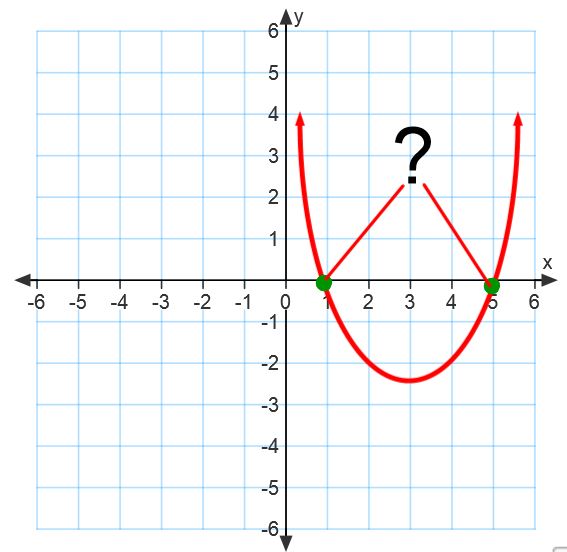
What are the green dots called?
a)
axis of symmetry
b)
vertex
c)
parabola
d)
roots or x-intercepts
61.
Solve using square roots.
4m2 - 100 = 0
a)
m=25, -25
b)
m=96
c)
m=5, -5
d)
m=-96
62.
2x2=100
a)
x = √25
b)
x = ±5√2
c)
x = √100
d)
x = ±√5
63.

Solve

x2 + 2x - 20 = 4

a)

x = -6, x = 4

b)

x = 6, x = -4

c)

x = 12, x = -2

d)

x = 8, x = -3

64.
n² - 2n = 0
a)
n = 2 and 0
b)
n = -2 and 0
c)
n = 2
d)
n = 0
65.

Solve.

(2x - 4)2 = 16

a)

x = 4

b)

x = 10

c)

x = -2

d)

x = 0, 4

66.

What is the formula above primarily used for?

a)

Finding the axis of symmetry from standard form

b)

Finding the vertex from standard form

c)

Finding the vertex from vertex form

d)

Finding the y intercept from standard form

67.
What is the vertex?
a)
(2, 4)
b)
(3, -1)
c)
(0, 8)
d)
(4, 2)
68.
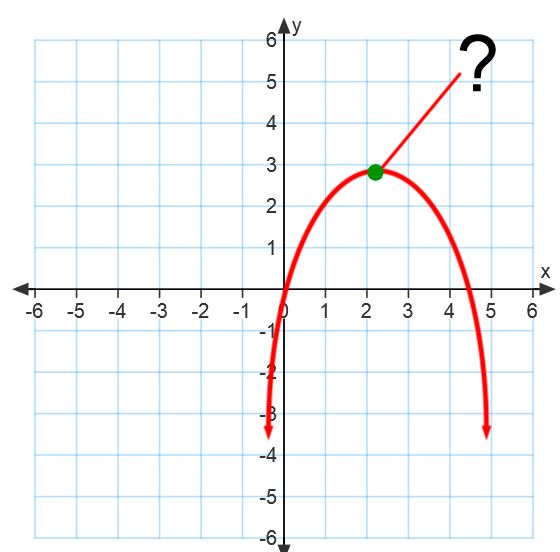
What is the green dot on the parabola called?
a)
maximum
b)
minumum
c)
roots
d)
zeros
69.
What is another word for zeros?
a)
y-intercepts
b)
roots
c)
vertex
d)
axis of symmetry
70.
If the graph of a quadratic does not intercept the x axis at any point, then it has:
a)
1 Real Solution
b)
2 Real Solutions
c)
Half a Solution
d)
No Real Solution
71.
Find the zeros of this quadratic.
a)
b=4/5, b=3
b)
b=4, b=-3
c)
b=1/5, b=3
d)
b=4/5, b=-3
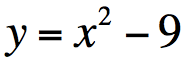
72.
a)
-2, 4
b)
-8
c)
±8
d)
No real solution
73.
What are the zeros?
a)
x= 0 and x= -4
b)
x= 0 and x= 4
c)
y= 0
d)
x= 2
74.
Which of the following equations matches standard form of a quadratic?
a)
ax + by = c
b)
y = a(x - h)2 + k
c)
y = ax2 + bx + c
d)
y = mx + b
75.
What is another word for zeros?
a)
y-intercepts
b)
roots
c)
vertex
d)
axis of symmetry
76.
How many zeros does this parabola have? 
a)
3
b)
2
c)
0
d)
1
77.
What are the roots of the function? 
a)
{x|x = 4, -1}
b)
(-4, 1)
c)
{x|x = -4, 1}
d)
(4, 0) (-1, 0)
78.
What are the x-intercept/s of the function? 
a)
{x|x = 3}
b)
{x|x =-3,3}
c)
(3, 0)
d)
(-3, 0)&(3, 0)
79.
What are the factors AND solutions of x2 + 2x – 3 = 0
a)
(x - 2)(x + 1); x=2, x=-1
b)
(x + 1)(x - 3); x=-1, x=3
c)
(x + 2)(x - 1); x=-2, x=1
d)
(x - 1)(x + 3); x=1, x=-3
80.
a)
-2, 4
b)
-8
c)
±8
d)
No real solution
81.
b² = -35 + 12b
a)
b = 5 and 7
b)
b = -5 and -7
c)
b = -5 and 7
d)
b = 5 and -7
82.

Solve for x by taking square roots.

6x2 - 9 = 87

a)

x = 4, -4

b)

x = 4

c)

x = 16

d)

x = 16, -16

83.
Solve by factoring: 2x2 - 5x - 12 = 0
a)
x = -4 and x = -6
b)
x = 4 and x = -3/2
c)
x = 4 and x = 6
d)
x = -4 and x = 3/2
84.
Standard form of a quadratic equation
a)
y=x²
b)
y=ax²+bx+c
c)
y=mx+b
d)
y=x
85.
What are the green dots called?
a)
axis of symmetry
b)
vertex
c)
parabola
d)
roots or x-intercepts
86.
Determine the values of
a, b, and c for
the quadratic equation: 
4x2 – 8x = 3
a)
a = 4, b = -8, c = 3
b)
a = 4, b =-8, c =-3
c)
a = 4, b = 8, c = 3
d)
a = 4, b = 8, c = -3
87.

Tammy solved the equation x2x12=0x^2-x-12=0  
Select the factors of  x2x12x^2-x-12  

a)

(x+3)(x+4)

b)

(x-3)(x-4)

c)

(x+6)(x-2)

d)

(x-6)(x+2)

e)

(x+3)(x-4)

88.
Find the vertex of 
f(x) = -x- 4x + 12
a)
(-2, 16)
b)
(2, 0)
c)
(2, 4)
d)
(-2, 4)
89.

Which of the following is the Factored Form of a quadratic function?

a)

f(x) = mx + b

b)

f(x) = ax2 + bx + c

c)

f(x) = a(x - m)(x - n)

d)

f(x) = a(x - h)2 + k

90.

What are the x-intercepts of the parabola?

y = -3(x + 5)(x - 9)

a)

(-5, 0) and (9, 0)

b)

(5,0) and (-9, 0)

c)

(5, 0) and (9, 0)

d)

(-3, 0) and (5, 0)and (-9, 0)

91.

What are the x-intercepts of the parabola?

y = ¼(x + 2)(x - 6)

a)

(-2, 0) and (6, 0)

b)

(2, 0) and (-6, 0)

c)

(-2, 6)

d)

(¼, 0) and (-2, 0) and (6, 0)

92.

What are the x-intercepts of the parabola?

y = x(x - 4)

a)

(0, 0) and (4, 0)

b)

(1, 0) and (4, 0)

c)

(0, 4)

d)

(-4, 0) and (0, 0)

93.

In f(x) = a(x - p)(x - q), what does "a" tell us?

a)

The slope

b)

If the Parabola opens up or down

c)

x coordinate of the x - intercept

d)

y coordinate of the y - intercept

94.

Solve 2x² - 7x + 6 = 0 by factoring

a)

x = -3/2 and x = -2

b)

x = -3 and x = -2

c)

x = 3 and x = 2

d)

x = 3/2 and x = 2

95.
Determine the values of
a, b, and c for
the quadratic equation: 
4x2 – 8x = 3
a)
a = 4, b = -8, c = 3
b)
a = 4, b =-8, c =-3
c)
a = 4, b = 8, c = 3
d)
a = 4, b = 8, c = -3
96.

Solve Using the method of your choice.

x2 + 4x - 40 = -8

a)

-10 & -4

b)

-4 & 10

c)

-8 & 4

d)

8 & -4

97.
Solve the equation: 
5x2 - 35x + 60 = 0
a)
x = 3,  -4
b)
x = -3,  4
c)
x = 3,  4
d)
x = -3,  -4
98.

Solve using Zero-Product Property.

(2x - 2)(5x + 5) = 0

a)

x = -1

b)

x = -1 or x = 1

c)

x = 1

d)

x = -2 or x = 5

99.
True or false:
The solution, root, x-intercept, and zero of a problem are all the same thing.

a)
True
b)
False, because the solution and root are the same but the x-intercept and zero are different
c)
False, because the x-intercept and root are the same but the zero and solution are different
d)
False, they are all different
100.
Factor 6x2-27x
a)
(6x+1)(x+3)
b)
3x(2x-9)
c)
6x(x-9)
d)
(3x-9)(2x+3)