
 Worksheets
Oceans
Total questions: 123
Worksheet time: 1hrs 2mins

What hemisphere is the United States in?
Southern
Up
Northern
Equador

What part of the Earth is the hottest?
The middle- Equator
Antarctica
South Africa
Sahara Desert

Vertical lines that help us locate places on Earth are called?
X, Y Axis
Longitude
Equator
latitude

Which two countries are found on the Equator?
Congo
Brazil
Russia
Canada

What does "flatten the curve" mean(corona?)
less people get sick
more people get sick
people get sick over a longer period of time
noone gets sick

Which ocean separates the US from Portugal? (Ronaldo's home)
Pacific
Atlantic
Indian
Arctic

What is the EAC, that Crush uses in Finding Nemo?
a Tsunami
Waves of water in the Pacific
Flow of water from Antarctica
Current of water that flows along Australia

What is a Tsunami?
A current of water caused by the moon
A huge wave caused by wind
A series of waves caused by an earthquake
A current caused by heat

How can climate change affect the oceans?
Melt polar ice making the oceans change temperature
Make ocean levels rise and flood some land
Make some hurricanes and typhoons longer, more destructive
All of the above

Would you expect California ocean to be warmer or cooler than the Atlantic ocean on the East Coast?
The same because they are on the same latitude
Cooler because the current comes from Arctic
Warmer because the current comes from Equator
Much colder
The bottom of the ocean is just flat.
true
false
What is the most common salt found in sea water?
sodium
chloride
sulfate
borax
What percent of the ocean's water is salt?
1%
3.5%
97%
24%
Which of the following contribute to the saltiness of the ocean?
runoff from rivers and streams
living organisms in the ocean
precipitation
factories dumping waste in the ocean
How is a hydrothermal vent different from a volcano?
hydrothermal vents release mineral water and volcanoes release magma
they are pretty much the same - no differences
hydrothermal vents make the ocean saltier while volcanoes do not
hydrothermal vents are much cooler than volcanoes so they don't erupt as much
Where can hydrothermal vents be found?
only in the Pacific Ocean
all along the Mid Ocean Ridge
only near underwater volcanoes
Anywhere on Earth
Why was the discovery of hydrothermal vents so remarkable?
They showed us a new life form that we didn't know existed
They explained how the sea floor was spreading
They explained how the ocean got salty
They helped us discover how deep the ocean really is
The 3 main zones of the ocean are:
Euphotic, Bathyal, and Abyssal
Upper, Middle, Lower
Primary, Secondary, Tertiary
Alpha, Beta, Delta
What is the deepest part of the ocean that we know of?
Challenger Deep
Mid Ocean Ridge
Off the coast of Hawaii
Sienna Deep
Which of the following is a topographical map?


The bottom of the ocean is too cold for living organisms.
true
false
What is the huge, flat area of the ocean floor called?
seamounts
trenches
abyssal plain
continental shelf
The gradually sloping area at the edge of the ocean is called:
abyssal plain
continental slope
continental shelf
Galapagos Rift

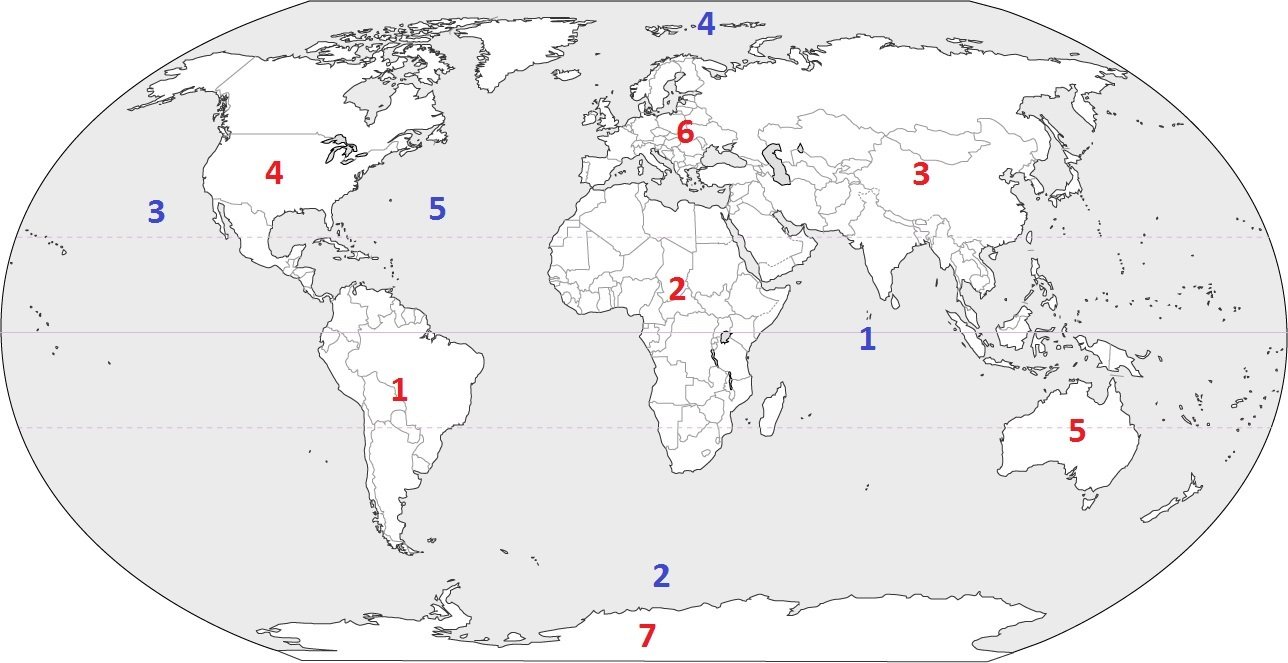
Which ocean is located at point D?
Pacific
Atlantic
Southern
Indian

Which ocean is located at point A?
Arctic
Southern
Pacific
Atlantic
What is the most interesting thing (or your favorite thing) you learned in science this week?
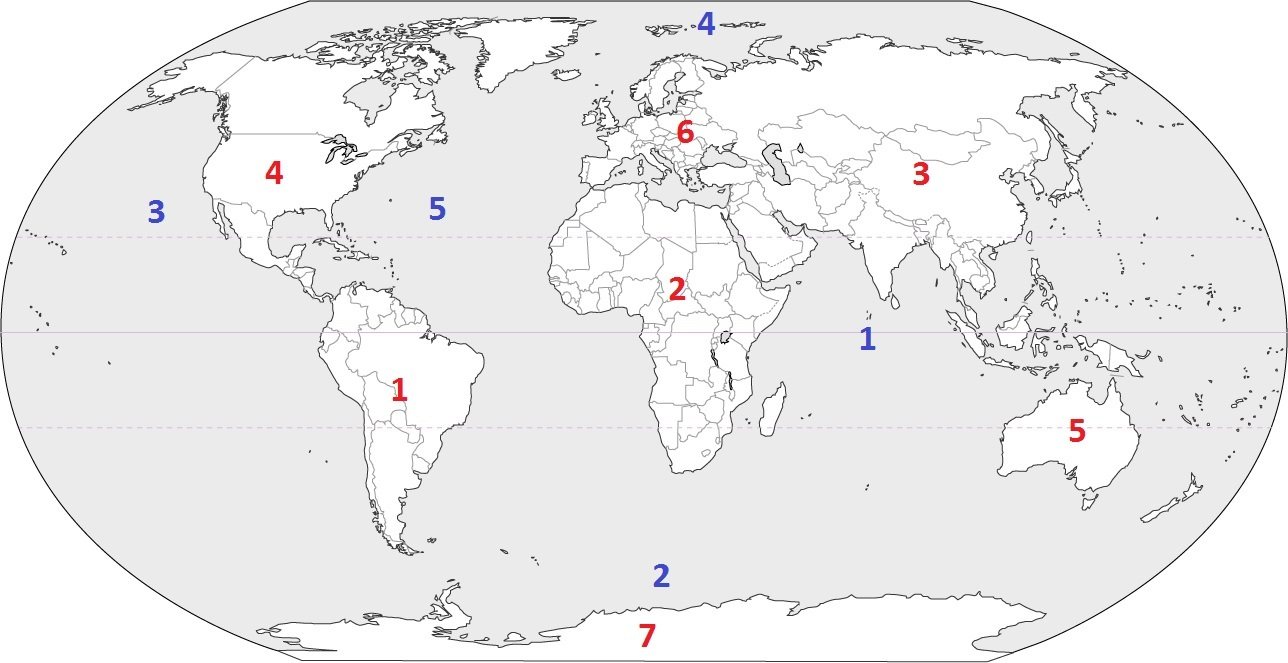
How many oceans are there around Asia?
3
4
5
6
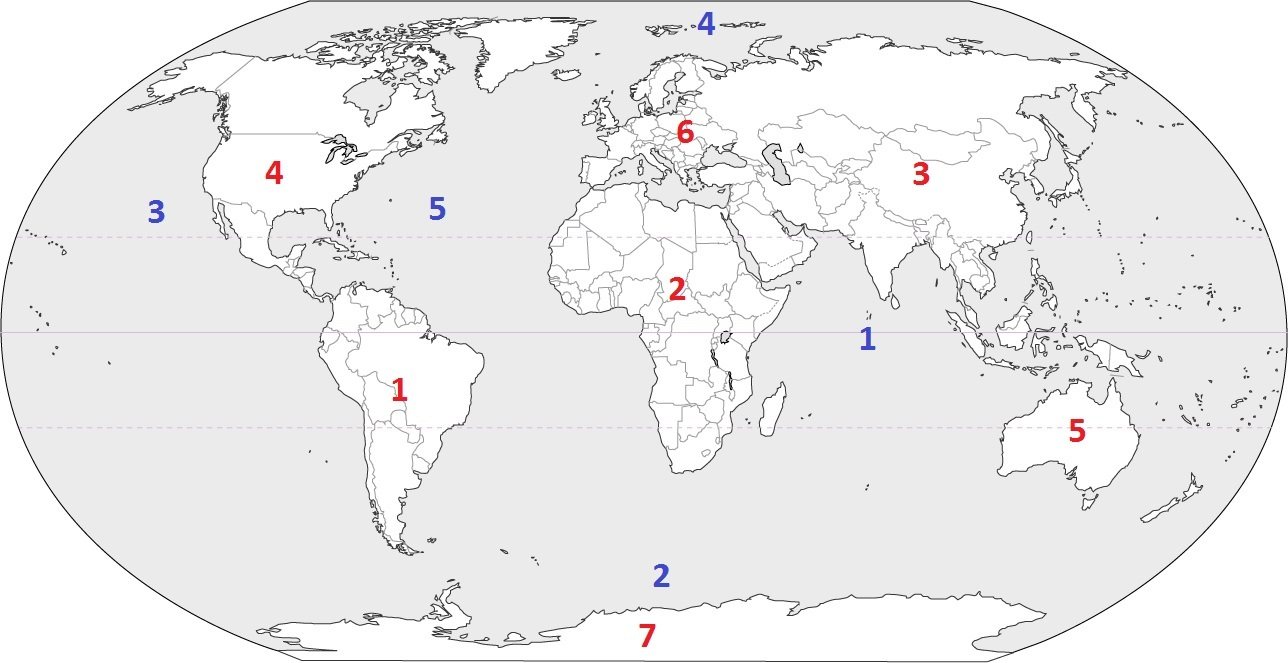
Our oceans cover more than ___% of the Earth’s surface.
50
60
70
80
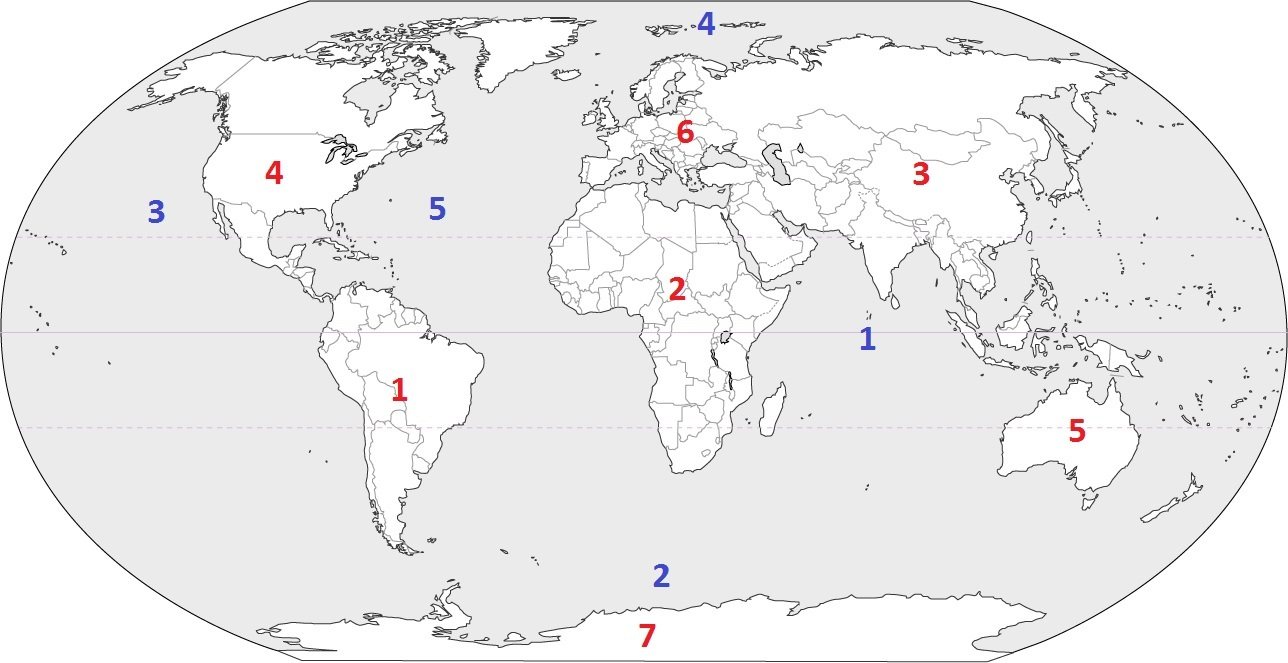
Over ___% of our planet’s oxygen is produced by the ocean.
60
70
80
90

Which ocean is this?
Arctic
Pacific
Indian
Atlantic
Less than ___% of the planet’s oceans have been explored.
5
10
15
20
The largest ocean on Earth is the ___ Ocean.
Pacific
Atlantic
Indian
Artic
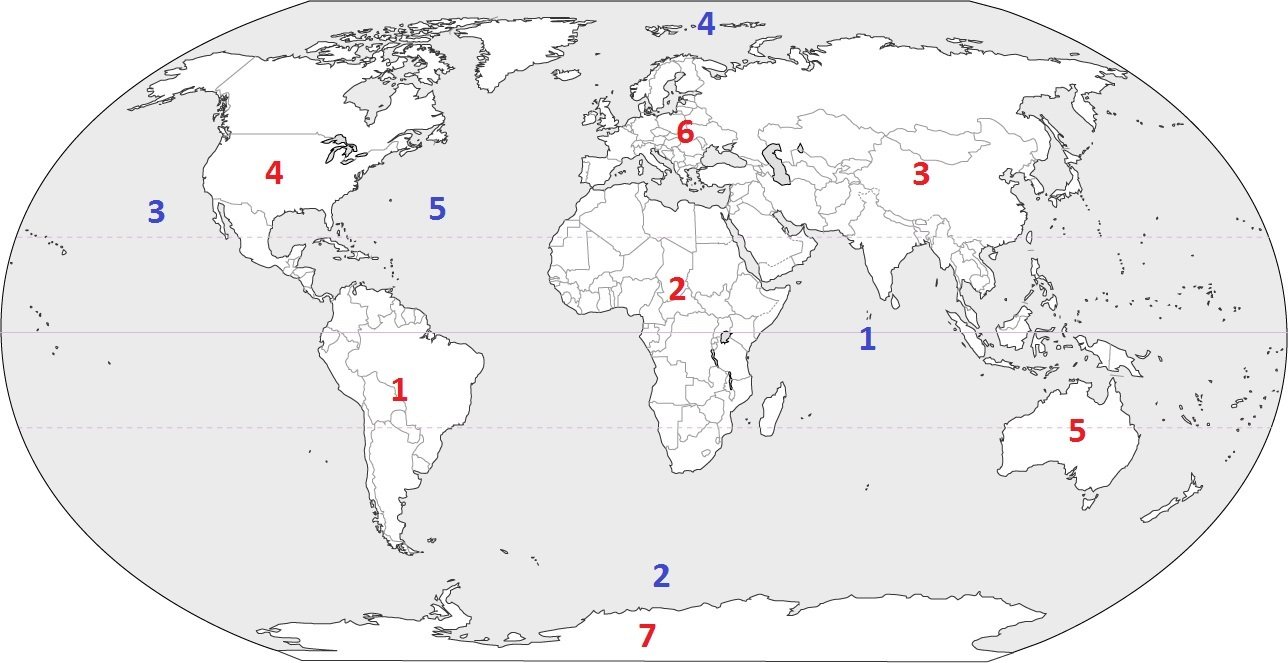
What are the names of the oceans?
Indian, Pacific, Atlantic, Antarctica
Indian, Pacific, Atlantic, Arctic
India, Pacif, Atlanta, Art
Indian, Pacific, Atlanta, Antarctica
What can you do to stop pollution of oceans?
Go swimming more
Watch a video
Write a letter
Reduce amount of garbage
True or False: All oceans have salt?
TRUE
FALSE
How many oceans is Australia surrounded by?
3
4
2
1
Which ocean is half the size of the Pacific?
Arctic ocean
Atlantic ocean
Southern ocean
Indian ocean
The Pacific Ocean and Atlantic Ocean are the two largest oceans on Earth.
True
False
Which is not an ocean?
Southern ocean
Arctic ocean
Caribbean ocean
Indian ocean
Oceans cover about ______ of the surface of the earth.
60%
70%
80%
90%
There are _____ oceans in the world
4
6
5
9
The following are the oceans according to size
Pacific, Atlantic, Indian, Arctic, Antarctic
Pacific, Indian, Atlantic, Arctic, Antarctic
Atlantic, Pacific, Indian, Antarctic, Arctic
Pacific, Atlantic, Indian, Antarctic, Arctic
The _________ is located in the North Pole.
Antarctic Ocean
Southern Ocean
Arctic Ocean
Indian Ocean
Smaller bodies of salt water are called
seas
lakes
oceans
rivers
The ______________ covers a third of the earth's surface.
Indian Ocean
Pacific Ocean
Atlantic Ocean
Arctic Ocean
The deepest parts of the ocean are called
trenches
abyss
deep sea plain
guyot
Underwater volcanoes with flat tops are known as
shelf
abyss
guyots
slope
Seas, bays, channels and gulfs are other bodies of _____
salt water
fresh water
swampy water
loamy water
Winds blowing across the surface of the oceans and seas cause them to move in ripples called ________
tides
waves
current
motion
Jellyfish is an example of
zooplankton
benthos
nekton
Whales, eels, dolphin and squid are examples of
benthos
nekton
zooplankton
Lobsters, starfish, warms and snails are examples of
zooplankton
benthos
nekton
Pythoplankton inhabit
the bottom of the ocean
the middle of the ocean
the surface of the ocean
the beginning of the ocean
People who study oceans are called
oceanographists
oceaners
oceanists
oceanographers
Which of the following bodies is part of the world ocean?
The Gulf of Mexico
The Mississippi River
Lake Michigan
Niagara Falls
How is the Caspian Sea different from the Mediterranean Sea?
The Caspian Sea is part of the Atlantic Ocean; the Mediterranean is part of the Pacific Ocean
The Caspian Sea isn't directly connected to any ocean; the Mediterranean is
The Caspian Sea contains fresh water; the Mediterranean contains salt water
The Caspian Sea cannot support marine life; the Mediterranean supports a lot of marine life
In the movie, Tim says that the waters of the world ocean are "integral" to life on earth. What does "integral" mean?
Unnecessary
Deadly
Helpful
Essential
What might happen if warm and cool currents did not move through the ocean's waters?
Ocean temperatures would become either too hot or too cold to support life.
Climates on land might be extremely different.
There would be no ocean tides.
The pace of global warming would accelerate.
What powers the process of evaporation, by which salt water is turned into fresh water?
Ocean currents
Ocean tides
Heat from the sun
Photosynthesis, which is undergone by algae and other marine plants
How does the Pacific Ocean compare to the world's other oceans?
It's the smallest
It's the largest
It's the hottest
It's the coldest
If you were visiting Asia during monsoon season, what object might you want to bring?
snow shoes
winter coat
rain coat
sun tan lotion
One direct effect of the Gulf Stream is that:
Northwestern Europe tends to be warmer than northeastern North America
Africa is the hottest continent on the planet
The climate of Australia is warm enough to support human life
Antarctica is the coldest continent on the planet
What do you call a scientist who studies the ocean for a living?
An oceanist
An oceanologist
An oceanographer
An oceananthropist
What can you infer about the Northern and Southern Oceans from the information presented in the movie?
They're deeper than the other oceans.
They're saltier than the other oceans.
They contain more life than the other oceans.
They're colder than the other oceans.
How many continents are there in the world?
3
5
7
9
How many oceans are there in the world?
3
5
7
9

Where is Australia?
Orange
Yellow
Green
Purple
Where is North America?
Pink
Green
Blue
Red
Where is Asia?
Pink
Green
Blue
Orange
Where is South America?
Pink
Purple
Yellow
Orange
Where is Europe?
Red
Green
Yellow
Orange
Where is Africa?
Pink
Green
Yellow
Orange
Where is Antarctica?
Purple
Green
Red
Orange

Where is the pink heart?
Arctic Ocean
Atlantic Ocean
Indian Ocean
Pacific Ocean
Southern Ocean
Where is the green heart?
Arctic Ocean
Atlantic Ocean
Indian Ocean
Pacific Ocean
Southern Ocean
Where is the blue heart?
Arctic Ocean
Atlantic Ocean
Indian Ocean
Pacific Ocean
Southern Ocean
Where is the yellow heart?
Arctic Ocean
Atlantic Ocean
Indian Ocean
Pacific Ocean
Southern Ocean
Where is the orange heart?
Arctic Ocean
Atlantic Ocean
Indian Ocean
Pacific Ocean
Southern Ocean
A measure of the amount of dissolved salt contained in water
Salinity
Oceans
Sonar
Seamounts
A very large expanse of sea, in particular, each of the main areas into which the sea is divided geographically
Upwelling
Crest
Oceans
Density
A system that uses sound waves to measure distances and locate objects.
Salinity
Condensation
Ocean Current
Sonar
Underwater mountains
Mid-ocean-ridge
Seamounts
waves
crest
A wide flat area of the ocean floor that is covered with a thick layer of sediment
Ocean trenches
Abyssal Plain
Volcanic Island
El Niño
Underwater volcanoes tall enough to reach above the surface
Topography
Longshore current
Continental slope
Volcanic Island
The flat or gradually sloping land that extends underwater from the edge of a continent to a continental slope
Rip current
Waves
Continental Shelf
Wave length
land that drops down steeply at the edge of a continental shelf
Continental slope
Topography
Ocean trenches
Downwelling
all natural and human-made surface features of a particular area
Mid-ocean-ridge
Topography
Trough
Waves
narrow steep sided clefts in the ocean floor
crest
ocean current
rip current
Ocean trenches
Highest point of a wave
Density
wave length
Crest
wave height
a mass of moving ocean water
Upwelling
Ocean currents
Density
El Niño
the vertical movement of deep water up to the surface
Rip current
Waves
Upwelling
Downwelling
A property of matter representing mass per volume
Mass
Volume
Speed
Density
the movement of water from the surface to greater depths
Downwelling
Volcanic welling
sidewelling
crosswelling
A global weather event that may last for 12 to 18 months and is caused by changes in air and water movements.
La Niña
La muchacha
El Niño
All of the above
the overall direction and movement of water as waves strike the shore at an angle
Wave length
high current
sideshore current
Longshore current
A chain of mountains that run through an ocean basin
Deposition
Mid-ocean-ridge
Rip current
Salinity
Narrow streams of water that break through sandbars and drain rapidly back to sea.
Salinity
Rip Current
Sea-floor spreading
Rock density
Lowest point of a wave
Low Valley
Deep Valley
Trough
Sinkhole
Vertical distance between the crest and the trough
Topography
Longshore Current
Upwelling
Wave height
Horizontal distance between two crests or two troughs
Wave current
Wave distance
Wave length
Crest
Rhythmic movement that carries energy through matter or space; in oceans, waves move through seawater.
Waves
Lakes
Motion
Ocean movement

