
 Worksheets
Electromagnetic Spectrum & Behaviors of light
Total questions: 73
Worksheet time: 2hrs 36mins
Electromagnetic waves vary in
the speed they travel in a vacuum.
wavelength and frequency.
the way they reflect.
the orientation of their electric and magnetic fields.
Light acts like
a wave.
a particle.
Both a wave and a particle
neither a wave nor a particle.
Infrared rays have a shorter wavelength than
Ultraviolet ray.
X-rays.
radar waves.
gamma rays
The full range of frequencies of electromagnetic radiation is called
visible light.
radio waves.
the electromagnetic spectrum.
invisible radiation.
The waves with the longest wavelengths in the electromagnetic spectrum are
Infrared rays.
radio waves
gamma rays
X-rays
The visible light spectrum ranges between
radar waves and X-rays.
television waves and infrared rays.
infrared rays and ultraviolet rays.
ultraviolet rays and gamma rays.
X-ray photographs show softer tissue
as invisible.
as dark, highly exposed areas.
the same as dense bones.
as bright white areas.
Which of the following occurs as a light wave bends when it passes from one medium into another?
constructive interference
refraction
destructive interference
reflection
Newton’s prism experiments showed that white sunlight is made up of
the full electromagnetic spectrum.
only blue light.
all the colors of the visible spectrum.
only the longest wavelengths.
Cellular telephones utilize
radar waves.
very high frequency waves.
very low frequency waves.
microwaves.
What is the electromagnetic spectrum?
The full range of wave frequencies of electromagnetic radiation is called the electromagnetic spectrum.
The rainbow
Which is an example of a radio wave
television
heat lamp
vision
sun light
What do radio and television transmitters emit?
Light
Sound
Heat
Radio Waves
Ultraviolet waves
What waves do you use to heat food?
Microwaves
Gamma Waves
Ultraviolet waves
Radio Waves
UV rays from the sun are -
Gamma Waves
Ultraviolet waves
Heat Waves
Light waves
Sound waves
A campfire emits -
Ultraviolet waves
Gamma waves
Carbon Dioxide
Light waves
Infrared Waves
Produced by nuclear reactions
Radio Waves
Nuclear Waves
Gamma rays
Used to treat cancer
Microwaves
X rays
Radio Waves
Gamma rays
None of the above
Which has the highest frequency?
blue light
green light
yellow light
red light
When a wave changes direction without changing medium, which of the following is NOT happening?
diffraction
refraction
reflection
All electromagnetic waves have the same ______ in free space.
frequency
amplitude
wavelength
speed
What range of frequencies of light are absorbed by glass?
(Select all that apply.)
visible light
ultraviolet light
infrared light
What range of frequencies of light are transmitted by glass?
(Select all that apply.)
visible light
ultraviolet light
infrared light
What is the best description of an opaque material?
no light passes through the material
some light passes through the material
all light passes through the material
What is the best description of a transparent material?
no light passes through the material
some light passes through the material
all light passes through the material
What is the best description of a translucent material?
no light passes through the material
some light passes through the material
all light passes through the material
Which pictures shows a translucent image?
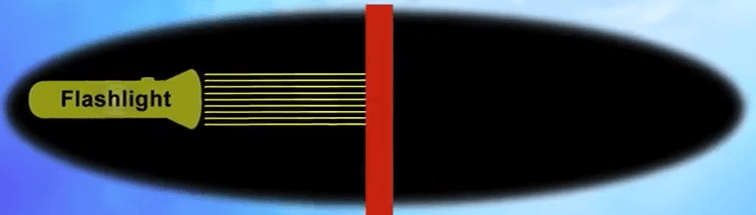
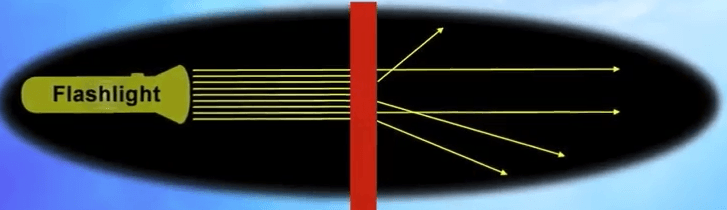
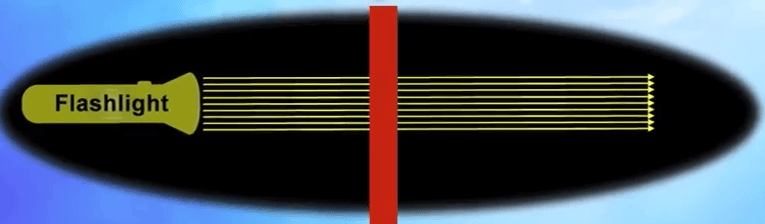
Which pictures shows a transparent image?

What type of object is shown in the picture?
opaque
transparent
translucent

What type of object is the glass in the glasses considered?
opaque
transparent
translucent

What type of object is a mirror considered?
opaque
transparent
translucent

A student does the experiment on tracing the path of a ray of light passing through a rectangular glass slab for different angles of incidence. He can get a correct measure of the angle of incidence and the angle of emergence by following the labelling indicated in figure:
I
II
III
IV

Which diagram represents regular/specular reflection?
A
B
When light waves bend as they pass through a transparent medium we call this:
Refraction
Reflection
Absorption

Light waves bending through a prism is an example of:
Reflection
Refraction
Absorption

Light waves bouncing off of this mirror is an example of:
Reflection
Refraction
Absorption

Light waves bouncing off of this lake is an example of:
Reflection
Refraction
Absorption

A fish bowl bending light waves and distorting an image of a cat's face is an example of:
Reflection
Refraction
Absorption
A transverse wave's oscillations move __________________ to it's energy transfer.
Parallel
Perpendicular
Horizontal
Vertical

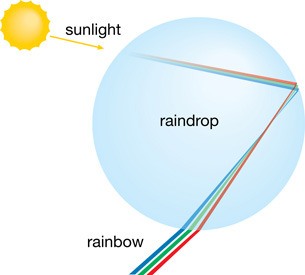


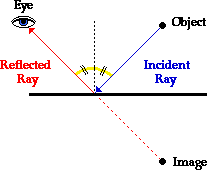
What is the angle of reflection equal to?
The angle of refraction
The angle of incidence
The angle of absorption
The angle of light
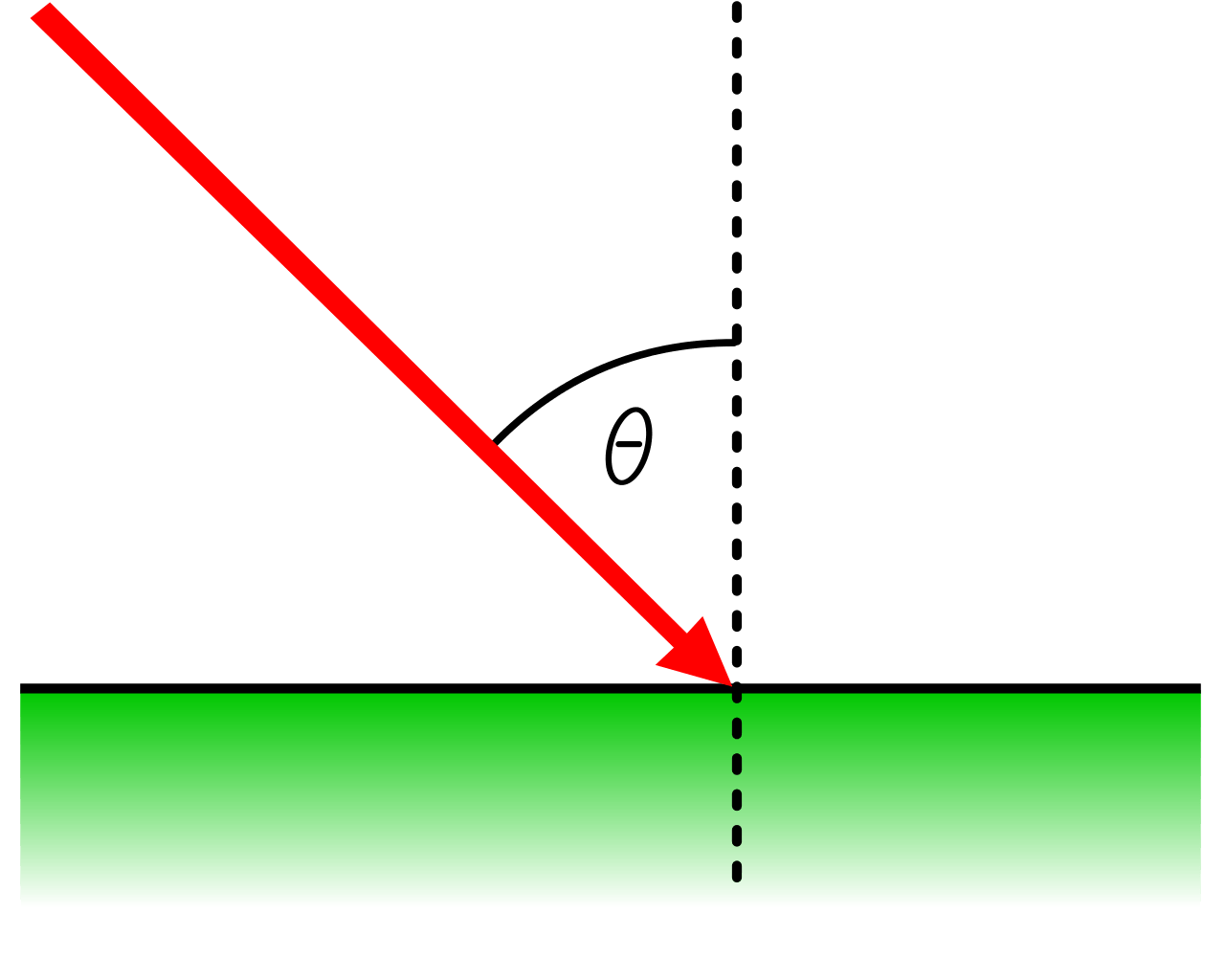

Glass has a _____________ density than air.
Smaller
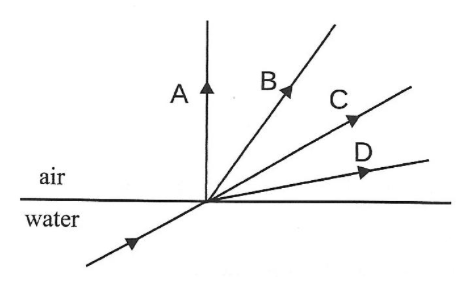
A light ray is incident from water to air. Which of the refracted rays is correct?
A
B
C
D
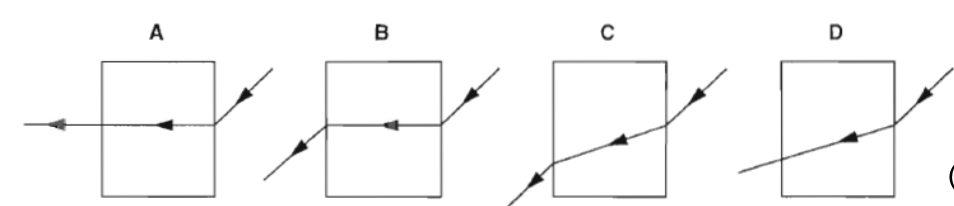
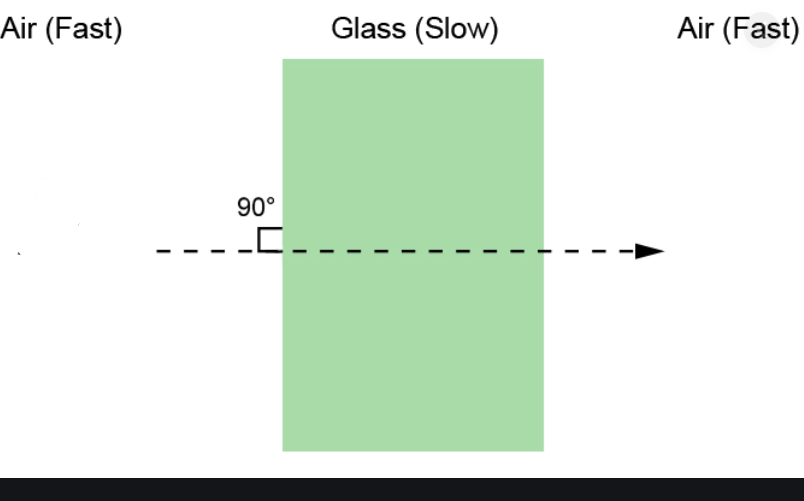
A ray of light travels from air into a glass block.
Which diagram correctly shows the path of the ray through the glass block?
A
B
C
D
The line 90 degress through the refracting or reflecting surface is called?
Medium
Normal
Incidence
Reflection

The angle of reflection is
90 degrees
55 degrees
45 degrees
135 degrees

A prism is a way to break ___________ light into its color components.
white
green
purple
black

In a real rainbow, ________________ in the air act like very small prisms.
dresses
circles
one
raindrops

When light shines on an object, it is reflected, absorbed, or transmitted through the object, depending on the object’s material and the frequency (color) of the light.
true
false
What is the evidence that an object absorbs light?
It turns black.
It transmits the light.
It reflects the image.
It gets hotter.


Which transverse wave has the highest frequency?
1
2
3
4
The measurement of the length of a wave from one point of the wave to the next identical part of the wave (for example, top to top or bottom to bottom)
Crest
Amplitude
Frequency
Wavelength
The number of waves that passes a certain point in a set period of time
Frequency
Amplitude
Wavelength
Amplength

Which vocabulary term is used to identify the distance between points C & the midline?
Amplitude
Crest
Frequency
Wavelength
What are waves used for?
Transferring Energy
Storing Energy
Moving Objects
Removing Energy
In a transverse wave, how do the particles move?
They don't move
Sideways
Up and down
In a square
Which one shows the amplitude of a wave?


Which one shows the wavelength of a wave?



