wayground logo

Free Printable Worksheets

Font size

S
M
L
XL
Worksheets

Chapter 2 Bio 111 Review

Total questions: 42

Worksheet time: 32mins

Name
Class
Date
1.
a)

Proteins

b)

Carbohydrates

c)

Lipids

d)

Nucleic Acids

2.

Which macromolecule would you use to STORE leftover energy from a big meal?

a)

carbohydrate

b)

protein

c)

lipid

d)

nucleic acid

3.

DNA and RNA are _______.

a)

Carbohydrates

b)

Lipids

c)

Proteins

d)

Nucleic acids

4.

Which elements are found in all four macromolecules?

a)

Iron, Oxygen, and Phospohorous

b)

Phosphorous, Nitrogen, and Sulfur

c)

Carbon, Hydrogen, and Oxygen

d)

Carbon, Hydrogen, and Nitrogen

5.
What is the function of nucleic acids?
a)
store genetic information
b)
store energy (long-term)
c)
store energy (short-term)
d)
build skin, hair, nails, muscles
6.

Match the following macromolecules with their monomers.

a)

carbohydrate

1.

monosaccharide

b)

protein

2.

amino acid

c)

lipid

3.

fatty acid

d)

nucleic acid

4.

nucleotides

7.

What kind of charge do electrons have?

a)

Positive charge

b)

No charge

c)

Negative charge

d)

Electric charge

8.

All matter is made of what?

a)

energy

b)

atoms

c)

electrons

9.

The positive particles of an atom are ___________.

a)

electrons

b)

protons

c)

neutrons

10.

The center of an atom where its neutrons and protons are is called the _____________.

a)

nucleus

b)

electron cloud

c)

center

11.

An atom with atomic number 6 would have how many protons?

a)

6

b)

12

c)

3

12.

Particles in an atom that are neutral and have no charge are

a)

protons

b)

electrons

c)

neutrons

13.

A particle that moves around the nucleus is called an _________.

a)

Proton

b)

Neutron

c)

Electron

d)

Quark

14.
What does the 1.00794 stand for?
a)
Hydrogen
b)
atomic number
c)
atomic mass
d)
atomic explosion
15.
What is the atomic mass of "F"
a)
9
b)
18
c)
17
d)
19
16.

What elements generally make an ionic bond ?

a)

Metal and nonmetal

b)

2 or more nonmetals

c)

2 or more metals

d)

2 elements

17.
What is a anion
a)
a metal with a negative (-) charge
b)
a non-metal with a negative (-) charge 
c)
a metal with a positive (+) charge 
d)
a non-metal with a positive (+) charge
18.

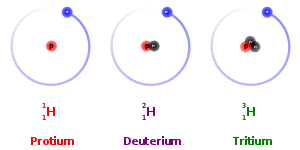
Different isotopes have...

a)

different masses

b)

different protons

c)

different electrons

19.
What word describes when water is attracted to other substances?
a)
cohesion
b)
adhesion
c)
capillary action
d)
surface tension
20.

Which of the following is LEAST likely to dissolve in water?

a)

nonpolar fats and oils

b)

polar sugar molecules

c)

salt made of a positive sodium ion and a negative chloride ion

d)

all of the substances will dissolve easily in water

21.
When water sticks to water
a)
Adhesion
b)
Cohesion
c)
Surface Tension
d)
Hydrogen Bonds
22.
Property of Water that means it can dissolve almost any substance
a)
High Specific Heat
b)
Universal Solvent
c)
Neutral pH
d)
Unique Density of Ice
23.

What type of bond is found BETWEEN water molecules?

a)

hydrogen bonds

b)

ionic bonds

c)

nonpolar covalent bonds

d)

polar covalent bonds

24.
Which end of the water molecule has a slightly positive charge?
a)
the oxygen end
b)
the hydrogen end
c)
both ends are slightly positive
d)
neither end is positive
25.
The fact that ice floats on liquid water is due to the fact that water's solid is ___________ than it's liquid form
a)
less polar
b)
more polar
c)
less dense
d)
more dense
26.
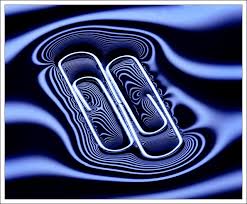
The tightness across the surface of water that enables paper clips to float is ____________.
a)
adhesion
b)
capillary action
c)
surface tension
d)
polarity
27.

Water is polar. What does that mean?

a)

it is a molecule with opposite charges on opposite ends

b)

it is a molecule with no charge

c)

it is a molecule with identical charges on opposite ends

d)

it is a molecule with too many protons
28.
Which statement explains why water molecules stick together?
a)
both sides are negative
b)
one side has a positive charge and the other side has a negative charge
c)
one side has a negative charge adn the other side has a neutral charge
d)
both sides are positive
29.
Large bodies of water help to keep nearby climates from being too hot or too cold  because they...
a)
absorb heat in the spring and slowly release that heat in the fall
b)
absorb heat in the fall and slowly release that heat in the spring
c)
absorb heat in the summer and slowly release that heat in the winter
d)
absorb heat in the winter and slowly release that heat in the summer
30.
How do covalent bonds form?
a)
Donating & receiving valence e- between atoms.
b)
Opposite slight charges attract each other between compounds.
c)
Scientists are still not sure how they form.
d)
Sharing valence e- between atoms.
31.
What two types of atoms make a covalent bond?
a)
2 Nonmetals
b)
1 Nonmetal and 1 Metal
c)
2 Metals
d)
2 Noble Gases
32.
What is a cation
a)
a metal with a negative (-) charge
b)
a non-metal with a negative (-) charge 
c)
a metal with a positive (+) charge 
d)
a non-metal with a positive (+) charge
33.

An acid

a)

is a substance that releases H+ ions when dissolved in water

b)

is a substance that does not release any ions when dissolved in water

c)

is a substance that releases OH- when dissolved in water

d)

releases an equal amount of OH- and H+ ions when dissolved in water

34.

Which of the following is the strongest acid?

a)

1

b)

5

c)

3

d)

8

35.

A base is a substance

a)

That releases OH- ions when dissolved in water

b)

That releases H+ ions when dissolved in water

c)

Does not release any ions when dissolved in water

d)

None of the above

36.
Buffer is defined as
a)
ability to resist pH change
b)
ability to prevent pH from decreasing
c)
ability to resist a pH increase
d)
ability to resist pH change when small amount of acid added
37.

Which of the following is the strongest base?

a)

4

b)

14

c)

7

d)

15

38.
The pH scale is a range from:
a)
1-7
b)
0-14
c)
1-5
d)
1-20
39.

A substance with a pH of 8 is...

a)

a weak base

b)

a weak acid

c)

a strong base

d)

a strong acid

40.

A substance with a pH of 7 is which of the following?

a)

acid

b)

base

c)

neutral

41.

What is the only substance with a neutral pH of 7?

a)

Milk

b)

Orange Juice

c)

Pure Water

d)

Blood

e)

All Water

42.

As one moves down the pH scale from 14 to 1, what happens to the concentration of H+ in the solution?

a)

concentration of H+ decreases

b)

concentration of H+ increases

c)

concentration of H+ stays the same