Wayground logo

Free Printable Worksheets

Font size

S
M
L
XL
Worksheets

Intro to Nuclear Chemistry

Total questions: 20

Worksheet time: 23mins

Name
Class
Date
1.
The time taken for half of an amount of radioactive atoms to decay.
a)
Nuclear fusion
b)
Full-life
c)
Dead time
d)
Half-life
2.
Arrange in order of increasing ability to penetrate matter.
a)
Beta, gamma, alpha
b)
Alpha, gamma, beta
c)
Gamma, beta, alpha
d)
Alpha, beta, gamma
3.
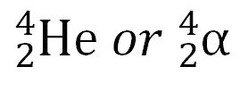
What do these symbols represent?
a)
alpha particle
b)
beta particle
c)
neutron
d)
gamma ray
4.
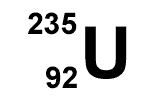
How many neutrons are in this isotope of Uranium?
a)
235
b)
92
c)
327
d)
143
5.
The type of radioactive particle that can be stopped by a sheet of paper is the ____.
a)
alpha particle
b)
beta particle
c)
gamma ray
d)
uranium
6.
This is an example of...
a)
Fission  reaction
b)
Fusion reaction
c)
Decomposition reaction
d)
Combustion
7.
How do atoms with stable nuclei differ from atoms with unstable nuclei? Nuclei is the plural of nucleus.
a)
The number of particles in stable nuclei never changes; the number of particles in unstable nuclei does change 
b)
Stable nuclei contain equal numbers of protons and neutrons; unstable nuclei do not 
c)
Stable nuclei emit electrons; unstable nuclei emit protons and neutrons 
d)
Stable nuclei can be found everywhere; unstable nuclei do not occur in nature
8.
How is nuclear fusion different from nuclear fission?
a)
In fusion, the product is a larger atomic nucleus.
b)
Fission produces energy but fusion does not.
c)
Fusion produces energy but fission does not.
d)
In fission, the product is a larger atomic nucleus.
9.
This is an example of ---
a)
Radioactive Decay
b)
Nuclear Fission
c)
Nuclear Fusion
d)
Fossil fuel reaction
10.
What happens when the number of protons in an atom changes? 
a)
The number of electrons changes too 
b)
Usually nothing happens, unless the atom is radioactive 
c)
The atomic nucleus explodes
d)
It becomes a completely different atom, with different properties 
11.
Has the highest penetrating power.  Can penetrate our body.  Even several cm thick of lead or several meters thick of concrete cannot stop all of it.
a)
Alpha
b)
Beta
c)
Gamma
12.

What is the charge of beta particles?

a)

2+

b)

-1

c)

0

d)

+1

13.

Based on the graph, determine how long it will take 1/4 of a carbon sample will remain

a)

5730 years

b)

11460 years

c)

17910 years

d)

28650 years

14.
What makes something radioactive?
a)
elements with an atomic number above 81
b)
an unstable nucleus
c)
contaminated sewage
d)
It decays over time
15.

What is a nuclide?

a)

Protons and electrons

b)

Neutrons and electrons

c)

Protons, neutrons and electrons

d)

Neutrons and protons

16.

Which has the longest wavelength?

a)

microwave

b)

radio

c)

ultraviolet

d)

infrared

17.

Which EM wave has the highest energy?

a)

Radio waves

b)

X-rays

c)

Gamma waves

d)

Ultraviolet waves

18.

What equation represents the relationship of energy to mass?

a)

x = (-b±√(b²-4ac))/(2a)

b)

e = mc2

c)

a2 + b2 = c2

d)

ax²+bx+c=0

19.

Marie Curie designed the first ........ .

a)

washing machine.

b)

mobile X-Ray machine.

c)

microwave oven.

d)

mobile phone.

20.

The radioactive decay of an element (pick all that are correct)

a)

each element has it's own half life

b)

each element decays into a new element

c)

during decay it only releases gamma particles

d)

we know the decay rates for all the radioactive elements