
 Worksheets
Unit 4: A More Perfect Union
Total questions: 60
Worksheet time: 34mins
The FIRST official government of the United States following the Revolutionary War was known as ___________________.
The Magna Carta
The Bill of Rights
The U.S. Constitution
The Articles of Confederation
Correctly finish this statement: The first U.S. government under the Articles of Confederation had many flaws, such as __________________."
No legislative branch and no power to create a military
No Congress and the states had no independence or power
No President, no way to collect taxes, & no way to pay the military
It was perfect!

What led to the failure of the Articles of Confederation?
Strong central government and effective law enforcement.
Complete independence of states from federal authority.
Weak central government and inability to enforce laws.
Universal agreement among all states on every issue.
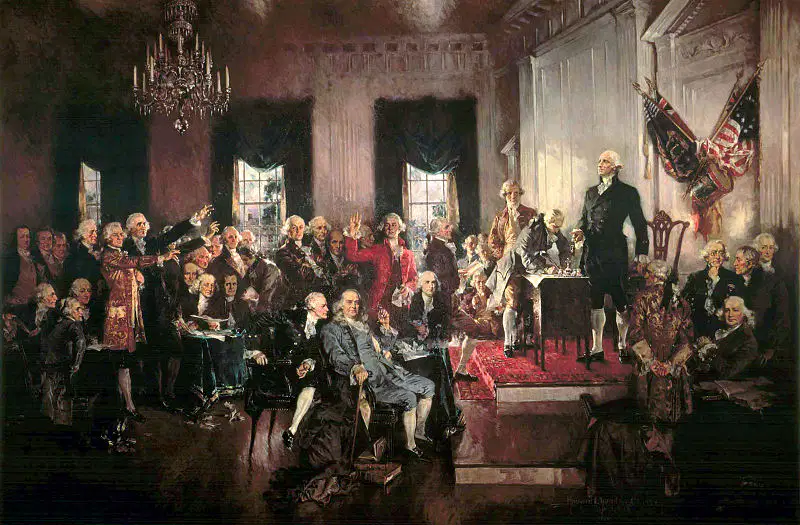
Why did the Constitutional Convention meet in 1787?
To address the weaknesses of the Articles of Confederation and create a stronger federal government.
To discuss the outcome of the Revolutionary War.
To draft a new constitution for the state of Virginia.
To celebrate the signing of the Declaration of Independence.
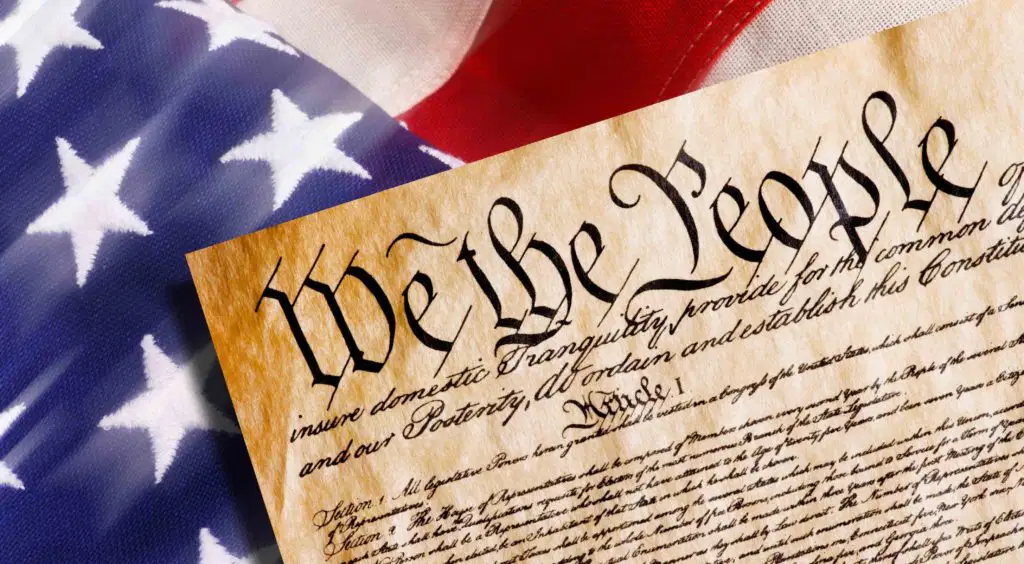
The Document that is considered "The Supreme Law of the Land"
The Bill of Rights
The Articles of Confederation
The Constitution of the United States
The Declaration of Independence

What does the Constitution do?
sets up and defines the government
draws boundaries of congressional districts
sets codes of conduct for obeying local and federal laws
determines whether citizens are prosecuted to the full extent of the law

This event led the leaders under the Articles of Confederation to believe the government was too weak and needed to be fixed
Shays' Rebellion
The Boston Tea Party
The Whiskey Rebellion
The Constitutional Convention
The New Jersey plan involved...
representation based on population diversity
representation based on equality
representation based on population size
state size
The Virginia Plan involved...
Two Presidents in the Executive Branch
A monarchy with a king
Equal Representation in each state.
Representation based on the population of each state
Large states at the Constitutional Convention prefered which plan?
New Jersey Plan
Virginia Plan
Madison Plan
New York State Plan of Union
Small states at the Constitutional Convention prefered which plan?
New Jersey Plan
Virginia Plan
Madison Plan
New York State Plan of Union
The Great Compromise settled the dispute over
The Presidential veto power
The issue of slavery
Representation in Congress
Judicial Review
The plan that combined the New Jersey & Virginia Plans and created our legislative branch was called
The Good Compromise
The Compromise
The Great Compromise
The New Virginia Plan
What were the two main issues states argued about at the Constitutional Convention?
Slavery and war debt
Debt and Shay's Rebellion
Slavery and Representation
Representation and Shay's Rebellion
The Constitution was written in what year?
1787
2001
1945
1992
What are the first 3 words of the Constitution?
We are people
We the people
We as people
We are the people
The introduction to the Constitution, known as _____________, begins with "We the People".
the Amendments
the Preamble
the Articles
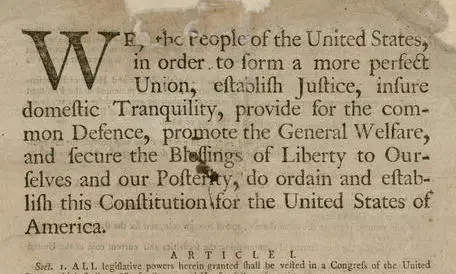
The Preamble of the United Constitution states...
To promote international trade and commerce.
The purposes for the creation of the United States government
To ensure the supremacy of one religion over others.
To establish a monarchy in the United States.
The U.S. Constitution is based on several different principles, including the idea of popular sovereignty. Popular sovereignty means that real power belongs to _______________.
Congress
The President
The Supreme Court
The People
How many branches does the government have?
25
10
3
5
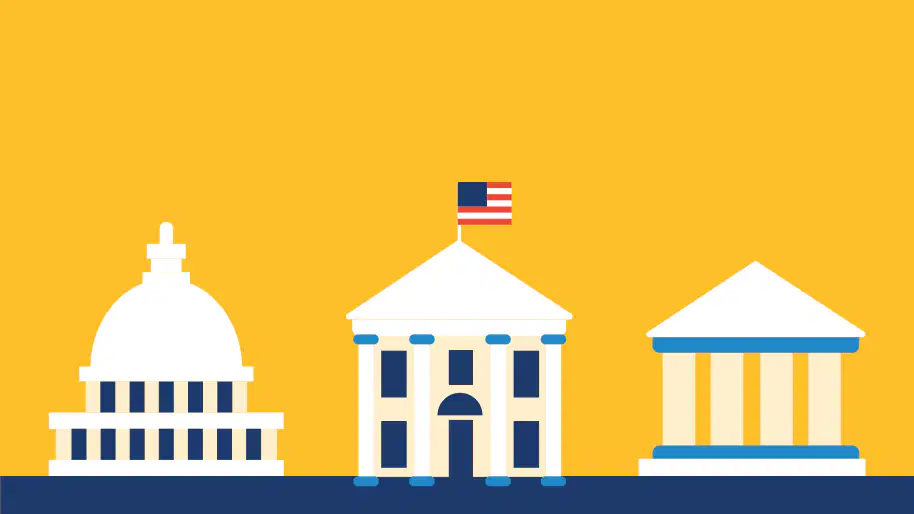
What are the three branches of government that were created by the Constitution?
Executive, Departmental, Judicial
Executive, Legislative, Judicial
Cabinet, Congress, Senate
Legislative Branch - (Congress) Passes the laws
Executive Branch - (President) Carries out and enforces the laws
Judicial Branch - (Courts) Interprets the laws
Which political principle is shown by the description above
federalism
implied powers
separation of powers
unwritten constitution
The Legislative Branch...
...is in charge of the military.
...makes sure all children go to school.
...makes the laws in our country.
...decides when Spring Break is.
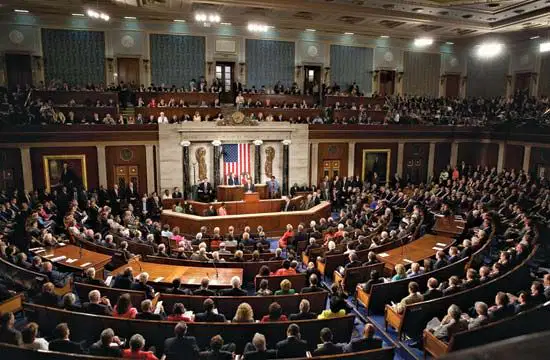
What are the two houses/chambers of the U.S. Congress?
the President and the Cabinet
the Supreme Court and the Superior Court
the U.S. Treasury and the State Department
the Senate and the House of Representatives
The Legislative Branch is made up of:
Congress and the Senate
Cabinet and Congress
House of Representatives and Congress
Senate and House of Representatives
How many chambers of congress are there?
2
4
435
270
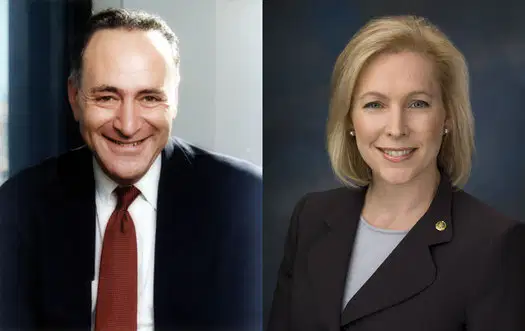
How many senators are their from each state?
Depends on population
2
100
270

How is the number of U.S. Representatives chosen for each state?
by state location
by state population
by state geographical size
by state political affiliation
The executive branch _____________ the laws
enforces
executes
creates
debates in the House of Representatives
Who is in charge of the executive branch?
the President
the Chief Justice
the Majority Leader
the Speaker of the House
The commander in chief of the armed forces currently is
Donald Trump
Barack Obama
George Bush
Joe Biden
The judicial branch ____________ the laws
makes
marks
adds to
interprets

What is the highest court in the United States?
the District Court
the Superior Court
the Supreme Court
the Municipal Court

How long is the term limit for a Supreme Court Justice?
They serve a term of 10 years.
They serve until the age of 70.
They have a term limit of 20 years.
There is no term limit; they serve for life.
What was the impact of the Marbury v Madison (1803) case?
The case gave the Supreme Court the power of judicial review, it also allowed them to make laws and passed by Congress to be unconstitutional.
The case impacted nothing
It gave the courts more powers
It allowed the judges to serve for life
What did the marbury vs madison establish?
It establish the judicial review
It establish nothing
It establish the rights of humans
judicial review
the power of the Supreme Court to decide whether laws made by the other branches are unconstitutional
the power of the Supreme Court to overturn Constitutional amendments
the power of the Supreme Court to remove an elected official from office
the power of the Supreme Court to overturn laws made by state governments
What stops one branch of government from becoming too powerful?
the military
the Bill of Rights
checks and balances
the Federal Reserve
Who vetoes bills?
the President
the Majority Leader
the President Pro Tempore
the Speaker of the House of Representatives
The sharing of powers between the federal and state governments
Shared Powers
Limits on Government
Federalism
The Constitution

Use the diagram to answer the question: Is setting up schools a National Power or State Power?
National Power
State Power

(Use the diagram) True or False: When you get a job, you only have to pay taxes to your state.
True
False
Powers shared by both the federal and state governments
Concurrent powers
Implied Powers
Enumerated Powers
Reserved Powers
Powers given only to the federal/national government
Enumerated powers
Reserved Powers
Implied Powers
Concurrent Powers
Powers given to the state government not listed in the Constitution
Enumerated powers
Reserved Powers
Concurrent
Which part of the constitution has the bill of rights
the articles
the amendments
the preamble
Ratify means:
to add
to disagree respectfully
to approve
to move
Anatomy of the Constitution: Any changes or additions to the Constitution are known as _________________.
Amendments
Preamble
Articles
The first ten amendments were added to the Constitution to
remove portions of the original Constitution
protect individual freedoms from governmental power
make changes in the election process
increase the power of the legislative branch
The only way to change or reverse an amendment...
3/4 of Congress approval
Create a New Amendment
Presidential Veto
2/3rds state overrule

Which Amendment protects people's right to speak out against the government?
1st
3rd
5th
10th
Freedom of speech, press, religion and assembly
1
4
8

Which Amendment Reserves powers for the States?
6th
1st
9th
10th
This amendment allows you to bear arms...
1
2
5
7

Which Amendment protect us from having to house or quarter soldiers?
6th
3rd
10th
5th
This Amendment requires police get a warrant to arrest you in your home.
1
3
4
5

