wayground logo

Free Printable Worksheets

Font size

S
M
L
XL
Worksheets

DNA Info

Total questions: 30

Worksheet time: 35mins

Name
Class
Date
1.

What is DNA made of?

a)

Sugar, Phosphate, nitrogen base

b)

Phosphate, Adenine, nitrogen base

c)

Thymine, Adenine, Cytomine

d)

Phosphate, Nitrogen, Adenine

2.
Adenine bonds with ______________.
a)
Guanine
b)
Thymine
c)
Cytosine
d)
Adenine
3.
Guanine bonds with ______________.
a)
Adenine
b)
Guanine
c)
Cytosine
d)
Thymine
4.

What are the 4 nitrogen bases?

a)

adenine, thymine, cytoplasm, and guanine

b)

adenine, thymine, cytosine, and guanine

c)

adenine, thymine, cytosine, and gylcerol

d)

adenine, thymine, cytosine, and glucose

5.
Which 2 molecules forms the sides (backbone) of the DNA ladder?
a)
deoxyribose and adenine
b)
deoxyribose and a hydrogen bond
c)
sugar and the nucleus
d)
deoxyribose (sugar) and phosphate
6.
Which organelle is DNA usually found in?
a)
cell membrane
b)
vacuole
c)
chloroplast
d)
nucleus
7.
Which sequence of DNA bases would pair with this partial strand
ATG TGA CAG
a)
ATG TGA CAG
b)
TAC ACT GTC
c)
GTA AGT GAC
d)
CAT TCA CTG
8.
Why is DNA important?
a)
it is very small and very complicated
b)
it's in everything
c)
it serves as the blueprint for traits of all living things
d)
because we eat it every day for energy
9.
What determines the code, or information, of a DNA molecule?
a)
the shape (structure) of the nitrogen bases
b)
the order (sequence) of the nitrogen bases
c)
the color of the nitrogen bases
d)
the frequency (number) of nitrogen bases
10.
Nitrogenous bases are joined by which type of bond?
a)
polar bonds
b)
ionic bonds
c)
covalent bonds
d)
hydrogen bonds
11.
DNA replication results in two DNA molecules,
a)
each one with two original strands
b)
each one with two new strands
c)
each one with one new strand and one original strand
d)
one with two new strands and the other with two original strands
12.

order of replication

a)

3, 2, 1, 4

b)

2, 1, 4, 3

c)

2, 3, 1, 4

d)

3, 4, 1, 2

13.
What is the correct complimentary strand for the following DNA?ATCGAG
a)
TACGAG
b)
ATCGAG
c)
TAGCTG
d)
TAGCTC
14.

What does the base 'A' pair with?

a)

A

b)

T

c)

C

d)

G

15.

What does the base 'G' pair with?

a)

A

b)

T

c)

C

d)

G

16.
What is the name of the shape of DNA?
a)
Single Helix
b)
Double Helix
c)
Double Stranded
d)
Semiconservative
17.
Which series is arranged in order from largest to smallest in size?
a)
chromosome, nucleus, cell, DNA, nucleotide
b)
cell, nucleus, chromosome, DNA, nucleotide
c)
nucleotide, chromosome, cell, DNA, nucleus
d)
cell, nucleotide, nucleus, DNA, chromosome
18.
What part of the cell cycle is the DNA in a cell's nucleus replication?
a)
Prophase
b)
Metaphase
c)
Interphase
d)
Telophase
19.
Adenine forms hydrogen bonds with which base?
a)
Guanine
b)
Thymine
c)
Cytosine
d)
Adenine
20.
Which enzyme unzips the DNA to prepare for replication?
a)
Helicase
b)
DNA Polymerase
c)
Ligase
d)
Primase
21.
A process in which DNA makes an exact copy of itself is called...
a)
Replication
b)
Translation
c)
Transcription
d)
Copying
22.
Nitrogenous bases are joined by which type of bond?
a)
Polar bonds
b)
Ionic bonds
c)
Covalent bonds
d)
Hydrogen bonds
23.
In a molecule of double-stranded DNA, the amount of Adenine present is always equal to the amount of which base?
a)
Cytosine
b)
Guanine
c)
Thymine
d)
Uracil
24.
When DNA replication is complete, which is true about the products?
a)
Each one has two original strands
b)
Each one has two new strands
c)
Each one has one new strand and one original strand
d)
One has two new strands and the other with two original strands
25.

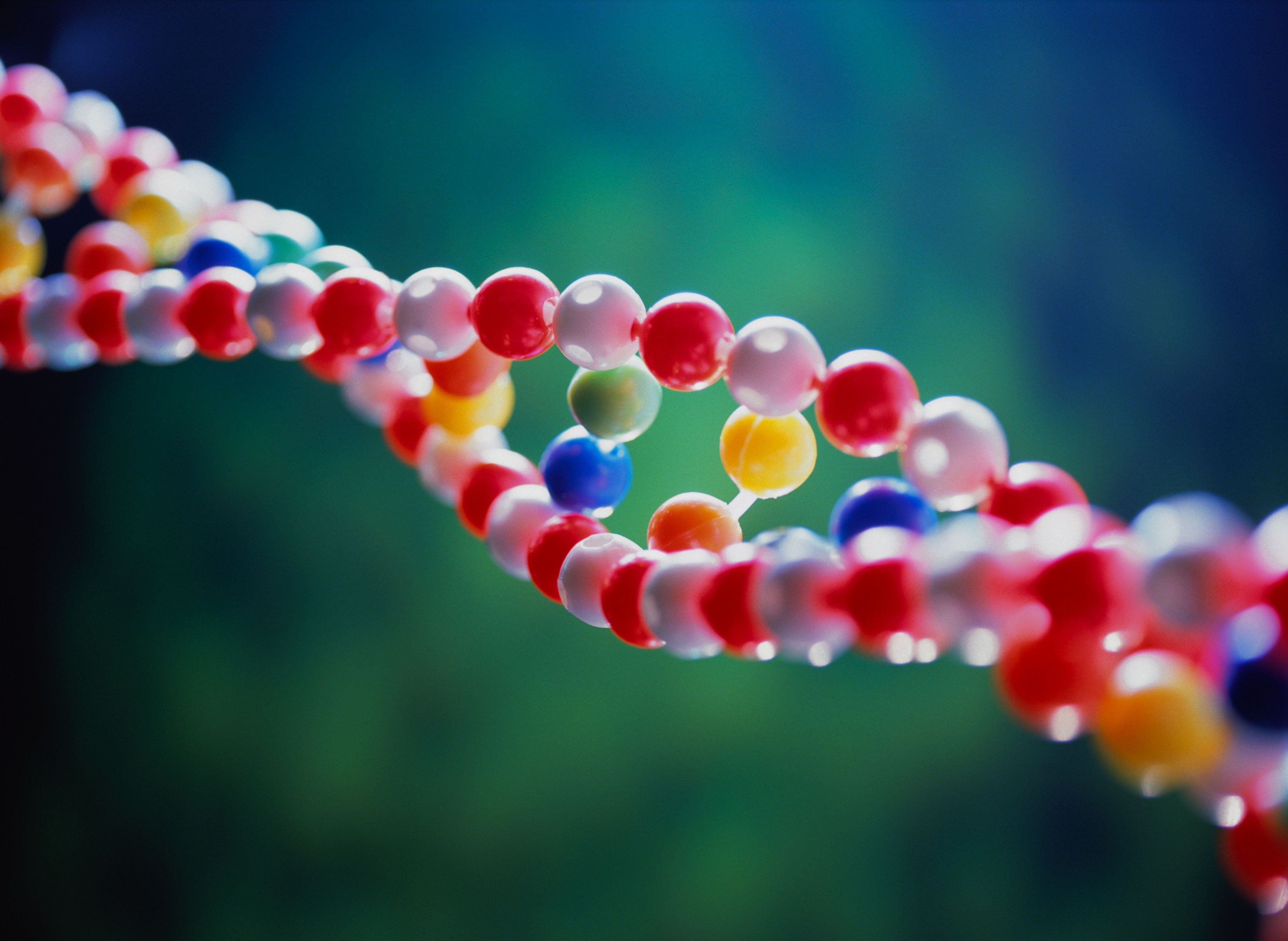
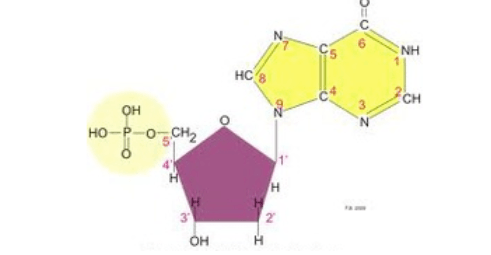
Which biomolecule is this a picture of?

a)

Protein

b)

Nucleic Acid

c)

Lipid

d)

Carbohydrate

26.
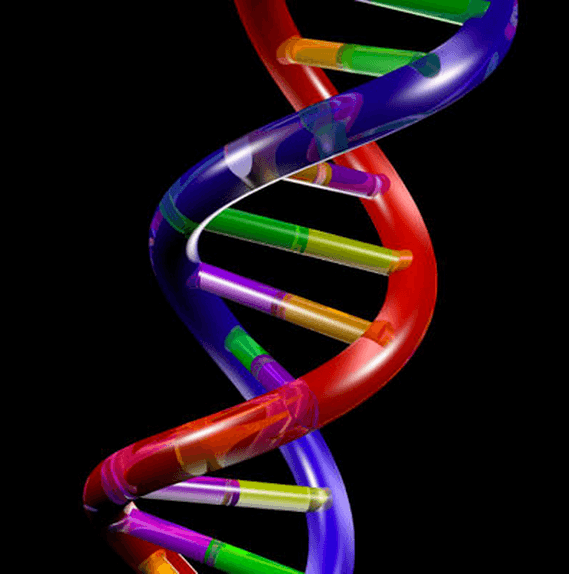
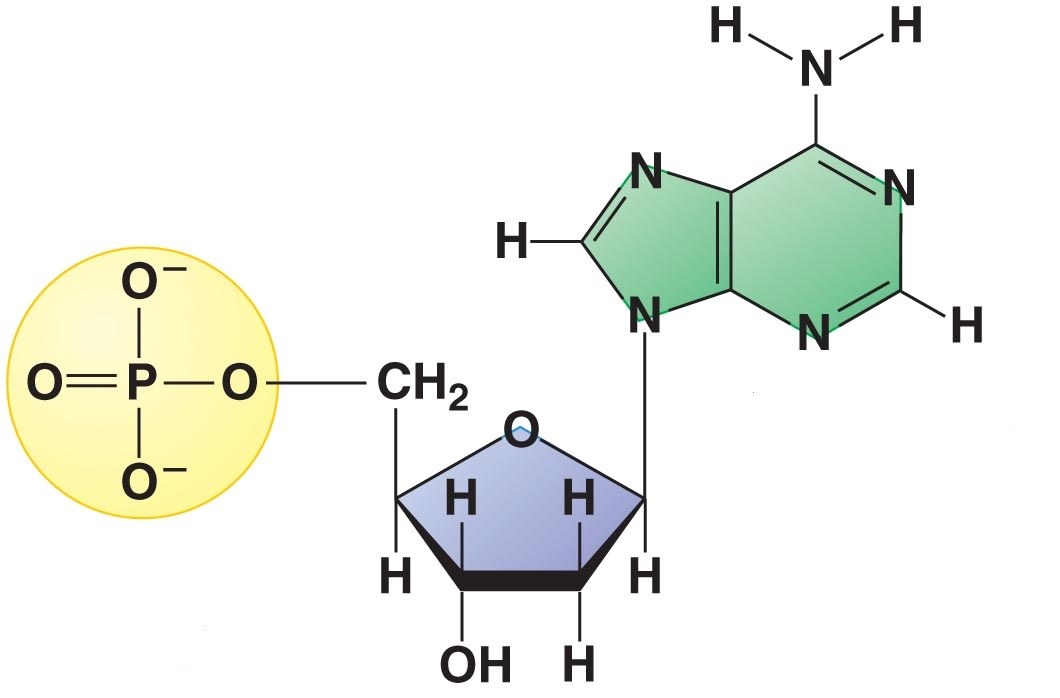
Name this structure
a)
double helix
b)
nucelotide
c)
twisted ladder
d)
hydrogen bond
27.
Guanine bonds with ______________.
a)
Adenine
b)
Guanine
c)
Cytosine
d)
Thymine
28.

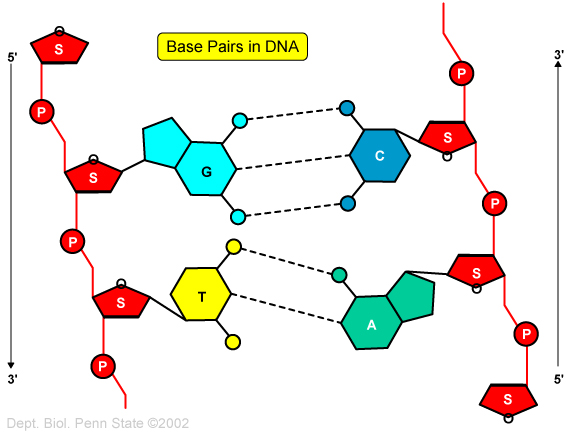
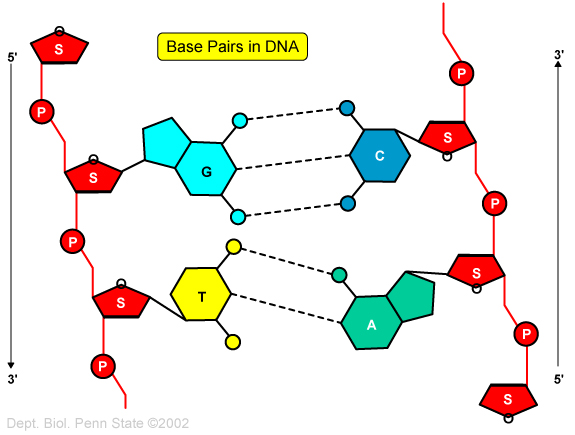
Name the part of the nucleotide with the question mark?

a)

adenine

b)

hydrogen bond

c)

deoxyribose

d)

phosphate

29.

Which letter represents the template for replication

a)

A

b)

B

c)

None of the above

30.

The semi-conservative model states

a)

a newly replicated strand will have an original and new strand

b)

a newly replicated strand will have two new strands

c)

a newly replicated strand will have a two original strands

d)

a newly replicated strand will be different than the original strand