
 Worksheets
untitled
Total questions: 139
Worksheet time: 3hrs 2mins

Which would hit the ground first if dropped from the same height in a vacuum—a feather or a metal bolt?
the feather
the metal bolt
They would hit the ground at the same time.
They would be suspended in a vacuum.
The state that exists when the only force acting on an object is gravity is called
momentum
acceleration
inertia
free fall

The more mass an object has, the faster it will fall.
Aristotle - TRUE; Galileo - TRUE
Aristotle - FALSE; Galileo - FALSE
Aristotle - TRUE; Galileo - FALSE
Aristotle - FALSE; Galileo - TRUE
What shape is Earth's orbit?
circle
ellipse
square
spiral
The law of universal gravitation is credited to whom?
Einstein
Galileo
Cavendish
Newton
Who of the following first described the shape of the earth's orbit?
Aristotle
Kepler
Galileo
Newton

Who is credited with discovering the Gravitational constant, even though he got it wrong at first for measuring edge to edge and not center to center?
Galileo
Kepler
Newton
Cavendish
The gravitational constant used in the Universal Gravitation Formula is:
6.63 x 10⁻³⁴
6.02 x 10⁻²³
6.67 x 10⁻¹¹
6.65 x 10⁻²⁹
Who came first?
Einstein
Galileo
Cavendish
Newton
Who described gravity as a field around masses?
Einstein
Galileo
Cavendish
Newton
Who was Kepler?
Scientist
Chemist
German Astronomer and mathematician
Journalist
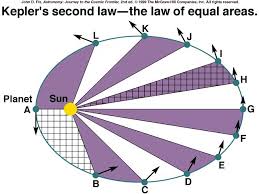
Kepler's 2nd Law deals with
the shape of the planets' orbits
the area the planet travels
the length of time/period it takes the planet to orbit the sun
What does Kepler's 1st Law state?
all planets move in elliptical shaped orbits around the sun
all ellipses have one foci
the area that a planet revolves around the sun is equal
the speed that a planet revolves around the sun changes
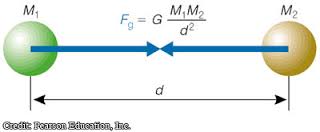
Which configuration will result in the greatest gravitational force?
small masses far apart
large masses far apart
small masses close together
large masses close together
Calculate the gravitational force between two objects when they are 0.750m apart. Each object has a mass of 5.00kg.
2.96x10⁻⁷N
3.00x10⁻⁹N
2.22x10⁻⁹N
2.23x10⁻⁸N
What would the force between them be if the distance between them were doubled?
Two spherical objects have masses of 8000 kg and 1500 kg. Their centers are separated by a distance of 1.5 m. Find the gravitational attraction between them
5.4 X 10⁻⁴ N
1.2 X 10⁷ N
3.6 X 10⁻⁴ N
5.33 N
Which configuration will result in the greatest gravitational force?
small masses far apart
large masses far apart
small masses close together
large masses close together

How is the gravitational force between to objects related to their mass
They are directly proportional
They are inversely proportional
They do not affect each other
They are equal

A 500 kg asteroid is located 3.4 x10⁷m from the center of Earth. The mass of Earth is 6.0x1024 kg. What is the gravitational force between the asteroid and Earth?
F = GMm/r2
G= 6.67 x 10⁻¹¹
1.73 x 10² N
4.63 x 10⁵ N
2.94 x 10³ N
6.42 x 10⁴ N
If I double the mass of one object, but don't change anything else... What happens to the gravitational force between two objects?
Doubles
Quadruples
Cut in Half
4x Smaller

The law of universal gravitation is credited to whom?
Einstein
Galileo
Darwin
Newton

Two asteroids exert a gravitational force, F, on each other. Some time later, the asteroids are now three times as far from each other as before. Which of the following represents the gravitational force at this distance?
F/3
F/2
F/6
F/9
Two masses m1 and m2 are separated by a distance R and gravitaional force between them is F. If the distance R is reduced to R/2 the force will now be
8F
2F
F/4
F/2
4F
What would the force between them be if the distance between them were doubled?
Two spherical objects have masses of 8000 kg and 1500 kg. Their centers are separated by a distance of 1.5 m. Find the gravitational attraction between them
5.4 X 10⁻⁴ N
1.2 X 10⁷ N
3.6 X 10⁻⁴ N
5.33 N
Which configuration will result in the greatest gravitational force?
small masses far apart
large masses far apart
small masses close together
large masses close together
How is the gravitational force between to objects related to their mass
They are directly proportional
They are inversely proportional
They do not affect each other
They are equal
If I double the mass of one object, but don't change anything else... What happens to the gravitational force between two objects?
Doubles
Quadruples
Cut in Half
4x Smaller
The law of universal gravitation is credited to whom?
Einstein
Galileo
Darwin
Newton

The number 6.67 x 10 -11 N* m2 / kg2 is called the
Universal speed constant
centripetal force
Universal Gravitational constant
Earth's Gravitational constant
Calculate the gravitational force between two objects when they are 0.750m apart. Each object has a mass of 5.00kg.
2.96x10⁻⁷N
3.00x10⁻⁹N
2.22x10⁻⁹N
2.23x10⁻⁸N
What would the force between them be if the distance between them were doubled?
Two spherical objects have masses of 8000 kg and 1500 kg. Their centers are separated by a distance of 1.5 m. Find the gravitational attraction between them
5.4 X 10⁻⁴ N
1.2 X 10⁷ N
3.6 X 10⁻⁴ N
5.33 N
How is the gravitational force between to objects related to their mass
They are directly proportional
They are inversely proportional
They do not affect each other
They are equal
The law of universal gravitation is credited to whom?
Einstein
Galileo
Darwin
Newton
How is the gravitational force between to objects related to their mass
They are directly proportional
They are inversely proportional
They do not affect each other
They are equal
The law of universal gravitation is credited to whom?
Einstein
Galileo
Darwin
Newton
Two masses m1 and m2 are separated by a distance R and gravitaional force between them is F. If the distance R is doubled the force will now be _
4F
2F
F/2
8F
F/4

Which of these two pairs of objects will have a larger gravitational force?
The top pair, because they are smaller
The bottom pair, because they are more massive
They are the same distance apart, so they will have the same force
Why does the Earth orbit the Sun instead of the Sun orbiting the Earth?
The force of the Sun's gravity is bigger than the Earth's
The force of the Earth's gravity doesn't affect the Sun
The Earth is more massive than the Sun
The Sun is more massive than the Earth
On which planet would you weigh the most?
Pluto, because it it not very massive
Earth, because it is where we live
Jupiter, because it is the most massive planet
Venus, because it has a very thick atmosphere
A comet has a very elliptical orbit (sometimes it's a long way from the Sun and sometimes it comes close to the Sun.) When do you think the comet will be moving the fastest?
When it is a long way from the Sun
When it is closest to the Sun
It will move at the same speed all the time
It changes speed based on gravity, not distance
An object in free fall seems to be ________
not moving
slowed by air resistance
sped up by air resistance
weightless

In the free-body diagram shown, which of the following is the gravitational force acting on the balloon?
5120 N
1520 N
950 N
4050 N
Kepler’s third law states that the ratio of
the orbital period to the orbital radius is the same for all planets.
the orbital periods of any two planets equals the ratio of the orbital radii.
all planets would orbit with the same orbital period.
the period squared to the radius cubed is the same ratio for all planets.

The following diagram shows two smaller planets of mass m and one larger planet of mass 4m, aligned and separated by distance d between each planet.
Planet A experiences a gravitational force by Planet C that is ______ that by Planet B.
less than
equal to
greater than
cannot be determined by the information given

Satellite B is three times more massive than Satellite A. Which satellite experiences a stronger gravitational attraction with the earth?
A due to its mass
A due to its distance
B due to its mass
B due to its distance
The size of the gravitational force between two objects depends on their ____.
Frictional Forces
inertia
masses and the distance between them
speed and direction
When calculating the gravitational force between two extended bodies, you should measure the distance
from the closest points on each body.
from the most distant points on each body.
from the center of each body.
From The center of one object and the edge of the other
In the absence of air, a penny and a feather that are dropped from the same height at the same time will ____.
fall at different rates
fall at the same rate
float
have no momentum
If gravity did NOT affect the path of a horizontally thrown ball, the ball would ____.
go straight up
fall straight down
follow a curved path
travel horizontally
Objects that are falling toward Earth in free fall move
faster and faster
slower and slower
at a constant velocity
slower then faster
An object in free fall seems to be ________
not moving
slowed by air resistance
sped up by air resistance
weightless
What two factors cause planets to move in elliptical orbits?
centripetal force and rotational capacity
inertia and gravity
mass and distance
mass and gravity
Kepler’s third law states that the ratio of
the orbital period to the orbital radius is the same for all planets.
the orbital periods of any two planets equals the ratio of the orbital radii.
all planets would orbit with the same orbital period.
the period squared to the radius cubed is the same ratio for all planets.
The following diagram shows two smaller planets of mass m and one larger planet of mass 4m, aligned and separated by distance d between each planet.
Planet A experiences a gravitational force by Planet C that is ______ that by Planet B.
less than
equal to
greater than
cannot be determined by the information given
Satellite B is three times more massive than Satellite A. Which satellite experiences a stronger gravitational attraction with the earth?
A due to its mass
A due to its distance
B due to its mass
B due to its distance

Which graph best represents the gravitational force F that a rocket experiences as it travels a distance D away from the surface of the earth? Note that RA represents the edge of the atmosphere.
A
B
C
D
A person on Pluto’s surface would experience a(n)_______________gravitational force compared to being on Earth.
weaker, because Pluto is further from the sun
weaker, because Pluto has less mass
equal, because both planets orbit the sun
stronger, because Pluto has a more elliptical orbit
Does an earth-orbiting satellite or the moon experience a greater force of gravity from the Earth?
The satellite, because it is much closer to the earth.
The moon, because it is much more massive.
They experience the same force, because they both orbit the earth.
Neither experiences a force, because they are in space.
Which of the following statements is correct about weight and mass?
Mass and weight both vary with location.
Mass varies with location, but weight does not.
Weight varies with location, but mass does not.
Neither mass nor weight varies with location.
Planets travel at _______________distances and speeds as they orbit the sun.
the same
different, faster when closer, slower when farther away
different, slower when closer, faster when farther away
the same distance but different speeds
When the earth is closest to the sun, it is ____________ and when it is farthest from the sun it is____________.
winter (January), summer (July)
summer (July), winter (December)
fall (September), spring (March)
spring (April), summer (June)

Which of the graphs shows how the force on an object changes if the mass increases and the gravitational acceleration stays constant?
A
B
C
D

Two balls are dropped at the same height. One ball is dropped from table height and the other initially moves horizontally across the table and then falls off the edge, as shown in the figure. If both balls are dropped at exactly the same time, which one will hit the ground first?
Ball A because it has the shortest distance to travel.
Ball B because it is already travelling downward.
A and B hit at same time because gravity pulls all objects the same.
In a heliocentric system, Earth revolves around
Mars
The moon
Stars
The sun
The fact that each planet’s orbit is an ellipse was discovered by
Copernicus
Kepler
Galileo
Brahe
What shape are the orbits of most comets?
long narrow ellipses
nearly circular ellipses
circles
spherical
Copernicus explained that
the sun is at the center of the system of planets.
the sun and the planets revolve around Earth.
the geocentric system is correct.
there are only six planets.
The size of the gravitational force between two objects depends on their ____.
Frictional Forces
inertia
masses and the distance between them
speed and direction
When calculating the gravitational force between two extended bodies, you should measure the distance
from the closest points on each body.
from the most distant points on each body.
from the center of each body.
From The center of one object and the edge of the other
Why does an astronaut weigh less on the moon than on Earth?
The astronaut has less mass on the moon.
The astronaut is farther from Earth’s center when he or she is on the moon.
The gravitational field strength is less on the moon’s surface than on Earth’s surface.
The astronaut is continually in free fall because the moon orbits Earth.
In the absence of air, a penny and a feather that are dropped from the same height at the same time will ____.
fall at different rates
fall at the same rate
float
have no momentum
If gravity did NOT affect the path of a horizontally thrown ball, the ball would ____.
go straight up
fall straight down
follow a curved path
travel horizontally
Which of the following statements applies to the motion of a ball rising and then falling in free fall?
I. The ball has constant acceleration as it moves upward.
II. The ball has zero acceleration at the very top of its path.
III. The ball has constant acceleration as it moves downward.
I only
III only
I and III
I, II, and III
Objects that are falling toward Earth in free fall move
faster and faster
slower and slower
at a constant velocity
slower then faster
An object in free fall seems to be ________
not moving
slowed by air resistance
sped up by air resistance
weightless
In the free-body diagram shown, which of the following is the gravitational force acting on the balloon?
5120 N
1520 N
950 N
4050 N

In the figure shown, according to Kepler’s laws of planetary motion,
A1=A2
Δt1 > Δt2.
if Δt1 = Δt2, then the orbit is circular.
if Δt1 = Δt2, then A1 = A2.
Kepler’s second law states that a line connecting a planet to the sun
is longest in the winter and shortest in the summer.
is longest in the winter and shortest in the summer.
sweeps out the same amount of area in any two equal periods of time.
sweeps out the same amount of area regardless of the planet.
What two factors cause planets to move in elliptical orbits?
centripetal force and rotational capacity
inertia and gravity
mass and distance
mass and gravity
Kepler’s third law states that the ratio of
the orbital period to the orbital radius is the same for all planets.
the orbital periods of any two planets equals the ratio of the orbital radii.
all planets would orbit with the same orbital period.
the period squared to the radius cubed is the same ratio for all planets.
The following diagram shows two smaller planets of mass m and one larger planet of mass 4m, aligned and separated by distance d between each planet.
Planet A experiences a gravitational force by Planet C that is ______ that by Planet B.
less than
equal to
greater than
cannot be determined by the information given
Satellite B is three times more massive than Satellite A. Which satellite experiences a stronger gravitational attraction with the earth?
A due to its mass
A due to its distance
B due to its mass
B due to its distance
Which graph best represents the gravitational force F that a rocket experiences as it travels a distance D away from the surface of the earth? Note that RA represents the edge of the atmosphere.
A
B
C
D
A person on Pluto’s surface would experience a(n)_______________gravitational force compared to being on Earth.
weaker, because Pluto is further from the sun
weaker, because Pluto has less mass
equal, because both planets orbit the sun
stronger, because Pluto has a more elliptical orbit
Does an earth-orbiting satellite or the moon experience a greater force of gravity from the Earth?
The satellite, because it is much closer to the earth.
The moon, because it is much more massive.
They experience the same force, because they both orbit the earth.
Neither experiences a force, because they are in space.
Which of the following statements is correct about weight and mass?
Mass and weight both vary with location.
Mass varies with location, but weight does not.
Weight varies with location, but mass does not.
Neither mass nor weight varies with location.
Planets travel at _______________distances and speeds as they orbit the sun.
the same
different, faster when closer, slower when farther away
different, slower when closer, faster when farther away
the same distance but different speeds
When the earth is closest to the sun, it is ____________ and when it is farthest from the sun it is____________.
winter (January), summer (July)
summer (July), winter (December)
fall (September), spring (March)
spring (April), summer (June)
Which of the graphs shows how the force on an object changes if the mass increases and the gravitational acceleration stays constant?
A
B
C
D
Two balls are dropped at the same height. One ball is dropped from table height and the other initially moves horizontally across the table and then falls off the edge, as shown in the figure. If both balls are dropped at exactly the same time, which one will hit the ground first?
Ball A because it has the shortest distance to travel.
Ball B because it is already travelling downward.
A and B hit at same time because gravity pulls all objects the same.
In a heliocentric system, Earth revolves around
Mars
The moon
Stars
The sun
The fact that each planet’s orbit is an ellipse was discovered by
Copernicus
Kepler
Galileo
Brahe
What shape are the orbits of most comets?
long narrow ellipses
nearly circular ellipses
circles
spherical
Copernicus explained that
the sun is at the center of the system of planets.
the sun and the planets revolve around Earth.
the geocentric system is correct.
there are only six planets.

