
 Worksheets
Motion Graphs
Total questions: 42
Worksheet time: 1hrs 6mins

During which segment did the car come to a complete stop?
Segment A to B
Segment B to C
Segment C to D
Segment D to E
During which segment did the car travel back toward its starting position?
Segment A to B
Segment B to C
Segment C to D
Segment D to E
During which segment did the car travel the fastest?
Segment A to B
Segment B to C
Segment C to D
Segment D to E
What distance had the car traveled at 10 hours?
60km
50km
60
50
The two variables used in the graph are:
speed and time
distance and time
going fast and slowing down
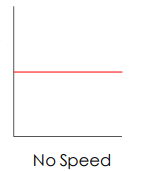
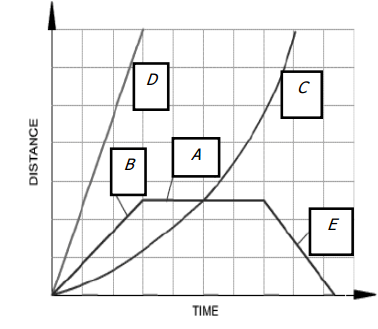
Which position vs time graph shows no speed?

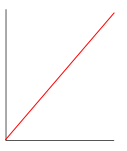
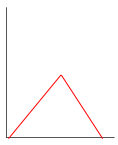
Which position vs time graph shows a constant positive speed?

Which runner accelerated the fastest at the start of the race?
Runner A
Runner B
Runner C
Which runner ran at a constant speed
Runner A
Runner B
Runner C
Which runner won the race?
Runner A
Runner B
Runner C
Which runner had a bad start to his race?
Runner A
Runner B
Runner C
What was runner A's speed at 15 sec?
150
10
10 m/s
150 m/s
What was runner C's speed between 5 sec and 15 sec?
15 m/s
10 m/s
5m/s
0 m/s

Choose the description that best describes this motion graph.
The object is accelerating at an increasing rate.
The object is moving at a constant velocity/speed.
The object moved at a constant speed, then stopped. After stopping, it returned to the beginning and then moved back in the original direction at a very fast constant speed.

Choose the description that best describes this motion graph.
The object is accelerating at an increasing rate.
The object is moving at a constant velocity/speed.
The object moved at a constant speed, then stopped. After stopping, it returned to the beginning and then moved back in the original direction at a very fast constant speed.
A vector is a quantity with... (choose all that apply)
magnitude
mass
direction
speed
Match the following quantities to their units.
displacement
meters
velocity
m/s
time
sec
Which of the following are two examples of vectors?
force, distance
speed, mass
time, acceleration
velocity, displacement
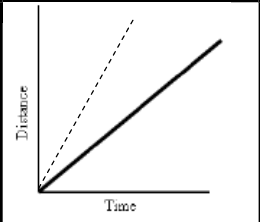

The position vs. time graph shows:
positive velocity that's getting faster
negative velocity that's getting faster
negative velocity that's getting slower
positive velocity that's getting slower

The position vs. time graph shows:
positive velocity that's getting faster
negative velocity that's getting faster
negative velocity that's getting slower
positive velocity that's getting slower

The position vs. time graph shows:
positive velocity that's getting faster
negative velocity that's getting faster
negative velocity that's getting slower
positive velocity that's getting slower

The velocity vs time graph shows
positive velocity that's getting faster
negative velocity that's getting faster
negative velocity that's getting slower
positive velocity that's getting slower

The velocity vs time graph shows
positive velocity that's getting faster
negative velocity that's getting faster
negative velocity that's getting slower
positive velocity that's getting slower

Select the description of motion from A - B.
Slowing down away from the origin
Speeding up away from the origin
Constant velocity away from the origin
Constant velocity towards the origin

What segment of the graph shows no motion, or standing still?
A - B
B - C
C - D
None

Describe the motion from B - C.
Standing still
Constant velocity of 60 m/min
Constant velocity of 0 m/min
Accelerating

Describe motion of C - D.
Constant velocity away from the origin
Slowing down away from the origin
Slowing down away from the origin and then slowing down towards the origin
Slowing down moving toward the origin and then speeding up moving away from the origin


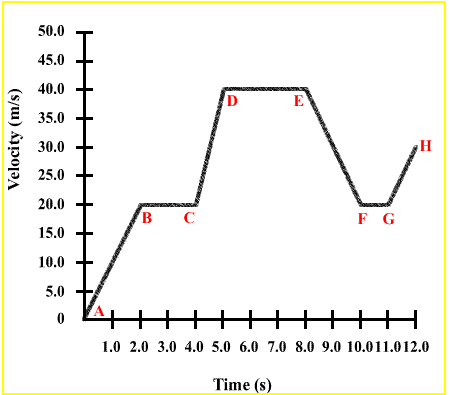

How fast is this object going at 1 second?
20 cm/s
30 cm/s
-40 cm/s
The slope of a velocity-time graph represents __________.
acceleration
displacement
speed
distance
Select the description of motion from A - B.
Slowing down away from the origin
Speeding up away from the origin
Constant velocity away from the origin
Constant velocity towards the origin

Select the two correct statements that describe the object's motion.
The object is moving in the positive direction.
The object is moving in the negative direction.
The object is moving at a constant speed.
The object is speeding up.
The object is slowing down.

Select the two correct statements that describe the object's motion.
The object is moving in the positive direction.
The object is moving in the negative direction.
The object is moving at a constant speed.
The object is speeding up.
The object is slowing down.

Select the two correct statements that describe the object's motion.
The object is moving in the positive direction.
The object is moving in the negative direction.
The object is moving at a constant speed.
The object is speeding up.
The object is slowing down.

