wayground logo

Free Printable Worksheets

Font size

S
M
L
XL
Worksheets

Heredity

Total questions: 36

Worksheet time: 1hrs 16mins

Name
Class
Date
1.
T - tall and t = short
In the punnett square below, what belongs in the missing square
a)
tt
b)
Tt
c)
Bb
d)
TT
2.
B = brown fur  b = white fur
In the punnett square, what is the probability for white fur? 
a)
0%
b)
25%
c)
50%
d)
75%
3.
In plants, tall (T) is dominant to short (t). Perform the following cross: Tt x Tt. What is the probability of producing a short plant?
a)
0%
b)
25%
c)
50%
d)
75%
4.
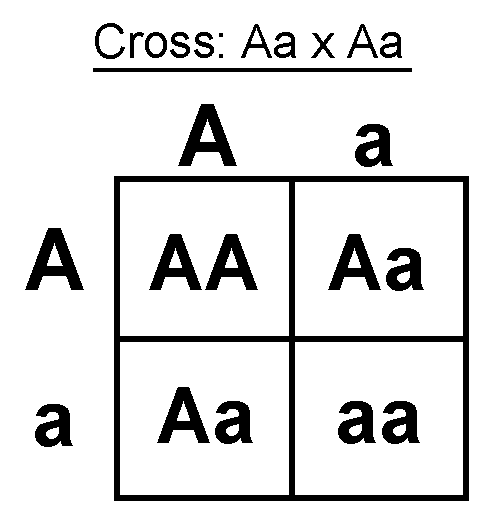
What is the probability of heterozygous offspring?
a)
25%
b)
50%
c)
0%
d)
100%
5.
What allele combination should go in the missing box?
a)
AA
b)
Aa
c)
aa
d)
none of these
6.
In a flowering plant species, red flower color (R) is dominant over white flower color (r). What is the genotype of any red-flowering plant resulting from this species?
a)
rr
b)
R
c)
RR
d)
RR or Rr
7.
What is the phenotype of the offspring? (A-Brown hair; a-blond hair) 
a)
50 % Brown Hair and 50% Blond Hair 
b)
25 % Brown Hair and 75% Blond Hair 
c)
75 % Brown Hair and 25% Blond Hair 
d)
0% Brown Hair and 100% Blond Hair 
8.
AA and Aa always show up as
a)
dominant
b)
recessive
9.
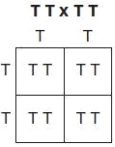
What ratio of the offspring from the cross shown will be homozygous recessive for the  trait of tallness? 
a)
0 in 4
b)
1 in 4
c)
2 in 4
d)
4 in 4
10.
Which of the following genotypes is homozygous dominant?
a)
A
b)
Aa
c)
AA
d)
aa
11.
Which of the following genotypes is heterozygous?
a)
Bb
b)
BB
c)
bb
d)
B
12.
In a heterozygous genotype, the ___________ allele takes over in the phenotype.
a)
recessive
b)
dominant
c)
lower case letter
d)
both 
13.
What you see, or the physical appearance.
a)
Genotype
b)
Phenotype
c)
Homozygous
d)
Heterozygous
14.
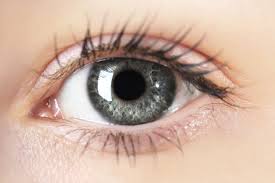
B = brown eyes
b = blue eyes
What is true about these two brothers that have brown eyes?
One has genotype BB the other Bb.
a)
they have same phenotype and genotype
b)
they have different genotypes and phenotypes
c)
they have same phenotype but different genotypes
d)
they have same genotype but different phenotypes
15.
Aa is
a)
homozygous
b)
heterozygous
16.
Which of the following is homozygous recessive?
a)
Tt
b)
tt
c)
TT
d)
T
17.
Dominant alleles are represented by a:
a)
Male gene
b)
lowercase letter
c)
recessive trait
d)
capital letter
18.
In pea plants, the tall allele is dominant to the short allele. What key would demonstrate this?
a)
Tall = T
Short = S
b)
Tall = T
Short = t
c)
Tall = t
Short = T
d)
Tall = TT
Short = tt
19.
A heterozygous long-tusked elephant is crossed with a homozygous recessive short-tusked elephant. What is the probability of the offspring having short tusks?
a)
0%
b)
25%
c)
50%
d)
75%
20.
What is the probability of a purple-horned unicorn if a heterozygous pink-horned unicorn is crossed with a heterozygous pink-horned unicorn?
a)
0%
b)
25%
c)
50%
d)
75%
21.

Why do scientist use Punnett Squares?

a)

A tool scientist use to to see alleles

b)

A tool scientist use to see which alleles are dominant

c)

A tool scientist use to determine possible genotypes for offspring
22.

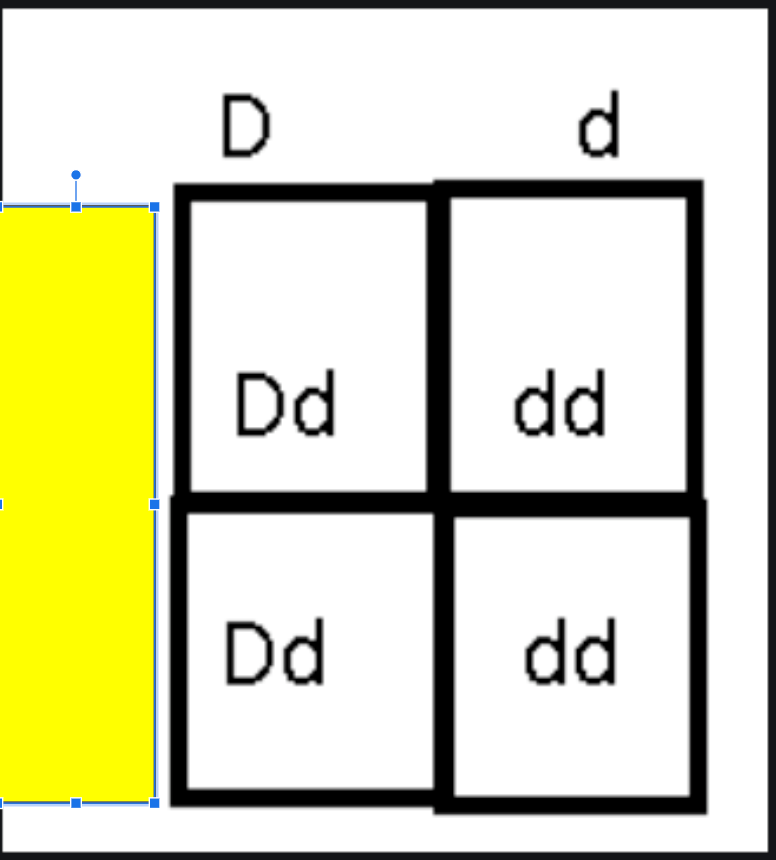
What is the mother's genotype?

a)

DD

b)

Dd

c)

dd

23.

Who is Gregor Mendel

a)

an Austrian Monk from the mid 1800s who contributed to the study of Genetics

b)

The scientist who discovered the structure of DNA

c)

a British scientist who discovered penicillin

d)

The scientist who used X-Ray Crystallography to shed light on the structure of DNA

24.

What did Gregor Mendel study?

a)

Mold Spores

b)

Pea Plants

c)

Sun Flowers

d)

Rats

25.

the science that studies how traits are inherited through the interactions of alleles

a)

heredity

b)

genetics

c)

biology

26.

the passing of traits from parent to offsprint

a)

heredity

b)

genetics

c)

botany

27.

the genetic make-up; the actual gene pair

a)

genotype

b)

phenotype

28.

the physical or visible appearance of an organism; a trait we can see

a)

genotype

b)

phenotype

29.

purebred; the same gene pair

a)

homozygous

b)

heterozygous

30.

hybrid; a different gene pair

a)

homozygous

b)

heterozygous

31.

the father of genetics

a)

James Watson

b)

Robert Hooke

c)

Gregor Mendel

d)

Reginald Punnett

32.

a tool used to predict the results from crossing 2 sets of allelles

a)

microscope

b)

Punnett square

c)

Jawsome trapezoid

33.

The different forms of a gene

a)

Genes

b)

Variants

c)

Variation Forms

d)

Alleles

34.

How many PAIRS of chromosomes do we have?

a)

49

b)

23

c)

120

d)

26

35.

The structure in the nucleus that contains the DNA

a)

gene

b)

chromosome

c)

genotype

d)

trait

36.

The different variations of a gene. Letters are used to represent each version.

For example: B - brown or b - blue

a)

genes

b)

alleles

c)

trait

d)

phenotype