wayground logo

Free Printable Worksheets

Font size

S
M
L
XL
Worksheets

Patterns of Inheritance Review

Total questions: 79

Worksheet time: 1hrs 17mins

Name
Class
Date
1.

What is a trait?

a)

A physical characteristic passed down from your mom

b)

A behavioral characteristic passed down from your dad

c)

A physical or behavioral characteristic passed down from your parents

d)

A behavioral characteristic passed down by your mom

2.

What is an allele?

a)

A trait

b)

Different forms of a gene

c)

DNA

d)

Different types of parents

3.

What is a genotype?

a)

Pair of alleles that determine a specific trait

b)

Observable physical trait

c)

A trait that is observed with only one copy of an allele

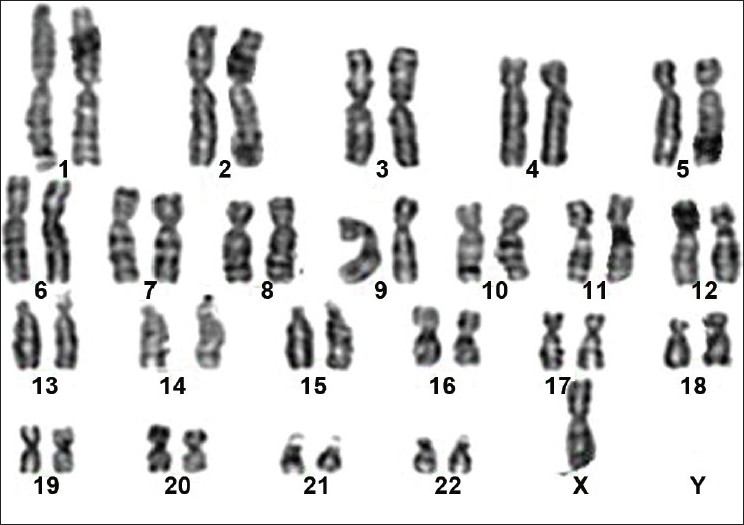
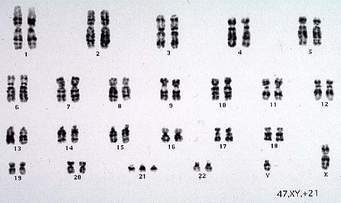
4.

What is a phenotype?

a)

Pair of alleles that determine a trait

b)

Observable physical trait

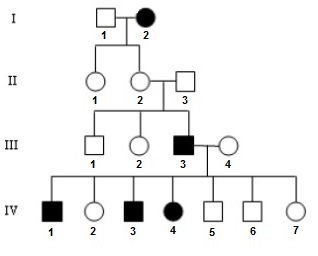
c)

Different forms of a gene

5.

What is a dominant gene?

a)

A trait that is observed when there are one OR two copies of the allele

b)

A trait that is observed only when there are two copies of the allele

c)

A trait that can be hidden in a generation

6.

A person who is homozygous for a trait can have a genotype of....

a)

AA, Aa

b)

Aa, aa

c)

AA, aa

d)

aa

7.

If a person is heterozygous for a trait, their genotype can be...

a)

Aa

b)

AA, aa

c)

AA, Aa

d)

AA

8.

If "B" represents brown hair, and "b" represents blond hair, what will the genotype be for a homozygous brown haired person?

a)

BB

b)

Bb

c)

bb

9.

If "B" is brown and "b" is blond, what is the phenotype of someone who's genotype is "bb"

a)

Brown Hair

b)

Blond Hair

c)

Red Hair

10.

P= purple petals and p= white petals. What genotype(s) would result in purple petals?

a)

pp

b)

Pp, pp

c)

PP, Pp

d)

PP, pp

11.

How many copies of the recessive gene must there be for that phenotype to show up?

a)

1

b)

2

c)

3

d)

4

12.

What is the missing pairing?

a)

AA

b)

Aa

c)

aa

13.

Using the Punnett Square, identify the correct Genotypic ratio

a)

2:2:1

b)

1:2:1

c)

2:1:1

d)

1:1:1

14.
How is meiosis related to sexual reproduction?
a)
Meiosis allows the offspring produced during sexual reproduction to grow and develop.
b)
Meiosis joins together the sex cells during sexual reproduction to produce new offspring
c)
Meiosis produces the sex cells that join to form new offspring during fertilization.
d)
Meiosis produces the body cells that join to form new offspring during fertilization. 
15.

What stage of the cell cycle is this?

a)

Prophase 1

b)

Anaphase 2

c)

Metaphase 1

d)

Prophase 2

16.

What phase of the cell cycle is this?

a)

anaphase 2

b)

metaphase 1

c)

prophase 1

d)

telophase 2

17.
What you see, or the physical appearance.
a)
Genotype
b)
Phenotype
c)
Homozygous
d)
Heterozygous
18.

Aa, DD, Ba, and yy are all examples of ---

a)

genotypes

b)

phenotypes

19.
Which of the following is homozygous dominant?
a)
Yy
b)
Y
c)
yy
d)
YY
20.
What allele combination should go in the missing box?
a)
AA
b)
Aa
c)
aa
d)
none of these
21.
In the punnett square shown, what must the genotype of the missing parent be?
a)
BB
b)
Bb
c)
bb
d)
Tt
22.

How do you classify the following genotype : AA

a)

Homozygous Dominant

b)

Homozygous Recessive

c)

Heterozygous

23.

If Purple Flowers (P) are dominant over white flowers (p), what would the phenotype be for a Pp genotype?

a)

Purple flowers

b)

White flowers

c)

Not enough information

24.

If straight hair (S) is dominant to curly hair (s) - what are the possible Genotype(s) for curly hair?

a)

ss only

b)

SS only

c)

SS or Ss

d)

Curly Hair

e)

Straight Hair

25.

Different forms of a gene are called...

a)

chromosomes

b)

DNA

c)

gene

d)

alleles

26.

A segment of DNA that codes for a trait is called a(n)...

a)

chromosome

b)

DNA

c)

gene

d)

allele

27.

Bb is a _________________________ genotype.

a)

homozygous

b)

heterozygous

28.

Look at the Punnett Square. What is the probability the offspring will be short? (T - tall, t - short)

a)

25%

b)

50%

c)

75%

d)

100%

29.

Which statement about the Punnett Square is true?

a)

The parents are homozygous dominant

b)

The parents are homozygous recessive

c)

The parents are heterozygous

d)

One parent has the dominant trait and one parent has the recessive trait

30.

Ends with diploid number of chromosomes

a)

Mitosis

b)

Meiosis

c)

Both

31.

Involves crossing over

a)

Mitosis

b)

Meiosis

c)

Both

32.

Produces four cells

a)

Mitosis

b)

Meiosis

c)

Both

33.

produces identical daughter cells

a)

Mitosis

b)

Meiosis

c)

Both

34.

forms gametes

a)

Mitosis

b)

Meiosis

c)

Both

35.

produces haploid cells

a)

Mitosis

b)

Meiosis

c)

Both

36.
A human usually has xx amount of chromosomes.
a)
6
b)
22
c)
4
d)
46
37.
What causes genetic variation in meiosis?
a)
chromosomes lining up
b)
crossing over of chromosomes
c)
separation of chromosomes
d)
chromosomes pulling apart
38.
Look carefully at the diagram.  Then identify the phase of meiosis this is.
a)
anaphase II
b)
metaphase II
c)
metaphase I
39.
Which of the following cell types is formed by meiosis?
a)
muscle cells
b)
skin cells
c)
sperm cells
d)
blood cells
40.
Which cellular process is shown?
a)
meiosis
b)
endocytosis
c)
mitosis
d)
phagocytosis
41.

In humans, the haploid number of chromosomes is ____.

a)

23

b)

46

c)

69

d)

92

42.
a)
This karyotype shows Trisomy 21
b)
This karyotype has no abnormality
c)
This karyotype is missing a sex chromosome (monosomy x)
d)
This karyotype is from a gamete
43.
Based on the Karyotype shown, at which chromosome pair can we identify a genetic disorder? 
a)
Chromosome pair 5
b)
sex chromosomes
c)
Chromosome pair 21
d)
There are no chromosomal disorders
44.
Which statement is NOT true about Karyotypes
a)
Chromosomes (pairs 1-22) are arranged by size
b)
Sex chromosomes are found at the end
c)
A normal karyotype has 46 chromosomes or 23 pairs
d)
Having missing or extra chromosomes does not indicate a disorder
45.
Nondisjunction can result in 
a)
trisomy conditions
b)
monosomy conditions
c)
additional sex chromosomes
d)
all of these
46.
When chromosomes fail to separate correctly during anaphase of meiosis, what can occur?
a)
extra chromosomes are found in the sex cell
b)
chromosomes of the sex cell are doubled
c)
chromosomes of the sex cell are halved
d)
meiosis never completes
47.

What would you call the failure of one or more pairs of homologous chromosomes or sister chromatids to separate normally during meiosis?

a)

nondisjunction

b)

anaphase I

c)

nondiploidy

d)

karyotype

48.
How many generations are shown in this pedigree?
a)
1
b)
2
c)
3
d)
4
49.
How many kids did the mother and father from the first generation have?
a)
2
b)
4
c)
5
d)
6
50.
This pedigree represents the inheritance of hemophilia in this family. How many of the females have the hemophilia trait?
a)
8
b)
5
c)
2
d)
3
51.
What do half colored symbols represent?
a)
The individual is a carrier (heterozygous).
b)
The individual expresses the trait.
c)
The individual has both recessive alleles.
d)
The individual has both dominant alleles.
52.
What does an open circle represent?
a)
Not Affected Male
b)
Not Affected Female
c)
Affected Male
d)
Affected Female
53.
T2 - The Law of Segregation explains why, if you start with 46 choromosomes, Meiosis produces cells with how many chromosomes?
a)
44
b)
22
c)
46
d)
23
54.
T2 - Which law states that organisms inherit 2 copies of each gene and donate one to their offspring
a)
law of independent assortment
b)
law of segregation
c)
law of genetic linkage
d)
law of inheritance
55.
T2 - Recessive alleles may not be expressed because they are
a)
masked by the dominant allele
b)
the least common allele in the population
c)
the most common allele in the population
d)
less likely to having crossing over
56.
T2 - Based on the picture of Mendel's experiment, which of Mendel's Laws could you propose?
a)
Law 1, The Law of Dominance
b)
Law 2, The Law of Segregation
c)
Law 3, The Law of Independent Assortment
d)
Both Law 1 and Law 2
57.
T2 - Which observation of dihybrid crosses led to Mendel's law of independent assortment
a)
Particular individual traits persisted for many generations
b)
Many combinations of traits were always inherited together
c)
Some combinations of traits were not passed onto offspring
d)
The presence of one trait didn't affect the presence of another
58.

every individual has two alleles of each gene and when gametes are produced, each gamete receives one of these alleles

a)

law of segregation

b)

law of independent assortment

c)

law of the west

d)

constitutional law

59.

different traits are inherited independently of each other

a)

law of independent assortment

b)

law of segregation

c)

inheritance law

d)

law of gravity

60.
The term for the different forms of a trait. 
a)
DNA
b)
Chromosomes
c)
Genes
d)
Alleles
61.
The genetic makeup of a trait.  (The letters represent this)
a)
Genes
b)
Phenotype
c)
Genotype
d)
Characteristics
62.
The law that states that when an organism is hybrid for a pair of contrasting traits, the dominant trait is the one that is shown. 
a)
Law of Dominance
b)
Law of Independent Assortment
c)
Law of of Segregation
d)
Law of Incomplete Dominance
63.

A mosquito has 6 chromosomes. How many chromosomes would their egg and sperm cells have?

a)

2

b)

3

c)

6

d)

12

64.

Which of the following concepts explains how siblings can look different from one another (select all that apply)?

a)

Mitosis

b)

Meiosis

c)

law of independent assortment

d)

fertilization

e)

DNA replication

65.

According to the Law of Independent Assortment...

a)

The alleles for one trait determine the inheritance of another trait

b)

Certain traits are inherited together

c)

The arrangement of chromosomes for one trait can affect the arrangement of chromosomes for another trait

d)

Traits are inherited independently of one another

66.

In pea plants, round seeds (R) are dominant to wrinkled seeds (r). Which of the following represents the genotype of a pea plant that is heterozygous?

a)

RR

b)

round

c)

Rr

d)

wrinkled

e)

rr

67.

In pea plants, round seeds (R) are dominant to wrinkled seeds (r). Which of the following represents the genotype of a pea plant that is homozygous dominant?

a)

RR

b)

round

c)

Rr

d)

wrinkled

e)

rr

68.

In mice, black fur (B) is dominant to white fur (b). According to the Punnett square shown, how many offspring would be black?

a)

0

b)

1

c)

2

d)

3

e)

4

69.
B = brown eyes
b = blue eyes
What is true about these two brothers that have brown eyes?
One has genotype BB the other Bb.
a)
they have same phenotype and genotype
b)
they have different genotypes and phenotypes
c)
they have same phenotype but different genotypes
d)
they have same genotype but different phenotypes
70.
If you have a parent who has GgBb as their genotype, what are the possible alleles they could donate to their gametes?
a)
GB, Gb, gB, gb
b)
GB, GB, gb, gb
c)
Gb, Gb, Gb, GB
d)
GG, BB, gg, bb
71.
T4 - Black fur in mice (B) is dominant to brown fur (b). Short tails (T) are dominant to long tails (t). What percentage of the offspring of the cross BbTt x BBtt will have black fur and long tails?
a)
0%
b)
25%
c)
50%
d)
100%
72.
T4 - What genotype is missing from this Punnett Square?
a)
RrYy
b)
RRYY
c)
rryy
d)
RrYY
73.
Assume mom's gametes are on the left, what is her genotype?
a)
TTZz
b)
TtZz
c)
ttZZ
d)
TtZZ
74.
This is an example of a ______________.
a)
phenotype
b)
genotype
c)
xenotype
d)
base pairs
75.

A condition in which both alleles for a gene are expressed so that both traits are visible is known as ---

a)

Codominance

b)

Incomplete dominance

76.

What type of inheritance pattern is shown here?

a)

Codominance

b)

Incomplete dominance

77.

This is an example of ---

a)

Incomplete dominance

b)

Codominance

78.

What does this Punnett square and the probabilities of the ofspring represent?

a)

incomplete dominance

b)

codominance

79.

Some flowers are controlled by codominance. Red flowers (FRFR), blue flowers (FBFB) and Speckled flowers (FRFB).


Cross a red flower with a speckled flower. What is the phenotypic ratio?

a)

50% red, 50% speckled

b)

25% red, 25% blue

c)

100% blue