wayground logo

Free Printable Worksheets

NEW

Font size

S
M
L
XL
Worksheets

Biology-Complex Inheritance and Human Heredity

Total questions: 74

Worksheet time: 1hrs 20mins

Name
Class
Date
1.

Diagrammed family history that is used to study inheritance patterns of a trait through several generations and that can be used to predict disorders in future offspring.

a)

Pedigree

b)

Carrier

c)

Autosome

d)

Karyotype

2.

Cell division in which the sister chromatids do not deperate correctly in gametes with an abnormal number if chromosomes.

a)

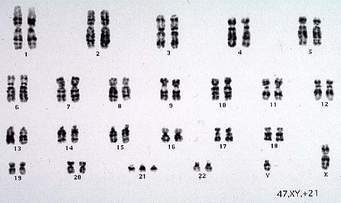
Telomere

b)

Epitasis

c)

Nondisjunction

d)

Autosome

3.

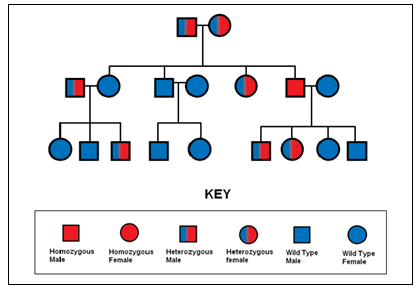
Having more than two alleles for the same trait

a)

Telomere

b)

Autosome

c)

Epitasis

d)

Multiple Alleles

4.

Individual heterozygous for recessive disorder such as cystic fibrosis or Tay - Sachs disease

a)

Pedigree

b)

Carrier

c)

Autosome

d)

Telomere

5.

Characteristic that results from the interaction of multiple gene pairs

a)

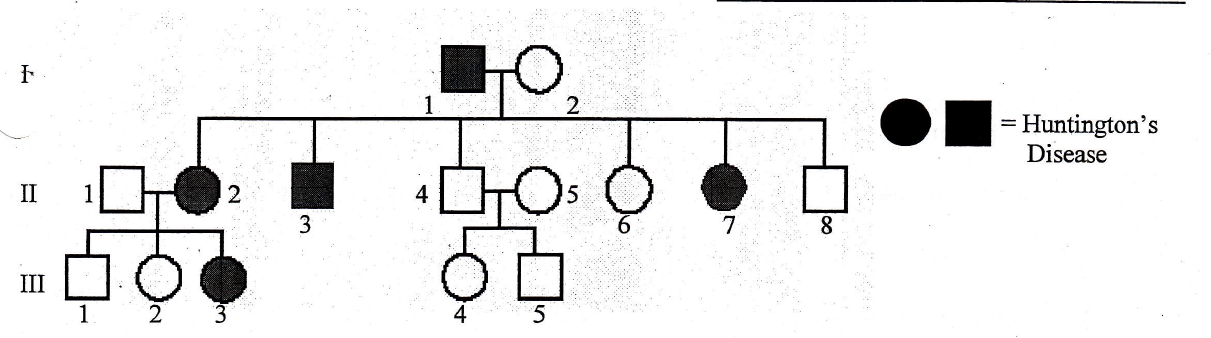
Multiple Alleles

b)

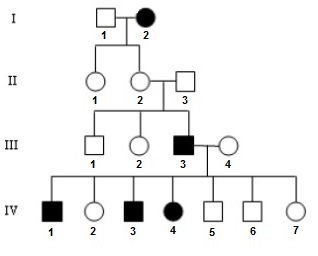
Karyotype

c)

Polygenic Trait

d)

Nondisjunction

6.

Complex inheritance pattern that occurs when neither allele is dominant and both alleles are expressed.

a)

Codominance

b)

Sex-linked trait

c)

Telomere

d)

Epitasis

7.

Protective cap made of DNA that is found on the DNA of a chromosome

a)

Nondisjunction

b)

Epitasis

c)

Telomere

d)

Sex Chromosome

8.

Complex inheritance pattern in which the heterozygous phenotype is intermediate between those of the two homozygous parent organisms

a)

Codominance

b)

Autosome

c)

Karyotype

d)

Incomplete Dominance

9.

Chromosome that is not a sex chromosome

a)

Autosome

b)

Sex Chromosome

c)

Polygenic Trait

d)

Codominance

10.

Interaction between alleles in which one allele hides the effects of another allele

a)

Karyotype

b)

Epitasis

c)

Autosome

d)

Telomere

11.

Micrograph in which the pairs of homologous chromosomes are arranged in decreasing size.

a)

Pedigree

b)

Autosome

c)

Telomere

d)

Karyotype

12.

X or Y

a)

Telomere

b)

Epitasis

c)

Sex Chromosome

d)

Sex - linked trait

13.

Characteristic controlled by genes on the X chromosome

a)

Sex - Linked trait

b)

Telomere

c)

Autosome

d)

Codominance

14.
blood types consist of 4 different alleles.
a)
false
b)
true
15.
polygenic means that _________ control a characteristic
a)
many genes
b)
single genes
c)
3 genes
d)
no genes
16.
What are the blood types of the possible children that a woman (type O) and man (type AB) can have?
a)
O and AB
b)
O and A
c)
O and B
d)
A and B
17.
What is the phenotype of a person with the genotype AO?
a)
type A
b)
type O
c)
AA
d)
OO
18.
What pattern of inheritance is shown in this image?
a)
Codominance
b)
Incomplete dominance
c)
Polygenic traits
19.
What pattern of inheritance is shown in this image?
a)
Codominance
b)
Incomplete dominance
c)
Polygenic traits
20.
A breed of chicken shows codominance for feather color. One allele codes for black feathers, another codes for white feathers. The feathers of heterozygous chickens of this breed will be:
a)
all black
b)
all white
c)
all gray
d)
speckled black and white
21.
Which term(s) best describes the inheritance of human blood types? 
a)
incomplete dominance and multiple alleles
b)
codominance and epistasis
c)
codominance and multiple alleles
d)
incomplete dominance and codominance
22.

This picture is example of what type of trait?

a)

codominance

b)

incomplete dominance

c)

polygenetics

d)

multiple alleles

e)

sex linked

23.

What is NOT a possible genotype for someone with type B blood?

a)

IBIB

b)

IAIB

c)

IBi

24.

What is the genotype of a person with type A blood, who had a father with type O blood?

a)

IAIB

b)

IAi

c)

IAIA

d)

ii

25.

What is the phenotype of a person with the genotype IBi?

a)

type A

b)

type O

c)

type B

d)

type AB

26.

A roan cow shows co-dominance in fur color (red and white). What is the phenotype ratio expected if a roan cow and a roan steer mate together?

a)

4/4 Red and White

b)

2/4 Red, 2/4 White

c)

2/4 Red, 2/4 Roan, 0/4 White

d)

1/4 Red, 2/4 Roan, 1/4 White

27.

Snap dragon color is a incomplete dominant trait. A red flower (RR) is crossed with white flower (R'R')? What color are flowers that are RR'?

a)

Red

b)

Red and White

c)

White

d)

Pink

28.

What is this a picture of?

a)

karyotype

b)

pedigree

c)

genome

d)

chromosome

29.

What is this a picture of?

a)

pedigree

b)

karyotype

c)

genome

d)

chromosome

30.
Based on the Karyotype shown, at which chromosome pair can we identify a genetic disorder? 
a)
Chromosome pair 5
b)
sex chromosomes
c)
Chromosome pair 21
d)
There are no chromosomal disorders
31.
X-linked conditions are more common in men than in women because
a)
The genes associated with the  X linked conditions are linked to the X chromosome, which determines maleness.
b)
Men need to inherit only one copy of the recessive allele for the condition to be fully expressed
c)
Women simply do not develop the disease regardless of their genetic composition
d)
The sex chromosomes are more active in men than in women
32.
Looking at the karyotype, is this person male or female?
a)
There is no way to tell from a karyotype.
b)
Male 
c)
Female 
d)
This person has a genetic disorder
33.
How many TOTAL chromosomes do humans have?
a)
2
b)
44
c)
46
d)
23
34.
Which of the following disorders can be observed in a human karyotype
a)
colorblindness
b)
trisomy 21
c)
cystic fibrosis
d)
sickle cell diease
35.
What is the probability that a human sperm cell will carry a X chromosome?
a)
50%
b)
100%
c)
25%
d)
0%
36.
The genotype of the affected son and daughter at the bottom of this pedigree...
a)
homozygous dominant
b)
homozygous recessive
c)
heterozygous
d)
Can't tell
37.
How many generations are shown in this pedigree?
a)
1
b)
2
c)
3
d)
4
38.
How many kids did the mother and father from the first generation have?
a)
2
b)
4
c)
5
d)
6
39.
What does a filled in square represent?
a)
Not affected Female
b)
Not affected Male
c)
Affected Male
d)
Affected Female
40.
What do half colored symbols represent?
a)
The individual is a carrier (heterozygous).
b)
The individual expresses the trait.
c)
The individual has both recessive alleles.
d)
The individual has both dominant alleles.
41.
What does an open circle represent?
a)
Not Affected Male
b)
Not Affected Female
c)
Affected Male
d)
Affected Female
42.
Is this trait (the shaded individuals) dominant or recessive?
a)
dominant
b)
recessive
43.
In the second generation-how many people are carriers of the trait?
a)
2
b)
3
c)
5
d)
6
44.
How many people in this whole pedigree have the trait/disease?
a)
2
b)
3
c)
4
d)
6
45.
How many females are in this pedigree?
a)
3
b)
4
c)
6
d)
7
46.
Which individual in the first generation is a carrier?
a)
The male
b)
The female
c)
individual 1
d)
None of the above
47.
How many individuals are there in the 3rd generation?
a)
2
b)
3
c)
4
d)
6
48.
Which gender can be carriers of colorblindness and not have it?
a)
Just males
b)
Just females
c)
Both genders
49.
How many people in the pedigree are carriers for the disorder? 
a)
b)
8
c)
2
d)
9
50.
What is the symbol for an Affected Male? 
a)
Half Circle 
b)
Half Square 
c)
Full Shaded Circle 
d)
Full Shaded Square 
51.
How many affected females are present? 
a)
1
b)
2
c)
3
d)
4
52.
How many offsprings did generation 2 have? 
a)
5
b)
8
c)
9
d)
10
53.
How many Homozygous Dominant males are present? 
a)
2
b)
4
c)
6
d)
8
54.
What would the genotype be for the blonde son in generation 2?
a)
BB
b)
Bb
c)
bb
d)
Not enough information 
55.
How many carrier males are present? 
a)
2
b)
4
c)
6
d)
8
56.
What does the symbol located at Generation II - 3  represent? 
a)
Dominant Female 
b)
Recessive Female 
c)
Carrier Female 
d)
Mitosis Female 
57.
What is the possible genotypes for both children in generation 3? 
a)
BB & BB
b)
Bb & bb
c)
bb & bb
d)
Bb & Bb 
58.
If this pedigree shows an autosomal recessive disorder, what MUST the genotype of individual II-3 be?
a)
HH
b)
Hh
c)
hh
d)
None of the above
59.
How are individuals III-2 and II-4 related?
a)
Cousins
b)
Dad and Daughter
c)
Uncle and Niece
d)
Grandpa and Granddaughter
60.

If this pedigree shows a recessive disorder, what MUST the genotype of individual 4 be?

a)

HH

b)

Hh

c)

hh

61.
In a pedigree, what shape represents a male?
a)
circle
b)
square
c)
triangle
d)
diamond
62.
How many kids did the mother and father from the first generation have?
a)
2
b)
4
c)
5
d)
6
63.
There are no carriers for Huntington's Disease- you either have it or you don't. Is Huntington's disease caused by a dominant or recessive trait?
a)
Dominant
b)
Recessive
64.
How are individuals I-2 and III-5 related?
a)
Grandpa and grandson
b)
Mom and son
c)
Uncle and nephew
d)
Grandma and grandson
65.
This pedigree represents the inheritance of hemophilia in this family. How many of the females have the hemophilia trait?
a)
8
b)
5
c)
2
d)
3
66.
Huntington's Disease is a dominant trait.
What is the correct genotype for individual I-2?
a)
HH
b)
Hh
c)
hh
d)
H_
67.
Does this pedigree show a dominant or recessive trait?
a)
Dominant
b)
Recessive
68.
Hemophilia is a recessive sex-linked trait. If H = normal & h = has hemophilia, which genotype represents a male with hemophilia. 
a)
XHY
b)
XHXh
c)
XhXh
d)
Xh
69.

How many alleles does a child get from each parent for a trait?

a)

1

b)

2

c)

3

d)

4

70.

How many alleles does a person carry for a trait?

a)

1

b)

2

c)

3

d)

4

71.
What makes this individual's karyotype not normal?
a)
An extra sex chromosome
b)
An extra autosome
c)
A missing sex chromosome
d)
A missing autosome
72.
What is the sex of this individual?
a)
female
b)
male
73.
What is the sex of this individual?
a)
female
b)
male
74.
Chromosome pairs 1-22 are referred to as
a)
sex chromosomes
b)
sister chromatids
c)
a karyotype
d)
autsomes