
 Worksheets
CHAPTER 8 WORKSHEET FOR MIDTERM
Total questions: 45
Worksheet time: 36mins
Why does the temperature of different layers of the atmosphere vary?
because air temperature increases as altitude increases
because the amount of energy radieated from sun varies
because of interference by humans
because of the composition of gases in each layer
Which of the following would be the best description of the atmosphere?
A mixture of gases in space
Where airplanes fly
Layers of moisture that surround the Earth
Layers of gases that surround the Earth

Which layer do airplanes and jet fly in?
Mesosphere
Stratosphere
Thermosphere
Troposphere
Which layer is above the Stratosphere?
Ionosphere
Thermosphere
Troposphere
Mesosphere
The lowest layer, where weather occurs is called the ___________________________.
Thermosphere
Mesosphere
Troposphere
Stratosphere
Layer furthest from Earth.
Troposphere
Stratosphere
Mesosphere
Thermosphere

Which layer consists of a large amount of ions and free electrons?
Troposphere
Mesosphere
Ionosphere
Exosphere


Clouds are made of...
a collection of gases like nitrogen and oxygen
a collection of water droplets or ice crystals
The transfer of heat using electromagnetic waves is called...
Conduction
Convection
Radiation
Advection
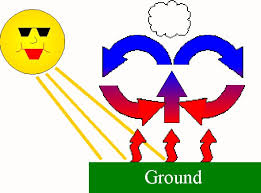
Ozone is contained in which layer?
exosphere
stratosphere
mesosphere
thermosphere
Why is it harder to breathe at higher elevations, like the top of a mountain?
at higher altitudes, the air is very cold
at higher altitudes, the air pressure is lower
at higher altitudes, the air contains more nitrogen
at higher altitudes, the air contains more carbon dioxide
Thermal energy transferred by circulation of a liquid or gas is called....
Thermal Conduction
Radiation
Convection
Conservation
The process by which gases in the atmosphere absorb thermal energy and radiate it back to earth is called....
The Coriolis Effect
The Greenhouse Effect
Global Warming
Fossil Fuels
One reason for global warming may be
decreasing global gases
increasing global gases
increasing greenhouse gases
decreasing noble gases
Winds always blow from areas of _________ pressure to areas of _________ pressure.
high, high
low, low
high, low
low, high
Which statement correctly defines wind?
Wind is the movement of air from areas of low pressure to areas of high pressure
Wind is the movement of air from areas of high pressure to areas of low pressure.
Wind is the movement of air to a colder area in the atmosphere.
Wind is the movement of air pushed around and bouncing off Earth's surface.

The rotation of the Earth causes winds to bend due to the...
coriolis effect
doldrums
trade winds
westerlies

what is the main cause of the coriolis effect?
earth’s rotation
trade winds
the sun and ocean
temperature

Winds that blow from the North and South pole toward 600 latitude are called...
trade winds
westerlies
polar easterlies
horse latitudes
What causes warm air to rise?
Warm air is less dense than cold air.
Warm air weighs more than cold air.
Warm air has higher pressure than cold air.
Warm air is more dense than cold air.
Air pollution causes all of the following, except
holes in the ozone layer
increased particles in the air
acid rain
healthy air to breath
smog
Natural causes of air pollution include all of the following
forest fires
dust
volcanic ash
wind
pollen
What is the main cause of air pollution?
plowing fields and releasing dust
using solar power
burning fossil fuels
using water power
Climate change caused by extra carbon dioxide in the air that causes heat to get trapped in the atmosphere is called
global warming
photosynthesis
smog
rain, sleet, or snow that contains acids from air pollution is called
(a)
A rapid change in a body of water's acidity is called (a)

