
 Worksheets
Resource & Technology Grade 9
Total questions: 174
Worksheet time: 2hrs 9mins

It is a good idea to not plug too many things into one outlet, since there is a risk of overloading the circuit at that outlet.
true
false

It is generally okay to use electrical devices around water if you use a good quality extension cord.
true
false
An electrical ground provides a alternative path for current if something goes wrong in a circuit or device.
true
false


turn off the power source
call 999
Select the correct statements about the neutral wire in a plug.
It is brown
It is blue
It has green and yellow stripes
It is at 0 V.
It is at 230 V.
Select the correct statements about the earth wire in a plug.
It is brown
It is blue
It has green and yellow stripes
It is at 0 V.
It is at 230 V.
In a plug, the fuse is connected to the (a) wire.
Select the correct advantages of circuit breakers over fuses.
Circuit breakers can be reset.
Circuit breakers are cheaper.
Circuit breakers stop the current faster.

What are the best ways to put out electrical fires? (more than one option)
Using water
Nothing. Just let it burn out
Fire extinguisher
Fire blanket

Is this dangerous? Why?
Yes. The fork is made of metal. The child can get electrocuted.
No. The fork is made of metal. Nothing will happen.
No. The child is an insulator so he can't be electrocuted.
No. The switch is off. It is safe.
Electricity is a form of _____.
energy
life
food
machine
Which of these materials is a good conductor of electricity?
Rubber
Metal
Newspaper
Glass
What supplies the energy or power in an electric circuit?
light bulb
wire
battery
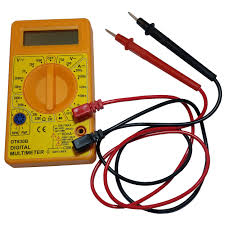
Identify this tool
Digital multimeter
Digital therometer
Digital pedometer
Digital weight scale
An electrical kettle is rated 500W. What physical quantity does 500W represent?
Power
Current
Resistance
Voltage

Name this instrument.
Ammeter
Voltmeter
Multimeter

Name this instrument.
Ammeter
Voltmeter
Multimeter
What type of multimeter has a needle gauge?
analog multimeter
digital multimeter
electrical multimeter
mechanical dual multimeter
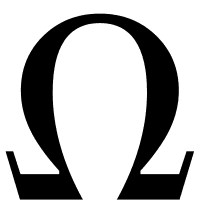
What do you call that symbol?
resistance
current
microfarad
ohm
Which of the following is the symbol for AC voltage?
---
u
.)))
~
On a multimeter which wire is used for what?
the red probe is used for positive, and the black probe is used for negative
the red probe is used for negative, and the black probe is used for positive
What is a multimeter?
a tool used to estimate distance current travels
a tool used to find a correct locaton
a tool used to measure electricity
a tool used to measure electronics
An electrician taking a voltage reading, wearing all the correct PPE, stands no chance of getting injured.
True
False


It is critical that CPR is performed in what order?
Compression Airway Breaths
Airway Breaths Compression
The order does not matter
Compression Breaths Airway
What is a sign of giving effective breaths?
the chest rises
air comes out of nose
no physical change
their face gets red
What is the first step in CPR?
check for signs of life
check the scene
start compressions
call 911
When do you perform CPR?
when the person is unresponsive
when the person is asleep
when the person is talking
when the person is coughing
How many sets of CPR complete one cycle?
5
7
10
3
What does AED stand for?
annual edited documents
actual emergency device
automated external defibrillator
always extending diaphragm
What are signs of life?
shallow gasping and turning blue
chest rising and pulse
chest rising and no pulse
pulse and shallow gasping
What do you do if the scene is not safe?
stand back and call 911
go ahead and do CPR
only do compressions
tell another person to do compressions

What records of minor accidents or injuries should be kept ?
Memo ?
Email ?
Fax ?
Accident Book ?

It is important to report accidents because ?
It could prevent one happening again ?
It could reduce the risk one happening again ?
It could persuade one happening again ?
It could purport one happening again ?
What does the O in OSHA stand for?
Orientation
Occupational
Optional
Who must comply with OSHA?
Only teachers and doctors.
Everyone who works at a job that requires health and safety.
What does the S in OSHA stand for?
Sounds
Simple
Safety
Why is workplace safety important?
It's not important.
It keeps workers and customers safe.
Only managers need to worry about workplace safety.
Only companies with over 100 employees need OSHA training.
True
False
A company with only 1 employee still needs OSHA training.
True
False
Which is an example of being healthy at work?
Never making a mistake at work.
Working everyday of the week.
Washing your hands after using the bathroom.
Which is NOT a right workers have under OSHA?
The right to a safe and healthful workplace
The right to information on injuries or illnesses in the work place
The right to industry specific training
The right to guaranteed wage raises
Which is NOT an employer's main responsibility under OSHA?
Monitor hazards
Provide lunch for employers weekly
Keep records of workplace injuries
Provide personal protective equipment (PPE)
Who is responsible to provide you with training required by OSHA standards?
The employer
The union
The government
The worker/employee
What year was the OSH Act signed by President Nixon of the USA?
2006
1990
1970
2021
When dealing with warning symbols, which set of symbols represent the NEW labeling system?


What is the importance of dress code in the work place?
can dress however you want in a workplace
used to ensure that workers are safe and dressed appropriately
factory workers can dress as they please
everyone should wear a uniform
Department of Labor, OSHA and EEOC are what type of agencies?
Labor Laws
Regulatory
Standard
State
Occupational Safety and Health Administration is known as
SOAH
OSHHA
SHA
OSHA
The chemicals that pose a hazard to health or the environment.
toxic wastes
reactive wastes
chemical waste
wastes management
It refers to devices worn by workers to protect them against hazards in the work environment.
UCHP
PPS
PPE
The continuous, systematic use of routinely collected health data.
OSH training
occupational health service
mitigation activities
occupational hazard
It refers to various environmental factors or stresses that can cause sickness, impaired health, or significant discomfort in workers.
biological hazard
chemical hazard
ergonomic hazard
occupational hazard
It is intended to ensure by means of training and rehearsal, that in the event of fire.
earthquake drills
fire safety
first aid
fire drills
It refers to plant equipment which by their very nature has the potential of causing severe or fatal injury to the worker or operator.
hazardous tools
hazardous equipment
hazardous paraphernalia
hazardous chemical
PPE stands for ____________
Professional Protective Equipment
Primary Protective Equipment
Personal Protective Equipment
Personal Professional Equipment
Which of the following is NOT a true statement about personal protective equipment (PPE)?
PPE eliminates all job site hazards
PPE must be provided by all employers
PPE should be routinely inspected
PPE should be comfortable to wear

This sign represents that eye protection must be worn? Tick one answer
True
False
Which of these is responsible for the highest percentage of work-related accidents?
Electric shocks
Office chairs
Slips, trips and falls
Exposure to hazardous substances
What is energy?
moving energy
stored energy
renewable energy
The ability to do work.
What is potential energy?
moving energy
stored energy
renewable energy
non renewable energy
What is kinetic energy?
moving energy
potential energy
stored energy
renewable energy
Which of these things is an example of potential energy?
a car motor
firewood
Roller Coaster
a fan
What is given off from energy?
water
heat
smoke
ash

Potential energy depends on ______ and _______.
height, mass
weight, mass
speed, mass
height, speed
Kinetic energy depends on_________ and _________.
speed and mass
speed and height
height and mass
energy and height
Which of the following is NOT an example of potential energy?
A diver on the edge of a diving board
A parachute falling to the ground
A pencil sitting on a desk
A car parked in the parking lot of a mall
True or False. Renewable sources will never run out.
True
False
Which form of energy uses water moving through a dam?
Geothermal
Nuclear
Solar
Hydropower
Energy that uses heat from within the earth is ____.
Nuclear
Geothermal
Wind
Solar
What is one advantage of using hydroelectricity as an energy source?
Heat is captures under the earth
It might change the migration patterns of salmon
Reservoirs can be used to irrigate crops
It doesn't need motion to turn turbines.
Why is it helpful to use natural gas even though it's nonrenewable?
there is a limited supply
it releases less pollution than any other fossil fuel
It takes a while to make
We have an endless supply
What is a disadvantage of using coal as an energy source?
There is lots of it everywhere
It releases radiation as a byproduct
It is inexpensive
Mining can damage the environment
What is a disadvantage of using nuclear power?
It releases radiation as a byproduct
It produces a lot of energy really fast
It needs motion to turn turbines
It is dependent on weather
Which two energy sources require open space?
Biomass and natural gas
Wind and Hydropower
Wind and Solar power
Solar power and Nuclear power
Biomass is created from ______.
Plants, animal waste, and garbage
Splitting atoms
The energy rays of the sun
Moving turbines
Which energy source depends on the weather?
Hydropower
Solar
Wind
Geothermal
Which energy source uses turbines that spin in open air?
Nuclear
Hydropower
Wind
Geothermal
Which fossil fuel produces the least amount of carbon dioxide when burned?
Coal
Oil
Nuclear
Natural Gas
Which of these is NOT a fossil fuel?
Natural gas
Nuclear
Oil
Coal
What do geothermal and solar energy have in common?
Both rely on the movement of turbines
Neither is expensive
Neither produces greenhouse gases
Sunlight is needed for both
Energy transfer when fuel is burnt in a thermal power station.
Kinetic --> heat
Heat --> chemical
Chemical --> Heat
Electric --> Light

The _______________ is transformed into electrical energy inside the battery.
Chemical energy
Sound energy
Kinetic energy
Sun energy
Mechanical energy is the sum of what two energies?
Thermal and Radiant
Chemical and Electric
Potential and Kinetic
Nuclear and Sound
Moving electrons is an example of which form of energy?
Thermal energy
Electrical energy
Chemical energy
Mechanical energy
What type of energy is stored in the bonds between atoms
Electrical energy
Thermal energy
Kinetic energy
Chemical energy

What kind of energy makes the microwave work?
Light energy
Heat energy
Electrical energy
Chemical energy

What type of energy allows you to see the images and texts on your cell phone screen?
Sound energy
Heat energy
Chemical energy
Light energy


What are some things you can do to conserve energy and help protect our environment?
leave water on, leave TV on, run dishwasher with 1 plate
run the washing machine with 1 shirt
leave the refrigerator door open
turn off water, turn off lights, turn off TV
Which one is an example of recycling? 🌟
Reusing a paper bag for lunch.
Using less water to take a bath.
Making new glass bottles from old ones.
Using plastic cups instead of paper cups.
To save energy you should: (check 2)
Take a cooler shower
Take a warmer shower
Take a shorter shower
Take a longer shower
To save energy we should:
use energy-saving bulbs
Use larger tv's
Avoid turning lights on and off
Keep the TV on
It is very cool outside an you feel very hot inside, what should you do?
Turn on the air- conditioner
Open the windows
Turn on the air conditioner and open the windows
Go out for a walk

Electricity is another word for moving __________.
electrons
move
circuits
Electricity is the __________ of electrons.
flow
change
light

_____________ can be made from moving water or wind.
Electricity
Friction

________________ such as oil, goal and natural gas need to burn to make electricity.
fossil fuels
movement
Fossil fuels such as oil, goal and natural gas need to __________ to make electricity. They are not good for the air.
burn
drink
sleep

The ___________ of electricity is where it comes from.
source
power
Fossil fuels are __________ because they pollute the air.
good
not good

Renewable energy from sources like solar, wind, and geothermal keep the air ___________.
dirty
clean
Renewable energy comes from sources like ____________ that are better for the environment.
coal
solar or wind

Which of the following describes a battery as a source?
Chemical action
Magnetomotive
Triboelectric
Photo Voltaic

A network of electrical cables and electrical substations is known as an electric ............................
battery
grid
line
wire
The occurrence wherein things are rubbed together; oldest electrical phenomenon
Friction
piezoelectric
thermocouple
chemical action
It is the center of an atom
proton
neutron
nucleus
electron
Part of nucleus that is positively charge.
nucleus
proton
atom
electron
Part of an atom that is neutrally charged
proton
electron
neutron
shell
Smallest particle of an element; means invisible
matter
atom
molecules
It is made up of molecules
atom
matter
nucleus
proton
It is the smallest particle of matter, made up of atoms
atom
molecules
proton
shell
Which one is the smallest subatomic particle?
Proton
Neutron
Electron
Atom


__________ are negatively charged particles that are in the orbitals around the nucleus.
protons
nucleus
neutrons
electrons

A proton has a ___________ charge.
positive
negative
neutral
massive.
An electron has a _________ charge
positive
neutral
negative
massive

The negatively charged particles in an atom
Proton
Electron
Neutron
Electron Cloud
What are valence electrons?
The total number of electrons in an atom
The number of electrons in the outermost shell
The number of electrons in the second shell
The number of protons in the outermost shell
According to Coulomb's Law, when the distance increases, the electrostatic force ____________.
increases
decreases
remains unchanged
has no relationship to distance
The Coulomb is the unit for:
Charge
Force
Distance
Mass
What is the unit for electrostatic charge?
Coulombs
Newtons
Meters
Joules
Select all answer that apply:
What kinds of particles do Coulomb's Law apply to?
electrons
protons
neutrons
neutral atoms
A repulsive force exists between which two particles?
Two neutrons
An electron and a neutron
An electron and a proton
Two protons
The variable "r" in Coulomb's Law would have what units?
Joules
Coulombs
Newtons
Meters
Coulomb's Law is __________ proportional.
directly
inversely
polymetrically
exponentially

