
 Worksheets
Physical Science Final Review (Units 1-5)
Total questions: 179
Worksheet time: 2hrs 37mins
Which best describes the act of using senses or tools to gather information?
creating a hypothesis
making an observation
summarizing the results
recording the measurements
Which best describes the purpose of a control sample?
to compare its results to those of a well-known scientist
to have more qualitative data to analyze at the end of the experiment
to compare its results to those with the experimental sample
In an investigation that uses the scientific method, which step immediately follows making a hypothesis?
test your hypothesis
summarizing the results
making observations
asking a question
When we test our hypothesis, there are two types of variables. What are they?
Independent and controlled variable
dependent and controlled variable
independent and dependent variable
none of the above
Constants are factors in an experiment that stay the same. True or False?
True
False
What should an experimenter do after analyzing data?
carry out the experiment
draw conclusions
observe and infer
identify the problem
What is the first step in a commonly used scientific method?
(a)
A statement that can be tested or is an educated guess is known as what?
control
observation
independent variable
hypothesis
Which best describes the purpose of a controlled experiment?
to prevent an undesired change in a variable
to make sure the results of the experiment support the hypothesis
to prevent a dangerous condition resulting from a reaction
to examine whether one variable causes a change in another
to prevent an undesired change in a variable
An independent variable is?
step-by-step approach to solving problem
a statement that can be tested
variable measured during the experiment
variable changed by the experimenter
What is a step-by-step approach to solving problems known as?
(a)
Read the lab procedure for a controlled experiment that looks at the effect of heat on the circumference of bicycle tires.
Step 1: Pump up six identical bike tires to the recommended air pressure.
Step 2: Place three tires under heat lamps, and keep the other three tires at room temperature.
Step 3: After four hours, measure the circumference of each tire.
Step 4: Record your results in the table.
Step 5: (?)
Which step should be next in this procedure?
Write a conclusion for the experiment.
Write a hypothesis for the results.
List the materials that are needed.
Draw a table for the observations.
In an investigation that uses the scientific method, which step immediately follows asking a question?
designing an experiment
creating a hypothesis
presenting the results
Inference can be bits of information you gather with your senses? True or False
True
False
How many steps are there in the Scientific Method that we discussed in class?
5
6
7
8

What will happen in this scenario?
The forces are balanced, but the cart will move to the left because the pulling forces are closer to it.
The forces are balanced, but the cart will move to the right because the pulling forces are farther away from it.
The forces are balanced and the cart will not move, even though the pulling forces are at different distances.
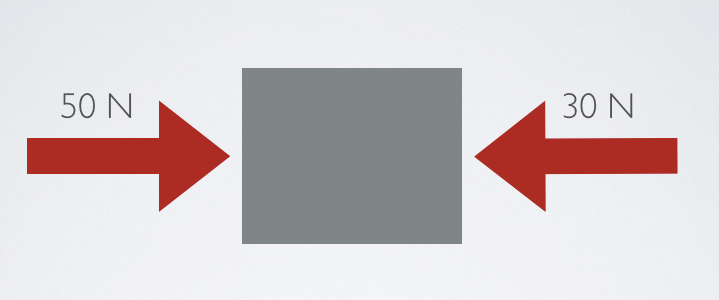


If the net force is equal to zero, the forces acting on the object are
balanced
unbalanced

What is the sum of the forces (Net Force) for the situation above?
100N to the right
100N to the left
50N to the right
50N to the left
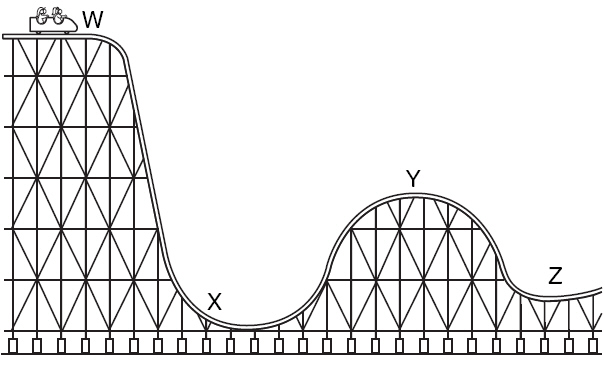
Which of the following parts of the roller coaster you built would have the highest potential energy?
The top of the rollercoaster (at the start)
The top of the hill
The top of the loop
The end of the rollercoaster
From the rollercoasters you built in class, it is possible to have the top of the loop be higher than the top of the rollercoaster.
True
False





To move something AWAY from you is called a
push
pull
target
track

The action of moving or changing position is called
motion
friction
target
track
When an object is pushing on another object making it slow down it is called
friction
motion
track
position
To move or haul something TOWARDS yourself it is called
pull
push
friction
target
A push or pull is an example of a
force
track
target
position

The picture is an example of a
push
pull
target
track

The picture is an example of a
pull
push
shove
dig

A game of tug-of-war is an example of
balanced and unbalanced forces
track and target
rolling force

The picture is an example of a(n)
unbalanced force
balanced force
moving target

The picture is an example of a(n)
balanced force
unbalanced force
moving track

Q. The strongest parts of the magnet are ...
fronts
backs
poles
middle

Q. A north pole and a south pole will attract.
TRUE
FALSE

Q. The area around a magnet is called the .....
attraction zone
work area
magnetic field
hot zone

Q. A magnet will pick up an object that is made of...
plastic
glass
iron or steel
Paper

In scrapyards, there are many tipe of materials like iron, wood, steel, gold, silver, and cooper.
What are materials that can be lifted up using the magnetic crane?
iron and wood
iron and steel
wood and cooper
silver and gold

Which metal does NOT attract to a magnet
Nickel
Copper
Iron
Colbalt

What type of magnet is shown in the picture?
Bar Magnet
Button Magnet
Ring Magnet
Horseshoe Magnet

What type of Magnet is shown in the picture?
Horseshoe Magnet
Bar Magnet
Button Magnet
Ring Magnet

True of False: A magnet will attract a paperclip?
True
False

True or False: A magnet will be attracted to a wooden spoon
True
False

What kind of energy makes the microwave work?
heat
wind
electricity

You shined a flashlight on object and light bounced back. What kind of object would bounce back the light?
mirror
paper
jar

A small bell produces what kind of sound?
soft
loud

The sun produces what kind of energy?
Heat
Light
Electricity
Solar

This airplane is moved by what energy?
electricity
Gas (fuel)
solar

These produce what kind of energy?
heat
solar
light

What energy helps this object move?
solar
gas
wind

A grill produces what type of energy form?
heat
light

Do people make energy when they exercise, like running?
yes
no

Can we live without the sun?
yes
no
How do objects become positively charged?
They gain electrons
They lose electrons
Rubbing or Friction
How do objects become negatively charged?
They gain electrons
They lose electrons
Rubbing or Friction
This is a measure of electrical pressure
Current
Volt
Ohm
Ampere
This is the measure of the movement of the electric charge
Voltage
Volt
Ohm
Ampere
This is a measure of electrical resistance
Current
Volt
Ohms
Ampere
Force resulting from interaction between electrically charged particles
Magnetic Force
Electromagnetic Force
Electric Force
Current
The size or quantity of something
Magnetic Force
Magnitude
Electromagnetic Force
Current
As the distance between magnets increases-the attraction between them will
Decrease
Stay the Same
Increase
How can the strength of an electromagnet increase?
Remove the battery
Remove loops (coils) of wire from around the iron nail
Add more loops (coils) of wire around the iron nail
Remove the iron nail, leaving only the coils of wire
What is magnetic force?
Attraction or repulsion that arises between electrically charged particles because of their motion
How strong a magnet is
Force resulting from interaction between electrically charged particles
The size or quantity of something

Students attached both ends of a long wire to the poles of a battery and wrapped the wire around a spoon. In this arrangement, the spoon is able to pick up five paper clips. The students wrap more wire around the spoon and want to determine if the strength of the magnetic force has increased. Which of the following observations would indicate that wrapping more wire has increased the strength of the electromagnet?
More wire was needed to wrap around the spoon.
The spoon now picks up seven paper clips.
Eventually, the battery runs out of energy.
The ends of the wire must touch the battery's poles.
Students want to investigate how the amount of electric energy delivered to a motor affects its speed. Which of the following procedures will most likely produce the data students need to answer their question?
Measure the rotations per second of a motor when it is connected to one battery, two batteries, and three batteries.
Add larger and larger motors to a battery to determine the size of the largest motor the battery is able to run
Closely observe the rotation of the motor to see if the direction of spin reverses when the poles of the battery are switched
Connect a series of motors to the same battery to figure out how many motors can be run off the same battery.

The table provided shows data collected by students during an investigation of two electromagnets. Which of the following conclusions is supported by data on the table?
When two electromagnets are of like charges, they attract each other.
Electromagnets that repel each other have more force than those that attract each other.
The greater the charges of two electromagnets, the greater the size of the force.
If the charge on one magnet is positive, the charge on the other must be negative.

The illustration shows a hand generator. Turning the handle of the generator spins a magnet and creates an electric current that lights the bulb. Which of the following observations can be used to indicate the strength of the current created by the generator?
The brightness of the bulb
The size of the magnet
The length of the handle
The mass of the generator

This table shows the magnitude of electromagnetic force exerted by two electromagnets on each other as the distance between the two electromagnets is varied. The data on the table provide evidence for which of the following conclusions?
The force between any two magnets is always constant, regardless of distance.
As distance between electromagnets increases, the electromagnetic force also increases.
The smaller the distance between two electromagnets, the greater the force.
The force between two magnets depends only on the charge of the electromagnets.
What is a current?
A directional flow of electrical charge through an object or medium
Attraction or repulsion that arises between electrically charged particles because of their motion
The size or quantity of something
Attractive or repulsive interactions between any two charged objects
What will happen as an electron (-) gets closer to a proton (+)?
The repulsion will be stronger.
The attraction will be stronger.
The attraction will be weaker.
Nothing will happen to the electric field.
A current flowing through a wire is surrounded by a
Electric Current
Magnetic Field
Electric Field
None of these
What is an electric force?
The size or quantity of something
Attractive or repulsive interactions between any two charged objects
A directional flow of electrical charge through an object or medium
How strong a magnet is
What is magnetic strength?
Attractive or repulsive interactions between any two charged objects
Force resulting from interaction between electrically charged particles
How strong a magnet is
Attraction or repulsion that arises between electrically charged particles because of their motion
What will happen if the north ends of two magnets are placed near each other?
Both magnets will get weaker.
They will repulse (repel) each other.
They will attract each other.
Nothing will happen.
The region in which a magnetic force acts is called a
line of force
pole
magnetic field
field of attractio
An example of a ferromagnetic material is
copper
wood
cheese
nickel
A coiled current carrying wire is called
an electromagnet
a solenoid
a compass
a ferromagnet
Unlike poles of different magnets
attract each other
cancel each other out
repel each other
Electromagnets can be
turned on and off
made stronger
made from iron
made weaker
The magnetosphere
surrounds the Earth
Surrounds the sun
is shaped by the solar wind (charged particles from the sun)
doesn't exist
The magnetic field is strongest
at the poles
in the middle
at the north pole
at the south pole
THe north end of a compass needle always points to
our geographic north pole
our geographic south pole
our magnetic north pole
our magnetic south pole
Earth acts like a magnet because its core contains
molton carbon
solid nickel and iron
rocks
molten nickel and iron
Which of the following would be an example of an insulator?
iron
aluminum
rubber
silver
The rule of charged particles states that
opposites attract
opposites repel
opposites don't interact
likes attract
These are responsible for the flow of electricity
protons
electrons
neutrons
wires
Conduction is the transfer of electric charges by
interaction of electric fields
direct contact
rubbing
jumping

If the magnets above were brought close together they would…
attract each other with a a strong force
repel each other with a strong force
attract each other with a weak force
repel each other with a weak force
An example of static discharge would be
using a compass
an elecromagnet
a lightning bolt
rain

Which position of the two magnets results in the greatest attraction between them?
A
B
C
D
Current is the flow of these through a wire
electrons
protons
neutrons
Charging by rubbing is called
friction
induction
conduction
polarization
Current, or the flow of charge through a wire is measured in
volts
amps
Joules
Newtons
Induction is the charging of an object through
direct contact
rubbing
interaction of electric fields
pugging it in

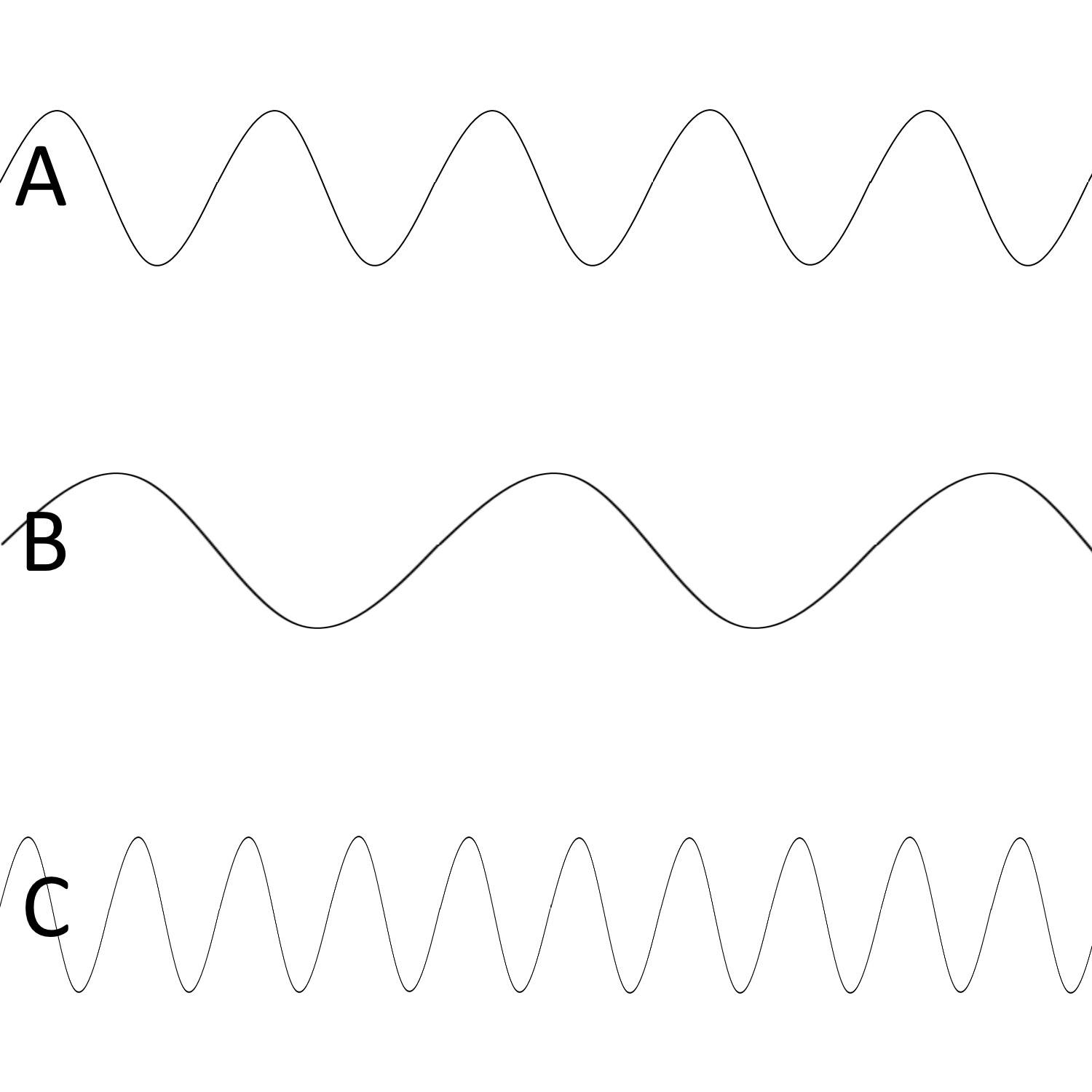
Which transverse wave has the highest frequency?
1
2
3
4
Which diagram shows the wavelength of a wave?


What does a wave carry from place to place?
energy
matter
people
The highest point on a transverse wave is the
compression
crest
rest position
trough
The lowest point on a transverse wave is the
compression
crest
rest position
trough
If the wavelength of a wave increased, what would happen to the frequency?
decrease
increase
stay the same
A wave that can travel through matter and empty space is a:
electromagnetic wave
longitudinal wavy
transverse wave
mechanical
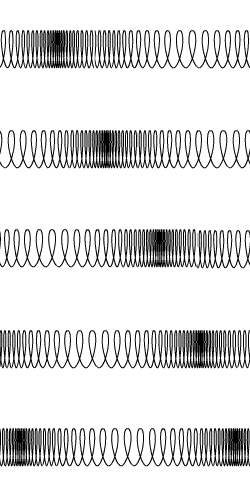
What type of wave is this?
Longitudinal
Transverse
Electromagnetic
x ray


You can't hear sounds in outer space because there is no
medium
light
energy
heat


Electromagnetic waves do not require a medium to travel.
True
False
The more energy waves have, the more penetrating the are.
True
False
Cell phones transmit and receive ______ waves.
infrared
radio
gamma
micra
Visible light rays have more energy than Ultraviolet rays.
True
False
The difference between the different waves on the EM spectrum is ______________
amplitude
frequency
wavelength
GPS stands for _______________ ________________ system.
global placement
global positioning
gamma positioning
What is the description for x rays?
used in cell phones
allows you to see
causes skin to tan
can see broken bones
What is the description for radio waves?
have the least amount of energy
allows for night vision
see broken bones
kills cancer cells
What is the description for gamma rays?
causes skin to tan
kills cancer cells
used for night vision
used in cell phones
What is the description for microwaves?
allows you to see
can see broken bones
used in cell phones
has the least amount of energy
What is the description for ultraviolet rays?
has the least amount of energy
causes skin to tan
allows night vision
see broken bones
What is the description for infrared rays?
allows night vision
kills cancer cells
causes skin to tan
used in cell phones
What is the description for visible light?
has the least amount of energy
causes skin to tan
allows you to see
can see broken bones

On the EM spectrum... what would "A" represent?
UV
visible
radio
microwave

On the EM spectrum, what would "G" represent?
X ray
gamma
UV
visible

On the EM spectrum, what would "D" represent?
visible light
UV
radio
infrared

On the EM spectrum, what would "3" represent?
red
blue
green
yellow
Select the correct order of waves on the EMS from low to high energy
Radio, Micro, Infra, Visible, Ultra, X-ray, Gamma
Gamma, X-ray, Ultra, Vis, Infra, Micro, Radio
Vis, Micro, Infra, Ultra, X-ray, Gamma, Radio
Micro, Radio, Vis, Infra, Ultra, X-ray, Gamma
Which has the LONGEST wavelength and, therefore, the LOWEST frequency/energy
Gamma Rays
Ultraviolet
Visible Light
Infrared rays
Which of the following electromagnetic waves has the lowest frequency?
gamma ray
infrared wave
visible light wave
microwave

Which letter indicates X-rays?
A.
B.
C.
D.

Which letter indicates infrared rays?
A.
B.
C.
D.
Which list places the electromagnetic energies in order from most energy to least energy?
X-ray, Radio, Visible
Ultraviolet, Inferred, Radio
Radio, Visible, Gamma
Visible, Ultraviolet, X-Ray

Which of the following statements can be concluded from the table?
X-Ray waves have a lower frequency than infrared waves.
Microwaves have a smaller wavelength than visible light.
The speed of all electromagnetic waves are equal.
The frequency and wavelengths are equal for each type of radiation.
A gamma ray photon and a microwave photon are traveling in a vacuum. Compared to the wavelength and energy of the gamma ray photon, the microwave photon has a -----?
shorter wavelength and less energy
shorter wavelength and more energy
longer wavelength and less energy
longer wavelength and more energy
Earth’s atmosphere blocks short wavelengths of the electromagnetic spectrum. Which telescopes must be placed in orbit around Earth in order to observe short-wavelength radiation?
Gamma-ray telescopes
Visible-light telescopes
Infrared telescopes
Radio telescopes


The lower the frequency the ______ the energy.
higher
lower
neither, stays the same

Wavelength Not Frequency

Wavelength Not Frequency

Wavelength Not Frequency

Wavelength Not Frequency

Wavelength Not Frequency

Wavelength Not Frequency

Wavelength Not Frequency

Wavelength Not Frequency



