
NEW
Font size
 Worksheets
Matter Practice
Total questions: 61
Worksheet time: 46mins
Subatomic particles with a negative charge
Electrons
Neutrons
Protons
Quarks

Look at this picture of Argon off the periodic table. Which of the following is true for this element?
18 protons
40 protons
22 protons
21.9 protons
Which part of an atom is used to identify it?
number of protons
number of neutrons
number of electrons
The atomic mass of an atom is equal to
number of protons plus number of neutrons
number of protons plus number of electrons
number of electrons plus the number of neutrons

Which part of the diagram represents the proton?
a
b
c
d


A horizontal row of elements in the periodic table
Molecule
Period
Family
Atom

A substance that cannot be broken down into other substances by chemical or physical means.
Covalent bond
Atom
Element
Elements in the same vertical column of the periodic table; also called group
Family
Atom
Element
Metals

What is the atomic mass of Neon?
10
20
30

How many neutrons does calcium have?
20
40
60
0

What would Au (Gold) be categorized as on the periodic table?
Nonmetal
Metal
Transitional metal
Noble gas
What type of elements border the “stair step” or “zigzag line”?
metals
nonmetals
metalloids
solids
Krypton (Kr) is a colorless gas that does not conduct electricity. Where would you find this element on the Periodic Table?
on the left
on the right
in the middle
at the bottom
Sodium (Na) is a silvery metallic element with an extremely high melting point. This element is a __________ and will be found on the __________ side of the Periodic Table.
nonmetal, right
metal, right
nonmetal, left
metal, left
What kind of elements are dull and have low melting points?
metals
nonmetals
metalloids
megametals
What kind of elements are malleable and mostly solid?
metals
nonmetals
metalloids
megametals
What kind of elements have characteristics of both metals and nonmetals?
metals
nonmetals
metalloids
megametals

Which elements are to the right of the zig zag?
metals
nonmetals
metalloids
ductile means...
can be made into wire
can be bent or hammered
can light up a light bulb
it's shiny

Which elements are to the LEFT of the zigzag?
metals
nonmetals
metalloids
How many valence electrons are found in atoms of group 14?
4
3
14
16
What are valence electrons?
The total number of electrons in an atom
The number of electrons in the outermost shell
The number of electrons in the second shell
The number of protons in the outermost shell
Which elements have the most similar chemical properties?
boron and carbon
oxygen and sulfur
aluminum and bromine
argon and silicon
All atoms are most stable with (or would "prefer") how many electrons in their valence shell?
1
2
8
18
What group is the most reactive metals?
2
18
1
16
What group is the most reactive non metals?
1
17
2
1
Why are halogens so reactive?
They want to get rid of their only valance electron
They only need one more electron
They are non reactive, they have a full shell
How do electrons of an element determine that element's reactivity?
If the valence shell has missing electrons it is very reactive to attract or lose more electrons.
If the valence shell has a full ring of electrons it is very reactive because it needs more.
If the valence shell has a full shell of electrons it is very reactive because it is already full.
If the valence shell has missing electrons it is not reactive because it is missing electrons.
Which of the following statements describes group 17 of the periodic table?
Stable non-metals with 1 valence electron
Stable Metals with 7 valence electrons
Highly reactive non-metals with 7 valence electron.
Highly reactive metals with 2 valence electrons.


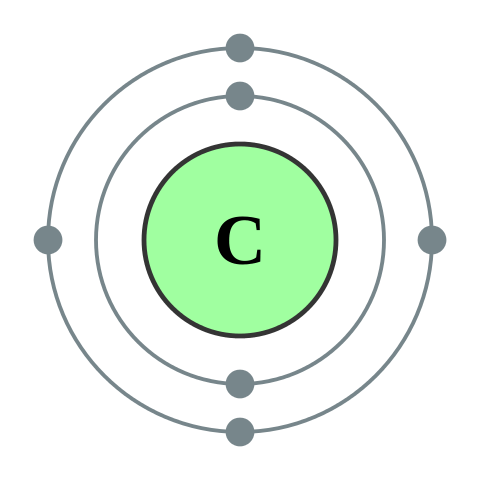
How many valence electrons does carbon have?
4
5
6
7
Appear Vertically on the periodic table
Periods
Groups
Energy Levels best describe .....
Periods
Groups
Elements that are similar in chemical reactivity
Periods
Groups
Elements that appear horizontally on the periodic table
Periods
Groups
Valence Electrons are organized into .......
Periods
Groups
Elements are organized by REACTIVITY into.....
Periods
Groups

Which element is this?
Nickel
Neon
Sodium
Nitrogen

Name this element.
Argon
Chlorine
Aluminum
Boron

Name this element.
Neon
Magnesium
Sodium
Manganese

What is the atomic number of this atom?
2
4
6
8

What is this element?
Beryllium (atomic #4)
Boron (atomic #5)
Carbon (atomic #6)
Nitrogen (atomic #7)

How many valence electrons?
2
3
4
5

