
 Worksheets
Musculoskeletal System
Total questions: 41
Worksheet time: 21mins
When a basketball player straightens their elbow to perform a free throw their elbow joint is said to have (a)
The role of cartilage is to prevent (a) .
If you were watching a cricket bowler bowling a bowl from the side you would be watching the (a) plane

What is the major muscle that raises the arm to the horizontal position shown in the image?
Trapezius
Pectoralis major
Deltoid
Latissimus dorsi

When a bodybuilder does a leg curl what muscle is the agonist
Deltoid
Gluteus Maximus
Hamstring
Quadriceps
What is a ligament?
Tough and elastic bands that hold bones together
Tough and inelastic tissue that hold bones together
Tough and elastic tissue that connects bones to muscles
Tough and inelastic tissue that connects bones to muscles
Tendons are connective tissue that connect bones to (a)
Approximately how many muscles are in our body
600
200
350
12
Which of the following is NOT a type of muscle?
smooth
rough
cardiac
skeletal
What is it called where two or more bones connect
Joint
Tendon
ligaments
cartilage
Which part of the skeletal system protects the brain?
pelvis
ribs
scapula
cranium/skull
Which part of the skeletal system protects the heart and lungs?
cranium/skull
pelvis
scapula
ribs
Which part of the skeletal system protects the spinal cord?
pelvis
cranium/skull
vertebra
scapula
Which body system is responsible for our movement, energy, and for moving food from one organ to another?
muscular
circulatory
nervous
skeletal
The type of involuntary muscle that lines the heart is the ___________ muscle.
skeletal
cardiac
smooth
bicep
This type of voluntary muscle is responsible for the movement of the skeleton.
skeletal
cardiac
smooth
heart
Approximately how many bones does the adult human body have?
200
350
600
12
The muscles that line the digestive system are _____________ muscles.
cardiac
skeletal
smooth
intestinal

Which muscle is this?
Latissimus dorsi
Trapezius
Sternomastoid
Deltoid

Which muscle is this?
Deltoid
Trapezius
Erector Spinae
Latissimus dorsi

Which muscle is this?
External Obliques
Erector Spinae
Latissimus dorsi
Deltoid

Which muscle is this?
Soleus
Gastrocnemius
Hamstring
Achilles Tendon
An example of a long bone
Femur
Sternum
Ribs
Pelvis
Short bones are cube-like and provide strength and stability. Name a place where they are located
Radius and ulna
Ankle and wrist
Vertebrae
Cranium
Irregular bones have a shape that does not conform to the other types and have various functions. An example is:
Vertebrae
Femur
Fibula
Sternum
Which part of the body acts as levers?
Muscles
Joints
Bones
Tendons
Which part of the human body produces force to enable movement?
Tendons
Ligaments
Bones
Muscles

Identify any of the 126 Appendicular Bones
Humerus, Radius, Ulna, Carpals, Metacarpals, Phalanges,
cranial, sternum, thorax, ossicles
metacarpals, phalanges, sacrum, coccyx
hyoid, humerus, sacrum, sternum
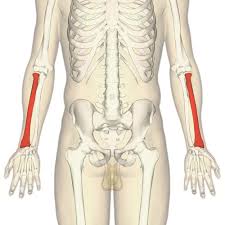
Which bone is highlighted
humerus
radius
ulna
femur
fibula
Found attached to bones throughout the body
smooth
cardiac
skeletal
all


What muscle is the arrow pointing to?
Pectoralis (Pecs)
Biceps
Triceps
Lats

What muscle is the arrow pointing toward?
biceps
traps
pecs
triceps

What muscle is the arrow pointing to?
Biceps
Triceps
Lats
Quads



