
 Worksheets
Chemical Bonding
Total questions: 149
Worksheet time: 2hrs 39mins
Construct the electron shell diagram for an atom of potassium (19K). Then identify the number of valence electrons in the potassium atom. Then complete the following sentence:
For potassium to become an ion, it will _____________ (gain /lose) ________ (a number) electrons and become a/an___________ (cation/anion)
(a)
Which of the following is most directly involved in chemical bonding?
valence electrons
neutrons
alpha particles
protons
___Fe + ___O2 ---> ___Fe2O3
Which set of coefficients will correctly balance the equation?
Already Balanced (no coefficients needed)
2, 3, 4
4, 3, 2
3, 2, 2
MgCl2 + Na ---> NaCl + Mg
What type of reaction is shown by the equation?
Combination/Synthesis
Decomposition
Single Replacement
Double Replacement
Why do bonds form?
To fill the valence shell of electrons for the elements involved
to release energy stored in the bonds
because whenever you mix two chemicals, there will be a reaction
because of attraction
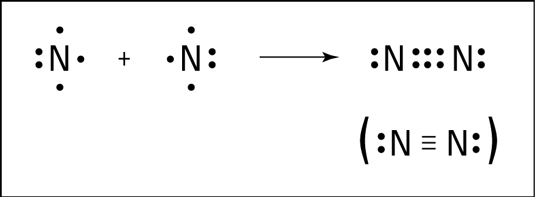
The type of covalent bond present in a nitrogen molecule is a
Double bond
Triple bond
Single bond
Dative bond
Which of the following is the correct name for the compound PbO?
lead oxide
lead monoxide
lead (I) oxide
lead (II) oxide
When Alkali metals (Group 1) form ions, they ____.
lose 1 proton
gain 1 proton
lose 1 electron
gain 1 electron
What is the correct IUPAC name for the compound P2O5?
*IUPAC stands for International Union of Pure and Applied Chemistry and it is the naming system that we use in class.
phosphorus pentoxide
diphosphorus pentoxide
phosphorus oxide
potassium oxide
Which of the following elements is most likely to form an incomplete octet?
Carbon
Oxygen
Boron
Fluorine
To determine if two atoms will bond, what would be helpful to know?
Valence electrons, found by group number
Whether the elements are metals or nonmetals
The electronegativity of the atoms
All of the above, all of which can be found on the Periodic Table
How does fluorine (F) obey the octet rule when reacting to form compounds?
It doesn’t change its number of electrons
Fluorine does not obey the octet rule.
It gains electrons.
It gives up electrons.
Which is the correct Lewis structure/ dot structure of oxygen?


Consider the four pairs of elements below. Which pairs form an ionic bond and covalent bond?
a) Na and Br _____________
b) Mg and S _____________
c) Ca and Al ______________
d) N and O______________
Which correctly describes the molecular polarity of water?
nonpolar and symmetrical
nonpolar and asymmetrical
polar and symmetrical
polar and asymmetrical

the diagram below represents particles of different elements in a crystal. What type of bond holds these particles together?
covalent
ionic
hydrogen
polar

Which of the following elements has the capability to form expanded octet?
Hydrogen
Carbon
Sulfur
Oxygen
What type of chemical bonding would take place between sodium and chlorine
Ionic Bond
Polar Covalent Bond
Non-Polar Covalent Bond
Metallic Bond
Among the following the one which is composed, of all the three kinds of bond (ionic, covalent and coordinate bond) is:
Sodium chloride
Ammonia
Carbon tetrachloride
Ammonium chloride
Based on formal charges, which of the following is the most desirable form of
CH2O

Atoms like oxygen and chlorine ________ the electrons to form stable molecules such as O2 and Cl2
Donates
Accepts
Shares
Exchanges
In the chemical formula Fe2O3, the number two means two atoms of
iron (Fe)
Oxygen (O)
Select the correct formula for boron trichloride.
B2Cl
B3Cl
BCl3
BCl2
Which type of bond involves the equal sharing of electrons?
ionic
polar covalent
nonpolar covalent
metallic
which of the following is a nonpolar molecule with polar covalent bonds?
HCl
Cl2
CCl4
KCl
Which sub-atomic particle is involved in chemical bonding?
Proton
Neutron
Electron
Valence Electron
Which of the following forms a nonpolar covalent bond?
Br2
HBr
NaBr
PBr3
Which type of bond involves a transfer of electrons?
ionic
polar covalent
nonpolar covalent
metallic
Which of the following is a common characteristic of a covalent compound?
High melting point
Consists of molecules
Always soluble in water
Conducts electricity in molten state
The number of _____ is most important in determining how an atoms will bond.
Neutrons
Protons
Valence electrons
Electrons in the innermost shells

What is the balanced chemical formula of iron (II) oxide?
FeO
FeO2
Fe2O2
Fe2O
Which of the following elements does NOT form an ion with a charge of 2+?
Beryllium
Strontium
Magnesium
fluorine
Which of the following compounds is able to conduct electricity when it is dissolved in solution but not as a solid?
C6H12O6
H2O
PCl3
CaCl2
Which statement correctly describes the behavior of the valence electron in the ionic bond?
an electron from the metal moves to the nonmetal
an electron from the nonmetal moves to the metal
an electron is shared between both atoms
Which of the following is the most polar?
HF
HCl
HBr
HI
What type of reaction is electrolysis if its formula is:
2H2O → 2H2 + O2
Synthesis (Combination)
Decomposition
Single Replacement
Combustion
When the orbitals of two nonmetals overlap and electrons get shared, what kind of bond is formed?
ionic
covalent
hydrogen
metallic
What is the chemical formula of sodium nitride?
NaN
Na2N
Na3N
NaN3
What elements generally make an ionic bond?
metal and non metal
metal and metal
non metal and non metal

Which type of bond involves highly mobile electrons?
ionic
polar covalent
nonpolar covalent
metallic
Which of the following is a non-polar molecule?
HCl
NH3
CCl4
H2O
Which of the following is a polar molecule?
O2
CO2
NH3
CH4
How many single bonds will carbon look to make when it bonds covalently?
2
3
4
5
Which of the following is the correct chemical formula of calcium nitrate?
CaNO3
Ca(NO3)2
CaN
Ca3N2
How many pairs of electrons are shared between the nitrogen atoms in a molecule of nitrogen?
2
3
4
6
Which type of bond involves an unequal sharing of electrons?
ionic
polar covalent
nonpolar covalent
metallic
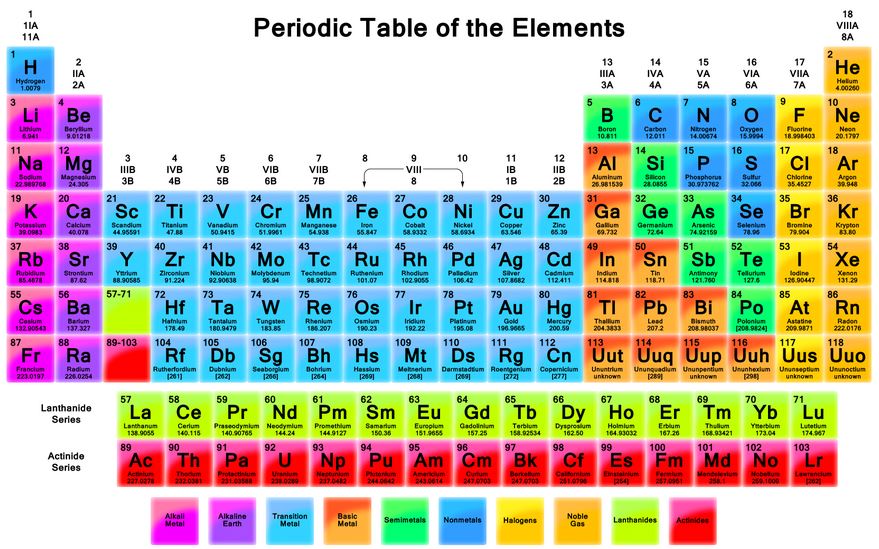
When a metal atom becomes an ion:
It loses electrons and is oxidized
It gains electrons and is reduced
It gains electrons and is oxidized
It loses electrons and is reduced
Below are four models representing compounds. Which of these models BEST represents ammonia (NH3)?


Which of the following is the most plausible structure of
N2OStructure 1
Structure 2
Structure 3
metals and nonmetals generally form ionic bonds by transferring electrons from one atom to another, Which of the following sets of elements will form an ionic bond?
Cl & F
Na & F
Na & K
He & O
Which of the following compounds contains both ionic and covalent bonds?
NaCl
PCl3
NaClO4
CaBr2
How many different elements are in the following compound?
Na2CO3
1
3
6
7
Which of the following pairs of elements is most likely to form an ionic compound?
magnesium and fluorine
manganese and iron
oxygen and chlorine
sodium and aluminum
How many chlorine (Cl) atoms are in 3MgCl2?
2
3
5
6
Which of the following has the longest bond length
Single Bond
Double Bond
Triple Bond
Ionic Bond
Chemical bonds are formed when atoms,
combine nuclei
give up neutrons
gain protons
share or transfer electrons
What is the correct formula for the covalent compound dinitrogen pentoxide?
N2O5
N4O
NO2
NO4
______ molecules are found in nature as pairs of two atoms of the same type covalently bonded together.
Diatomic
Monoatomic
Polyatomic
Elemental
Ionic and covalent compounds are alike because they both...
share electrons
lose outer electrons
fill outer electron levels
AlCl3 + Na(OH) → Al(OH)3 + NaCl
In the chemical equation above, NaCl is a ______.
Catalyst
Solvent
Product
Reactant
Metals are good conductors of electricity because when the metal atoms bond the valence electrons are
highly mobile
transferred
shared equally
shared unequally
What piece of evidence guarantees that a chemical change has occurred?
A change in shape or size
A change in the state of matter.
A change in temperature.
A new substance being created.
When cations and anions join, what kind of bond are they forming?
covalent
molecular
network
ionic
What is the formal charge of N in
NO3−0
+1
-1
+2
The property which is characteristic of an electrovalent compound is that
It is easily vaporized
It has a high melting point
It is a weak electrolyte
It often exist as a liquid
The number of covalent, coordinate bond and lone pair in hydronium ion is:
2,2,1
1,1,1
0,2,1
2,1,1
Predict the bond between Mg and Cl
Covalent
Ionic
Metallic
None of the above
How many valence electrons are transferred from the sodium atom to fluoride in the formation of the compound sodium fluoride?
0
1
2
3
When ionic bonds are formed electrons are
shared between a metal and a nonmetal
shared between metals
transferred from nonmetals to metals
transferred from metals to nonmetals
Which of the following shows correctly an ion pair and the ionic compound the two ions form?
Sn4+ and N3- form Sn4N3
Cu2+ and O2- form Cu2O2
Cr3+ and I- form CrI
Cr2+ and I- form CrI2
Which of the following is true about a balanced chemical equation?
Starting substances are called reactants, and ending substances are called products.
The reactants and products are separated by an arrow.
The equation must obey the Law of Conservation of Matter.
All of these are true.

A compound is made of two nonmetals. It is
ionic
metallic
covalent
Which solid would be a good conductor?
sodium chloride
copper (II) sulfate
glucose
aluminum
Which of the following types of elements can exist in monatomic form?
alkali metals
transition metals
halogens
noble gases
Which compound is held together by electrostatic forces?
NO2
CaSO4
Aluminum
P4O10
______ molecules are found in nature as pairs of two atoms of the same type covalently bonded together.
Diatomic
Monatomic
Polyatomic
Network
AlCl3
Ionic compounds are held together by
intermolecular forces
electrostatic forces
magnetic forces
nuclear forces
A compound forms between a metal and a nonmetal. It is
ionic
metallic
covalent
Which compound would have a very low melting point?
sodium chloride
copper (II) sulfate
sulfur dioxide
aluminum
1s22s22p63s2
Which compound would be a good conductor when in solution?
aluminum
sulfur dioxide
ammonia
sodium nitrate
A mixture of two or elements at least one of which is a metal is called
an ion
an alloy
steel
a crystal
A compound that is a poor conductor and has low melting and boiling points is most likely
ionic
metallic
covalent
Which of the following can exist in monatomic form?
Oxygen
Copepr
Sodium
Argon
Bonds formed by sharing electrons between atoms are
ionic
metallic
covalent
dipole-dipole
Bonds formed by transferring electrons from one atom to another are
ionic
metallic
non polar covalent
covalent
Which of the following types of elements can exist in nature as diatomic molecules?
alkali metals
transition metals
halogens
noble gases.

