
 Worksheets
Introduction to fundamental concepts of organic chemistry
Total questions: 149
Worksheet time: 2hrs 43mins

During the bromination of methane, the free radical CH30 is generated. A possible terminating step of this reaction is the formation of C2H6 by the combination of 2 free radicals. What could be produced in a terminating step during the bromination of propane


A
B
C
D

Which molecules would be present in the mixture produced by the photochemical chlorination of methane ?
1) Hydrogen
2) Hydrogen Chloride
3) dichloromethane
A
B
C
D
Meets bonding requirement for CARBON atoms, YES or NO?
Three single bonds and a triple bond
YES
NO
Formation of a single product from two reactant molecules is known as
addition reaction
substitution reaction
elimination reaction
oxidation reaction
TRUE or FALSE.
All organic and inorganic compounds contain the element Carbon.
TRUE
FALSE

The given structure is an example of ...
Expanded structure
Condensed structure
Skeletal structure
What is a functional group?
Atoms or group of atoms that give specific characteristics to a molecule
Group of molecules that make up a group of atoms
Group of molecules that give specific characteristics to an atom
Group of atoms that give specific characteristics to an element

Which of these always applies to a nucleophile
A
B
C
D
What is the name of the double bonded compounds, which are unsaturated?
Alkanes,
Alkenes.
Alkynes
Alkones

Which reaction is not an electrophilic addition ?
A
B
C
D
Which of the following is a HYDROCARBON DERIVATIVE?


Two main types of isomers are the __________ (structural) isomers and ____________.
stereoisomers, optical
constitutional, optical
constitutional, stereoisomers
enantiomers, stereoisomers
____________ groups are atoms, groups of atoms or bond that determine the characteristic of an organic compound.
Aliphatic
Aromatic
Functional
Hydrocarbon
How many carbon atoms are in propane?
1
2
3
4

Which pair of homologous series have the same C:H ratio in their general formula
1) Aldehydes and Ketones
2) Carboxylic acids and esters
3) Alkenes and Ketones
A
B
C
D

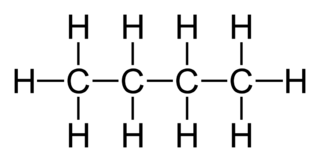
What is the name of the alkane shown here?
Methane
Ethane
Propane
Butane

Classify the compound based on the functional group present.
Ether
Ketone
Ester
Carboxylic acid
Which bond is weaker and is more prone to chemical attacks?
Pi bond
Sigma bond

What is the condensed formula of this structure?
CH3CH2CH2OH
CH3COCH3
CH3CH2CHO
CH3OCH2CH3
Which of the following is a unique nature of carbon? (Multiple Selection Question)
Forms 4 strong covalent bonds
It can form only one type of bond
It has the ability to form stable bonds with itself
It can form multiple bonds
This is a region about the nucleus where the probability of finding the electrons is very high
Pi bond
Atomic orbital
Sigma bond
Hybrid orbital

A reaction between chlorine and propane in UV light produces 2 isomeric monochloropropanes, C3H7Cl, as products. Which information about this reaction is correct ?
A
B
C
D
Meets bonding requirement for CARBON atoms, YES or NO?
Four single bonds
YES
NO
TRUE or FALSE.
Organic Chemistry is the study of chemical compounds found in living organisms alone.
TRUE
FALSE

If the given structure is converted to condensed structure, which will be its correct version?
CH3CH2CH2CH2CH2CH3
CH3(CH2)4CH3
C6H14
(CH3)2(CH2)4

A
B
C
D
Carbon has _____ valence electrons.
2
4
6
8
What is the name of the process in which one orbital "S" and three orbitals "P" combined to form new orbitals?
Combining
Joining
Hybridization
Hydrozation
Alkane molecules are made of which elements?
Carbon and hydrogen
Carbon, hydrogen and oxygen
Carbon and oxygen
Carbon, nitrogen and hydrogen
If the given structure is converted to condensed structure, which will be its correct version?
CH3CH2CH2CH2CH2CH3
CH3(CH2)4CH3
C6H14
(CH3)2(CH2)4
Which type of bonding is present within organic molecules?
Covalent bond
Ionic bond
Metallic bond
Hydrogen bond
Which of the following is NOT true about nucleophiles?
donates an electron pair to an electrophile to form a chemical bond
all molecules or ions with a free pair of electrons or at least one pi bond can act as nucleophiles
nucleophile are Lewis acids by definition
a nucleophile becomes attracted to a full or partial positive charge
Which of the following is a HETEROATOM?
Meets bonding requirement for CARBON atoms, YES or NO?
A double bond and a triple bond
YES
NO
Covalent bonds can break through
Homolytic fission
Homolytic fusion
Heterolytic fission
Heterolytic fusion

How many single covalent bonds does benzene (C6H6) molecule have?
3
6
9
12

A
B
C
D
Meets bonding requirement for CARBON atoms, YES or NO?
Two single bonds and a double bond
YES
NO

A
B
C
D
Two optical isomers have the same
Empirical formula
Structural formula
Molecular formula
Meets bonding requirement for CARBON atoms, YES or NO?
Three single bonds and a double bond
YES
NO
Is the chemistry of carbon.
Inorganic Chemistry
Organic Chemistry
Analytical Chemistry
Biochemistry


How many hydrogens are missing from this extended structural formula?
6
7
8
9

A
B
C
D
Organic compounds made only of the elements carbon and hydrogen are called...
Hydrocarbons
Carbohydrogens
Carbohydrates
Hydrocarbonates
How many single covalent bonds does benzene (C6H6) molecule have?
3
6
9
12
Meets bonding requirement for CARBON atoms, YES or NO?
Two double bonds and two single bonds
YES
NO

The formula CH3 can represent an anion, a cation or a free radical. Species with molecular formula CH3 can act as an electrophile, a free radical or a nucleophile depending on the number of outer shell electrons on the central carbon atom. How many outer shell electrons must be present for CH3 to act in these different ways ?
A
B
C
D

All of these structure formulas are correct, except for ___?
a.
b.
c.
d.
Why is methane used as a fuel?
It burns and releases energy (Exothermic reaction)
It is a gas
It is odourless
It has a low boiling point

A
B
C
D
TRUE or FALSE.
All organic compounds contain the element Carbon.
TRUE
FALSE

A
B
C
D

A
B
C
D
Which of the following is an UNSATURATED HYDROCARBON?
Which two elements do all organic compounds contain?
Carbon and hydrogen
Carbon and oxygen
Oxygen and hydrogen
Carbon and nitrogen

A
B
C
D

What is the condensed formula of this structure?
CH3CH2CH2OH
CH3COCH3
CH3CH2CHO
CH3OCH2CH3
Meets bonding requirement for CARBON atoms, YES or NO?
Two double bonds
YES
NO
What is the name of the triple bonded compounds which are unsaturated?
Alkanes
Alkenes
Alkynes
Alkones

A
B
C
D
How many hydrogens are missing from this extended structural formula?
6
7
8
9
What is the condensed formula of this structure?
CH3CH2CH2OH
CH3COCH3
CH3CH2CHO
CH3OCH2CH3
Which type of bonding is present within organic molecules?
Covalent bond
Ionic bond
Metallic bond
Hydrogen bond
Aliphatic hydrocarbons consist only single bonds, and so are called ____________ hydrocarbons.
unsaturated
saturated
aromatic
chain
Which one of the following characteristics is not correct for all of the members of the same homologous series?
Same general formula
Similar chemical properties, i.e. undergo the same reactions
Varying physical properties, i.e. change in a predictable way
Different functional group
What is the condensed formula of this structure?
CH3CH2CH2OH
CH3COCH3
CH3CH2CHO
CH3OCH2CH3
Isomers are molecules that have the _________molecular formula (contain the same number of atoms) but ______ structurally (having different arrangement of the atoms in space).
differ, differ
same, differ
same, same
differ, same
The given structure is an example of ...
Expanded structure
Condensed structure
Skeletal structure
TRUE or FALSE.
All organic compounds are obtained from living organisms or "organic materials" while all inorganic compounds are obtained from earth's mineral constituents or "inorganic materials".
TRUE
FALSE

Which diagram gives the skeletal formula of
2-chloropentan-3-ol ?
A
B
C
D
Meets bonding requirement for CARBON atoms, YES or NO?
A single bond and two double bonds
YES
NO
__________ series is a series of compounds with same functional group differing from the successive member by CH2.
Heterologous
Homologous
Hydrocarbon
Group

What kind of molecule is this?
alkane
alkene
alkyne
cycloalkane
Classify the compound based on the functional group present.
Ether
Ketone
Ester
Carboxylic acid
____________ groups are atoms, groups of atoms or bond that determine the characteristic of an organic compound.
Aliphatic
Aromatic
Functional
Hydrocarbon
Which of the following statement is INCORRECT about electrophiles?
Electrophiles are positively charged or neutral species having vacant orbitals
The electrophiles are attacked by the most electron-populated part of one nucleophile
Electrophiles are Lewis base
Which of the two is an Organic Compound?


Which statement is correct?
All organic compounds contain carbon
All organic compounds contain hydrogen
What the name of the single bond compounds that formed saturated hydrocarbons?
Alkanes
Alkenes
Alkynes
Alkones

This type of bond allows free rotation of the parts of the molecule with respect to each other
Sigma bond
Pi bond
Covalent bond
Electron bond
How to determine that a molecule exhibit cis-trans isomerism?
Restricted rotation in a carbon-carbon single bond of alkenes
Each carbon of a site of restricted rotation has 2 different atoms or groups attached to it
Exist in cyclic compouds only
Similar chemical properties

What is the molecular formula for structure showed?
C8H18
C3H3
C8H3
C3H2(CH3)3
All molecules of the alkane homologous series have which ending in their name?
-ane
-ene
-anol
-anoic acid

Which of these molecules has a triple covalent bond?
CH4
C2H6
C2H4
C2H2
What is the molecular formula for structure showed?
C8H18
C3H3
C8H3
C3H2(CH3)3

A
B
C
D
Which is the correct general formula for the alkanes?
CnH2n+2
CnH2n
CnH2n+1OH
CnH2n+1COOH

Classify the compound based on the functional group present.
Ketone
Carboxylic acid
Ester
Ether
Which two elements do all organic compounds contain?
Carbon and hydrogen
Carbon and oxygen
Oxygen and hydrogen
Carbon and nitrogen
Which statement best defines chain isomerism?
Existance of chemical compounds with same molecular formula
Different ways the same number of carbons are connected which is either straight or branched
Have mirror image of each other
Similar chemical properties with different physical properties such as solubility
Formation of a single product from two reactant molecules is known as
addition reaction
substitution reaction
elimination reaction
oxidation reaction
Isomerism that arises out of the difference in spatial arrangement of atoms or groups about the doubly bonded carbon atoms are called?
Structural Isomerism
Stereoisomerism
Geometrical Isomerism
Optical Isomerism
molecules with double/tripple bond
carbocilic acids
alkynes
unsaturated fats
saturated fats
Which of the following statement is INCORRECT about electrophiles?
Electrophiles are positively charged or neutral species having vacant orbitals
The electrophiles are attacked by the most electron-populated part of one nucleophile
Electrophiles are Lewis base
Which of the following molecules exhibit geometrical isomerism?
CH2=CHCH3
C6H5CH=CHC6H5
(CH3)2C=CHCH3
CH3CH2N=OH
the name of this compaund C4H10
METHANE
HEXENE
BUTANOIC ACID
BUTANE
Which of the following is NOT true about nucleophiles?
donates an electron pair to an electrophile to form a chemical bond
all molecules or ions with a free pair of electrons or at least one pi bond can act as nucleophiles
nucleophile are Lewis acids by definition
a nucleophile becomes attracted to a full or partial positive charge
name the group that has a single bond
alkenes
alcohols
alkanes
ethers
Which among the following is not a class of organic compound?
Carbonyl compound
Nitro compound
Amides
Electro compounds
molecule with the same molecular structure but different structural formula
fats
lipids
fossil fuels
isomers
give the IUPAC NAME OF THIS STRUCTURAL FORMULAR C6H14
HAXANE
HEXANOL
HEXANOIC ACIT
Hydrocarbons burning is an example of what type of chemical reaction ?
neutralisation
endothermic
addition
exothermic
Choose the incorrect option regarding isomerism:
They differ in both physical and chemical properties
They have different molecular formula
There are two types of isomerism : Structural and Stereoisomerism
Geometric and optical isomerism are two types of stereoisomerism
Which of the following cannot react as a nucleophile?
CH3NH2
(CH3)2NH
(CH3)3N
(CH3)4N+
Bromine reacts with ethene to form 1, 2-dibromoethane.
What is the correct description of the organic intermediate in this reaction ?
It has a negative charge
It is a free radical
It is a nucleophile
It is an electrophile
organic polymer can be divided into
synthetic organic polymer
natural organic polymer
all of the above
Chlorination of alkanes is an example of
Elimination reaction
Free radical substitution reaction
Nucleophilic substitution reaction
Electrophilic addition reaction
General formula for amines is
R-CH2
R2CH
R-NH2
R-COOH
which bond does carbon mostly form
hydrogen bond
dipole-dipole
covalent bond
C5H12 + Br2 --> C5H11Br + HBr
This reaction is called____________________.
Substitution
Addition
Cracking
Combustion
The group made up of alcohols and acids
esters
carbocilic acids
ethers
alkynes
C3H8
the MP and BP increases as the molecular structure increases
hydrocarbons
ethers
ketones
the type of reaction that occur in alkenes
elimination
substitution
addition
The molecular formula C5H12 contains how many isomeric alkanes?
1
2
3
4
which compound is made up of carbons and hydrogen
hydrocarbons
aldehytes
condensed structure
alcohols
what are the outer most electrons called
energy level
valence
valency
How to determine that a molecule exhibit cis-trans isomerism?
Restricted rotation in a carbon-carbon single bond of alkenes
Each carbon of a site of restricted rotation has 2 different atoms or groups attached to it
Exist in cyclic compouds only
Similar chemical properties
which reaction that releases oxidising agents, heat and light
substitution
combustion
addition
Which among the following does not exhibit geometric isomerism?
1-hexene
2-hexene
3-hexene
4-hexene
What is a functional group?
Atoms or group of atoms that give specific characteristics to a molecule
Group of molecules that make up a group of atoms
Group of molecules that give specific characteristics to an atom
Group of atoms that give specific characteristics to an element
Macromolecule that is made up of repeated structure called monomers
protein
amino acids
polymer
what determines the properties of hydrocarbons
BP
molecular structure
MP

