Wayground logo

Free Printable Worksheets

Font size

S
M
L
XL
Worksheets

History of Earth and Evolution

Total questions: 45

Worksheet time: 45mins

Name
Class
Date
1.
Pangea broke apart during the 
a)
Precambrian
b)
Paleozoic
c)
Mesozoic
d)
Cenozoic
2.
Earth is a fiery ball of molten rock.  There is no air or life on Earth
a)
Precambrian Era
b)
Paleozoic Era
c)
Mesozoic Era
d)
Cenozoic Era
3.
What era do we live in?
a)
Cenozoic
b)
Paleozoic
c)
Mesozoic 
d)
Pre Cambrian 
4.
Which of the following places the geologic time eras in order from oldest to most recent?
a)
Precambrian, Paleozoic, Mesozoic, Cenozoic
b)
Mesozoic, Cenozoic, Paleozoic, Precambrian
c)
Cenozoic, Mesozoic, Paleozoic, Precambrian
d)
Paleozoic, Cenozoic, Precambrian, Mesozoic
5.
Eras of the geologic time scale are
divided into ______.
a)
periods
b)
ages
c)
units
d)
epochs
6.

What method do we use to determine the age of Earth and other rocks?

a)

Fossil stratum

b)

Radioactive decay

c)

Density analysis

d)

Dendrochronology

7.

Without the fossil record, we would NOT know about which of the following?

a)

dinosaurs

b)

the ancestors of humans

c)

mass extinctions

d)

all the above

8.

When did the Earth form?

a)

3.5 million years ago

b)

4.6 billion years ago

c)

6,000 years ago

d)

300 million years ago

9.

Which came first, prokaryotic or eukaroytic cells?

a)

Prokaryote

b)

Eukaryote

10.

What organisms was very prominate in the mesozoic era?

a)

Dinosaurs

b)

Fishes

c)

Metazoans

d)

chordates

11.

the study of fossils and the fossil record

a)

paleontology

b)

archeology

c)

anthropology

d)

biology

12.

the loss of many species throughout the world in a short period of time

a)

mass extinction

b)

great dying

c)

large ending

d)

explosion

13.

method of determining the age based on measuring radioactive elements

a)

radioactive dating

b)

relative dating

c)

teenage dating

d)

no dating

14.
The diagram shows fossils in different rock layers. Which of these statements about the age of these fossils is most likely correct?
a)
Fossil A and C are the same age
b)
Fossil B is older than fossil C
c)
Fossils A is older than fossil B
d)
Fossil D is older than fossil C
15.
Which type of animal appears earliest in the fossil record?  (OLDEST)
a)
Reptiles
b)
Birds
c)
Dinosaurs
d)
Fish
16.

What era did trilobites, fishes, and other marine organisms dominate?

a)

Precambrian

b)

Paleozoic

c)

Mesozoic

d)

Cenozoic

17.

The fossil record provides evidence about the history of life on earth, past environments on earth, and ...

a)

how organisms decomposed

b)

how many offspring a particular organism had

c)

how organisms have changed over time

d)

exactly how many of each type of organism existed because everything that dies becomes a fossil

18.

A dead organism left out on earth's surface will be less likely to become a fossil than an organism that...

a)

gets eaten quickly

b)

is left in a cave

c)

is very large

d)

gets buried by sediment quickly (usually at the bottom of a water source)
19.
Where the better adapted organisms survive to pass traits along to offspring.
a)
Evolution
b)
Natural Selection
c)
Extinction
d)
Artifical Selection
20.
Natural selection is when ____________ decides who survives and who doesn't
a)
nature
b)
humans
c)
animals
d)
years
21.
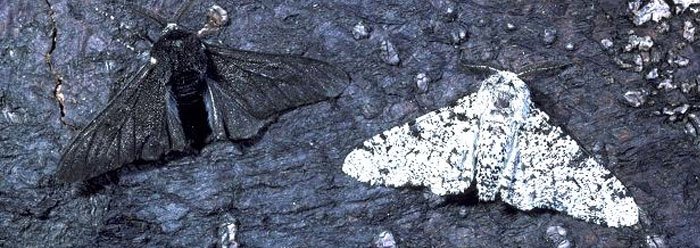
The trees these moths used to live on were white, but have been covered in soot from coal factories. Which moth will be more successful in this environment?
a)
Dark moth
b)
Light moth
c)
Both will be equally successful
d)
Neither will be successful
22.
Change over time
a)
Natural Selection
b)
Selective Breeding
c)
Homeostasis
d)
Evolution
23.
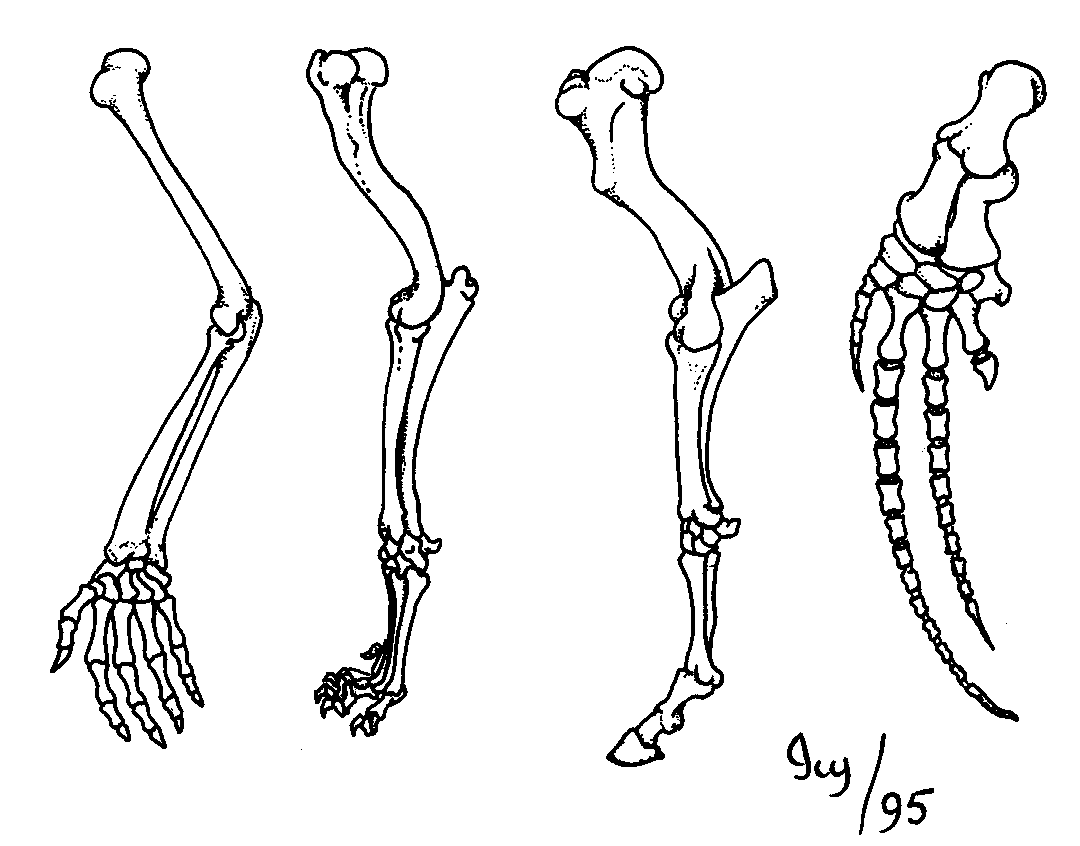
Structures with the same parts have different functions; suggests that organisms share a common ancestry
a)
vestigial structures
b)
homologous structures
c)
adaptive radiation
d)
fossil
24.
Study of embryos of various organisms to show a common ancestor because of similarities in development
a)
natural selection
b)
embryology
c)
speciation
d)
evolution
25.
Where humans have bred organisms together based on traits we like.
a)
Evolution
b)
Natural Selection
c)
Extinction 
d)
Artificial Selection
26.

Which scientist visited the Galapagos Islands and came up with the theory of natural selection?

a)

Theodor Schwann

b)

Gregor Mendel

c)

Charles Darwin

d)

Rudolf Virchow

27.

Scientists have collected millions of fossils of different organisms, and have developed a timeline of life on Earth. What do we call this?

a)

Mutation

b)

Natural Selection

c)

The theory of evolution

d)

Fossil Record

28.

A physical or behavioral trait that helps an organism survive and reproduce in its environment is called a what?

a)

An adaptation

b)

A response to a stimulus

c)

A mutation

d)

Evolution

29.

What most likely caused the finches on the Galapagos Islands to have beaks that were different from the finches on the mainland?

a)

There were different types of predators on the island.

b)

There were different types of food available on the island.

c)

The finches had no water to drink.

d)

The finches on the mainland could not fly high enough.
30.
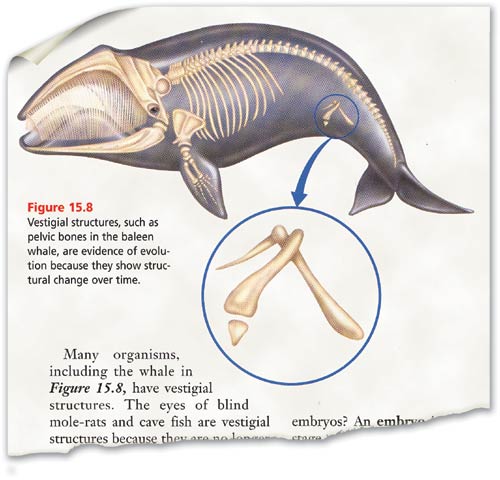
Which of the following is an example of a vestigial structure?
a)
the wings of a red-tailed hawk
b)
the hind limbs of a house cat
c)
the fins of sharks
d)
the tailbone of a human
31.
Ostrich wings are examples of
a)
homologous structures
b)
vestigial structures
c)
adaptations
d)
traits
32.
The environment around Manchester, England, changed during the Industrial Revolution.  How did this change affect peppered moths living in the area?
a)
Natural selection favored moths with dark wings because predators could not see them on the soot-colored trees.
b)
Natural selection favored moths with white wings that were easy for predators to see.
c)
Natural selection favored moths with white wings because predators could not see them on the soot-colored trees.
d)
Natural selection caused moths with white wings to become extinct.
33.
When an organism completely dies out, it is called.....
a)
Adaption
b)
Extinction
c)
Fossilization
d)
Mutation
34.
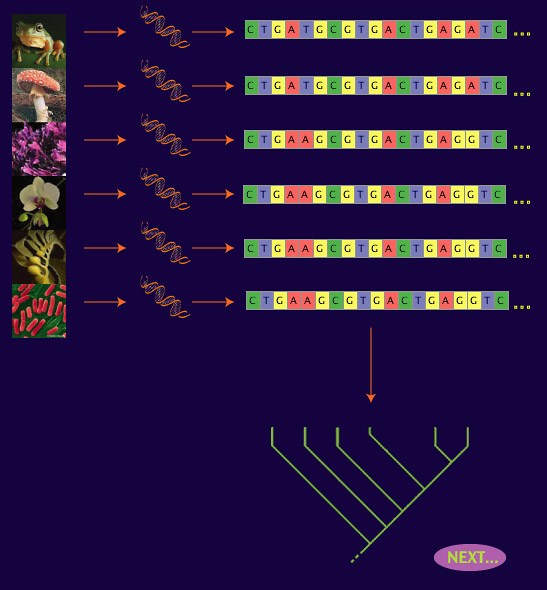
Two organisms that are closely related would have
a)
very similar DNA sequence
b)
exactly the same DNA sequences
c)
no proteins in common
d)
completely different DNA sequence
35.

What

type

of structure?

a)

Homologous

b)

Analogous

c)

Embryological

d)

Vestigial

36.

What

type

of structure?

a)

Homologous

b)

Analogous

c)

Embryological

d)

Vestigial

37.

What

type

of structure?

a)

Homologous

b)

Analogous

c)

Embryological

d)

Vestigial

38.

What

type

of structure?

a)

Homologous

b)

Analogous

c)

Embryological

d)

Vestigial

39.

Some animals are able to copy other animals in order to look more dangerous to get away from predators. What is this called?

a)

Hibernation

b)

Camouflage

c)

Mimicry

d)

Migration

40.

I am a polar bear who lives in the arctic. My fur is a beautiful white, just like the snow I live in. What adaptation is this adaptation called?

a)

camouflage

b)

mimicry

c)

migration

d)

hibernation

41.

This hoverfly is a harmless, nectar-feeding pollinator. It's wasp-like coloration and appearance are an example of _______ .

a)

mimicry

b)

warning coloration

c)

cryptic coloration

d)

disruptive coloration

42.
An adaptation that helps an animal hide from predators
a)
migration
b)
camouflage
c)
hibernation
d)
extinction
43.

Different structures same functions

a)
Vestigial 
b)
Homologous 
c)
Analogous Structures 
d)
Embryonic 
44.
About 96% of the information in human DNA is found in gorilla DNA. This evidence supports which statement?
a)
Humans evolved from gorillas.
b)
Gorillas and humans diverged from a common ancestor.
c)
As gorillas evolve, they will become more similar to humans.
d)
Gorillas and humans are too different for meaningful genetic comparisons.
45.
 Why are many bacterial infections more difficult to treat now than they were fifty years ago?
a)
Because there are more types of bacteria now.
b)
Because bacteria have evolved resistance to antibiotics.
c)
Because bacteria reproduce at greater rates than in the past, since there are more people on earth.
d)
Because treatment of virus infections consumes many antibiotics that were formerly used only for bacteria.