
 Worksheets
Astronomy Quiz 1 - Big Bang to Planets
Total questions: 35
Worksheet time: 22mins

The picture here shows the Hubble Deep Field, and it is shows objects that are the farthest away from our Earth. What are the majority of the objects in this photo?

The picture shown here is the Hubble Deep Field. What are TWO reasons a majority of the objects in the picture appear red and orange in color?
Because they are moving away from us
They are so far away that we see them as they were billions of years ago (young and cooler).
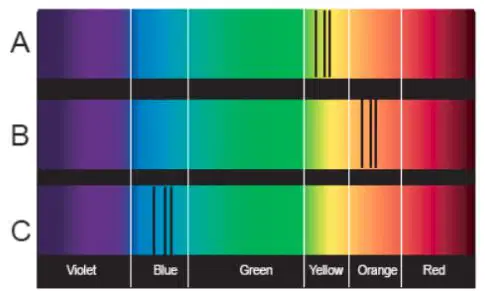
Spectrum "A" represents a possible star that is not moving relative to the Earth. Which spectrum shows an identical star that is moving away from the Earth?
B
C
Our Sun is most likely to end up as which of the following?


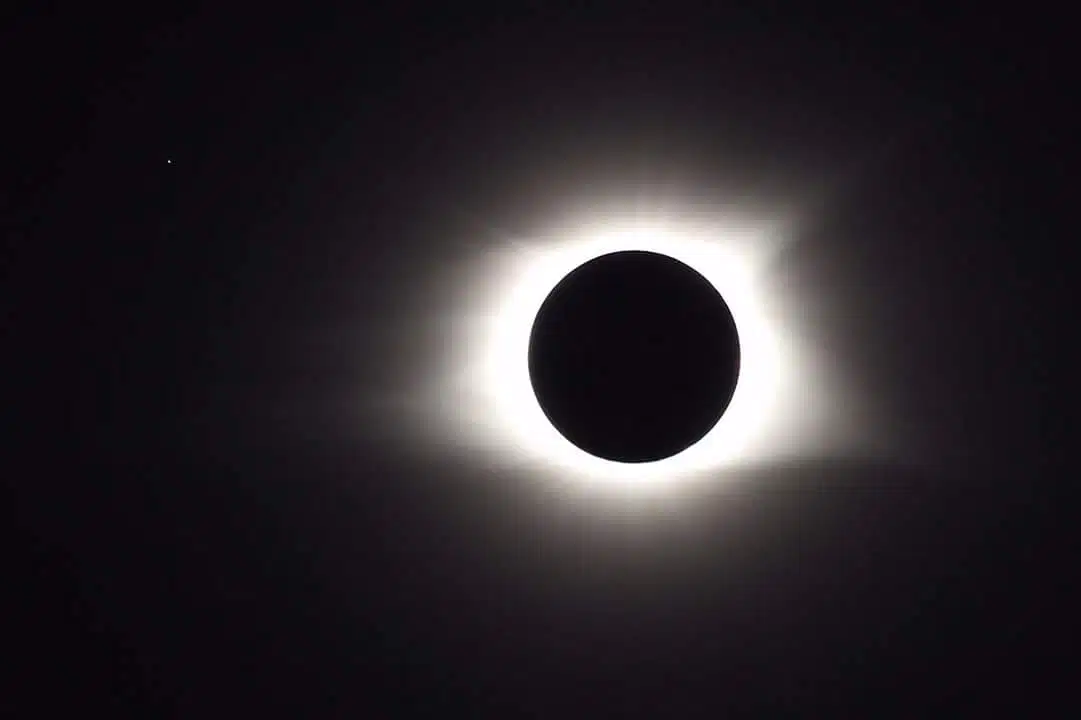
What is the name of the outermost layer of the Sun that we can only see during a total eclipse?
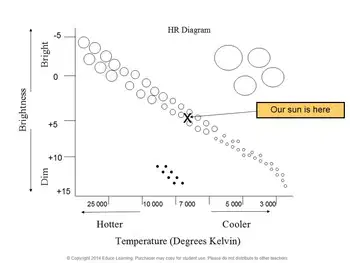
What is the section of stars that crosses diagonally down through the middle of an H-R diagram called? 90% of all stars in our universe fall into this category.
Blue Supergiants
Main Sequence
White Dwarfs
Red Giants
The stars Rigen and Deneb are very massive stars that we think will eventually supernova. Which of the following star groups do they fit into?
Supergiants
Red Giants
White Dwarfs
Main Sequence

In which of the following layers of a star does nuclear fusion take place?
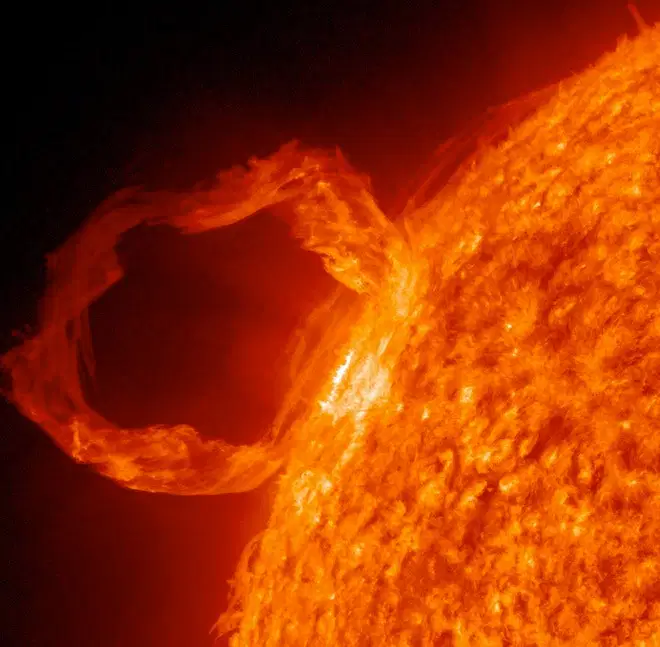
Absolute magnitude is a measurement of brightness that depends on a star's distance from Earth.
What is meant when a galaxy is red-shifted?
Distant galaxies appear blue in color due to having older stars
The temperature of distant galaxies is decreasing
The galaxy is moving away from us, so the colors of its spectrum are shifted towards the red end.
The light from distant galaxies appear red because of all the dust it travels through
Where are we located within our galaxy?
On a spur of one of the spiral arms
On the outer edge
Near the blackhole
In the center bulge

What is the name for a contracting mass of gas that represents an early stage in the formation of a star (before fusion has begun)?
supervona
black hole
protostar
gravity

Would the surface temperature of a white dwarf be higher or lower than a red giant?
Higher
Lower

Stars can take different life paths due to having different _____________
temperature
mass
brightness
color
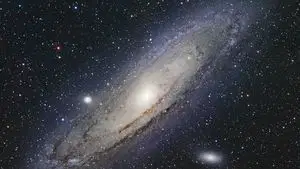
Which of the following is NOT a type of galaxy?
spiral
circular
elliptical
irregular
How old is the universe (approximately)?
4 billion years
1 billion years
100 million years
14 billion years

Which planet in our solar system has the most natural satellites (moons)?
Jupiter
Saturn
Venus
Earth

The order of the planets from the Sun is:
Mars,Venus,Earth, Mercury,Saturn Jupiter, Uranus, Neptune
Earth,Venus,Mars Jupiter, Neptune, Mercury,Saturn, Uranus
Mercury,Venus,Earth Mars,Jupiter, Saturn,Uranus Neptune

Where in our solar system are MOST dwarf planets found?
in the Asteroid Belt
Between Mercury and Venus
in the Kuiper Belt
orbiting Saturn
A large amount of these are found in a belt between the orbits of Mars and Jupiter
Asteroids
Comet
Meteor
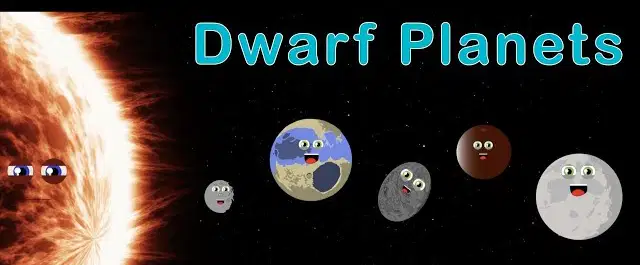
Which of the following is NOT catagorized as a Dwarf Planet?
Eris
Makemake
Pluto
Mercury
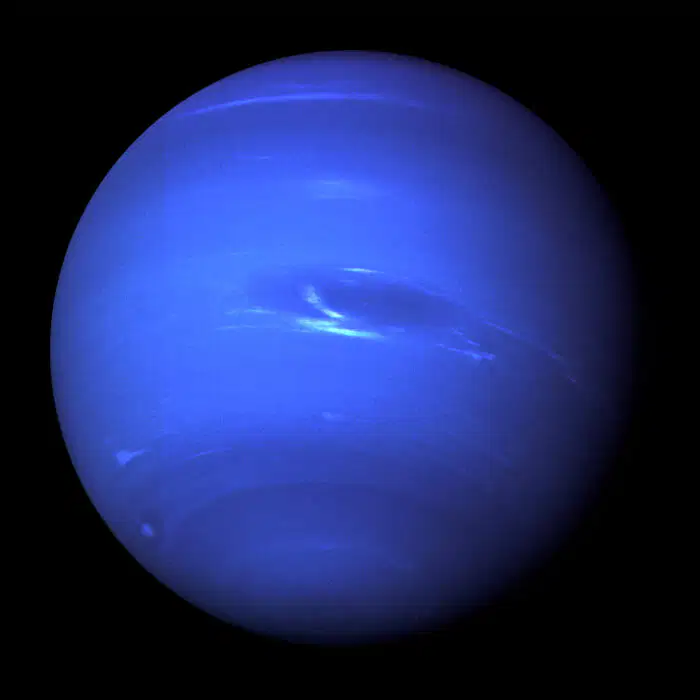
In the atmospheres of both Uranus and Neptune, what gas is responsible for their blueish colors?
Methane
Hydrogen
Carbon Dioxide
Iron

In what portion of our solar system are the majority of comets found?
Asteroid belt
near the Sun
Oort Cloud
Kuiper Belt
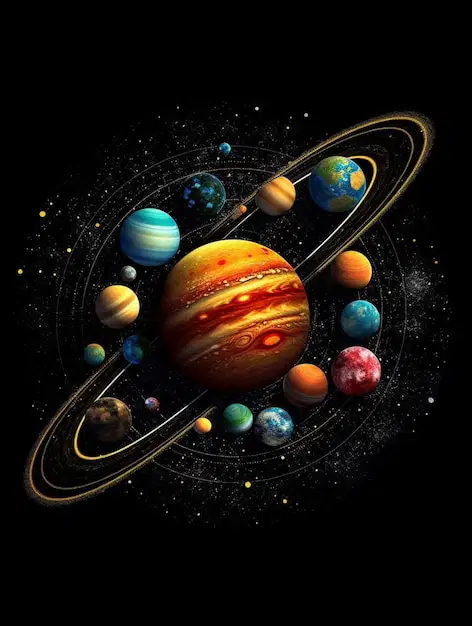
All of the following planets have a ring system EXCEPT:
Saturn
Venus
Haumea
Uranus
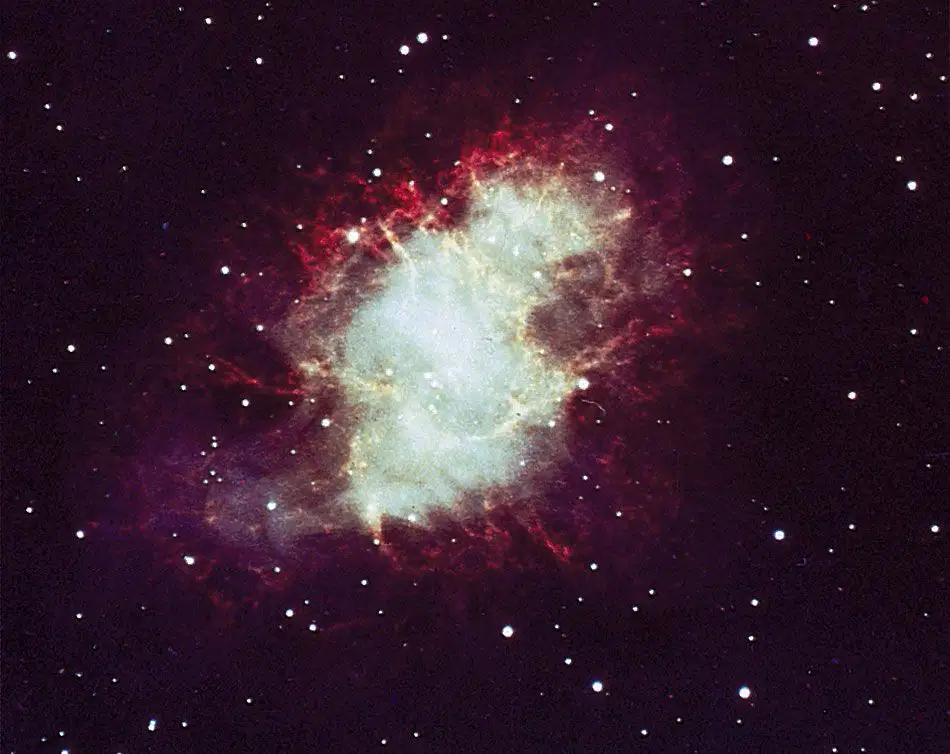
High-mass stars will end their lives in a supernova and perhaps become which of the following (choose TWO correct answers)?
blackholes
neutron stars
white dwarfs
asteroids

